
As we approach 2026’s halfway point, it’s time to take a temperature of the finest cinema thus far: we’ve rounded up our favorites from the first six months of this year, some of which have flown under the radar. Kindly note that this is based solely on U.S. theatrical and digital releases from 2026.
Check out our picks below, as organized alphabetically, followed by honorable mentions.
28 Years Later: The Bone Temple (Nia DaCosta)
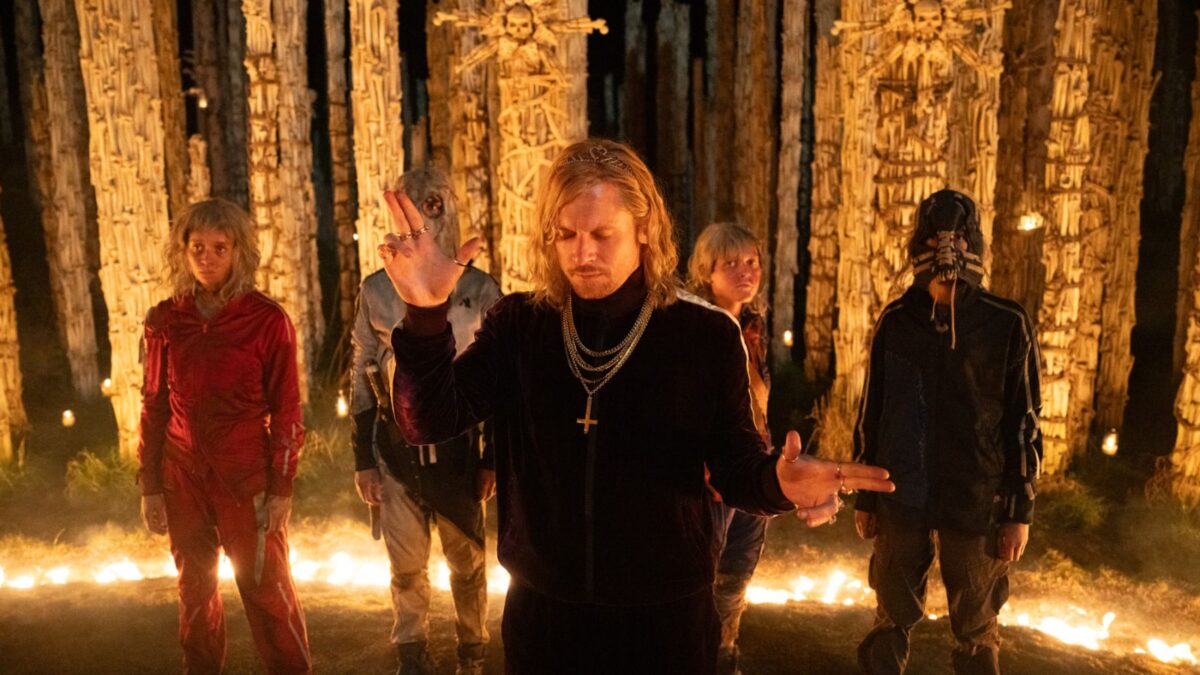
In 28 Years Later: The Bone Temple, the Jimmy gang is back, led by Jack O’Connell in a role that oddly mirrors his Irish vampire villain in last year’s Sinners. They’ve taken Spike (Alfie Williams), the pre-teen protagonist of the previous entry, now separated from his parents, under their wing. They ended the last film saving Spike’s life from the infected, but it’s soon revealed they have nefarious means to install themselves as new leaders of a post-apocalyptic society, among them the brutal torture of any other survivors who won’t conform. The rather unpleasant violence in these sequences is a different beast than all the goofy spine-ripping (still here) of Boyle’s predecessor. – Ethan V. (full review)
A Balcony in Limoges (Jérôme Reybaud)
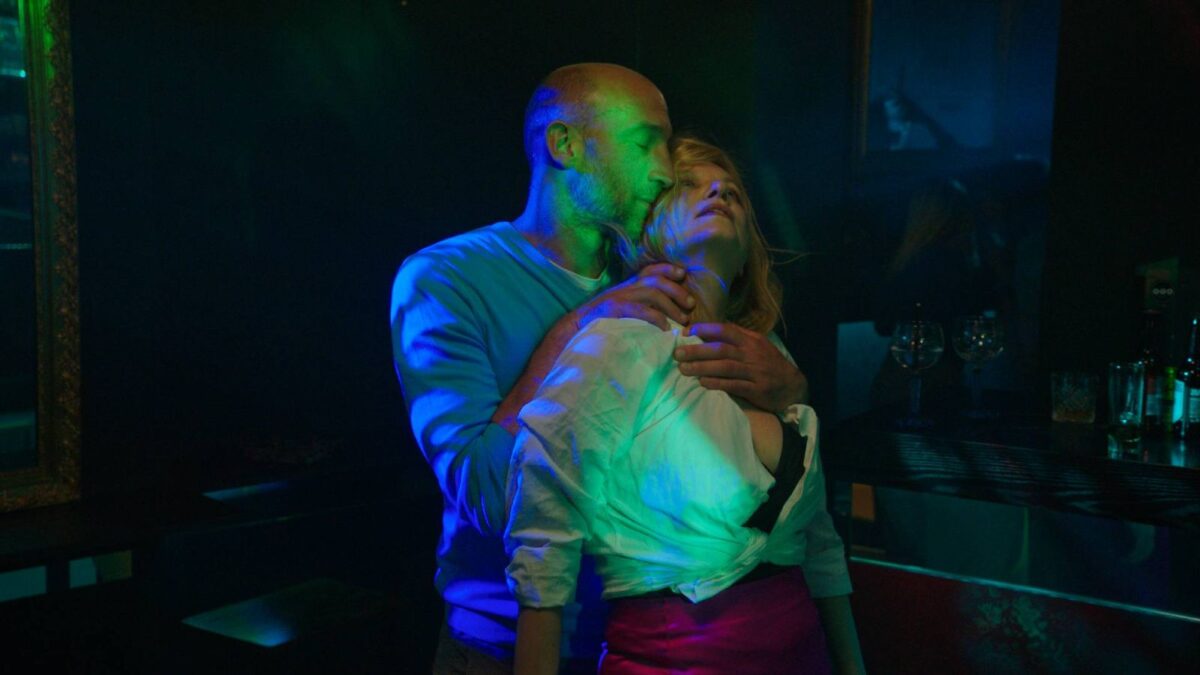
Reybaud observes a chance meeting between two former classmates who are now middle-aged women. Eugénie, a single mother who’s proud of being a “good citizen,” crosses paths with Gladys, who chooses to be homeless and rejects everything about society. Reybaud distills these two women into representations of two dominant types of people living today. Eugénie represents those still clinging on to a neoliberal status quo that’s on life support, while Gladys symbolizes the angry rejection of that status quo that’s led to the rise of far-right populism. A Balcony in Limoges watches the two women clash, with Eugénie thinking she can “rescue” Gladys, whose selfish and destructive behavior doubles as a middle finger to everything Eugénie believes in. It’s a conflict that Reybaud uses to point out that both women have the same problem of living under a failing world order, except they’re too stuck in their ways to see what unites them. How that conflict resolves is shocking and funny, a bit of pitch-black comedy that summarizes the inevitable outcome of our inability to imagine a better world for ourselves. – C.J. Prince (read more)
Blue Film (Elliot Tuttle)
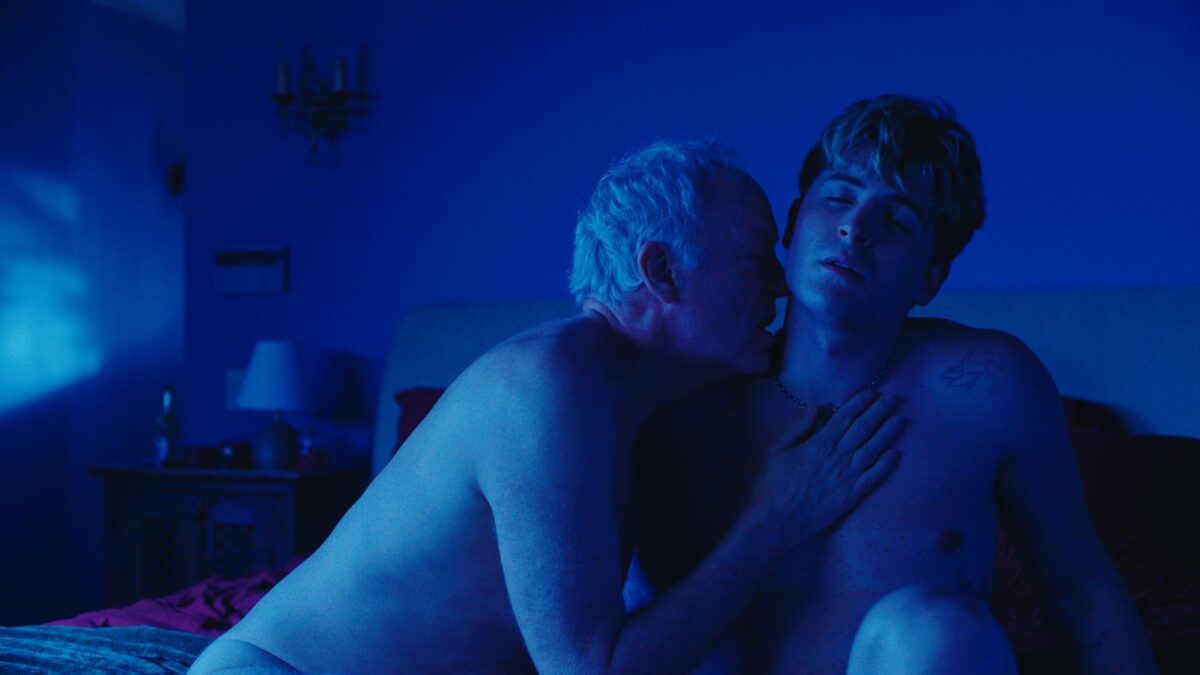
“Provocation” has become watered-down in recent times. All it takes to provoke someone is tossing off a bunch of half-assed offensive statements or aiming your cannon at every divisive mainstream issue on a quest to push people’s buttons. Getting a reaction out of people is easy; actually making them consider things is another matter entirely. Blue Film, by that token, is provocative in the truest sense of the term. Elliott Tuttle’s film seeks to unsettle, question, and, yes, provoke you. But his masterful two-hander wants, more than anything, to extend understanding to both men at the center, asking you to see them as flawed humans with depth and complexity, even if we’d rather not. – Devan S. (full review)
Blue Heron (Sophy Romvari)
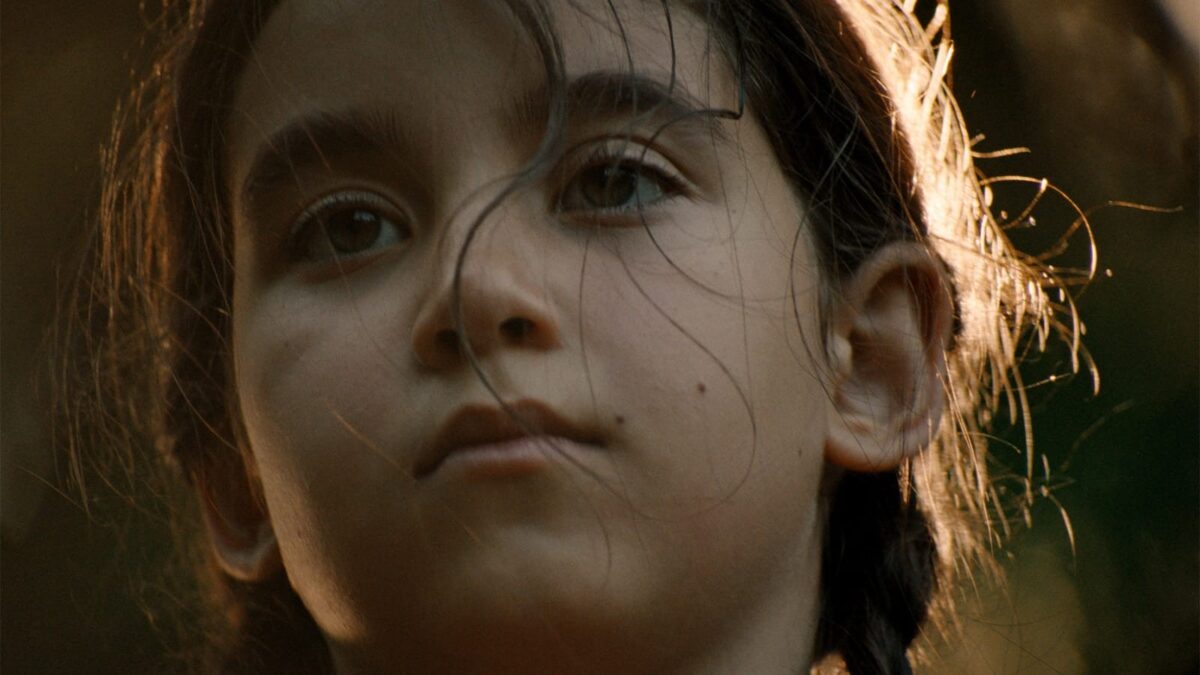
Blue Heron, Romvari’s feature debut, once again mines the director’s own history, following a Hungarian family of six as it settles in a nondescript stretch of suburbia outside Vancouver. The opening line, “I struggle now to remember much of my childhood,” belongs to the youngest child, Sasha (Eylul Guven), the film to her older stepbrother Jeremy (Edik Beddoes), a sullen, taciturn adolescent with a history of self-destructive behavior no one has learned how to deal with, much less address. Yet Romvari refuses to write him off as a troubled child. Yes, the kid is most certainly not all right, but he traverses Blue Heron as its most mysterious, elusive character, and that impenetrability is a measure of Romvari’s empathy. Rather than pathologizing his pain––a tendency his own parents succumb to––she invites us to sit with it and bask in his drawn-out silences, in the gaps between the words and imperfect memories that grown-up Sasha (Amy Zimmer), in the film’s second half, will try piecing together. – Leonardo G. (full review)
The Currents (Milagros Mumenthaler)
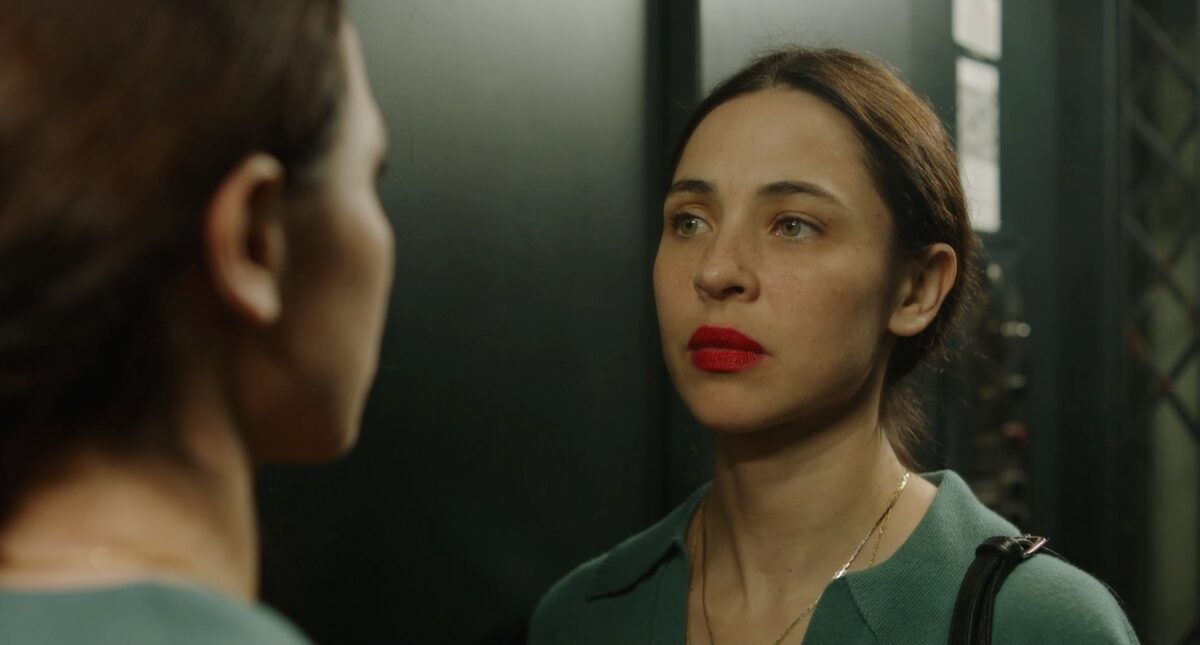
Writer-director Milagros Mumenthaler paints an intimate portrait of a woman trying to reckon with her fractured identity, trying not to fall into the grip of madness. Mumenthaler understands that motherhood requires an element of performance that reminds the mother that her life is no longer hers alone. Though the love for her daughter is still there inside, she cowers from it, preoccupied with inspecting the current shape of her life. In therapy, Lina expresses a fear of water’s power and the strength of a current that could wash her away. It’s as if she now knows the fragility of her existence, and that the confidence that once governed her was washed away when she jumped off the bridge. Despite the eccentricity of her fears, the emotions behind them are painfully relatable to any woman who feels that the inertia of her life has taken over. – Jourdain S. (full review)
Disclosure Day (Steven Spielberg)
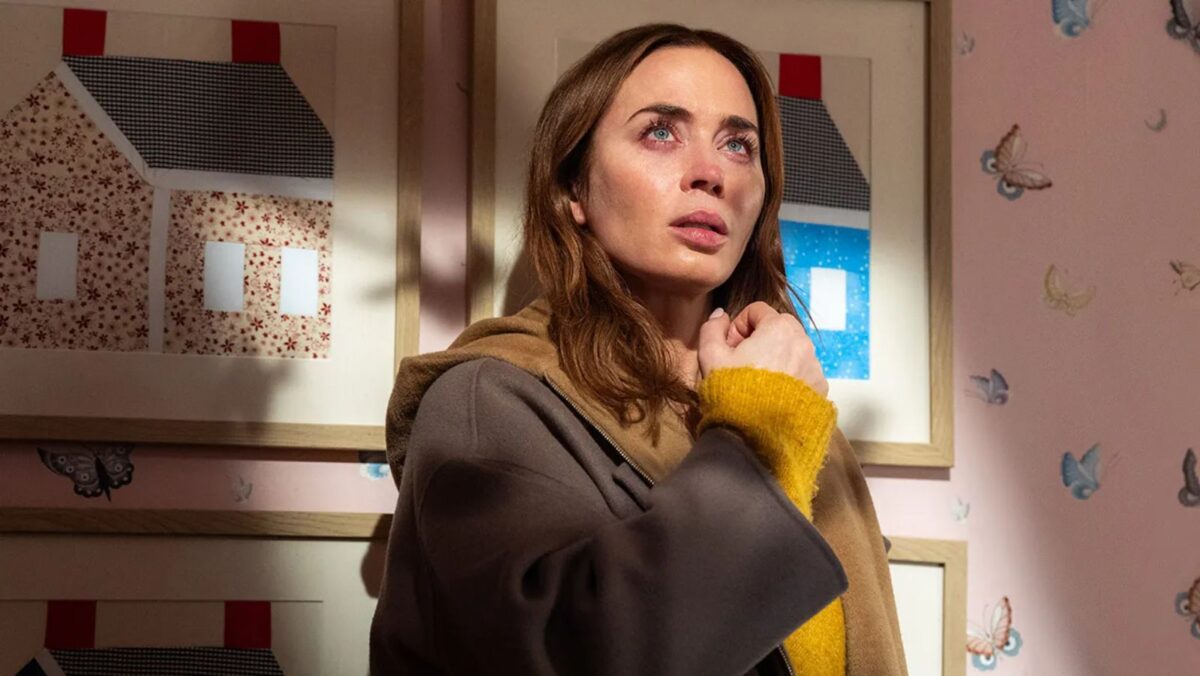
Certain beliefs unite all of humanity. Take, for example, the idea that the extraordinary is possible. Or, even more, that the impossible is possible. Steven Spielberg isn’t shy about believing in extraterrestrial life, and he doesn’t think you should be either. He’s so sincere about this aloof-yet-sky-high-stakes concept that he’s returning to it again with a very simple profundity in tow: “Empathy is the core of animate existence–our evolutionary advantage.” And he intends to remind us of our capacity for such. – Luke H. (full review)
Dry Leaf (Alexandre Koberidze)
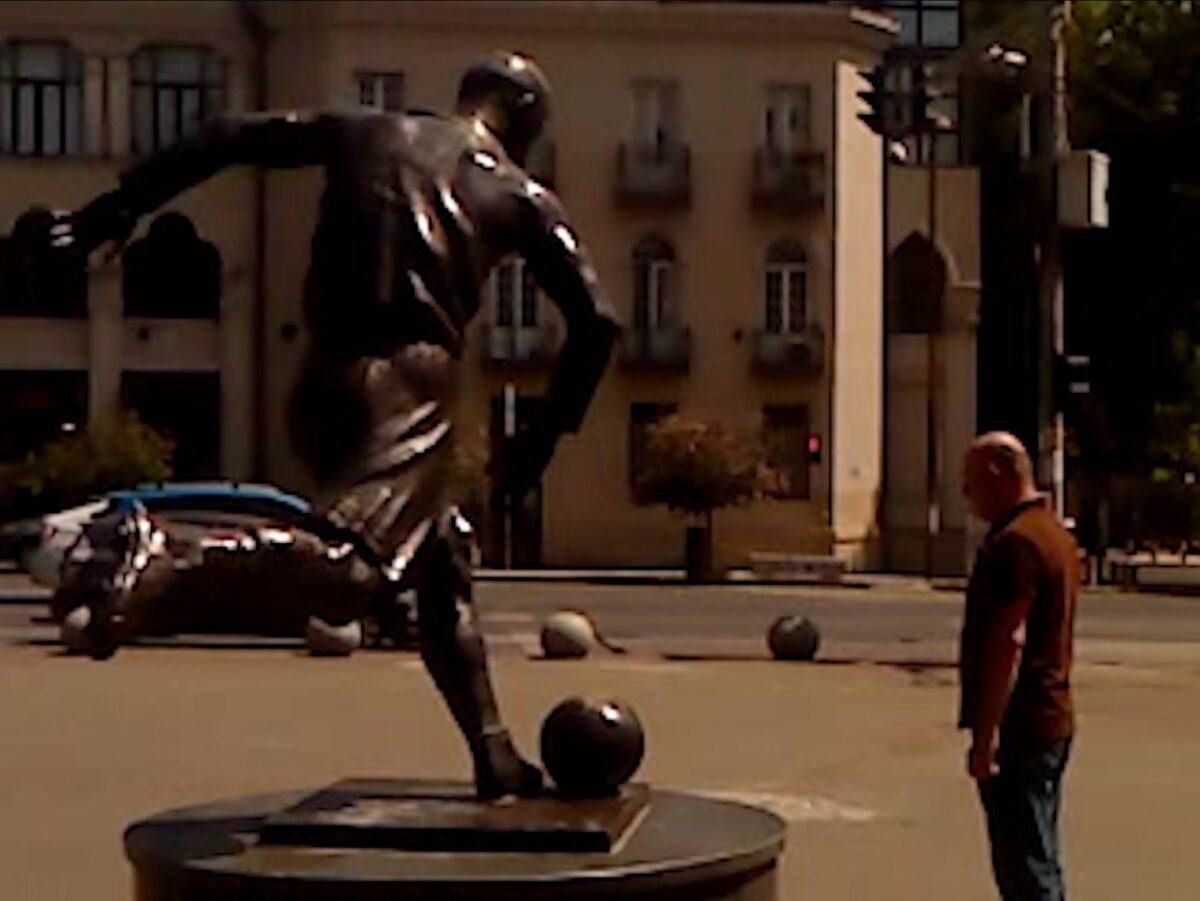
Languorous without becoming laborious, meditative without becoming meandering, abstract without becoming abstruse, Alexandre Koberidze’s Dry Leaf is a road movie unlike any other. It follows Irakli (David Koberidze), a father in search of his daughter, a sports photographer whose sudden disappearance is less of an enigma to solve than a vehicle for Koberidze’s imagination to serenely drift. Featuring Giorgi Koberidze’s charming, addictive score and shot on a Sony Ericsson, the fuzzy look of which transforms mundane landscapes into foreign-seeming textural images and hypnotic sequences, Dry Leaf, at 186 minutes, actively heightens our perception to its bucolic territory, its singular wavelength. It’s the kind of film where the destination is less important than the journey, where submission to its logic is more meaningful than a resistance, and where, like a vivid dream, its numinous sensations linger long after viewing. No matter the resolution, Koberidze has established himself as a modern enchanter. – Nirris N.
Drunken Noodles (Lucio Castro)
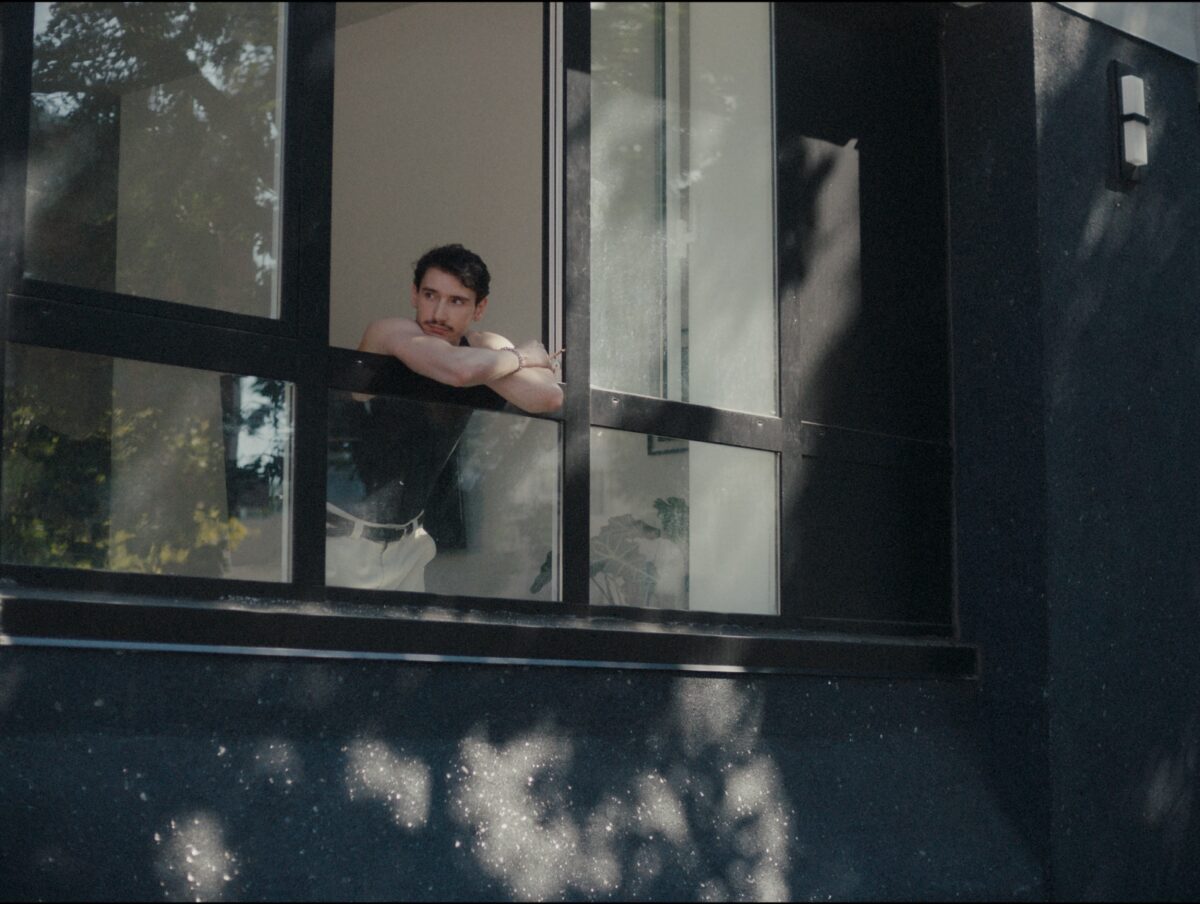
The laws of time and space are met with frisky ambivalence in Drunken Noodles, Lucio Castro’s anticipated third feature and surely the hottest title in this year’s ACID lineup. Most people familiar with the New York-based, Argentinian-born director first encountered him through End of the Century, a film of similar temporal disregard: set in Barcelona, it followed two men who seemed to fall in love only to realize it wasn’t their first encounter. Upon release in 2019, critics were divided over some of the film’s more adventurous flourishes––the sense of overreach. There are a handful of moments in Noodles that do something similar, but it’s an otherwise sultry and strangely calming film, 82 minutes of late-night hookups and late-season ennui that passes like a summer breeze. – Rory O. (full review)
EPiC: Elvis Presley in Concert (Baz Luhrmann)
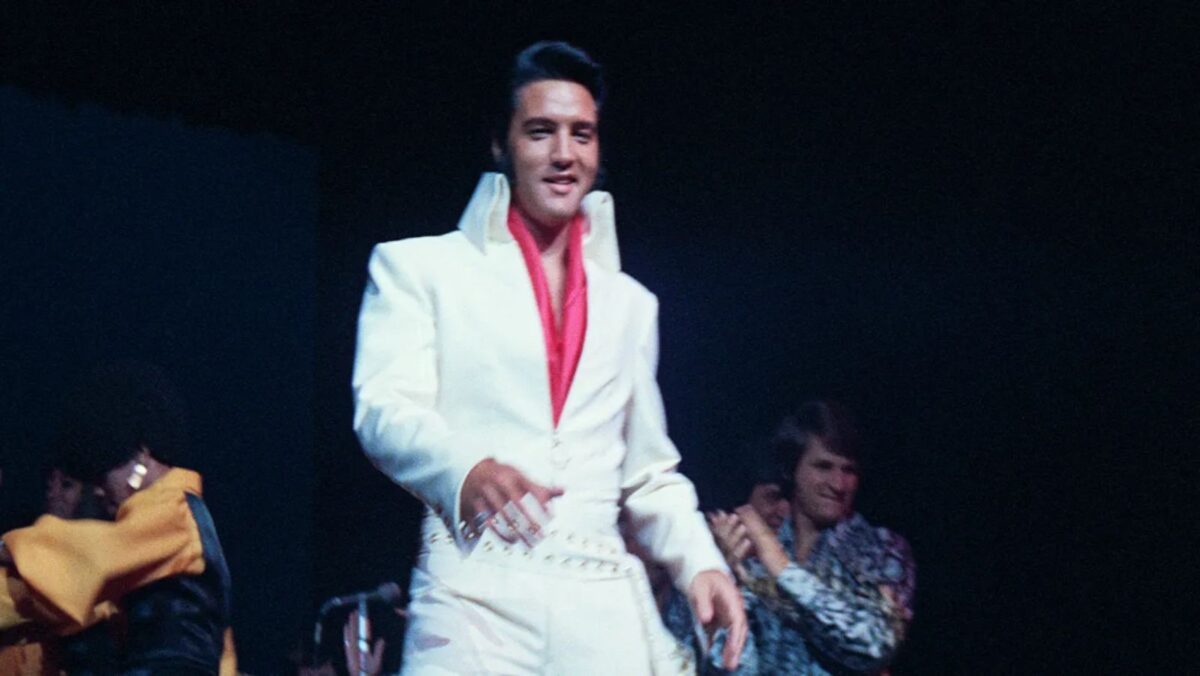
In a way, EPiC is the most naturalistic film Luhrmann’s ever made, unconventionally employing the traditional layout of a tell-all music doc. But that’s a misnomer under the singular, kinetic eye of the Moulin Rouge and Romeo + Juliet director, who brings a dazzling energy—as show-stopping in cinematic terms as The King’s concerts were in the musical—to the well-worn documentary style that electrifies the viewer into a state of ecstasy from start to finish. – Luke H. (full review)
Fiume o morte! (Igor Bezinović)
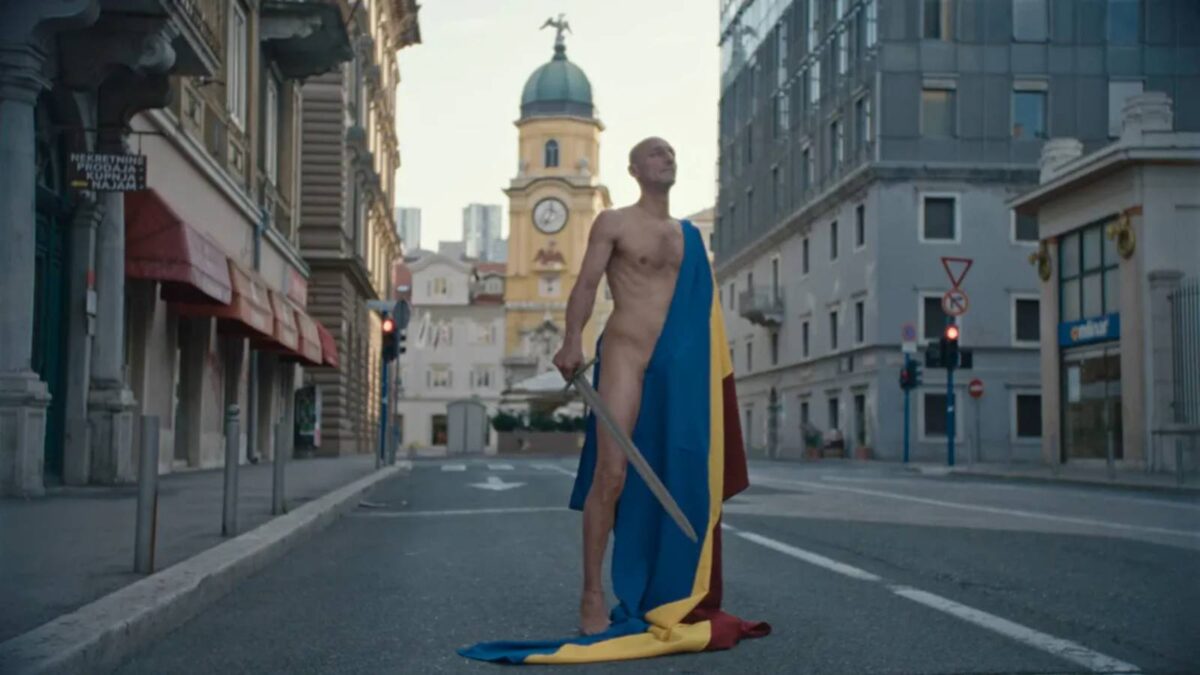
Learning about Gabriele D’Annunzio’s 16-month occupation of Fiume, a tale vividly retold in Igor Bezinović’s new, Tiger Award-winning documentary Fiume o Morte!, I spared a thought for Yukio Mishima. D’Annunzio’s life didn’t end so theatrically, but the two men––celebrated writers and hyper-nationalists with hubristic military dreams and similarly contested legacies––certainly shared a taste for the quixotic and chaotic. Was D’Annunzio a fascist colonizer, as those who still remember him in Fiume (now Rijeka, Croatia) claim, or was he the admirable dreamer as romantic as his poems? A century later, the jury’s still out. – Rory O. (full review)
The Furious (Kenji Tanigaki)
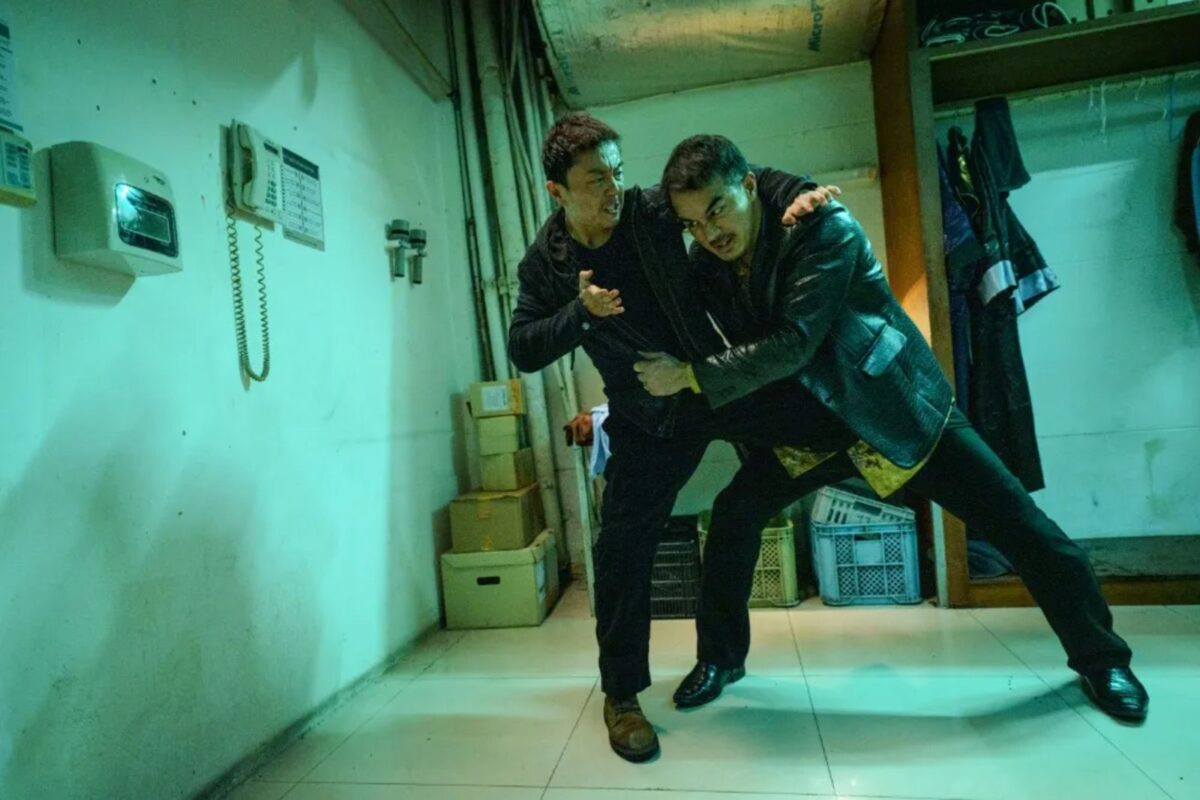
The Furious is the kind of totemic action picture that comes around only once or twice a generation. Its skeleton is a standard father-of-a-daughter revenge narrative. Its head, heart, and muscles are something else entirely, the action rendered with an acute sense of speed and ferocity. Director Kenji Tanigaki subverts rote beats and constantly invents new ways to celebrate bodies in bruising, bloody motion. The film’s climactic melee is such masterfully controlled chaos that the only alternative to hooting and hollering is stunned, wide-eyed amazement. – Conor O.
The Invite (Olivia Wilde)
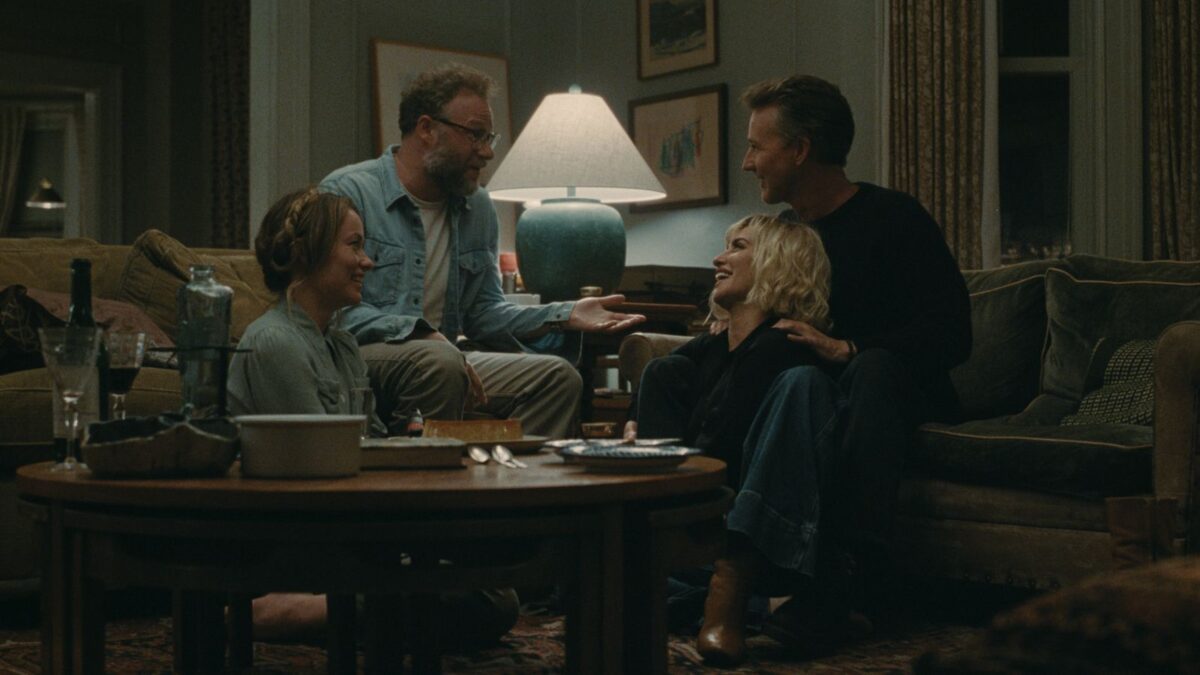
Small in scale, yet so much greater than the sum of its parts, Wilde conducts her quartet of players to an orchestral performance. She builds the dramatic tension of a relationship-turned-powder-keg from years of complacency and poor communication over staccato strings until it reaches its summit, only for it to drop and rise again. Employing just four principal actors, including herself, and a single apartment, it’s an impressive feat to pull off and a testament to her progression as actor-turned-director. – Kent M. W. (full review)
Is God Is (Aleshea Harris)
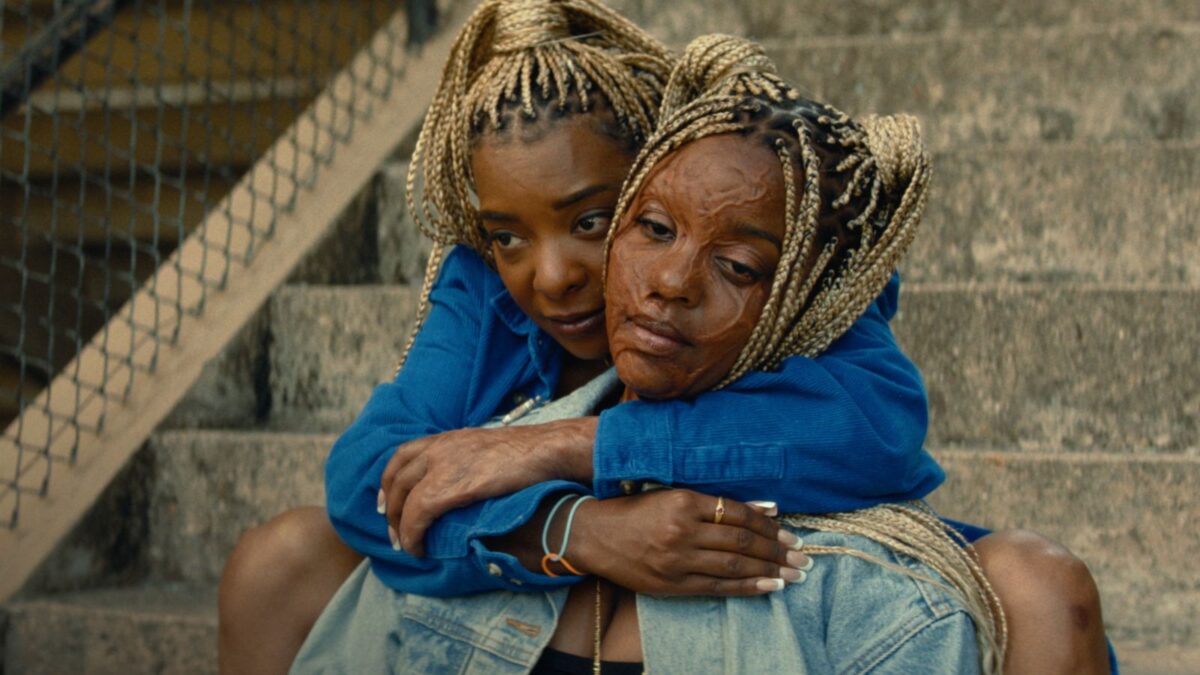
“Complicated” doesn’t begin to describe the family history that twin sisters Racine (Kara Young) and Anaia (Mallori Johnson) are facing in Is God Is, Aleshea Harris’ film adaptation of her acclaimed play. A directorial debut brimming with storytelling ingenuity and stylistic verve, the revenge tale follows the sisters on their path toward justice after their father left them and their mother for dead. While sometimes the theatrics at play can take away from the desired emotional connection, it’s quite an impressive first outing in the directorial chair for Harris, hopefully leading to more opportunities. – Jordan R.
The Last One for the Road (Francesco Sossai)
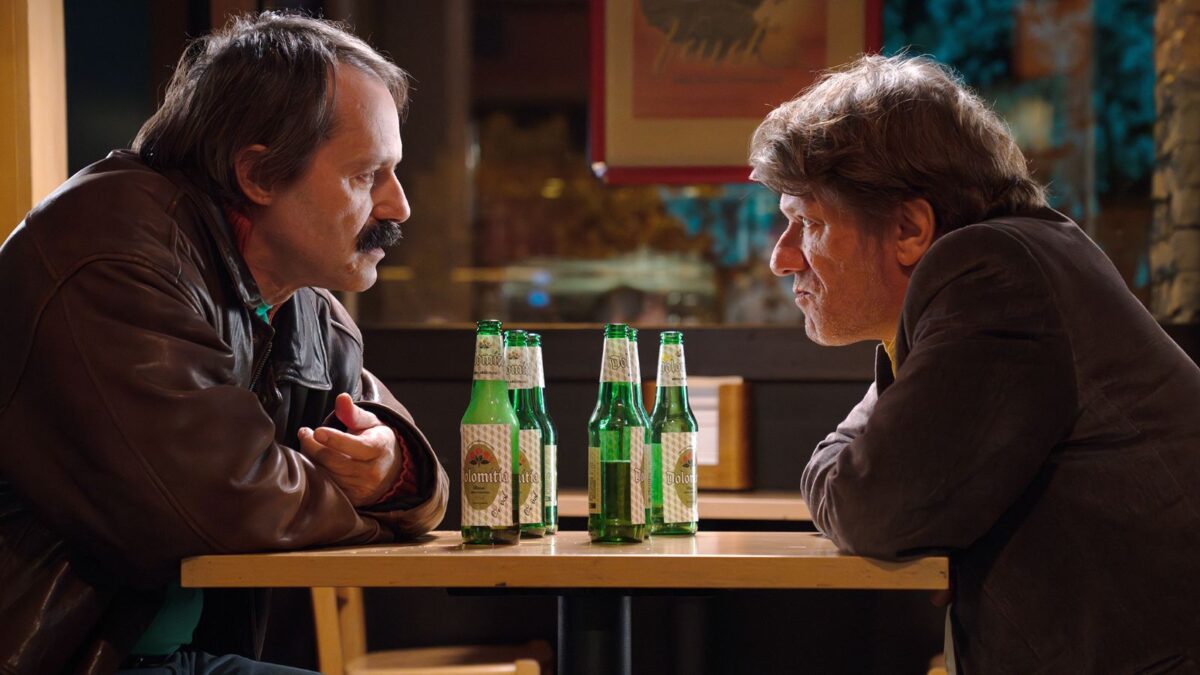
It doesn’t take long to work out where you are in The Last One for the Road––for the backroads of Veneto, Italy, Francesco Sossai’s delightful new movie has the unmistakable specificity of a life spent there. What you instead start to wonder is the when of it all. The protagonists are a pair of rogues in their 50s––one of whom, Doriano (Pierpaolo Capovilla), wears a shirt the color of a tobacco stain, the other, Carlobianchi (Sergio Romano), a style of bushy mustache I’ve rarely seen onscreen since Bruno Ganz sported a similar one in The American Friend. Only after stumbling into a group of Gen Z students––the most visible dressed in the headgear of an Egyptian goddess––late at night along a Venice canal do we realize that our heroes exist in the here and now. If it wasn’t for their innate knack for catching last orders, regardless of the watering hole, you’d almost call them men out of time. – Rory O. (full review)
Maddie’s Secret (John Early)
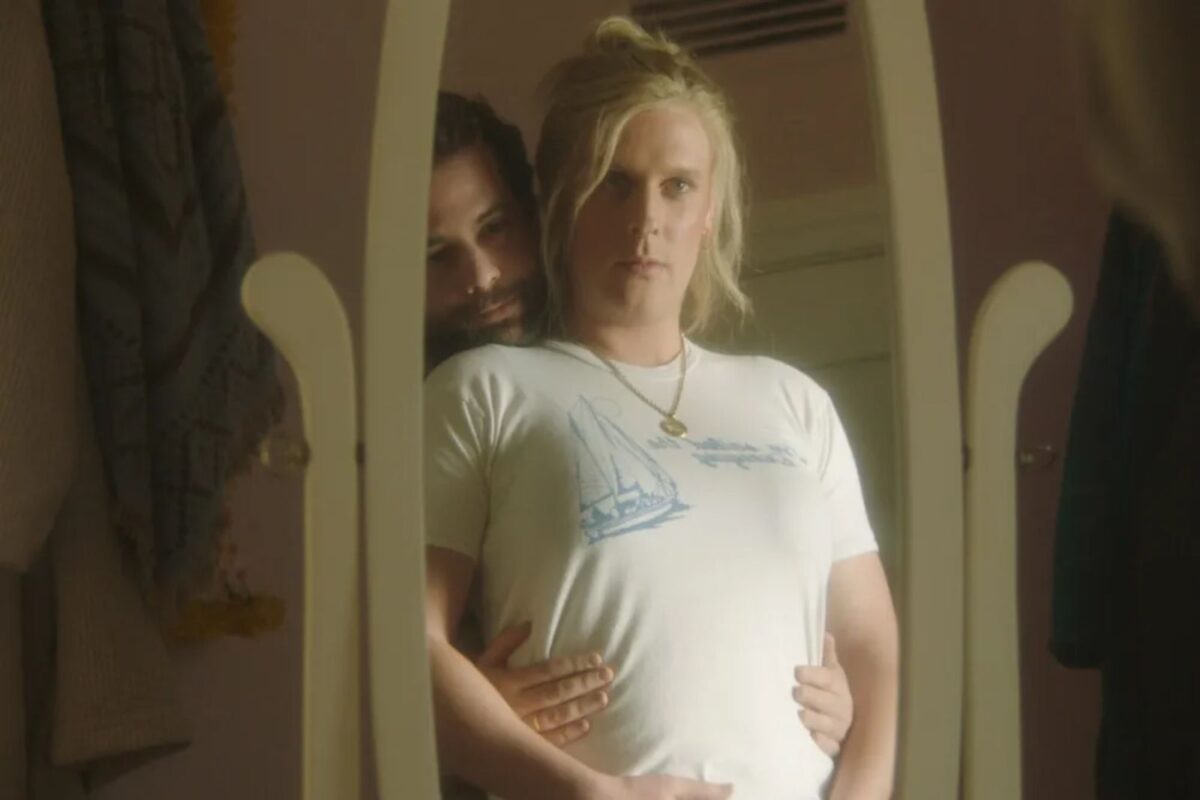
You can’t accuse John Early of not committing. Through the majority of his acting career, the comedian has become a reliable avatar for a palpable, toxic, hilarious narcissism, playing characters oblivious to the world outside the bubbles they’ve so thoroughly cultivated. That was particularly evident over four seasons of Search Party, as well as last year’s Stress Positions, a Sundance favorite that exposed the absurdity of living in quarantine over a masked summer. As an agoraphobic tenant in a Brooklyn brownstone, Early took the situation’s disaster and approached it through his very specific kind of self-assured, righteous mania to such an extent that his freak-outs are still rattling around in my brain. – Jake K-S. (full review)
Miroirs No. 3 (Christian Petzold)
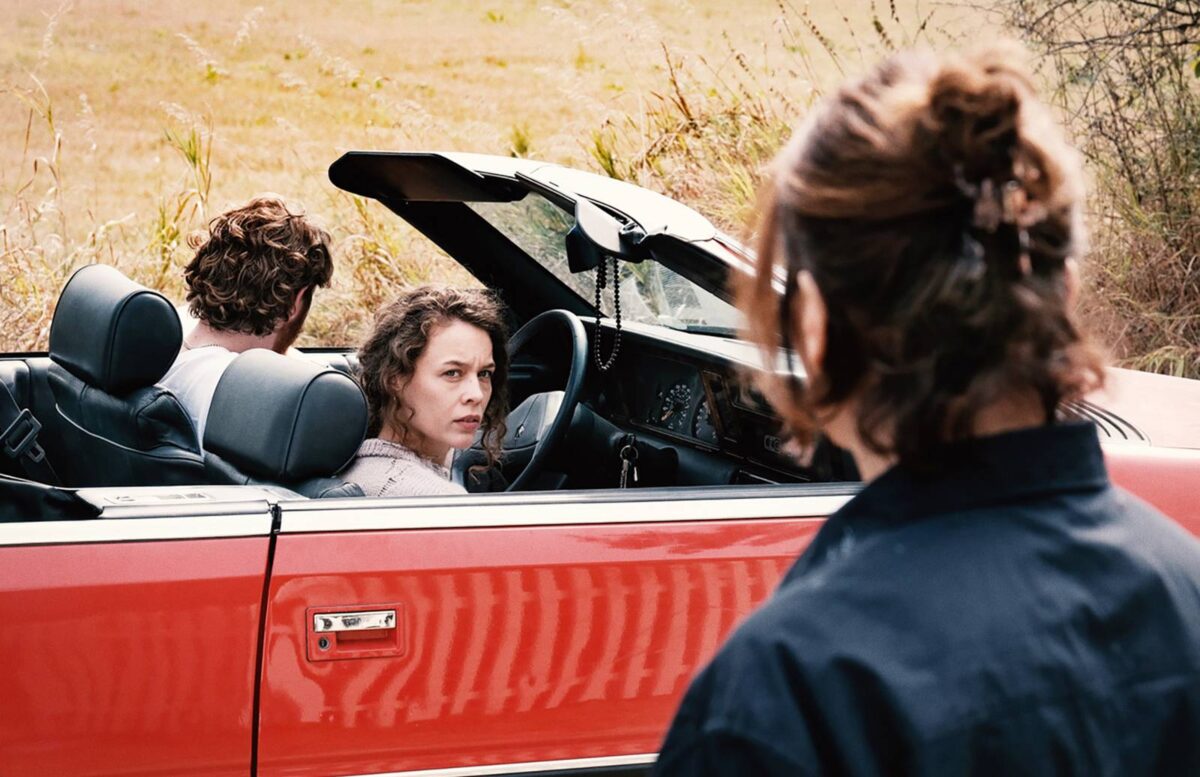
Christian Petzold’s fifteenth feature Miroirs No. 3 marks his fourth with Paula Beer, the actor-muse he first directed in 2018’s Transit, a film that shares significant themes with his newest––chiefly that of total strangers inexplicably recognizing each other and immediately feeling a deep, soulful bond with nary a word. Needless to say Miroirs No. 3 is, like the others, an enigma. –Luke H. (full review)
Nirvanna the Band the Show the Movie (Matt Johnson)
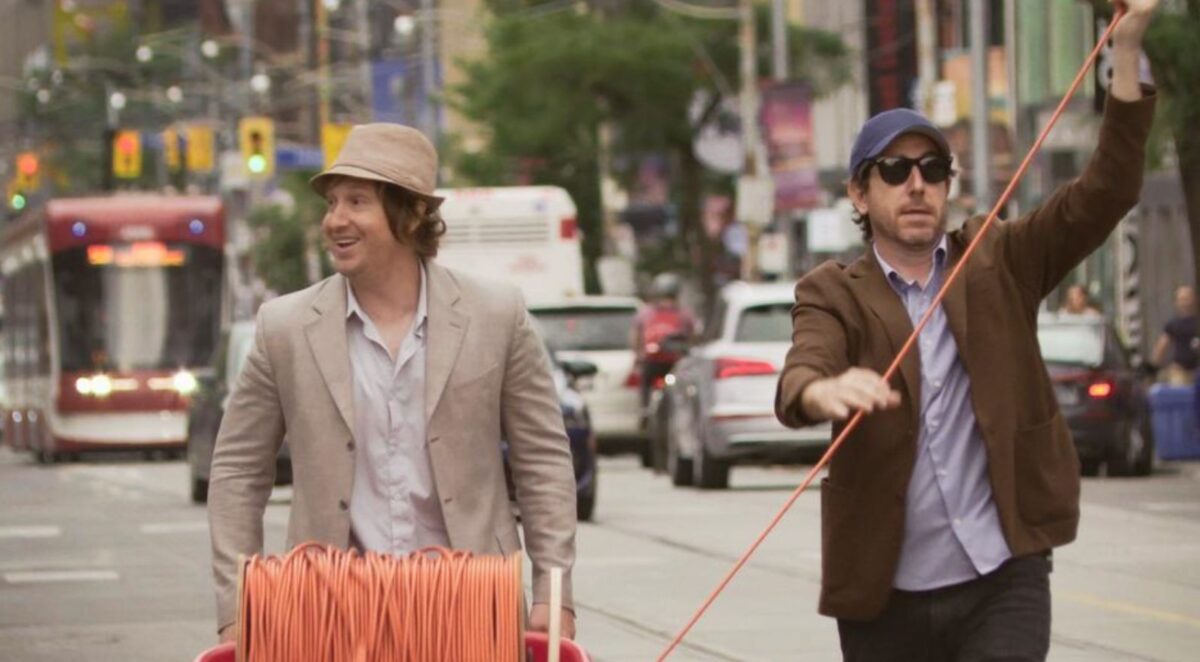
The funniest, most unpredictable, “no, seriously, how the fuck did they do that???” movie of the year is about two guys, an RV, and a dream to play the Rivoli. Matt Johnson and Jay McCarroll’s big screen take on their cult-classic web (and later cable) series is perfectly legible for newbies, throwing off enough gags across the spectrum that something will land, be it a particular movie seen in a theater to a stray comment from a passerby. As much a triumph of low-budget/mockumentary filmmaking as it is one of sheer audacity, it simply must be seen to be believed. – Devan S. (full review)
Our Land (Nuestra Tierra) (Lucrecia Martel)
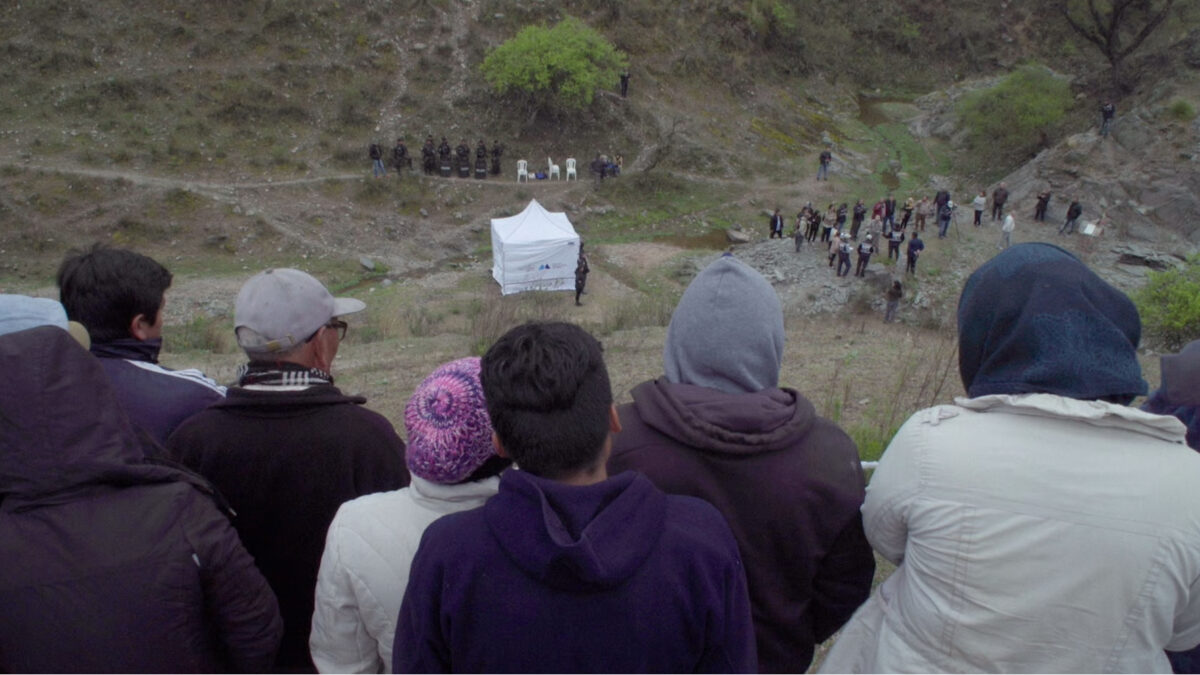
There is a direct and conscious through-line between Lucrecia Martel’s previous historical film Zama to her contemporary legal documentary Nuestra Tierra. We see the lives of indigenous communities in Argentina continue to be treated with little regard and a clear class and racial fissure exists in the nation. Martel films the court scenes and the footage of the disputed land as two battlegrounds spanning time. The murder of the Chuchagasta indigenous community leader Javie Chocobar at the hands of corrupt businessmen and bureaucrats reflects and mirrors the history of Argentina as, to this day, a disputed territory. While Martel’s cinema is known for its heavy use of metaphor, blending of fantasy and realism with impressionistic camerawork, this is a movie that pares everything down to cinema’s base elements, making crystal clear what is at stake. – Soham G.
Romería (Carla Simón)
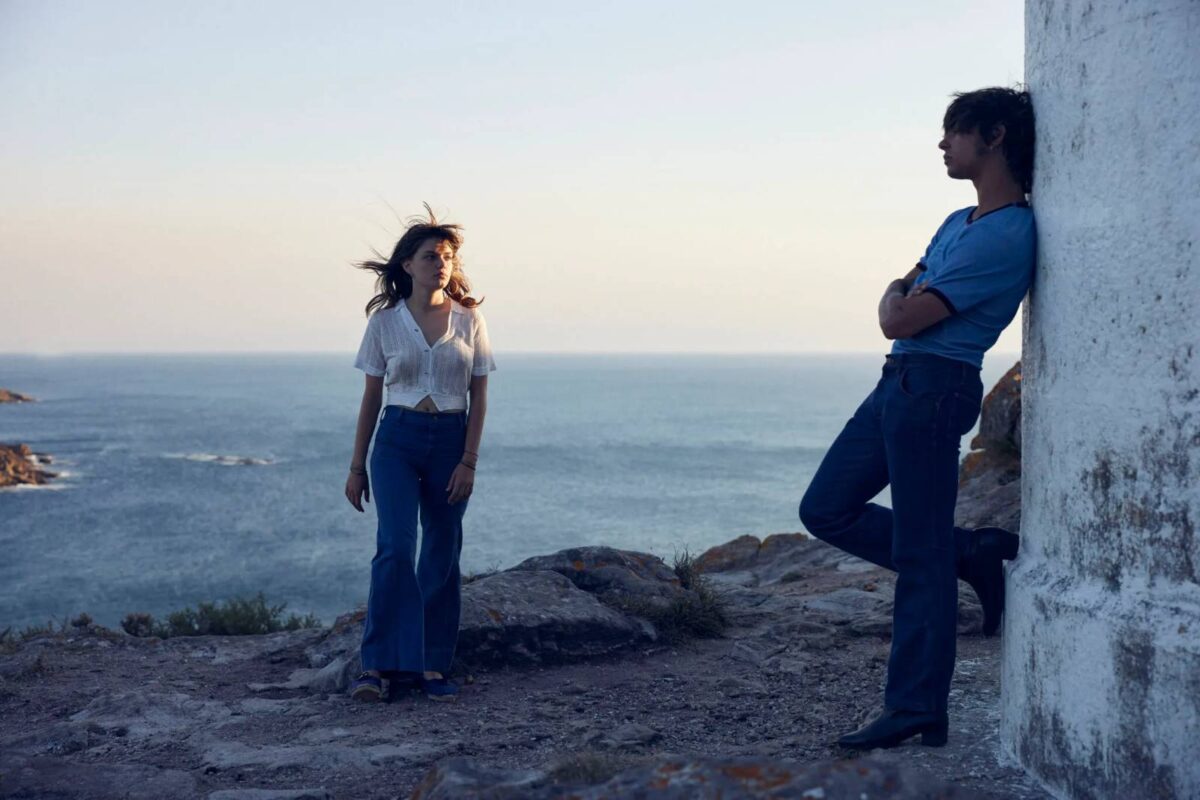
Continuing in the low-key register of her Golden Bear winner Alcarràs, Carla Simón returns with Romería, another tale of intergenerational dissonance. A film about the stories families choose to tell and the ones they bury deep inside, it unfurls on Spain’s Atlantic coast, where 18-year-old orphan Marina (Llúcia Garcia) hopes to reunite with her paternal family. It’s also a story about displacement and yearning for lost roots, themes that cut close to the bone for a director whose parents died of AIDS when she was still a child, and who reunited with her father’s family in the town of Vigo, Galicia, where the film is set, at the same age. Simón has always been an autobiographical filmmaker; Romería might be her most personal work yet. – Rory O. (full review)
Rose of Nevada (Mark Jenkin)
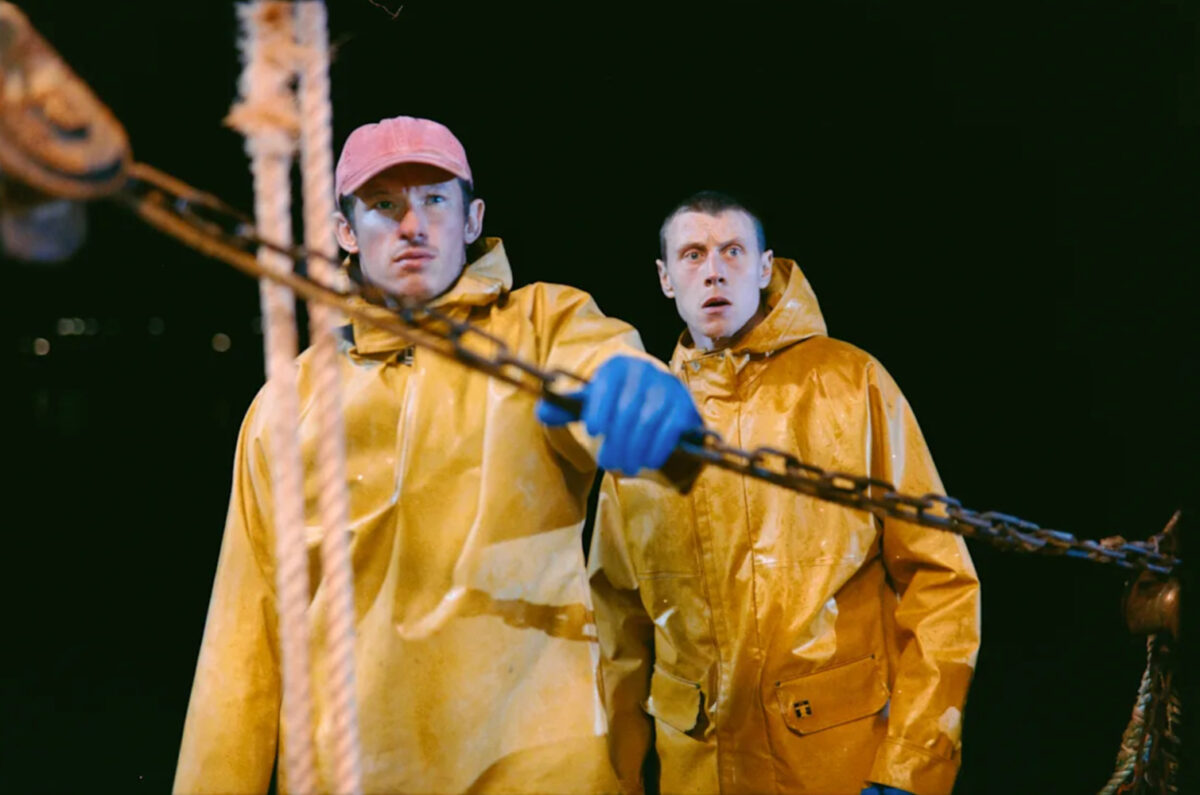
The films of Mark Jenkin ooze a hypnotic, seasick sensibility; to watch them is to be lulled by their restless jumps through time and space, their ability to convert his home turf of Cornwall into a suspended world where facts and visions collide in stupefying dioramas. The director is a spinner of wandering tales, never fueled by linear plots so much as ambient forces: a ticking clock, gusts of wind, the distant roaring of waves. His dramas tend to pull your gaze from people and toward the inanimate objects that litter their surroundings. It’s here––in the interstice between the fictional foreground and non-fictional background––that the actual story often lies. – Leonardo G. (full review)
Time and Water (Sara Dosa)
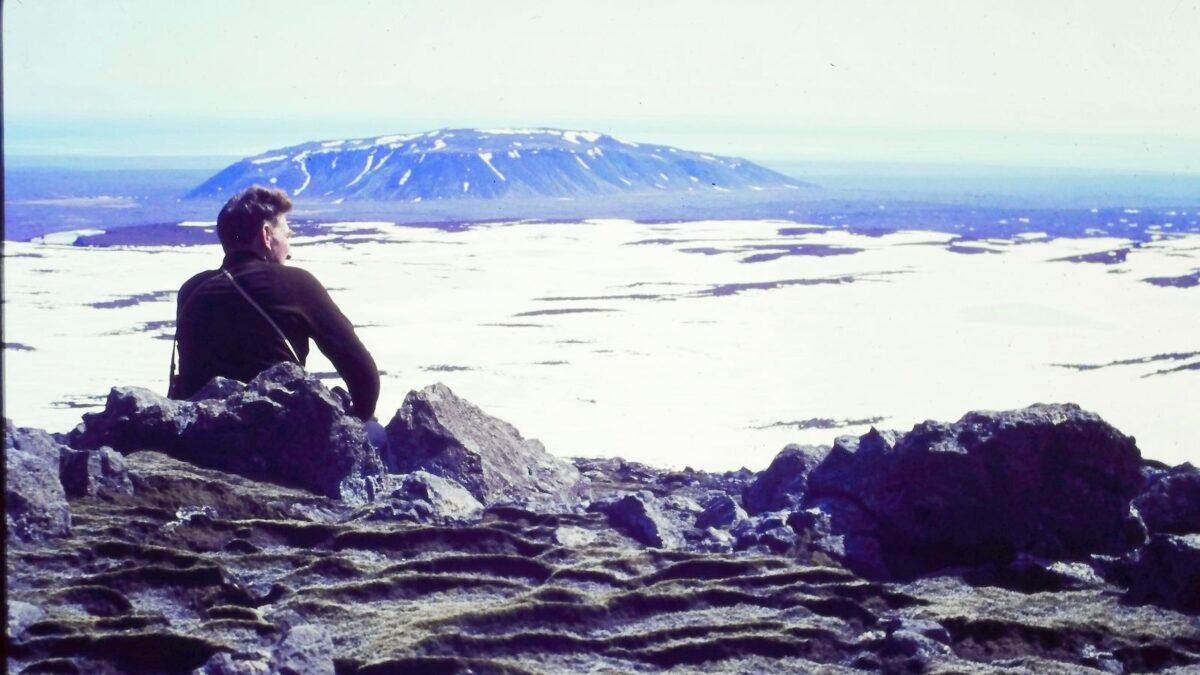
“Will your oceans be made of our glaciers?” Icelandic poet Andri Snær Magnason asks in the narration that plays over Time and Water, the beautiful new documentary from Fire of Love director Sara Dosa. Driven by Magnason’s family archives and some truly captivating footage of glaciers, it’s a melancholic ode to a world we are losing more and more of each day. Iceland is a nearly treeless country. It sits on tectonic plates that are pulling apart, resulting in an abundance of lava that prevents soil from getting to the depths needed for trees to grow in any quick way. There were once many trees, but the Vikings cut them all down for their ships and the like over a thousand years ago. It’s a place where some still believe in magic, which the breathtaking vistas make easy to understand why. – Dan M. (full review)
Two Pianos (Arnaud Desplechin)
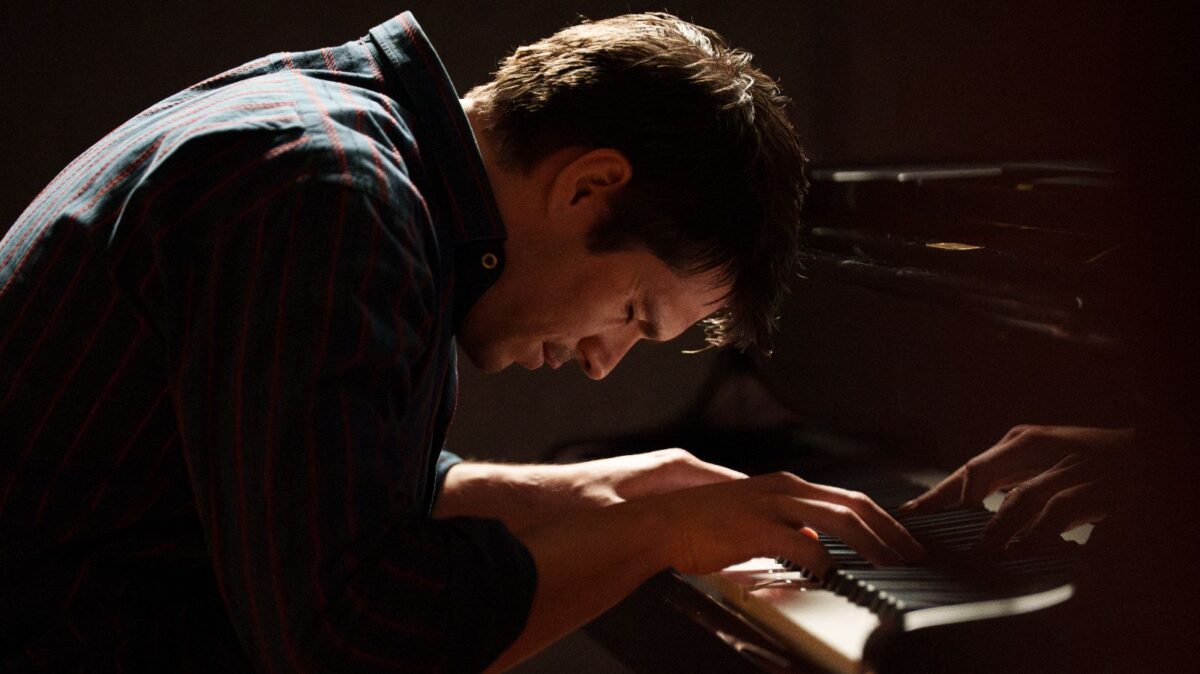
The past rears its not-so-ugly head in Two Pianos, Arnaud Desplechin’s latest film exploring the ways gorgeous people make an even bigger mess out of the messiness of life itself. Set amidst the world of classical music in Lyon, this tale of a tortured pianist’s reunion with his also-tortured first love contains the literary and melodramatic elements one normally expects from Desplechin, who––having not received a theatrical release since 2017’s Ismael’s Ghosts––has fallen out of favor in the U.S. Fortunately that’s not the case in his home country, where he’s maintained a prolific output that continues attracting some of France’s top actors. With Two Pianos he’s put together a rich, thoughtful look at how we can shape our lives around our biggest regrets. – C.J. P. (full review)
Two Seasons, Two Strangers (Sho Miyake)
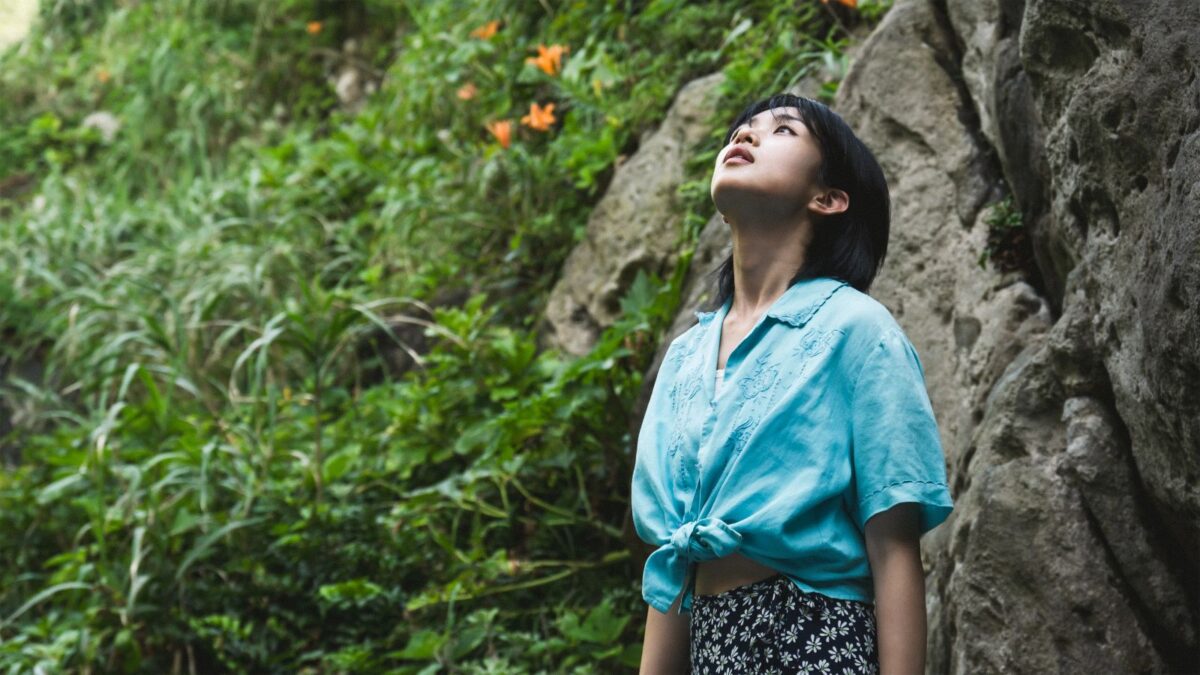
Two Seasons is the third in a wonderful recent run by Miyake, joining Small, Slow But Steady (2022) and All The Long Nights (2024). With each he has shown a remarkable ability for mixing porcelain-like levels of craft and detail with stories of comparatively messy human compassion––a cinematic mix that never fails to delight. Despite racking up some awards for those films, his work plays at the kind of modest register that often keeps filmmakers of his ilk relatively below-the-radar or, at the very least, just shy of name recognition. Winning the Leopard might be the push that elevates him to auteur status and perhaps (with respect to Locarno) the biggest of the big competitions, where I feel he belongs. – Rory O. (full review)
With Hasan to Gaza (Kamal Aljafari)
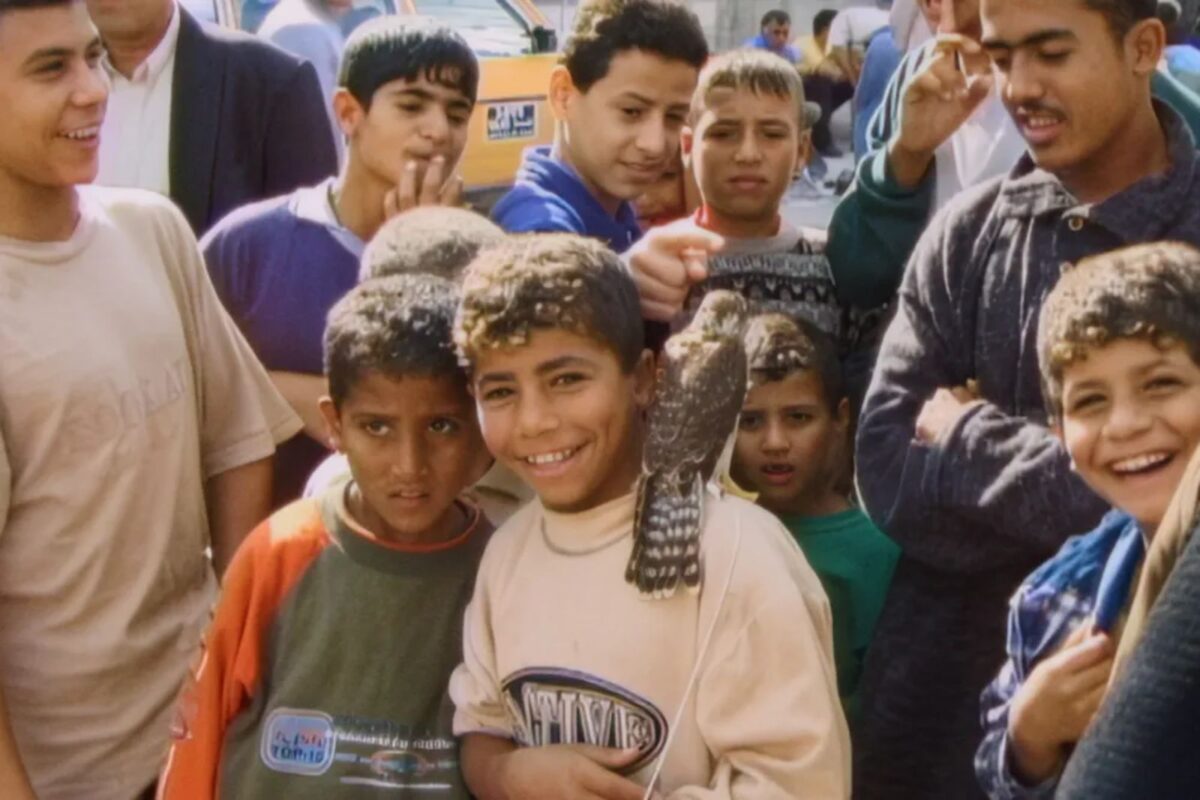
The new documentary With Hasan in Gaza––a poignant, meditative portrait of a city now fighting for its life––works as both a travelogue and time machine. In 2001, the filmmaker Kamal Aljafari journeyed to Palestine in the hopes of finding Adder Rahim, a friend he made while serving seven months in the juvenile section of Israel’s Naqab Desert prison when he was 17 years old. During filming, Aljafari met Hasan, a guide who agreed to drive him the length of the country, down its coastal strip, during which time the director documented what he saw: children playing, rows of cars and buildings, bustling city streets. – Rory O. (full review)
Yes (Nadav Lapid)
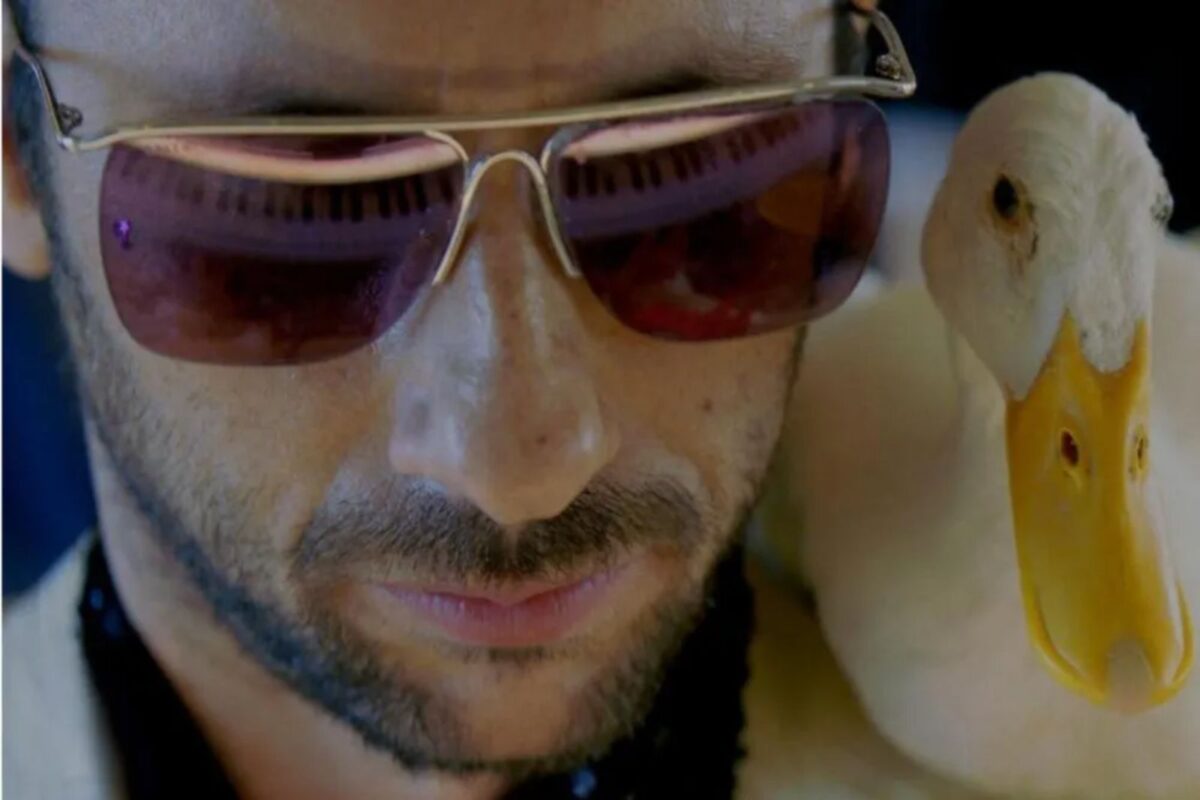
Tel Aviv native, defector, and auteur Nadav Lapid opens his fifth feature in a catastrophic state of carouse. A filmmaker known for his employment of trademark dance sequences, Lapid is back with an equally visceral but uncharacteristically clubby groove in Yes, a work whose sarcastically enthusiastic title points to the relentless ridicule and hometown mockery that defines it. – Luke H. (full review)
Honorable Mentions
- Amrum
- Backrooms
- The Blue Trail
- Bouchra
- Carolina Caroline
- The Christophers
- The Death of Robin Hood
- The Drama
- Dreams
- Forastera
- Good Luck, Have Fun, Don’t Die
- I Am Frankelda
- I Love Boosters
- John Lilly and the Earth Coincidence Control Office
- Kontinental ’25
- Leviticus
- The Misconceived
- Mother Mary
- Obsession
- Renoir
- Revelations of Divine Love
- Seeds
- Send Help
- Silent Friend
- The Stranger
- Tuner
- Two Prosecutors
- Two Women
- A Useful Ghost
- What Does That Nature Say to You
- The Wizard of the Kremlin