
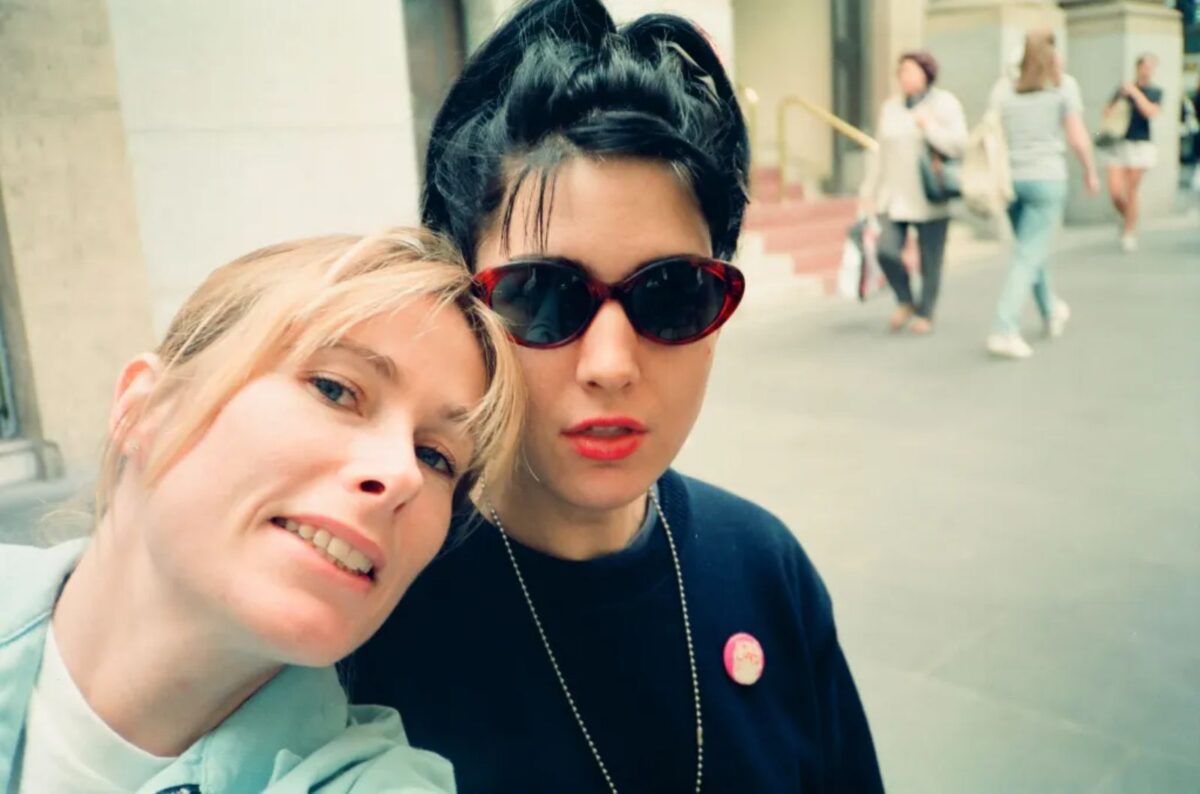
The opening titles ofThe Best Summer give us the only context we need: following the shoot of Billy Madison in 1995, director Tamra Davis took a camcorder and joined then-husband (and Beastie Boy) Mike D as the band toured Australia alongside Sonic Youth, Pavement, Bikini Kill, Beck, Foo Fighters, and others as part of the fondly remembered (and recently musealized) Summersault festival, followed by a handful of MTV-affiliated shows in Southeast Asia with a smaller crop of the Summersault lineup (the film ends with its most electric material, showing Jakarta teens moshing furiously to Sonic Youth’s “100%” and Beasties’ “Sabotage”). The footage that made up The Best Summer was never supposed to be a movie—as Davis tells us, she gave it nary a thought in the intervening years—but after discovering the tapes while evacuating her home during the 2025 Palisades fire, she saw some trapped-in-amber magic in the blown-out, slightly ghostly Hi-8 footage that comprises the film, not least its warts-and-all, forensic documentation of ‘90s affect from all the players involved (ideal double feature pairing: Michael Almereyda’s At Sundance) and the enduring appeal of great live performances captured in a slightly sub-optimal sound quality from the best possible vantage point.
The Best Summer premiered at Sundance in January this year, and Davis was in attendance for the film’s Australian homecoming-of-sorts at the 2026 Sydney Film Festival in early June, where I met up with visiting filmmaker Gabe Klinger—there to present his lithe, melancholic São Paulo-set sommelier character study Isabel (2026)—who was giddy at the prospect of interviewing Davis, an exciting albeit oft-overlooked subject. I’d befriended Gabe at SFF 2014 after interviewing him for his fine documentary Double Play: Richard Linklater and James Benning (2013)—itself a great conversation piece between filmmakers—and tagged along at his behest, mostly to keep the conversation The Best Summer-related, which wasn’t really necessary.
With Davis herself being such a generous interviewee and fascinating nexus point of alt/pop culture from the ‘80s onward, Klinger’s hunch paid off, and the hour-long ensuing conversation legitimately earned the obligatory “wide-ranging” descriptor: watching Fellini direct and learning from Francis Ford Coppola on set, the emergence of women directors in ‘80s and ‘90s Hollywood, accidentally inventing a music-video counter-style, mentoring Spike Jonze, helping Sandler, Chappelle and Chris Rock hone their comic personae, and giving Britney Spears an identity crisis—all this and more, not to mention eight feature films under her belt before she had turned 35. As it turns out, Davis has a book on the horizon about her unheralded and unprecedented Hollywood career, for which Gabe and I hope the following conversation provides a tantalizing teaser.
Gabe Klinger: We thought we could do a career-spanning thing. And as much as you wanted to talk about how you got the movie bug, working at Zoetrope or observing at Zoetrope, your memories of Coppola and being there for when he shot One from the Heart (1981), which is one of my favorite movies.
I know, amazing.
Gabe: And so maybe we could start a bit before Zoetrope. I know you kind of come from that world, but was there a specific movie or experience that made you get the movie bug, or was it actually just One from the Heart that did it?
I grew up in Hollywood, so that surrounded me. Hollywood, movies, and I thought it was a company town and that’s what you do. But also it was that girls usually were just actresses. In the beginning, I thought that was what I was going to be—I went to acting classes and studied and did commercials and all that—and then I was observing other directors, and I went to Rome with an agent, and I got to meet Fellini and I got to sit next to him. It was amazing.
Gabe: How old were you when you met Fellini?
I think I was 18 or 19. I was a kid…
Gabe: And had you seen his films?
Yeah, I knew his films, but not so much. It was more that I was going there as an American actress to act, and my agent was bringing me around to meet with different directors. And when I met Fellini, I asked if I could sit and watch him, so he invited me to the studio, and I went back every day and watched him direct.
Gabe: Do you remember which film it was?
It was on City of Women (1980).
Gabe: So you got to meet Mastroianni too?
Yeah, I don’t really remember that as much. I remember Fellini more, who was such a big character.
Gabe: What an introduction to watching a film set. You went to the top.
Yeah, it was crazy. I was such a young kid… I really feel like you have so much ambition and you feel like you could do anything. And so I was like, “I could do that.” And I had met Nastassja Kinski when she was working on One from the Heart. So when I was back in Los Angeles, I went by to visit the set, and Francis had a program where they were letting high school kids from across the street watch the making of the film. I snuck in on that and I pretended I was a high school kid. [Laughs] Because I looked like a high school kid.
Gabe: Like Cameron Crowe researching his Fast Times at Ridgemont High (1982) script.
Undercover, yeah. And so I got to go on the set all the time, and Francis was the one who told me if I really wanted to direct I should go to film school. So then I went to film school.
Ian Barr: You went from music videos to features. Did you see that pipeline, at the time, as a way to circumvent maybe some of the barriers that women directors faced?
No, I wish. No, it was that when I got out of film school, I was like, “Here’s my film, I’m going to try to get this film made,” and it was Guncrazy (1992). I had a package when I went out to present it, and I was basically laughed at because nobody was interested in hiring a 21-year-old girl. But on that reel, I had a music video that I made myself with film school equipment, like handheld Super 8, and I got a meeting with the record company and they were like, “How did you do this? Can you do this for this band?” And I was like, “Yeah.”
And so all of a sudden I became a music video director. So it wasn’t, “Oh, I should try this.” It was more that I had a new unique style. It was this shaky, handheld, kind of grainy look. And at the time, music videos were super slick-looking—Van Halen or Whitesnake or Billy Joel—and it didn’t have that same kind of edgy, kind of punk-rock look. So I just started working. It was because I had a style, and they didn’t care that I was a girl. It was just that I had a cool style.
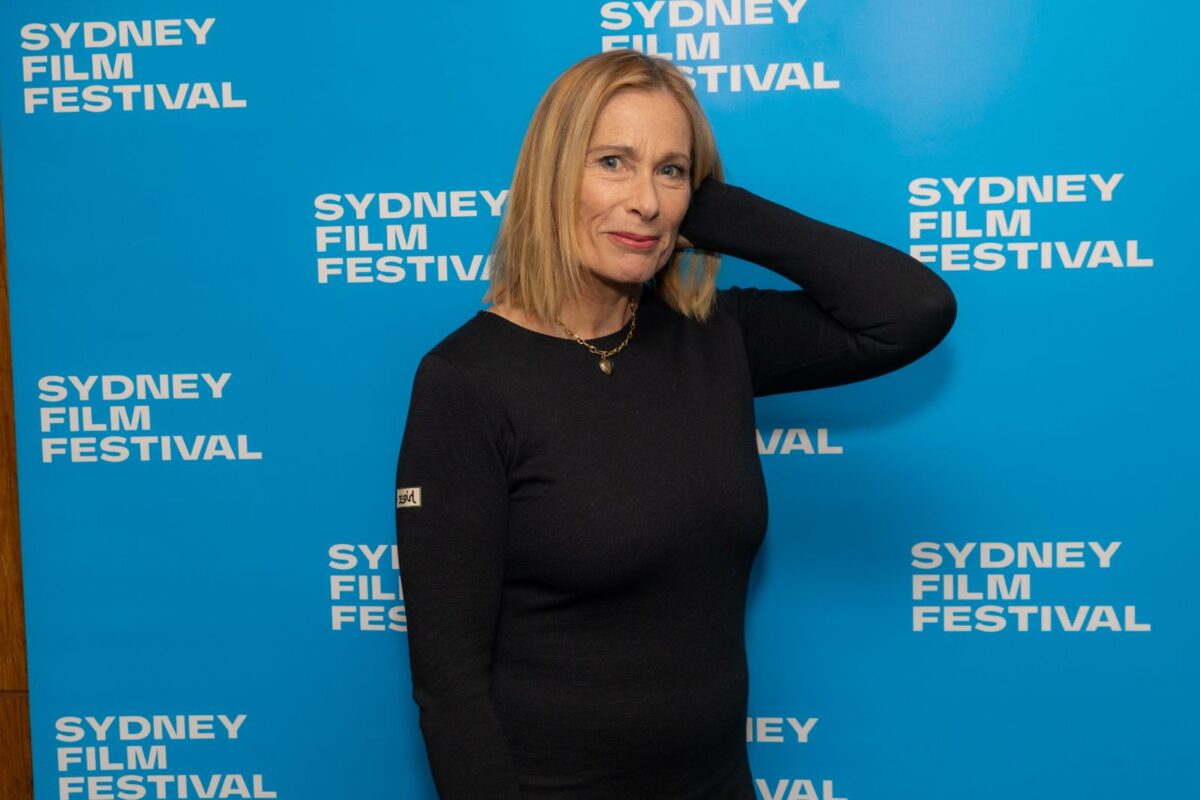
Tamra Davis at the 2026 Sydney Film Festival. Photo by Tim Levy.
Gabe: I wanted to backtrack just for a second. On that One from the Heart set… you know, such a legendary set.
It was amazing.
Gabe: Do you remember Jean-Luc Godard being there? Or Kurosawa, or any of those directors that Francis Coppola was courting and helping at the time?
I don’t remember them being there. I remember I became close with his son Gio, and Gio and I would just hang around and sneak around and watch everything. And what was really unusual about that film is he shot it in sequence. Nobody had ever done anything like that. He had all the sets built, and he would do scene one or scene two: he went in sequence. So that was just really amazing to watch: “Oh, we’re doing the next scene, it’s over on that soundstage.” So that was really different. Also, how he directed it, I’m sure everyone knows, but he had a silver Airstream trailer and he had the first feeds coming in from his cameras. And so he would sit in the trailer with the camera feeds, and if he was to give a note, his voice would come booming down on the soundstage. But if he had a private note, the actor would go over to a little set phone and he could talk to them.
Gabe: Wow.
It was a situation where I took the thing that might have been my weakness—that I was a girl—and I used it as my advantage to just be like, “Oh, he doesn’t mind that there’s like some little blonde girl sitting next to him.” And mostly I saw that people who worked on crews were very wonderful with their time; they loved to teach young people. If you’re interested, you could just pull up an apple box and the DP will talk to you, or the soundman will talk to you, and as long as you don’t annoy them—if you sit there quietly—people love to share their craft. I just found that it was an incredible experience.
Gabe: And when you saw the finished movie, did it surprise you?
Yeah, it was just stunning. I mean, it’s such a beautiful film and all the stuff that he did—like those in-camera techniques and the camera going through walls or shims that he would light in different ways—it’s really so beautiful. The miniatures he used; it was such an incredible craft film. And it was one of those things where you realize there’s no way you could really continue to make movies this way. It’s just not practical.
Gabe: Sounds like that was your film school.
For sure. I mean, yeah, I was lucky that I did. I got to sit on a lot of sets of some of the masters, and kind of just observe, and I was taking notes… nobody really realized that I was really paying attention.
Gabe: You’re finding these mechanisms in a very male-dominated industry and starting to be really clever about how you’re going to position yourself. So maybe you could talk a bit more about that: how those instincts started to kick in.
I grew up in Hollywood so I knew the story. And that’s one of the reasons why I decided I didn’t want to be an actress—because I just felt like, “This is crazy.” It didn’t seem like my odds were really good. Like, I’d have to sleep with this producer and he’d give me a part? How long would I have to sleep with this guy to get the part? I just felt like this doesn’t really work. It’s not in your control. You’re just being seen as this whatever. When I got close to the [male filmmakers], I didn’t really feel like they were that much smarter than me. I mean, of course they were, but in my brain I was like, “I don’t understand what they have that I don’t.” So I just thought, “I want to do this.”
Even though, at the time, there really weren’t any girls [directing] that I could be like, “Oh, I want to be just like her.” I think the only woman filmmaker that I had any connection to was Penelope Spheeris, because she had made The Decline of Western Civilization (1981) and I was in the punk scene a bit. But she was mean. She was not, like, a nice person. [It] wasn’t like you could be a young girl coming up to her and go like, “Hi, I want to be a filmmaker.” She was hardcore… she wasn’t Coppola. But she also wasn’t like me. I want to help young women out. I really want to be there to be a support system for young filmmakers or any female filmmakers. But no. She was like, “Stay away.” That’s how it felt. And then all the other women, there was, like, Nora Ephron or Elaine May… women that I had no connection to. They seemed like old ladies to me.
Ian: What about Amy Heckerling?
Kind of, but that was later on. Clueless (1995) came a little bit later on. But even so, Amy Heckerling, if you look at her, she looks like a woman. She didn’t look like a girl. I was, like, a 20-year-old girl.
Gabe: I guess Penny Marshall, too.
Penny Marshall’s a woman. Yeah, they’re like these 30-to-40-year-old women.
Ian: All these names, these are the first names that I saw where a “Directed by” was next to a woman’s name. Because when I started paying attention to the director’s name on the credits, I would have been around 12 or 13—around the same time that I was obsessed with these ‘90s comedies. What was going on behind the scenes there?
What I kept thinking is, “If I had my name on that, that would inspire other young women.” So that if they could see that a girl directed it, that that could help inspire girls as well. And I feel like in that time, that was a genre that they let women in. It was kind of like the low-hanging fruit, where these comedies—because they were fairly low-budget—it was a genre that for some reason they let women in. And so that’s why a Betty Thomas and Amy [Heckerling]… it really was the one genre they let you in. But it was the same thing that I found in music videos: I would do music videos and then somehow I would hit the wall and they wouldn’t let me do, like, rock bands. And I’d be like, “Why can’t I do those bands?” I’m always trying to fight against, “Why not? Why can’t I?”
Gabe: Maybe we could start getting into how you got into the feature space. Do you think we could jump there?
Ian: Gabe and I were just talking before, wondering in a broad way, “What does directing comedy look like?”
Gabe: Yeah, how did you approach that in terms of just the sheer craft of it? You had these three movies in the ‘90s starring sort-of-untested properties: Adam Sandler, Chris Rock, and Dave Chappelle. Maybe we could start with those comedies.
Well, first I did Guncrazy, a film I initially got rejected from making. And then I got Guncrazy back about seven or eight years later after I’d done a hundred music videos, really proved myself as a director, learned what I could do in a day. I’d made short films; I’d entered them in festivals. So I really kept trying to convince people to give me money to make a feature. Finally I got Guncrazy back and I made it, and that starred Drew Barrymore who was blacklisted: she was kind of on the D-list. And I believed in her and brought her back and we made this film together and it was a critical success. From there I got CB4 (1993), which was Chris Rock’s movie.
My grandfather was a very big comedy writer. I knew jokes… Milton Berle was really my uncle, so I had a flavor for comedy in Hollywood in the early days. And yeah, my grandfather [Stan Davis], his partner was Slappy White, and he wrote for Reagan, he wrote for Presidents. And when I was doing music videos, I worked with Chris Rock. I did a video for him, I did a PSA with him, and I did a lot of rap videos. So when [CB4] came up, Chris put me up for it
But then I had to convince the Universal people. I came in with a really good pitch, and I think that’s the key to being a filmmaker: you try to make, whoever you’re pitching the movie for, make [it feel like] everything you’ve done in your career has led you to this moment. So thank God I was able to do that pitch, and I convinced Sean Daniels and Brian Grazer, who were the producers, that they could hire me to do that film. So we did CB4 first and that was a real big success.
Gabe: That poster was everywhere when I was a kid. I had the soundtrack.
Ian: And Judgment Night (1993).
Gabe: Judgment Night and CB4. Those are the two 13-year-old kid soundtracks for us, our generation. [Laughs]
The movie did well and Chris and I had the best time. Then Universal brought me to New York to meet with Adam Sandler because they were like, “We want you to do what you did with Chris to Adam. Make him a star.” So I met with Adam and we got along really well, but he went with somebody else. He hired his friend. And then I had started work on a feature film called Bad Girls (1994), which was a female Western. Then I got fired from that movie for horrible [reasons]. So I went home and I was like, “Oh, my god, I can’t believe I’m fired.” I made a short documentary film called No Alternative Girls (1994) because I’m like, “Hollywood can’t tell me I’m not a director.”
Gabe: So the firing on the movie that Jonathan Kaplan was hired for—what were the reasons?
It was super patriarchal. They took it from me. Their only excuse was they said I was making a feminist Western, and I said, “What would be so bad about that?” It wasn’t like it flopped and then they shut it down. They poured more money into it, hired a man, and rewrote the story. They didn’t have faith in my vision of the film, so they fired me and my female DP and replaced us. Yeah.
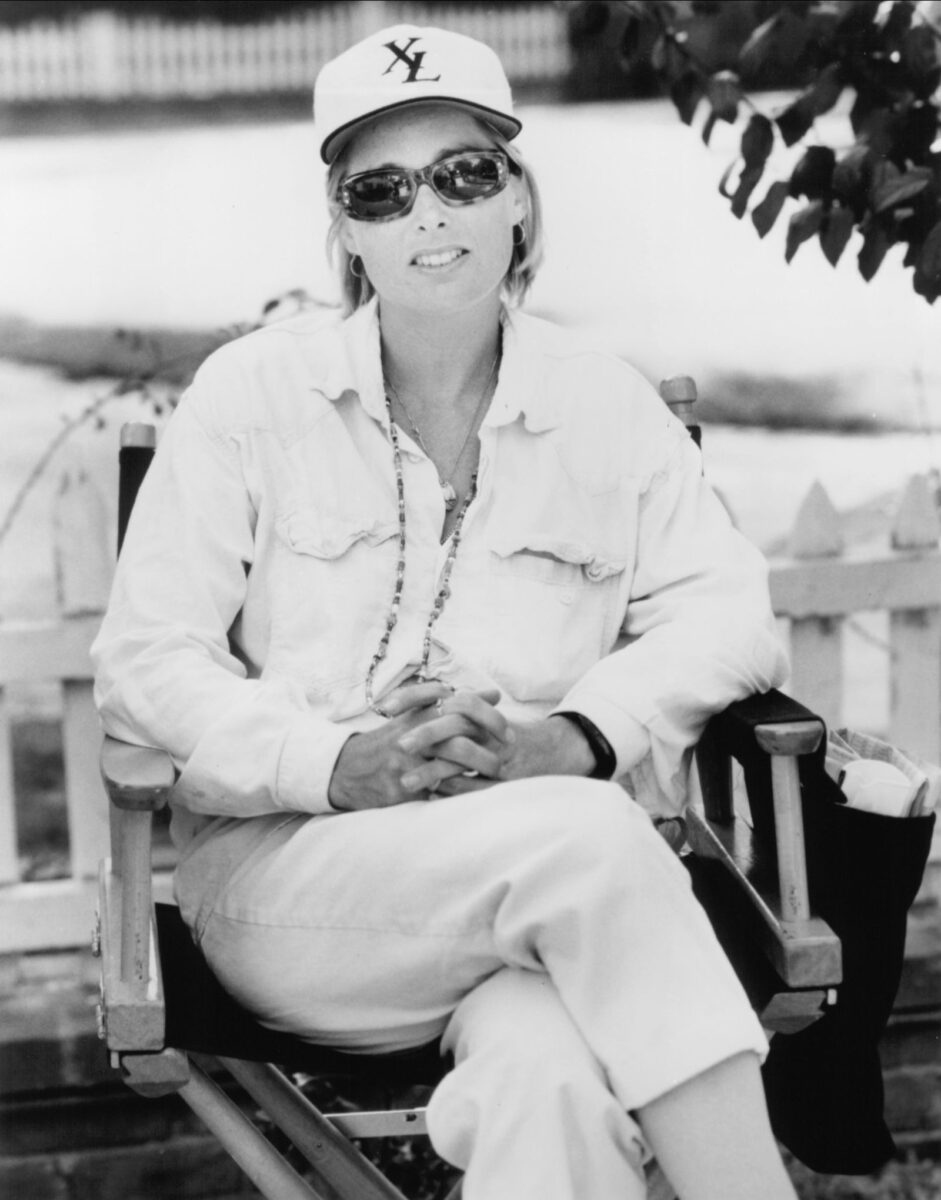
Gabe: Who was your DP?
Lisa Rinzler, who was amazing. So then I went back home and cried. But they had to pay me, so I was rich, but I was crying. [Laughs] And then Universal called me and they had just fired their director on Billy Madison: they’d started on Monday, they shot ‘til Wednesday, fired the director, I flew up on Thursday with the president of Universal and I started shooting Monday. Adam Sandler knew this was really important for him; this was his big chance. And then also for myself, I was like, “Oh, my god, I’ve got to pull this up.” I’ve got to be like: “I can’t be the fired director. I have to be the person who replaces the fired director.”
Gabe: Did you feel embraced showing up to that set?
Yeah, because I just felt the more Adam and I connected, the more we could work as a team to pull ourselves through this. I was with him 24/7—him and Tim Herlihy—and [I] just really tried to get myself into his form of humor and what this film was, and turn the mood around on the set. And again: use the thing that would be my weakness, of being a girl. But that’s why [Adam] became a comedian, the same way a rock star becomes [a rock star]; they want to make girls laugh. Just sitting on the side of the set laughing at him, encouraging him… we just had the best time together making that film.
Gabe: You can tell that. That’s a palpably joyful movie to watch. Great combination of chemistry of actors, too.
Oh, God, it was crazy. Yeah, but it was also so funny because I wasn’t involved in the casting of it [and they were written as younger characters]. I really just showed up like, “Who are these people?” I get to the set and I’m like, “Wait a minute, these are your two friends? They’re like 40 years old or something.” I did not see that coming. And so I just had to be like, “Okay…” The same thing with the cleaning lady. I was like, “Wait, that’s the maid?” because I’d read the script and I was imagining it was some hot cleaning lady or something. That’s the thing: you just jump in and you have to trust the artist and support them and enable them and be like, “How can I create this world to let you create your comedy in?”
Gabe: Billy Madison was a huge hit. Did that kind of give you the keys to the palace for a while or was it more gradual?
Not at all. It did well at the box office, but it was critically slammed. I loved Adam. I thought he was just amazing and hilarious and also his audience loved him. And then it just felt so rude for all these older men to just be like, “Oh, it’s dumb humor,” or whatever; they just said mean things about Adam and they didn’t get it. So we all just really bonded and it was like, “Fuck those guys.” That’s kind of when Adam stopped doing press… I think he did press for that movie and everybody attacked him and turned against him and then he’s just like, “I’m never talking to the press again.”
Ian: I never felt more out of touch with adults as a young movie fan than reading older critics on comedies.
Yeah, it just was like, “You guys don’t get it.” It’s like how when I grew up, if your parents liked your music, you didn’t have good music, you know? So we took the punk rock attitude of, “Fuck those guys. They don’t know what we’re onto.” And that’s all you can go on.
Gabe: I mean, they all have egg on their face now, right? So going from helping Adam Sandler sculpt his persona to helping Dave Chappelle sculpt his persona in something that was… stoner comedies were still kind of… I mean, we had Cheech and Chong before…
Yeah, yeah. We were huge Cheech and Chong fans. But it was unusual to do a stoner comedy. Maybe Friday (1995)…
Gabe: But also Friday is such a specific social milieu.
Oh, yeah.
Gabe: So Half Baked opens it up.
It was diverse. So on that one, it was the same producer of Billy Madison, Bob Simonds. He sent me the script and he’s like, “Hey, I’ve got this new comedian and I think that you guys would really get along. It’s him and his writing partner, Neal Brennan. They’re 23 years old. They wrote this great script…” I read the first scene and I called him up. I’m like, “Oh, my God, Bob, I’m in.” That scene was crazy, with the kids getting high in the parking lot at 7-Eleven. And so I went in and met Dave and Neal, and I just fell in love with them. I thought they were hilarious. And there was only, like, one clip I could see of Dave online—it was in an Eddie Murphy movie [The Nutty Professor (1996)]. But hanging out with him, that’s just the thing… you have to just believe they’re the funniest person ever, because you devote a year of your life to them and you have to really believe they’re funny, you know? From prep all the way to post, you love hanging out with that person and you believe in them and think they’re funny.
Gabe: And so for you, it’s just about getting to know these people, really being their friend in that way and creating a confidant and then just kind of letting them do their thing on set?
Yeah, yeah. I’m very technical and planned, and so I would have everything planned and organized so that they could just come on and do their act. Everything is on-schedule, on-time, and so that they walk in and there’s no stress, try to create a perfect atmosphere. It’s like herding cats, for sure… but you have to be able to have that flexibility so that if there’s something funny going on, you don’t want to be like, “Oh, we can’t do that, we have to move on.” I was always working like a football thing of, “Okay, if we do this move, then we can do this move.” To make sure that creativity happened always on set as well.
Gabe: For me, the date that he goes on in the film…
Oh, my God, we had so much fun. With the money…
Gabe: …where he steals from the homeless man– the numbers adding up. I’ve been on dates where I’ve been broke and I’m like, “How am I going to pull this off?” You have to maybe know a bartender or somebody who’s going to serve you a free drink just so you can make the money stand out.
Ian: I mean, “fuck you, fuck you, you’re cool, fuck you…”
Oh, my God, that was all-time. [Laughs] There’s so many of [those lines] from all those movies that has transferred into our dialogue. But yeah: that was Neal Brennan who did that scene, the writer. He’s so funny, and to see that he does stand-up now is really great. He’s so, so funny.
Gabe: So from Half Baked to, I mean, there’s a lot of music videos still going on in that time.
A few, but not as many. Once I started to do features, I really kind of stopped doing music videos, but also a lot of my features had music videos in them. In Half Baked, there’s a few music videos. Billy Madison has big musical numbers, so I was able to kind of keep my hand in that. But yeah: I wasn’t doing as many, like, real music videos.
Gabe: I guess that maybe preps you up for something like Crossroads (2002) with Britney Spears in a star vehicle loosely about her life. And that was a moment where a lot of those music stars were doing those crossover movies, right? Eminem did 8 Mile (2002)…
Ian: Glitter (2001).
But some of those were, like, the reason not to do it. So when the script first came in for me, my agents were like, “Don’t do it, don’t do it.” I turned it down. Ann Carli, who I knew from music videos, she was Brit’s handler—she worked really closely with Britney—and she was like, “Well, I really think you should just meet with her. Talk to her and see what you think.” And she’s like, “Yeah, she’s in Vegas. Will you go meet her?” I said, “Hell yeah.” Like: I want to meet Britney Spears! I’m not going to turn that down. So I went and met with Britney in Vegas… at 10 a.m. in her beautiful suite, and she opened the door and she’s like, [affecting Britney’s Southern drawl] “Man, I was hammered last night.” And I was like, “What? You’re Britney Spears?!” I was like, “Who are you?”
And we just immediately bonded, and I spent the whole day with her and we had so much fun and I was like, “Making a movie is so different than what you’re doing. We have to stop all this, go into rehearsals– will you do rehearsals with me?” And she was just like, “This is what I want to do. I really want to change my image, this means a lot to me.” She had hired the writer to get the script written, and she hired the young Shonda Rhimes. It was her first feature script. So Shonda wrote it and I just really believed in [Britney].
First I saw that she was like a boss at that time—she was running the whole show, she controlled everything around her. I felt how I felt with Drew [Barrymore] when I first met her: I could collaborate with you and we’d be strong together as a pair, and I’ll protect you and we can really work together. And so I just had that similar relationship with Brit. Just really close and… it was interesting to see because I just kept thinking, like, the more I knew her, then I could get that Britney on set—because I didn’t want her to “act.” You know, her acting—that would have been bad. So I was like, “At least if I could get her to be Britney on screen, then that would be authentic.”
And so I worked really hard to get her to that place. It was interesting, later in her book, she [talked about] how it really messed her up, what I was doing with her. [Laughs] But yeah, because I was really trying to get her into, like, the “method” in a way, or just be in the character and not her person. And she said afterwards she didn’t know who she was, that it really messed with her head a bit. But, in the end, that happens all the time with actors—you get yourself immersed in a role and it’s hard to differentiate between who you are and who the character is.
Gabe: What was the reception of that movie like?
Paramount and Sherry Lansing made me test it—I don’t even know how many times. Like, seven times or something? In the end, we got a 98% with our audience—like, an unheard-of score—because I was battling with her… when the studio asks you to do changes, I’d always be like, “Can I screen it? Can we test it? Make sure that’s what the audience [wants].”
We got the movie we wanted to make and not what the studio notes [dictated]. So we knew that the girls loved it. And then when the movie came out, again it was totally slammed by critics. It was heartbreaking that they tore her apart like that. And it just also made me so sad at how young artists who are vulnerable show their art—they make the thing that they love and then critics attack them. And they’re attacking, like, 20-year-olds.
You’re attacking young people who are young artists doing their first things, and that was something that really upset me on a personal level. I saw it happen with Kurt Cobain, you know? So I was just like, “What the fuck? Like, why do you do this to people’s vulnerable art when they’re so young, and what do you get out of this?” Attacking them like this. And it’s not what the audience thought. Listen to the young girls. What did they think of it? Not a 40-year-old guy trying to win points with his editor.
Gabe: Maybe it’s resentment because it gets into big money, and people are jealous…
Yeah, who knows? But why take down young talent. It just was upsetting. But I felt very vindicated when Britney brought the film back out recently when her book came out. She was the one that wouldn’t do press, but she called and got the film re-released. And I ended up having to do her press.
Gabe: How was it to revisit that?
It was… well, it was sad and it was good and bad. For one, I was so happy that the film got out again.
Gabe: Such a sweet film.
It’s a beautiful film. It’s really sweet. It’s like… it’s a girly movie, you know? And it’s like critics went back and said, “We were wrong, this was a really sweet movie.” So that felt [like] vindication. But it was also sad because, I mean, if you read Britney’s book, you see what happened to her, and she’s not the person I know anymore. And even though Shonda and I were like, “Britney, we’ll be there with you, we want to do ‘Crossroads 2,’” it’s… you know, they messed her up.
Gabe: It seems to me the moment that you start to transition into episodic TV work. Is that specifically having to do with that reception to Crossroads, or did you just kind of see it as an opportunity to pivot at that moment and stay active and be able to flex your muscles on set and be happy? Sorry, I know it might be a very personal question.
No, no, I wrote a book, it comes out in Spring 2027. So a lot of these stories are all in the book in way more detail, but yes… I was, at the time, in my mid-30s when I made Crossroads and I was married to Mike for quite a few years already and I wanted to have a baby. I was like, “If I don’t have a baby now, I’m going to miss my window,” and I really thought, “Okay, I’ve spent all this time on my career, I should focus on having a kid.”
Gabe: And how many features had you made at that point? Like, eight?
Probably like, eight? Oh, my God.
Gabe: A female director in Hollywood with eight features under her belt at 35 is unheard-of! It’s crazy.
So yeah, I had my first baby, Davis. After I was like, “Okay, I want to get back to work,” and I was about to do another Bob Simonds movie and I found out I was pregnant again. I was like, “Oh, my God, I’m just locked in the mommy world, I’m stuck in here for a while,” which I loved and I was like, “I spent all this time on my career. I could focus on being a mom for a while.” But I still didn’t want to only identify as a mom. I was still a filmmaker and I also did my cooking show, called Tamra Davis Cooking Show (2009 -). It was one of the first YouTube shows. I became, you know, viral. I was one of those Internet mommy bloggers and I was like, “Whoa, maybe that’s my career… I’m going to be an Internet person.” Then I started to work in television, because I realized that schedule, I could do it with two babies. It was a shorter schedule. Shooting a TV show only takes five days or six, seven, eight. It’s very short.
I also had such a passion for television at the time, because when you’re a new mom you can’t go out anymore, you’re stuck at home, and so TV had a profound impact on my life. Those shows just saved me at the end of a night: put the kids to sleep, take a bath, have a glass of wine, and watch Downton Abbey or Lost.
So yeah: I just really had an understanding of how much that meant to the home viewer that can’t get out to watch a movie, and there was so much new talent on television. It was respectable and cool. It was this battle between network and cable coming on. So the same way I got in on MTV, I got in on TV in the early days when it was really booming and when they would let women in and let girls in.
The Best Summer
Ian: Let’s segue into The Best Summer. In all these years, had you thought about the footage that you’d shot right after making Billy Madison? Was it a blast from the past?
I never, never thought of it. I had no intention of making that a movie. I’d done [music] videos for those bands, so \ those were my friends. I was still really good friends with Kim Gordon and Kathleen [Hanna], and so when I went on the road with Mike, one, it was because if you have a husband in a band, you either are at home all the time or you go on the road. So I went on the road with him I brought my camera and I was like, “I’m going to film.”
I have so much footage of the Beastie Boys from the first moment I was with him. I met him, I was a director—I wasn’t a girlfriend. I was, like, a well-known video director, and when I first met them, I think I made the early EPK for Paul’s Boutique, I made Netty’s Girl. I don’t even know if Mike and I were together during Netty’s Girl. And then when Mike and I started dating, I [didn’t] want to be the woman in the bar… it just was: the friction was weird, being creatively involved. And I had worked with this kid who was a young skateboard cameraman on [the video for Sonic Youth’s] 100% called Spike Jonze. And I said, “I’m going to co-direct with you, train you, because I think you could work with them.”
Gabe: So you were the Coppola to Spike Jonze? [Laughs]
Yes. I wish, yeah. I worked with Spike and just thought he was such a brilliant young kid as well… that was just such an amazing collaboration between him and [Beastie Boys].
Ian: When I first heard about The Best Summer, I naturally thought the next best thing to watching the doc would be to go to YouTube and watch some janky old footage from the festival. But there’s barely any footage of the Summersault festival.
Gabe: No phones.
Ian: Did you notice anything different in the energy and the audience or the management of the festival? Do you remember it being significantly different to other American music festivals?
No, I feel like you’re in your own little bubble in that world. So no, not really. It was more we were just, like, all these amazing friends together who were so bonded, and it was like summer camp for your friends. I didn’t know any of the business part or any of how it ran. All the bands stayed in the same hotel. It wasn’t like, “You’re in Bikini Kill, the lesser band, you’re going to stay in the crummy hotel.” We all stayed in the same hotels. So it was really like this incredible camaraderie.
Gabe: It’s so interesting that there were things that happened in that very dense ‘90s/early 2000s period that are now coming back and being reappraised.
It’s always interesting to, as you go forward, sometimes look back. Hollywood is so destroyed. I feel like it’s… whatever, they crashed Hollywood. I finally got out of doing television, I made my way back into features again. I did a Netflix film [13, The Musical (2022], and that was really wonderful, but it was also really complicated. The amount of notes I was given by multiple executives that I never even saw, didn’t know—I was getting notes from the algorithm. It was just like this whole other way, and then before my film came out, my entire department, who had been giving me notes over the last six months, all got fired. So I was like, “Why was I fighting with these people? They’re not even there anymore.”
Then after that film, I did a film for Paramount+ which I loved, Larger Than Life (2024). I got to work with all the boy bands I’d worked with. But then, right when we were about to come out, [even though] all the bands wanted to do the premiere and support the film, it was right at the time that Paramount+ was being bought by Skydance and their whole marketing department was fired and couldn’t make any decisions.
It’s so hard to get a film made. I’m a filmmaker and I’m like, “I don’t care that Hollywood has crashed. I’m still going to make a film.” Like, that’s what we do. So when I found this footage, I I was like, “Fuck it. I’m just going to make it all by myself.” I learned how to do an editing program, put up my own money, and I was like: I’m a filmmaker, I don’t care if Hollywood is broken—that’s what you do. You make films when you’re a filmmaker.
Ian: It forces you to have a more egalitarian attitude to everything you make, right?
If you’re a filmmaker, you make films; you can’t wait for Hollywood. You can’t wait, like, “Oh, yeah, they’re going to call me.” It’s like: no, you’ve got to be the person that goes out there and does it. And what I loved about The Best Summer is that I didn’t have notes, because I just made it creatively and I let the bands watch it, and [see] if they had any notes. So it felt more like a collaboration than anybody critiquing me.
I was able to make something that was kind of more avant-garde and different with the pacing of it and not doing what was expected. And I knew that the moment studios would have told me, “You need context, you have to add this and add that,” that would have made it a very different film and it would have made it a film that would have been just a regular documentary, not a film that got into Sundance.
Gabe: It would just be some algorithm slop.
Ian: I think people are more receptive to that kind of filmmaking now. Gabe and I both saw Frederick Wiseman’s Model yesterday, which was playing as part of a “fashion on film” retrospective. Everyone was locked in, a full house, hundreds of people. Maybe ten, even five years ago, there would have been a bunch of walkouts.
People want authenticity these days. My kids are 21 and 23 and they were my audience, and all their friends. So of course I knew my generation would like it because that’s our… like, somebody said it’s catnip for millennials, but I’m also trying to reach young people. They guided my editing. They were like, “Don’t cut, don’t cut. Keep that shaky camera. We want authenticity.