
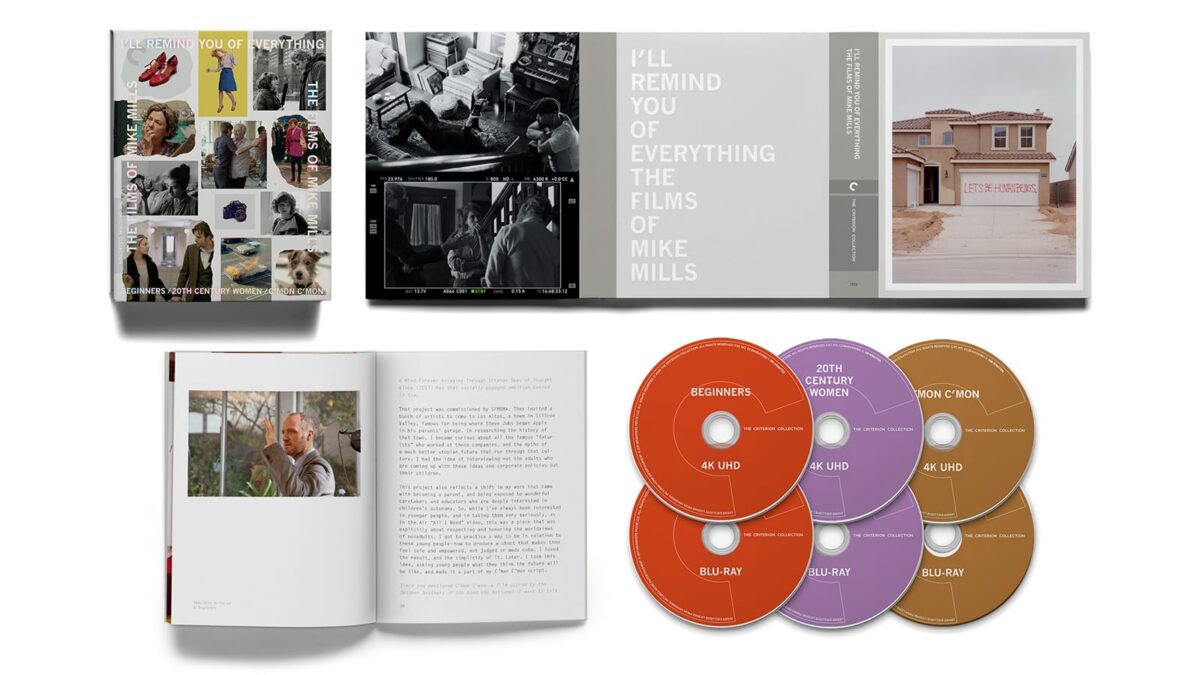
The question of which modern, living, working auteur most deserves a Criterion box set is not one I honestly wish to pose. (Would you intentionally open that can labeled “Worms”?) But I will suggest a sound logic in the recent anointment of Mike Mills, whose Beginners, 20th Century Women, and C’mon C’mon have been collected in the suggestively titled I’ll Remind You of Everything. More than pairing movies with germane extras on a few Blu-rays and 4K UHDs, this is a rounded-out physical complement to Mills’s cinema: everything from its cover (designed by the director and Osk) to booklet to menus operate in the associative, memory-laden key that places his work a step above their brethren.
Most directors given an enviable Criterion retrospective are no longer among us, which made unusual the opportunity to speak directly with Mills about this project. As our conversation reveals, the seeds for I’ll Remind You of Everything were planted as far back as Beginners, and this set’s significance initiated what the director calls “compartmentalized denial.” He nevertheless proves a game, generous conversation partner.
Mike Mills: How’s it going?
The Film Stage: It’s going well. It’s good to see you.
Good to see you.
Where are you? This room is so impressive. Where are you calling from?
[Laughs] That’s my little office in my house.
Oh, amazing. I guess I would expect your office to have a lot of framed photos.
It gets better. [Stands up, opens door to reveal life-size Charlie Chaplin cut-out]
Oh, my god! So that’s like a little treat whenever you open the door?
Yeah. I would notice sometimes, when I’m doing a Zoom, “Wow, he’s really just hanging out right there.” But also [Turns camera to reveal Buster Keaton portrait] he’s right there.
Wow. Okay. I like that you don’t discriminate. It’s not one or the other.
Oh, hell no. They party together. Come on.
I mean, we’ve all seen Limelight.
Yeah.
Now your movie is in that canon of Limelight. Your three movies are in the canon of Limelight.
That’s crazy. That’s very crazy. A lot of other movies, too. But yes, yes. [Laughs] I don’t have the self-love to totally accept that comment, but yes.
Well, I appreciate the films. So one of us can.
Cool.
No, it’s really cool. Your work hasn’t exactly been lacking for circulation—it’s been seen, it’s been available—but this is an honor for any movie, certainly three. And it’s really cool how they’re all talking to each other more, I think, with this box set.
Yeah. No, Kim Hendrickson—who’s my editor at Criterion from the beginning—started talking to me back when I just did Beginners, and then 20th came out and, “Oh, maybe it’s a duo.” And then C’mon came out, and she’s like, “Oh, maybe it’s a triptych.” And it was all unintentional, but I really loved that her eyes were on it for that time and she kind of saw it, and then the way that Criterion does things where it’s a lot of my shorter things, music videos, shorter films, documentary things. One of my very first things I ever made is on there—it’s Deformer, a portrait of Ed Templeton.
It’s [Exhales] so nice to have a house for all of it because it doesn’t really feel housed otherwise. [Laughs] Like, you’re just part of capitalism, right? And it’s not like capitalism’s super cozy with taking care of your work. So that feels really, really important and lovely. And then Kirsten Johnson did this long, really great interview. So I feel very seen and taken care of, yeah. And lucky.
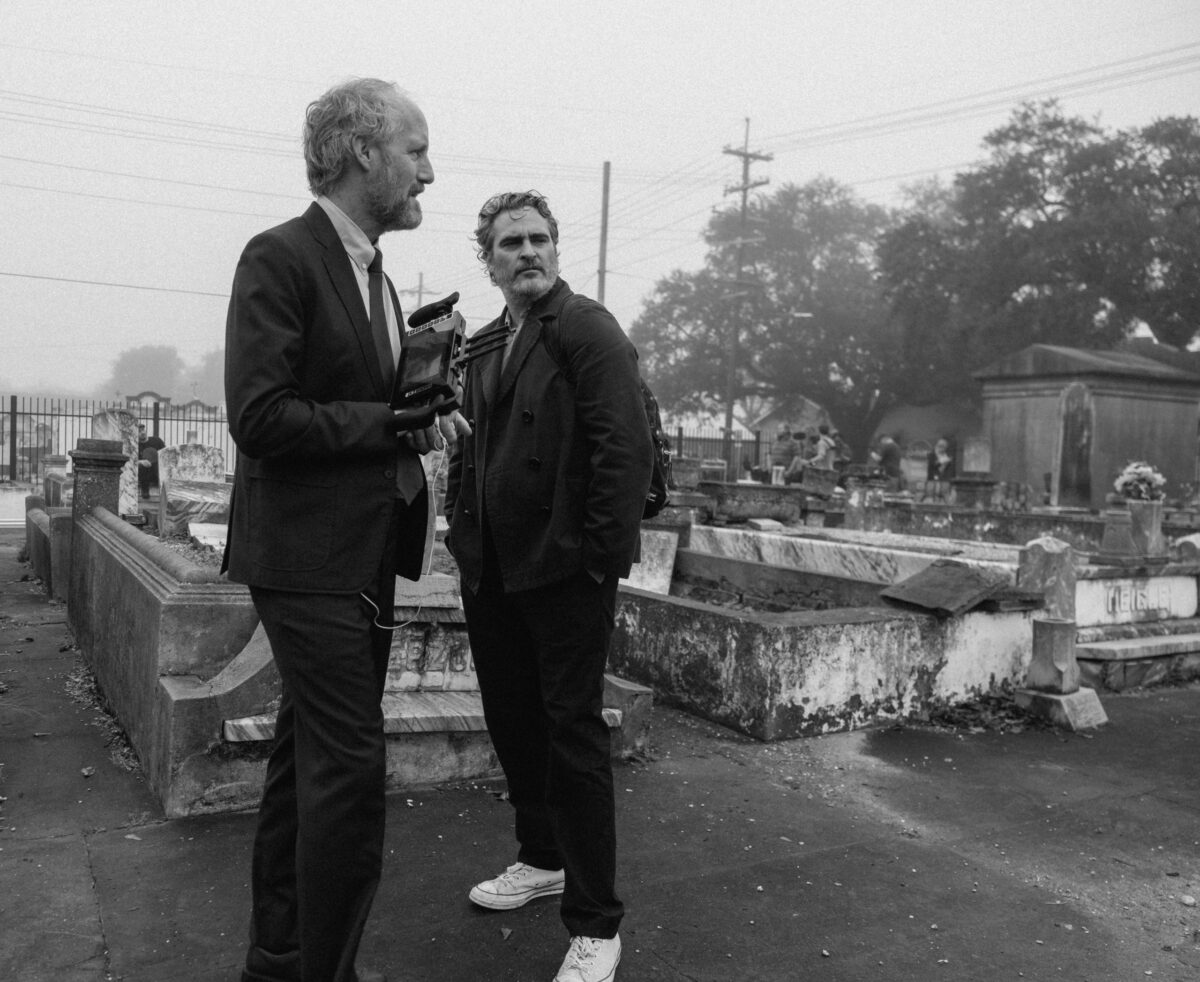
Mike Mills and Joaquin Phoenix on the set of C’mon C’mon
Well, I’ll tell you an anecdote that sounds made up.
Cool.
And it may sound like I’m just trying to get the conversation going, but I swear it’s completely true.
Okay.
I was sitting here and thinking, “What is it about Mike Mills’s movies, their ethos, that affects me so much, that I find so moving in ways that I can’t even articulate?” Me with my, you know, film studies degree and whatnot, I should know how to do this.
Uh-huh. Uh-huh.
I look down at the set and I see the words “I’ll remind you of everything.”
Yeah, yeah, yeah.
Which, of course, is a line from one of your films, but those words to me—”I’ll remind you of everything”—feels like the driving, catalyzing emotional force of your work.
Yeah.
And maybe that’s a way of asking: what was it about that title? Is that part of what made it a fitting title for this box set, or was it something else?
So Kim initiated this conversation of “What should it be titled? What’s the whole scope of it?” It’s really weird being you in this situation [Laughs] because often the author’s the last one to understand what they’re doing. And I’m, personally, not one to look back very much, weirdly, about my own stuff. So she just started this conversation, and it was a very basic conversation, but it was like, “What’s your stuff about?” “It’s like: people, places, memory, and how we co-create each other, right?” And that’s what led me to, “Oh, well, there’s a line in one of my movies that just kind of says that.”
That line really came from the emotion of being a father to a kid, and kids are kind of constantly erasing their hard drive as you go, but for you it’s just so fucking important, you know—like, the whole line. So I feel like there’s a few different strands that keep recurring in all the films, and memory is obviously one of them. All the films are kind of based on memories. And to remember, to me, feels like this very sacred, anti-capitalist, truly, deeply compassionate activity that I treasure in ways that I don’t really totally understand, and it just kind of keeps recurring. Why that’s so important to me, why that’s so nutritive to me, why that feels so… healing, you know? Like, to tell someone, “I’ll remember that.” To me, that’s the best thing you can say, in some ways.
But there’s that, and then I do really feel like there’s this thing of intersubjective co-creation. You know? In a Judith Butler sense—“there’s no ‘I’ without a ‘you’” kind of thing. I feel like that’s equally what my films are about: how I find myself with you through you, through your reaction to me? And then you could also say the films are all about parent-children or children and parent, and that means family. But to me, family is much more than just your biological situation. It’s the weird constellations that happen. I think all the families in all my films are broken in some ways.
Right.
What happens once it’s broken? There’s something improvised and healing that is still family but not biological, and that’s the terrain of all those films, in a weird way.
I was reading the interview that you and Kim Hendrickson did in the booklet, which is a great one. And there was a quote that I found pertinent, which suggested a second meaning to the title “I’ll Remind You of Everything.” And I have to throw your words back to you, if you don’t mind.
Yeah, yeah. [Laughs]
While talking about the video for “Psycho Killer” and I Am Easy to Find, you refer to “an impossible overarching structure—it says, ‘I’m going to show you a whole world,’ which is impossible, and there’s something exciting about that failure to me. I like breaking things down to their composite parts, applying a rigid, clarifying form to the chaos of life that reveals it can never be clarified.” Which feels like it’s getting at the thing about making a box set of your work: it’s a container, but you’ll never get all of it. I’ll remind you of everything, but it’s not like everything is actually going to be here.
Yeah. Well, “I’ll remind you of everything”—when I hear that I’m like, “Well, that’s impossible.” You know? Like, there’s some kind of grandiosity and funniness to that, right? You can’t remind someone of everything. So I find there’s something kind of tragic, funny, bragging in a way that’s not… actually cool [Laughs] in that title. And then with a box set… yeah, I can’t even look at that question straight, like, in making it. Yeah, to make something like this, you have to kind of deny it’s happening the whole time. Because it’s a little too good, and also: how do you ever fucking possibly really do that? Like, sum yourself up? This is probably… I’m not going to get another Criterion box set, right? This is a summation of the whole thing. And you just can’t think like that. Or if I did, I would just stop; I would get broken. So I just live in sort of, like, compartmentalized denial about that.
This set has an Air music video for “All I Need,” but there’s not, say, “Kelly Watch the Stars.” Then I think I got one second—I mean, one second—into the video for “All I Need” before going, “Oh, I get why this is here.”
Yeah, yeah, yeah. Yep.
I wonder if the shorts included herein comprise an idea about a line between fiction and documentary, about depicting some kind of truth in this somewhat abstract, narrativized way. Is that the attraction to what exactly went into the set?
Oh, that’s really interesting. That’s really funny. I just did a whole bunch of interviews; no one brought that up, and that’s really true. I always thought I was going to be a documentary filmmaker. Or, like, I was really into the Charles and Ray Eames films when I started. Because I came out of art school, didn’t go to film school, and I kind of bumped into Frederick Wiseman as a concept—like, as a conceptual artist, really. You can just reduce everything to the institutions that hold people, you know? And then I found the Eames films and I kind of loved the Sesame Street educational quality of them as, like, a counter-move to all the heavy-theory art-school stuff I was involved with. And when I started I loved Stephen Shore, William Eggleston. Those were really primary ways that I approached cinema, was those kinds of photographers.
And there’s this whole idea that part of your art or your craft or the joy or the pleasure of the image that you’re making is a sensitivity to what’s there and the randomness of it, and somehow making that holdable, or somehow capturing that, right? All my first filmmaking stuff… I’ve always loved not lighting things, natural light. Not blocking things too much; having a bit of unplanned, documentary-like quality to the filmmaking. And then the “All I Need” video was a really pivotal thing for me because it’s all that—it’s documentary, those are real kids, nothing is scripted—but then because it’s real and because I had a connection to those kids while I was filming them, and imbued the set and the filmmaking process with that connection, it had this emotionality that just came out of being present, you know? That taught me a whole lot, and that’s why I was like—you know, when Kim was talking about different videos—“That one is actually pivotal to me. Let’s put that one in.”
And all the way through there has been, like, a weird documentary—either through using historical elements, like artifacts or news, or using events or using Koyaanisqatsi or using a Jimmy Carter speech or using Howl or using the history of the rainbow flag. Either having actual, lived events or all the kids talking in C’mon, who are sort of like different forms of lived events that are outside of my authorship that I bring in. It’s not until I have that element in the script or in my idea of the film that the film sort of hits catalyst—the salt hits the cooking or whatever. It becomes like, “Oh, okay—that’s a film.”
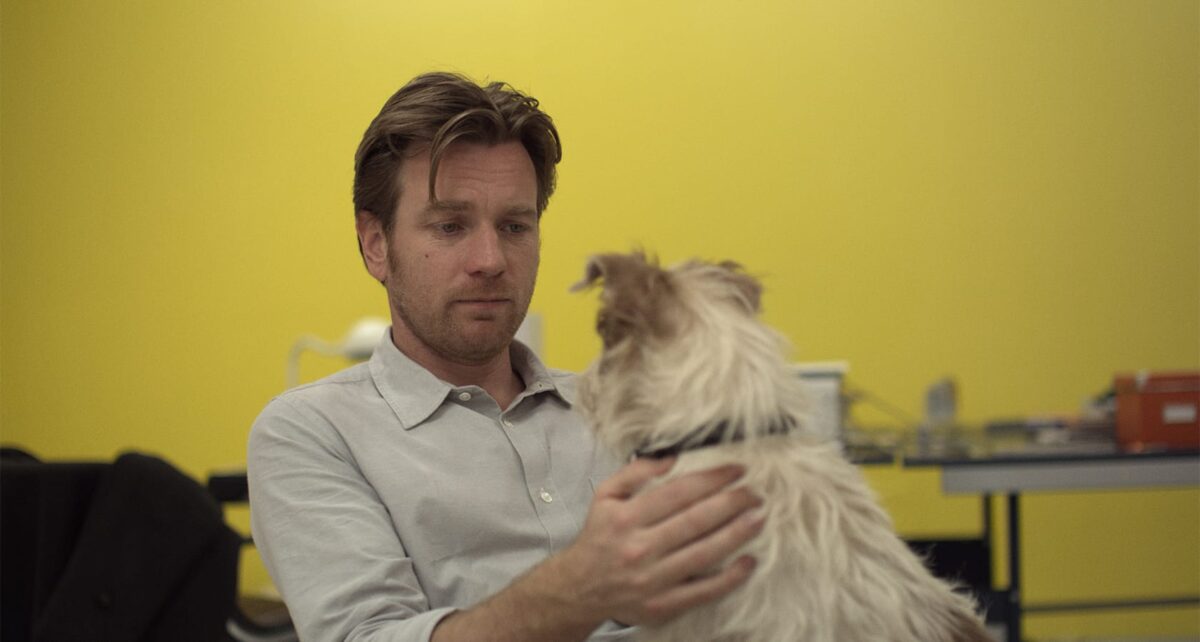
Beginners
You’re talking about these influences, the way things feed into and come out. Recently you did an interview with Joachim Trier for Criterion’s Sentimental Value disc. He wrote a really nice essay about you here, and there’s also an interview with Kirsten Johnson. Trier and Johnson are not two filmmakers I think of as synonymous with each other. And I don’t necessarily think of you as synonymous with them. We don’t have to try to dissect your commonalities, but: is there a commonality in your conversations with filmmakers? Are there things that you all find yourselves focusing on and thinking about when you’re together?
Well, there is a weird commonality. I never thought of this. I mean, they’re just people I met through different, weird, random ways, and they don’t know each other that I know of. And I’m more like friend-of-friends with Joachim. But they’re very smart people [Laughs] who really come from an analytic, history-based approach to their mediums—like, they know everything—and they’re both very therapized, emotional people. Really, both their films are pretty damn like, “I want to get to the main line of an emotional situation here.” But they’re coming at it from a very learned, intelligent, observational, analytic, history-of-the-craft-based perspective.
So I feel like they actually do share… they would have a great time together talking, I feel like. And they have a lot of self-awareness of the medium and their participation in the medium. Kirsten’s thing that ended up being in C’mon C’mon about the camera person—her essay about all the different layers of complicitness, you know, in what you’re filming—that’s a conversation that Joachim could really have, you know? His would be a little bit more about his relationship to his personal history and the history of people around him, I think. But I feel like they’d be great at a dinner party together.
Well, one man has the power to make that happen.
[Laughs] I’ll work on that, yeah.
Truth be told, I could ask you a thousand questions. Because the box set is so great and there’s so much more to say about it, I will ask selfishly—as it’s now been five years since your last feature—if you find yourself in the headspace, in the direction of a new film. Or are you working on something else altogether?
Yeah, no, I’ve been working, and if all the universe holds together, I will be in prep in October. And I can’t say more—it hasn’t been announced and all that—but I finally got casting and I’m all set. I’ve also been working on a documentary about P-22, you know, the mountain lion that crossed Los Angeles undetected and lived in Griffith Park for years.
Oh, wow.
But I really, first and foremost, am a dad, and I have learned that my films—no matter how fucking hard I try—take five, six years. This one’s going to take a little bit more. I’ve tried to rush it—it just doesn’t work—and then I’m like, “I enjoy my life.” And if all holds up, I’ll make maybe seven movies by the time I’m done—this will be five—and once I learned that I’m like, “Well, why rush? I’m not having an idea; I’m forcing it. I can’t figure it out. That’s what the universe is offering.” Also: I’m a big Fellini head. Fellini’s like, “You don’t control your creative process.” It’s like this planet that you court, and if you’re lucky, it’ll come towards you, you know?
So those two things are part of an answer. And then I had a really hard time casting this film, which I hope to be doing in the fall. And I was like, “You know, I’m not finding the right person. So maybe I just won’t make this film from this script that I’ve been writing for three years. Because why? It’s too hard to make a movie. Like, why start off with a project that you feel is kind of not quite right?”
Yeah, sure.
So I really blew everyone’s mind when I just kept saying “no” [Laughs] to all these different offers. I was like, “This just isn’t quite right.” And back in the day—between Beginners and 20th and 20th and C’mon—I was like, “Oh, my God, I want to make a movie every three years! What the fuck is the matter? That’s my life.” But it just doesn’t work out that way. I work on the movie the whole time.
Yes, of course.
It’s not like I’m sitting poolside. It’s not like I’m traveling and just enjoying life. I do enjoy being a dad. I like taking my kid to school. I like picking them up. I like knowing everything that’s happening. So that does change your life if that’s your priority.
It’s good that you enjoy being a dad. Some people, it seems, make movies because if they don’t, they’ll just wither and die. It’s good that you have something else.
Being a dad is by far the best thing that’s happened to me—the most enjoyable, meaningful thing. The most anti-depressant thing.
Very last question I’ll ask you. This is a quick one. I just have to know: how often do you listen to the Air song “Mike Mills”?
[Laughs] Never. So that song… I mean, I love the Air guys. I just saw Nicolas [Godin] in France. I love my relationship with them, my friendship with them, and all the things I did with them—so important to me and fun and just a huge part of my life. I was doing Thumbsucker. I said, “I want you guys to do the score” or, “I want you to be part of the score.” And it took so long to make Thumbsucker. It took so long to get finance. Like, no one in the world wanted to make that movie, and they don’t write a whole lot, so they’re like, “Well, we have this song that’s been hanging around forever. We’re just going to put it on our record.”
And then they thought it was so funny to call it “Mike Mills” because, as two fancy French guys, “Mike Mills” is such a weird name to them. So they thought it was pretty funny to name it that. And of all their music, it’s not one of my favorite songs at all. [Laughs] Of course it’s a huge honor, but like… we’re friends. My gratitude towards them is much deeper than that. It’s that we connected and that we’re friends and that we’re art friends and human friends, and that we had this experience of kind of coming up together. But I don’t find that song to be very me. And they’re like, “Oh, it’s so you.” [Laughs] And I’m like, “Okay. I don’t know what you’re talking about.” But that’s… right? That’s so art. That’s just so “of course.”
It’s art. It’s also your humility. If Air named a song after me, I would listen to it every day, no matter the quality.
[Laughs] Really? I don’t know. That’s funny. Every once in a while someone will show me the song, send it to me, go like, “Oh, my God, did you know this?” And not thinking it’s me. You know? And I’m like, “Yeah, no, I know about that, yeah.” [Laughs]
I’ll Remind You of Everything: The Films of Mike Mills is now available from Criterion.