
As personal and profound as a documentary can be, Ross McElwee has crafted a moving testament to the life of his late son, Adrian, with Remake. As established early on, Adrian passed away from a fentanyl overdose in 2016 at the age of 27, and McElwee weaves a patchwork of footage shot over the decades to capture the ups and downs of their relationship. It’s a nakedly confessional, deeply emotional work that will break any parent’s heart into a million pieces, yet McElwee also guides us through the process when a company hopes to adapt Sherman’s March, along with his own marital and health journeys. Remake offers a culminating work for the filmmaker and one of this year’s best documentaries.
Ahead of the release of a new 4K restoration of Sherman’s March beginning this Friday, July 3, and the release of Remake next Friday, July 10, I was honored to speak with McElwee about the personal journey of making the film, what Werner Herzog’s frequent editor Joe Bini brought to the film, his approach to voiceover, the push and pull of acting as both a filmmaker and father, revisiting Sherman’s March, and teaching the next generation of filmmakers.
The Film Stage: Voiceover is such an integral part of your films, and I can’t imagine this one without it. What is your process of actually writing and rewriting the voiceover? Is it all written or is any extemporaneous and then written?
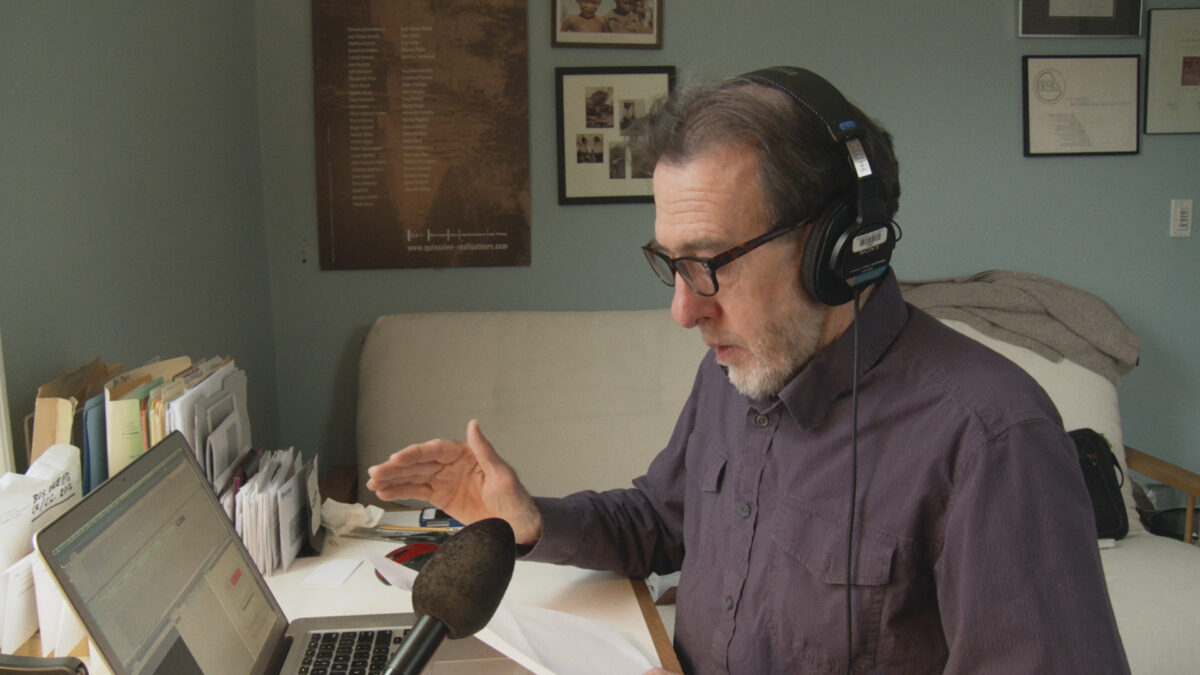
Ross McElwee: The extemporaneous part occurs in the very beginning when I’m watching footage on an editing console, watching shot after shot. I start to have a kind of dialogue with it, mainly in my mind, but now and then something occurs to me that might be useful for voiceover and I’ll pause and take a note about that. That could help inform the final form of the voiceover; sometimes it does, sometimes it doesn’t.
The actual writing of the voiceover to the footage is much more time-consuming. I don’t know why it takes me so long to get it just the way I like it. If you look at a transcript, it’s not that long, and there’s nothing complicated or erudite about it; it’s fairly straightforward. But it does take me a very long time to get the voiceover narration written in a way that I think works well with the footage.
Remake
You’ve mentioned, for Remake, asking an assistant editor to pull just frames of videos of Adrian to have a little more emotional distance from everything that was so personal in this film. How do you think that helped you, and did that come right away?
Yes. The problem I was dealing with after my son died was that I could not even begin to look at footage—even innocuous home-movie footage that I’d shot—much less think about how to begin making a film. I wasn’t even sure I wanted to make a film. To be blunt, it was too painful to sit there and watch him, especially as a little child.
So I didn’t actually watch the footage for a while. I did hire someone, a former assistant of mine, to go through all the films in which he had appeared and select two, maybe three frame grabs or still frames of him. I tried writing some notes to those, and I think that did break the ice because they’re not moving images; they’re static, obviously. So there was a little bit of built-in distance to the still frames that would not have been there with the footage. That’s what I used to sort of get myself back in a position, psychologically, to be able to watch the footage. It worked, and it was what I needed to do.
Towards the beginning of the film you establish Adrian’s passing and how it has been seven years. This shifts the film from being less about a mystery of what happened and lets the viewer focus on the relationships you are capturing. Can you talk about that structural choice? Was that always your decision from the beginning?
The first approach I wanted to take with the film was to comprise a fairly lengthy section of him growing up and not say anything about the fact that he was no longer alive. Although I also knew that most people who ended up seeing the film would know beforehand—somehow they’d find out.
I tried that, and it worked to a certain extent, and certainly was an easier way to get into the film. But I realized at a certain point, after showing it to friends who are filmmakers, there’s something a little bit coy about withholding this very critical information. So I moved it up to the beginning of the film and it’s been there ever since.
Knowing your work, I knew this wouldn’t be a PSA or a “message movie,” and I think it works so well because the viewer is guided by this emotional journey. But I’m curious—your editor worked on All the Beauty and the Bloodshed, which obviously talks about this issue in a different way—if at any point you had thought about maybe adding more of a macro view of the opioid crisis to make it more prominent and then pulled back?
Yes, I did that. I was very aware that other people had done really powerful films about the opioid crisis—All the Beauty and the Bloodshed by Laura Poitras, I think, is a fine example of that, but there are many, many others. A lot of specials were posted on HBO and other streamers. They were pretty powerful; how could they not be when they’re dealing with this particular subject?
Knowing about those other films and knowing that I was kind of coming late to the game, I knew that I’d have to take a slightly different approach if I wanted to directly involve the opioid crisis as a major theme of the film. What I tried to do, and eventually jettisoned, was to put title cards that would just appear at certain points in the film as my life was going on and I was discussing several different things. That pulled back from the immediate situation of my life and Adrian’s life and said something about what was going on in the country. It used very simple, stark graphics of white writing on a black background mentioning the number of people who had died over the last year from the opioid crisis.
Part of what I had hoped would work about that would be that even while I’m pursuing this kind of harebrained notion of turning Sherman’s March into a fiction film, I’m doing other things with my family, I have a teaching career—all of this stuff was going on in my life, and it’s true for anybody. It’s not always easy to follow what’s going on in the world at large. So it was meant to say that while I was busy doing all of these things that I thought of as being very important and necessary, in fact, perhaps one of the most important things was happening all around me and I didn’t really respond to it as strongly as I might have.
I had some friends I showed it to, and they felt it broke the film up, distorted the rhythm that had been achieved and the momentum that had been achieved up to those points, and that it just wasn’t necessary. So I sort of knew that, but I just wanted to test it. That was my one attempt to directly implicate the opioid crisis until the very end of the film, where I have that little rush of things that made me angry about the entire experience. I think that was perhaps the right thing to do.
You worked with Joe Bini, the editor, who has worked with Werner Herzog a lot. How did that relationship come about, and how much did it help you to have an outside pair of eyes? What was it like to see someone else shape footage that is so directly tied to you?
It was a new experience for me. I’ve had one editor on a film before, Photographic Memory, because I was teaching and we had a deadline of six months to finish the film because it was funded by ARTE, a French television network. So because I had to make progress in a daily way on the film, I knew I just had to turn it over to someone else, although I was involved every day in seeing how the cut advanced and changing things and so forth.
With Remake, it was a little bit different. I basically had cut a two-hour-and-ten-minute version of the film entirely on my own. I sent it to Joe at some point; he saw it and said, “If you ever think you want some help, I’d be honored to work on this.” He and I knew each other from the Sundance Documentary Edit Lab. We were mentors out there for two years and we became kind of pals at that point. He’s a wonderful person and I really so enjoyed working with him. I also really felt his work for not just documentaries, not just Werner Herzog, but people like Andrea Arnold whose fiction films I really respected.
At a point, I just burned out; I couldn’t deal with the whole onus of making this film on my own. So I talked to Mark Meatto, my producing partner, and said we’ve got to see if we can raise some money to get Joe in here. We did. Impact Partners stepped up and they were great in making it possible for Joe to come to the U.S. He lives in London, but he is American, so he has reason to come back; his son still lives in New York.
He came and actually stayed with us for three weeks. At first, we worked together every day in the editing studio that I had access to. Then there were times where I just left him on his own with the footage. He also had a wonderful assistant editor, Patrick Saxer. Patrick and Joe worked together a lot when I wasn’t there, and that suited me just fine at that point. I was depressed and unable to move forward with the film in any way, and I think Joe and Patrick figured out the solutions to the passages I was having the most trouble with.
So that was a very fruitful collaboration. I’d do another in a heartbeat with Joe. I’ve actually been stubborn about this—I’ve never hired a camera person, for instance, to shoot any of my films. I’ve always done it myself. Until Photographic Memory, I never hired an editor; the other eight or nine films before that, I edited myself, for better or for worse. I just liked all stages of filmmaking so much that I wanted to sort of hold onto them. I think it’s good that I did because it does make the films more intimate and authored by a single person. They have to be perceived as or they don’t really work. But I think Remake has managed to accomplish something just as good, which is the fact that the film itself becomes a kind of testament to my son’s life. I think it sort of doesn’t matter whether I had collaborative help with it or not. I gave in to the fact that this was the only way I was going to be able to finish the film.
I have two young sons and was in tears watching Remake, because it’s also so much about this sense of innocence of youth and just how precious those early years of family life are. It was really life-changing in a way, of just being reminded to be present in these moments of life. Did you have any hopes as you were editing for what parents might take away from the film? Or at screenings, people embracing that aspect even if they haven’t gone through something as devastating as you have?
As I made the film––filmmakers say this all the time––but I wasn’t making it for any particular audience. But it’s really true with me, and I think there was no sense of “this is a film for parents” or “this is a film for younger people who are in that world of skateboards and opioid availability.”
I think when I finished it, I did wonder if there’d be a bifurcation of audiences based on age. There would be the younger audiences who sort of would be from Adrian’s world and the parents in the audience, like yourself, and if or how they would mesh. Would the film become the kind of exclusive property of one or the other? So far—and, again, we’re very early on in getting the film out there; I’ve never done any kind of surveys after screenings in festivals and I have no idea how it falls—but it seems both parents and younger people relate to the film for very different reasons, I suspect. You can get a sort of sense from Q&As about how that goes.
To answer the last part of your question: yes, I do find parents who are particularly distraught—not just parents, but close friends who’ve lost friends to opioid addiction—have come up to me afterward and said that the film seemed to engender or represent something that they felt for a long time and they were happy to see an experience, a movie that went through something similar. I can’t tell you, not to get too maudlin about it, but many people just come up to me crying. They just wanted a hug. I think it wasn’t to hug me so much as hug themselves.
So if things go well, I hope the film does find audiences, targeted audiences perhaps—we’re talking a lot about how to do that—of people who’ve lost and people who are still struggling with opioid addiction, because there are hundreds of thousands out there. It’s just shocking.
Remake
You obviously shoot a lot of footage from moments in your life, but there’s also so much that you don’t film. You had mentioned that when Adrian stayed with you in his last few months, you only had three shots of him. There’s also that really pivotal and painful scene where Adrian’s discussing his path with addiction. As you’re seeing that unfold, is that a conversation with him before, where you are establishing, “I’m going to capture this”? Or was it just so natural in your family life that you had a camera and were just shooting? Is there any moment where you’re realizing you shouldn’t cut away from this because it’s such an important moment? I’m curious about your decision-making for when to shoot and when not to shoot when it comes to such personal moments.
Ordinarily, it would be an interesting question to explore; certainly, you could ask it of any of the scenes in my other films. This was totally unlike anything I’d ever filmed before. I mean, not literally what you see on screen, but just the whole notion of what it represented. It’s my son up there and he’s talking about some horrible experience he’s had.
I should also make clear that he had started a film on his own about addiction and he wanted me to film this. We discussed it before, long before he actually went into rehab. He said, “It would be good for you to film something with me at some point. I may or may not use it but I should have it available.” So as I mention in the narration, I’d gotten in the habit of when I did go to visit him in Colorado, I didn’t bring my camera. This time he asked me to bring it, because this was after his stint in rehab.
I had no list of questions. I didn’t go over the questions with him beforehand—none of the things you can do as a documentarian. I didn’t do any of that. I just sat down and we started talking. When I saw the footage, I was astonished at how eloquent he was and articulate and also how he seemed not exactly at ease—it was painful, I think, for him to talk about some of the things he was talking about—but something natural about it. For me, I think it was possible for us to get that scene because of all the scenes I’d filmed of him when he was younger. In the crayfishing scene, which is the scene that opens the whole film, we’re having a discussion the whole time I’m shooting and he’s trying to catch crayfish. It comes from that, I think.
He more or less rose to the occasion—his occasion—to explain what happened because I really wanted to know. It’s probably the longest scene in the film and it’s basically a talking head, which I try to stay away from as a documentarian. As to how I was thinking as I heard these things unfold: I had no idea that they were actually going to find cartel-pushers in Colorado to give them black tar heroin. I mean, I didn’t know that. The story kind of just spun out on its own.
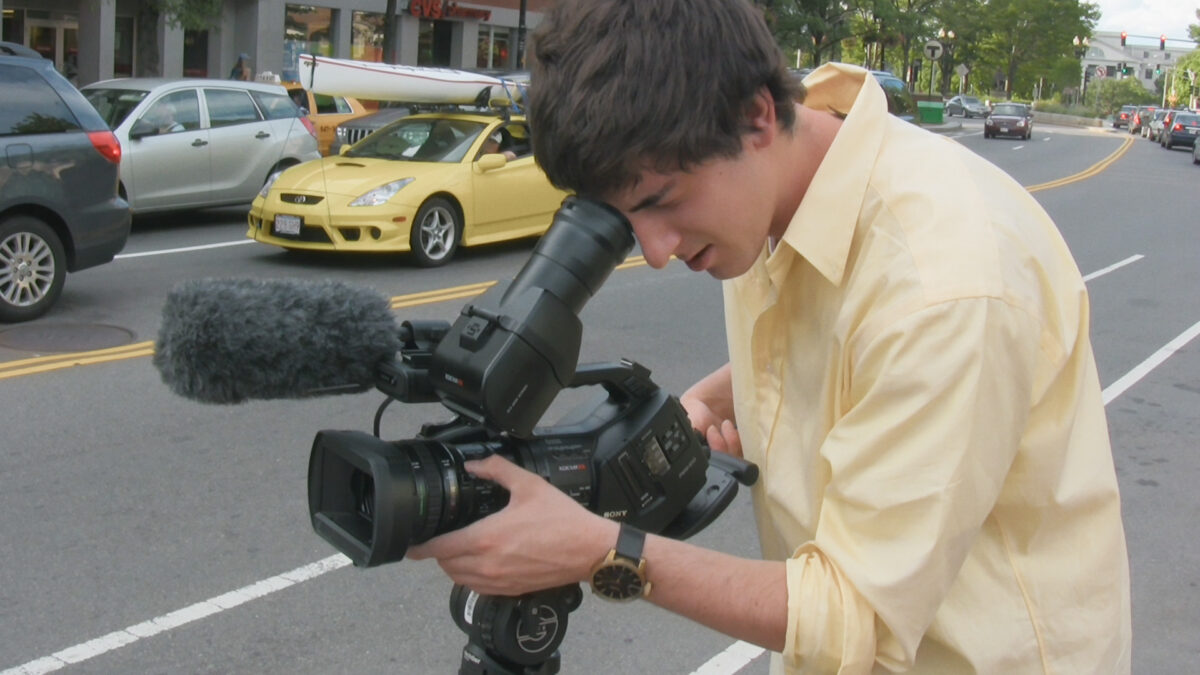
If you ask me, “Am I thinking about being a filmmaker?” No. But somehow, on some level, I was thinking about being a filmmaker because I also knew you can’t just have one focal length or you’re not going to be able to edit this in the conventional way that films are usually edited. I would zoom in and get a close shot. That just is a matter of training for me. It wasn’t me thinking, “Get the close shot now. This is a good time,” because it’s really a matter of schizophrenia because I was having to be both the father and the filmmaker, as I say in the very opening. I don’t know how I did it. I can’t recollect how I felt now, nine years later, exactly what was going through my mind, but I think it was some notion of what I just said—that two-pronged, “Yes, I’m a filmmaker, yes, I’m his father.” What does it mean that I’m doing this?
With Remake, you cover a lot of ground in terms of your art with the Sherman’s March remake, your marriages, and your own health issues. This film somewhat seems like a concluding chapter for a lot of things you’ve covered in your career with your own life and family. Upon finishing it or premiering it, do you feel a sense of closure, or does it open up a new door to reflect on these issues more with the public?
Relief for sure. But still pain in a way, because every time I go to a screening, it’s a little bit like going to a memorial service for my son all over again. I think I’ve more or less gotten over that as a primary response. At one point I said I don’t think I can do these Q&As anymore.
The other thing I realized after about four or five of these sessions was that it’s also awkward for audiences. It’s not like other films, where people have lots of questions to ask and there’s a kind of celebratory aura over the film having been finished. This film is not like that at all. My sense has been to limit the length of Q&A sessions after the film screenings and in some cases just not do them at all and let people just come, maybe introduce the film, but then not try. It’s just so difficult for me and it’s also difficult for audiences.
I had friends who said—they weren’t close friends, but good friends who came to screenings in Boston—”The last thing I wanted to do was hear a moderator summing up your career and then leading us into, very gingerly, a discussion of Remake.” One of them said, “I just wanted time to be alone with my wife and my friends and discuss what we had just seen.” I don’t think that’s how it should go for most screenings, but that comment really stayed with me. I’m still figuring it all out about that.
Sherman’s March
I just watched the restoration of Sherman’s March, which I had first seen 20 years ago in film school. It was one of the first films we watched in my documentary class. What was the process of restoring it side-by-side with some of the revisiting of subjects for Remake? Because those scenes are also really poignant in Remake. Or was the restoration part an entirely separate timeline?
They were two separate projects altogether. I think we did the Sherman’s March restoration long before Remake—long before my son died, we started it. So it was like a different era. It was a technical exercise for me. It was a matter of looking at it, digital scans, and trying to pass judgment on color and the quality of the negative from which the images were taken. But it was technical; it wasn’t really very much of a philosophical exploration of what it means.
Now it seems much more like that. When the film that I thought I was making, about the remaking of Sherman’s March, faltered and seemed to be going nowhere, I realized that, of course, would become a strand in the film about things in Hollywood taking forever, if it ever leads to anything. I sort of knew that going into it and I had to be ready to add a different agenda to the film: my own mortality. I kept thinking it’s amusing that they’re scrambling to try to find a way to make a film that was made 40 years or 35 years earlier. The protagonist of the film will forever be 29, or whatever he was at that point in his life. Meanwhile, the real person, Ross McElwee, is getting older and older as the years go by. If you don’t finish the damn thing soon, he’s going to be dead, and you’ll have to work on your own after that.
I thought it would be a kind of meditation on mortality and movies. I didn’t know for sure what would become the major themes. My works often change over time. Time Indefinite—have you seen that film by any chance?
No, I haven’t. I need to.
Well, it starts off being a film about getting married, lighthearted, and then halfway through, my father suddenly dies of a heart attack. He’s never had any illness at all. Total shock. So the second half of the film is dealing with that. That’s an example of a radical change of course in the film I thought I was making. I certainly went through that with this; the irony of the connection of Time Indefinite and Remake has not escaped me at all.
You’ve taught at Harvard for about three decades. Looking at that span of time, has anything fundamentally changed about your approach, especially as you make your own films and how that informs your teaching? Or is that kind of a strictly separate path?
The landscape of independent documentary filmmaking has totally changed. Obviously, the big change was from analog to digital. I shot the first five or six films with an Aaton 16mm camera on my shoulder. The thing weighs about 18 pounds and all the accoutrements that you have to have—the extra magazines that are loaded, ready to be swapped over—it’s such an awkward and arcane way to make movies. Now it seems that way to me, although I loved doing it and I do think it forced a kind of rigor and discipline on my shooting in a way that’s still there to some degree. It’s been somewhat diluted by the ability of filming digital where you have infinite amounts of time at only pennies per hour on file cards.
But that has nothing to do with the way we teach, speaking for myself. I’ve taught courses in 16mm documentary filmmaking and digital using cameras that shoot digital. The rules of the game are kind of the same in both: you have to find an interesting subject, somebody who trusts you, and we insist that they get off campus. They can’t film their roommate and things that they know well. So they have to go out into the world, which in my case is Boston, and meet people. That’s a very daunting thing if you’re only 19 years old and you’ve been shipped out to some place that isn’t your home. How do you do that? A lot of them flounder, but most of them actually succeed in finding the people and then, of course, editing it in such a way that, if you can, you honor their lives as well as your own as a filmmaker.
I don’t let them do autobiographical films in the beginning. I think it’s hard enough to get the technology straight and merely focus on something that’s happening in their world, but what’s happening in your own life on top of it. So that’s not part of what I teach. As they go through more advanced classes, they can go in that direction if they want to. But often they’re too smart to do that. They also have their eyes on the West Coast and so eventually they want to do fiction filmmaking courses, which we also offer, and I don’t teach those. I don’t feel I’m qualified to do that.
So in two ways, the landscape has changed tremendously. The way in which the courses are taught has actually not changed all that much in terms of what it asks the students to go out into the world and find.
That’s great, I’m always curious about what the next generation is learning. It’s really an honor to speak with you. I was just so moved by the movie and I’m excited for you to share it with the world.
Well, thank you, Jordan. And I wish you good luck as a father. It’s a wonderful experience; I don’t think there’s anything more important and I’m sure it’ll go well for you.
The new restoration of Sherman’s March opens on July 3 and Remake opens on July 10.