
For fifteen years now, Israeli writer-director Nadav Lapid has thoughtfully crafted blistering and incisive films about the incompetency, hypocrisy, criminality, and veritable shame of his home state in modern times, a place he’s long since abandoned for a life in Paris based on the feeling that he was born in a country he never belonged in. As you can imagine, the way global affairs have unfolded in recent years has only affirmed the existential suspicions of his soul. Naturally, one would think his first project since 2021 would contain the recognizable dramatic fire and fury of previous works, like Ahed’s Knee, or the alienation of his international breakout, 2019’s Synonyms. All of that is present in Yes, but with such a dark, war-torn world in Lapid’s crosshairs, the transplant who can’t take his eyes off home has been forced to go a completely different direction to both match and speak to the world’s absurdity: raucous, expressionistic satire.
Yes, which premiered in the Director’s Fortnight section of Cannes in 2025, is a film with a familiar premise and a totally unfamiliar design. It follows a yes man who jumps at every chance to succeed, no matter who he’s working for or how low the work brings him. But the story is hideous and the “comedy” so biting in its truth, so ugly in its reality, that it evokes more gasps than laughs, more heartache than hilarity, more hell than heaven. Y, the jazz pianist who’s asked to write the new, post-October 7 Victory Anthem for Israel, lives in squalor in modern Israel alongside Yasmin, his wife, with whom he’s recently brought a son into the world. Together, they serve the Israeli (and Russian, and everyone else in global power cahoots) oligarchy like court jesters serve kings, tonguing octogenarian’s ears and nearly dancing themselves to death in order to pay the bills.
What begins with a party sequence as rousing and ostentatious as Sorrentino’s opening blowout in The Great Beauty eventually lands on the other side of the walls of Gaza, where the genocide of Palestinians turns outrageous satire into infernal reality. Ahead of this Friday’s U.S. release, we sat down with Lapid to talk about Yes, its real-world parallels, the reason his characters dance through it all, and the satirical meaning behind the film.
The Film Stage: What sparked the idea of the narrative of the film for you?
Nadav Lapid: It was a combination of several things. I guess that I had this doubt looking at society, and societies in general, where everything counts but a sensitive soul. Looking at the world worshipping—maybe like always—money and power, but being even less and less complex about it. It’s a world where I’m not sure I have a place anymore. One can say artist, but for me, “artist” is also a symbol of an attempt to think differently, something alternative, a different hierarchy than the one based only on power and money, etc. Like a feeling that there is no place anymore for this. And even this old-fashioned, romantic, beautiful model for resisting, standing against, persisting… is not relevant anymore. There is a level, you know?
Maybe a very courageous dog can challenge an elephant. But an ant cannot challenge an elephant. It’s pathetic if an ant tries to challenge an elephant. Like in a film, in radical moments, you need absolute words. Supposedly there was also this “yes” and “no,” but what if the “no” doesn’t exist anymore? Like, the only way is to shout with everyone, “yes!” whether you are a physician, an artist, a jazz pianist, or I don’t know what. And also, like a certain feeling of being exhausted—not only me, personally, but I think it’s something that represents a bigger group—being exhausted by the useless resistance and by the myth of useless resistance and this kind of natural, normal, real desire to be a part of things, to take part in things, to love and to be loved, to belong… knowing that when you start to sign treatments and make agreements with the devil, at the beginning of everything that’s nice, but at the end only hell is waiting for you. So I think this is the genesis of this whole thing.
At first I had in mind this painting by George Grosz, and this was actually the genesis. And this painting by Grosz, “The Pillars of Society,” is a very apparently countercultural, grotesque, extremely expressionist painting of the pillars of German society on the eve of the rise to power of the Nazis. But actually, in the end, it was a very, very realistic description of the state of things. He was painting these people as deformed monsters, and they were deformed monsters. And he was painting the world as a kind of apocalypse and it became a kind of apocalypse. So it’s a little bit of the same feeling: that things are on the edge of the apocalypse, that we are sinking into the abyss, etc.
You had written a version of Yes before the events of October 7. What was the original version and how did it change after October 7?
Actually, when the seventh of October took place, I was in Paris and pretty shocked. At first instinct, it’s like, “What does art serve for? What does cinema serve for? Who cares about these things, movies, etc?” But then, I think what permitted me to make the film is that when I, several days later, read the script again, I wouldn’t say October 7 was inside, but I felt it was describing exactly this world where society makes a crusade of revenge and killing.
And I felt that this whole reality—this society where there is no place for the voices, where everyone is shouting this bloody, deadly hymn together, where the following generation will signify no hope for change and be even worse than the previous one—I felt, in a way, that everything was there. This painting, of course, was already there when I began. The seventh of October, and the genocide, like the rise of Nazism, was already there, because the potential for hell was already in the script. The script originally already described a society on the edge, where all the ingredients were ready for this obscene orgy of blood, vulgarity, and nationalism.
So in a way, it was the actualization of all of this. It pushed the stakes a little higher. It forced everything to be revealed right on time, right in place. But, you know, as we look at the world, the world is on the fastest scroll to madness. When we look around, the pace of things has become so accelerated and, I mean, it was like this from the beginning. In the same way, the story could’ve been told and shot today in New York, or in LA, or in London, or in Paris. The film, of course, takes place in Israel, but I think it’s really not particular to Israel. Each day that is passing, we see it more and more everywhere.
Do you think the events of the film precipitated what’s going on now with Israel and the U.S. bombing Iran?
I would say that these boundless figures are addicted, in a mental and almost sexual way, to a kind of omnipresence or endless power. For them, having more limits sounds like a pathetic joke. I know them and you know them. They are the kings and the queens of our world. It’s fascinating, by which I mean it’s terrifying, the meeting point between the collapse of cultural normality and any trace of morality.
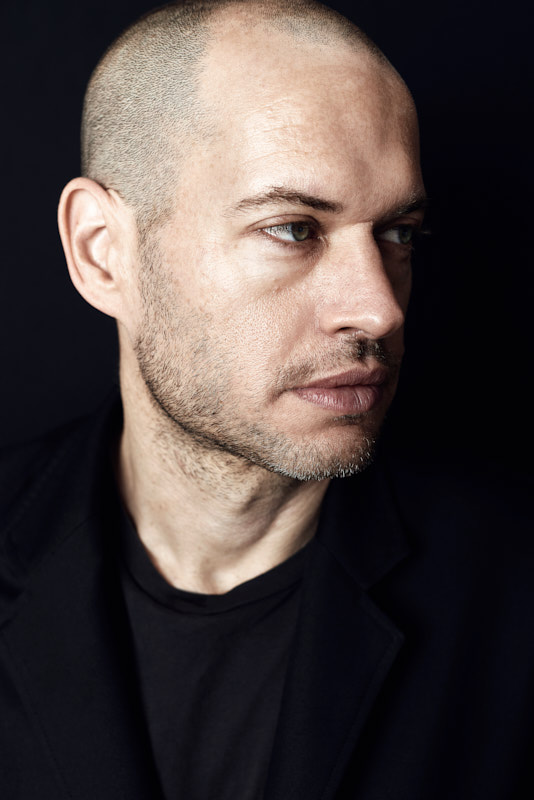
What led you to take a farcical, comedic, satirical angle on the story? It’s very different than your past work.
Again, I go back to this painting by Grosz. I think there are moments where, in a way, the only response to the madness of reality is the madness of cinema. The grotesque is actually our geography. You know, if you paint or if you shoot Nazis or fascists like this, they look like normal people. They look like everyone else. If you shoot them with your camera, they look like someone who works at the post office. But, in a way, you need to break something, to dig into something, to subvert something with your camera in order to get to the soul. To this extent, I think it’s really expressionist cinema.
Lately, you’ve often worked dance into your films, especially Synonyms. Or, in Ahed’s Knee, there’s the solo dance sequence in the desert. And it’s ever-present in Yes! Why do you keep using dance in your films and what does it help achieve in expressing this absurdity about the human condition?
I think I use dance for several reasons. First of all, my films, in general, have very few real dialogue scenes. What I’m trying to say is this concept of dialogue between two people where they discuss something and one is giving an argument and the other is responding, it exists in 99.9% of films, but it’s very, very rare in my films. Because, very often, even when there are two people and they talk, they don’t talk. They can’t really get through to each other. They declare themselves, one to the other, but there’s no real exchange, real dialogue, or real meeting point. And sometimes, I think that’s the only way people can express themselves in my movies—through dance. When people dance in my films, they dance themselves. They dance who they are. They address the spectators and say, “Look at us. This is what we are.” When this couple is dancing during the morning scene to “The Ketchup Song,” they dance their existence, they dance who they are. They dance the beauty that they look for in an ugly world. They dance this tiny island of love that they try to preserve in a polluted state of things before they themselves become polluted. They dance something beautiful in the middle of filth. And, in a short while, they become filthy, as well.
There’s also something in the concept of dance that easily enables the camera to take a position. Because, you know, dialogue, it’s like… how the fuck do you shoot dialogue? I’ve made attempts and I’ll continue to make attempts, but there’s something, you know, with the bodies and the camera. Together, they can take a position, because, for me, the script, the dialogue, what people are saying is a kind of chronicle of things. But, at the end, the only voice of truth is the mise-en-scène. I think the dance scenes also enable you to go very far with the mise-en-scène.
There’s a line in the film where Y is talking to his newborn child and he says, “Learn to smile and to give up to that smile,” which is a line that really stuck out. And it stuck with me, because I think it’s something a lot of parents would genuinely tell their children. It’s absurd, but you get the sense parents would tell this to their kids, because they care about them and want them to be taken care of—to have food, housing, work, the things that allow us to survive. But it also plays in the film as such ridiculous advice when you witness Y and Yasmin living out the horrible, shameless lives they’re living. Obviously you don’t plainly agree with the advice, but where do you stand on it? Do you have empathy for people who are complicit in a system that they’re virtually trapped in, or do you think we all have a choice—a way out of that complicity?
Especially as a filmmaker, the last thing I want to do is to be a kind of moral judge. I think my films are not morally relativist. There is this genre in cinema that’s become very, very fashionable in recent years, very respectable—god knows why, I think it’s a kind of confusion—of obscene and cruel movies that observe obscenity in a kind of objective way, taking a disposition of moral relativism. Like, we observe it, and that’s the way humans are. My film is not at all morally relativist but it’s not didactic either. I mean, you can be terrified and agitated when you see obscene things without becoming moralistic, regarding the characters.
But, you know, there is this idea of transmission—you transmit something to your child. And there is a moment when the gap between life—or the world as we know it, or as we try to understand it—and the world that we dreamt about, or the way we think life should look, is so huge that you don’t know anymore what you’re supposed to transmit to your kid. I mean, should you transmit a fantasy that will never take place or should you transmit reality as it is? You don’t want to raise a modern Don Quixote, who will fight in hopeless battles, who will spoil his life on all sorts of hopeless battles because he grew up on the myth of a legendary world that doesn’t exist. So maybe, as much as you can, you should make him acknowledge this reality as it is and he will be able to learn to enjoy it—to taste the food, to drink the beverage, to smell the perfume.
How did you balance the tone of the film? There are such drastically different tones between, for one, the satire, the absurdity, the dance sequences, the parties, the oligarchy, and then, for another, this really heavy, lamenting tone and very dire atmospheric defeat, especially once he shaves his head and we enter the Palestine section. Was that a tough act to balance or was it like making two separate movies?
In general, I’m a very instinctive director. I think I have a very poor capacity for self-analyzing. When I compare myself with friends and filmmakers, I’m always impressed by their capacity to make their own analyses while making the movie. You know, you have the feeling they could already write a Ph.D about their own movie. It might sound ironic, but it’s not. I’m really impressed by it. I’m very, very different. You know, in a way, my idols are always Jackson Pollack who’s running and hitting the canvas or Andre Breton who’s trying to become addicted to automatic language. So I don’t balance anything when I’m creating. And with this movie that was multiplied by a thousand, because this movie was shot in a way where the last thing I had was any sense of distance or perspective. It was shot in the middle of this war, of this disaster, of this genocide. And each day, hell and reality became more like synonyms.
But for me, these things are extremely complementary. Passing from one tone to the other is like living in the world. And we live at all these different levels. There’s the level of our actual life, then there’s the level of our phones. In the middle of a funeral, you can scroll across a funny reel on Instagram, to give an example. We live in a pudding, in a soup, in a place where the carelessness is so profound that sometimes the most funny thing or the most tragic thing or the most serious thing—they can all give you a sense of hope. For instance, which part of the movie is more disturbing? These decadent parties in Tel Aviv, where you have a feeling that in a way these people are maybe dancing on dead bodies, or when we go to the battlefield in a more classic way? I don’t know. They’re like twins. One wouldn’t have existed without the other, and they permit the existence of the other. It’s like the moon. The moon has a dark side and a clear side, but they’re both the moon.
You mentioned the Grosz painting that inspired the film. Were there any films or filmmakers that spoke to how you approached the movie or was it mostly instinctual?
Oh, you know, a lot. There hasn’t been one screening of the film where people asking questions are not mentioning this movie or that movie. And what I find impressive is in each screening they mention a different name and a new name. I’ve heard everything already about this movie, and I’m curious to see what American audiences will mention. I’ve already heard Lynch, Godard, Sorrentino, and Jacques Tati, but also things that are more surprising. A highly respectable French film critic explained his theory to me, which sounded extremely convincing, which is that it’s actually a remake of Contempt by Godard in Tel Aviv. A man is trying to make his wife appreciate him or love him, while doing this is selling his soul and losing the love of his wife, etc. It sounded very convincing to me, though I didn’t think about this while making the movie. People, of course, compare it with Wild at Heart from Lynch. All of this is inside.
In general, before I make a movie, my way of working in the five, six, seven months when I try to define and make all of the materials of the movie, I want my head to be full of imagistic questions, with cinema, cinema questions, cinema issues. So my way to do it is I watch, like, endless amounts of movies. But I don’t watch them like normal people, from beginning to end. I watch them on fast-forward on mute until I see something that surprises me. Then I look at this moment, this mise-en-scène. And, of course, one of the fascinating things you discover when you do it is the extent to which 99.9% of movies are actually the same. If you take out the narrative, it doesn’t matter if the main character is Jim, or Jane, or Joe, or Jackson. In a way, you’re watching the same movie. And suddenly this 0.1% which is going to other places is so stimulating. So I guess, a lot of these figures who compose this 0.1%, you can find their shadows in Yes.
Yes opens in theaters on Friday, March 27.