
Having enjoyed a conversation with him just last year, I was obviously glad to speak with Richard Linklater about Nouvelle Vague, his film concerning the making of Jean-Luc Godard’s Breathless and, in effect, the story of modern cinema’s big bang. When I confirmed with Netflix’s publicists, however, I didn’t anticipate the odd circumstances: visiting Tokyo for a film festival would find me waking up around 3:30 a.m., which perhaps directed our conversation in fruitful ways.
I like to think (or will flatter myself) that this scenario somewhat befits Nouvelle Vague, which takes a tricky approach––hyper-focused on certain details, expecting foreknowledge on others—to the pain-pleasure dichotomy that’s perhaps essential to any worthwhile artistic practice. Linklater’s film is both respectful and rib-poking: a reminder that even cinema’s greatest genius could be out of his element, that the incredible things we see were once accidents, and that one must protect ourselves as much as our ideas.
The Film Stage: I’m in a hotel and just woke up, hence the lighting.
Richard Linklater: It’s very moody. I like it.
It’s not exactly New Wave. Maybe a ‘70s Gaumont production.
I’m in sunny California on this day.
Great talking to you no matter where. I saw and enjoyed the film quite a bit––both as an individual project and… well, we can get into what it is.
Yeah. What is it?
Being on Zoom at 4 a.m. has me thinking: it’s often part of an artistic process to be awake at odd hours and finding inspiration. Is that part of your own, or do you keep a good sleep schedule?
I’m a night owl. Always have been. I’m writing from, like, 11 at night to 2:30 or 3:00. Those are my good hours, probably, creatively. But film teaches you: you just have to be a professional and get up and grind it out whenever. I think everybody has their own little body rhythms and preferences, but there’s nothing like a film shoot or professional situation––you just have to bring it on someone else’s schedule.
Have you had times where you were just physically exhausted but had to persevere?
You do get in that situation, but I’m pretty good at taking care of myself. You know? I have an athletic background as a young person, and you get a good night’s sleep before. I just carried a lot of those habits into this; you really take care of your mind and body. That’s everyone’s side project to whatever artistic career you’re having. I had a unique thing happen to me at age 20: I had a heart rhythmic problem. I was banned from all caffeine, any stimulants because of that. So I’ve never relied on coffee or anything; I can’t drink coffee. People go, “I need coffee in the morning.” No, I get sleep and I drink a vitamin C thing. My energy is my own.
Fitting: so many admire your prolificacy. You’ve had two new films premiere theatrically just this month. I saw them in close succession and was kind of shocked that you’d thought about making this film, Nouvelle Vague, ten years previously; Blue Moon is something Ethan Hawke brought to you about a dozen years ago. They’re about different artists in different decades and mediums. They’re also connected.
Yeah.
Which got me thinking about your generation of filmmakers. Both movies have a tough honesty about the fact that some people make it and some don’t, which I think you pay some homage to with all the people who appear in Nouvelle Vague for a two-second title card.
Mmm-hmm.
I wonder if you ever think about that––your “VHS Generation” of filmmakers. You’re one who made it. Some didn’t. And the strange roll of the dice there.
Even studying the Nouvelle Vague––let’s say Jacques Rozier, his great first film Adieu Philippine. That’s such a great first film. It got delayed a year. Had that come out earlier… he only made five films, but those are great movies. Yet he’s not as well-known. I think a lot of the well-known people are better marketers of themselves, or did something. You never know with a career; it seems kind of random. But the real root of your question: I don’t really know what “making it” is, necessarily. “Oh, they ‘made it.’” I think any artist starting out, “making it” would just be being able to keep doing your art, and almost all the filmmakers I started out with––you know, all the people you meet at film school––they’re still doing it. Maybe you don’t hear about the films so much or they don’t have a certain profile, but I know very few who quit. “Oh, that didn’t work out for me. I’m now an ad executive.”
I see artists persisting. So to me, that’s inspiring. I frankly don’t even know where I fit. There were times where I thought people would look at mine and say, “You know, you haven’t really made it. [Laughs] You’re floundering.” It depends on how you judge someone. I never felt that way; I was always excited about what I was working on. So I don’t want to project anything onto anyone else.
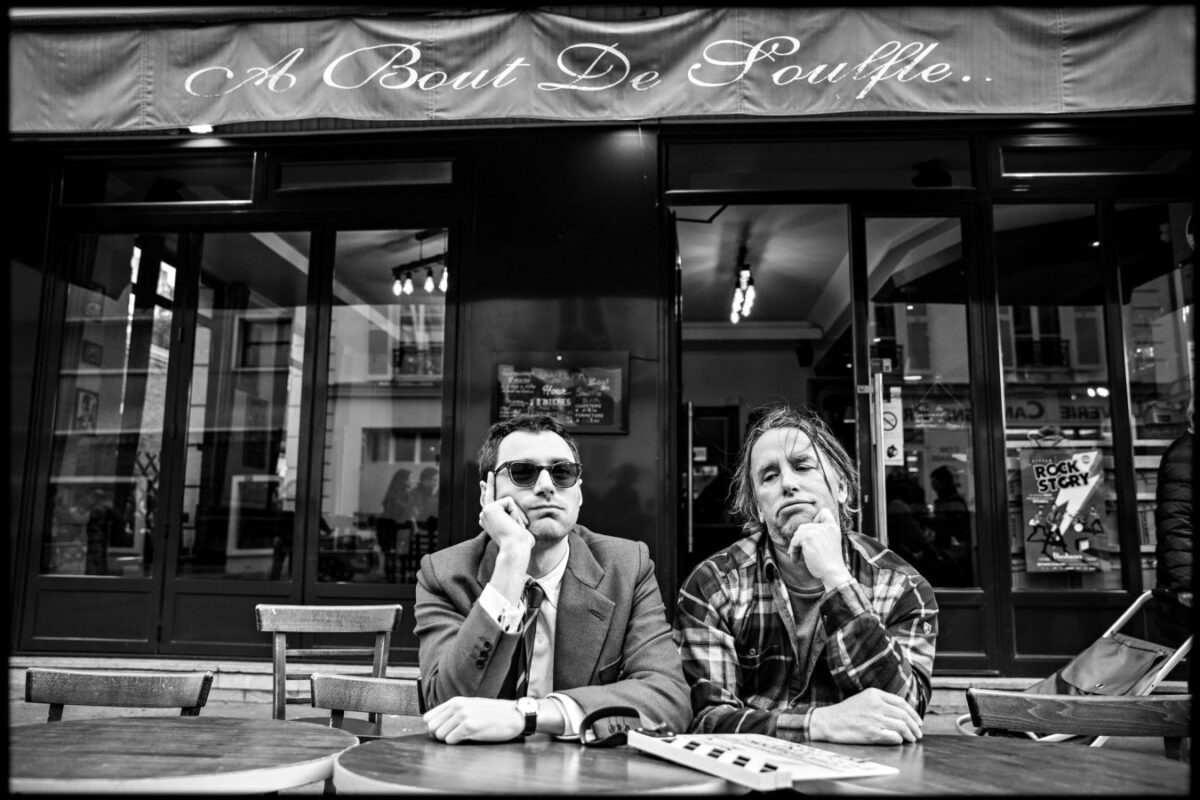
I was really surprised to look over the filmography and realize you’ve had no feature films in black-and-white.
No. First one.
The film looks fantastic, with a confidence and muscularity to the black-and-white photography. Was there kind of a seminar, even a crash course, in distinct ways to operate with it?
I’d been looking forward to black-and-white for years; I’d shot some shorts on black-and-white, in my past. But my attitude was: if you’re going to do black-and-white, you have to do it for a real purpose. There has to be a reason. There’s a reason Raging Bull is in black-and-white. I wouldn’t do it just to be some novelty, gimmick, or something, so this has to be black-and-white, so you take on that challenge. And not just black-and-white, but 1959, ‘60s [Laughs] black-and-white. Which doesn’t really exist anymore, you know? You kind of have to create that. So that was just the visual palette and the challenge.
But black-and-white, beautiful as it is, it was also very forgiving when it came time to do visual effects, and I incorporated some archival footage and things like that. When you see the beach at Cannes, that’s some footage that was shot back then––I’m just kind of integrating that––and I think black-and-white is very forgiving for that integration into the overall… color can be a little jarring, or just look dated. This was able to achieve a really good balance. The DoP I was working with, David Chambille, is a young French cameraman. I’ve met a lot of them, but he was the one who was really enthusiastic about my ideas of making the films look like then. He said Raoul Coutard is his favorite cameraman and we just were finishing each other’s sentences with our ideas. We did a lot of tests. It was a really fun visual project. And it’s not just the camera; everybody’s in on it. Production design, wardrobe. Everybody’s in on the overall scheme of things.
And nothing in shot selection or editorial rhythms had to adjust? Maybe it’s more about the speed of the film.
Well, this film, I was really eliminating the modern language of cinema. I didn’t want to use any techniques that… this is like the pre-Bertolucci, pre-Storaro look of the late ‘60s, ‘70s. The techniques had to feel time-appropriate. I’m eliminating half of cinema history in the way this thing looks. Really, there couldn’t be a shot in this movie that wouldn’t fit in a Nouvelle Vague movie from ‘59 to ‘62 or so––that was the scheme. That was just the plan. But when you break it down, you look at how they shot their movies, we were saying, “Well, they must have put this shot on sticks.” It’s like, “No, it’s handheld. Look. There’s the slightest bit of movement.” You go, “Damn, he’s good! Raoul Coutard, damn, he’s a good cameraman.”
But they weren’t really trying to draw attention to their camera. You know, the cliché of the jumpcut and the handheld camera, you see it now––people are shaking the camera. They’re not doing that. They want to make as smooth a dolly shot as they can. They just don’t have an expensive dolly; they don’t have a crane. They’re doing it within their very limited means. They’re shooting off balconies. Simple car mounts, hood mounts, trunk mounts. So we just went with their techniques.
This film gave my cinephilia a little defibrillation; it reminded me how strange and special the whole medium is. As you get older, though, it can be hard to reconnect with cinephilia. I wonder if you’ve seen anything of late that’s excited you like when you were a young man––or at least exciting you as a less-young man.
You know, that’s a challenge in cinema: you get older, you’ve seen so many thousands of movies, you become maybe a little harder to impress. I didn’t want to be that guy; I don’t want to be that old guy who is like, “There’s nothing new and I’ve seen it all.” It’s like… eh. My attitude is: there’s a revolution going on always. There has to be. Young artists, you come in dissatisfied with the status quo––you have to do something different, whatever that status quo you find yourself in. Pissed-off young artists have to reinvent and come up with stuff. I think it’s always somewhere in the world, there’s stuff going on.
I don’t seek it out the way I used to; it has to kind of come to you somehow. The film society in Austin, we show a lot of stuff, but one filmmaker I’ve been enthused about––he’s, whatever, a generation younger than me––is the Romanian, Radu Jude. His films seem pretty radical. I met him this summer. I was like, “Yeah, you remind me of Fassbinder in the ‘70s. You’re really saying ‘fuck it.’” [Laughs] Like I said: there’s always a revolution going on.
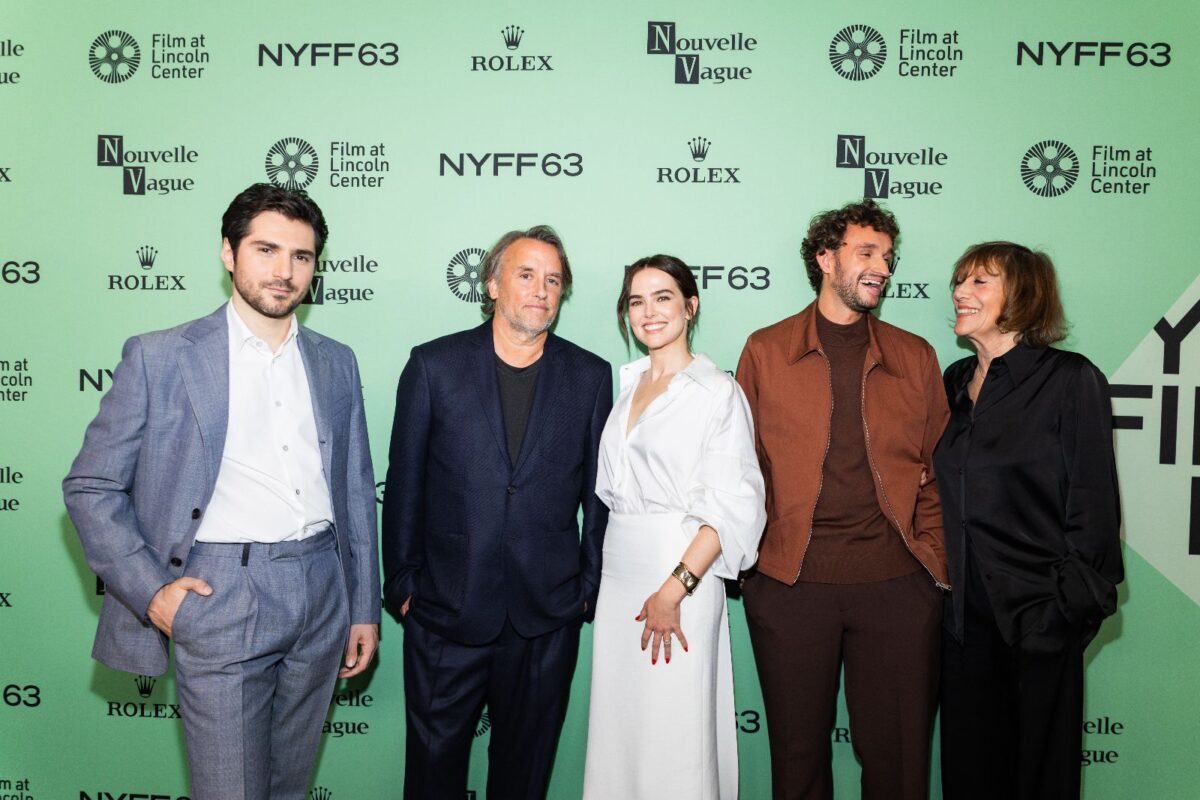
Photo by Mettie Ostrowski, courtesy of New York Film Festival
Maybe this is a bit of a softball, but I honestly wonder what film of yours would make for the best behind-the-scenes, making-of movie.
Oh, wow. That’s a good question. For sheer conflict and intrigue, probably Dazed and Confused. I had my [George] Beauregard I was fighting with. Most of my films, I would like to think, are pretty boringly normal––everyone’s pretty happy and there’s not a lot of conflict. That was my one and only battle. Because there was a studio. There was my own insecurity. There was my own… whatever. The actors: a lot was going on between all of them. It was more like a high school, summer camp kind of thing.
That’s a good answer. I can imagine the young actor playing you with the longer hair.
[Laughs]
You have the young Ben Affleck who you don’t say is going to become a huge star, but it’s understood. Just indulge in all of that. Not that you should make it. It might be hell for you to make it, but somebody else could do it.
Oh, it would be hell for me to have to watch it, much less make it. So no. [Laughs] No, that’s pretty funny, actually. No, I just find there’s something kind of comedic––Nouvelle Vague is a funny movie just because Godard’s a funny character. He’s the most unusual and comedic of all directors. There’s something just funny about making a film in the world: a crew drops in on the real world and tries, you know… it should be pretty light. Truffaut’s Day for Night is a pretty lighthearted movie, even though dark things happen. An actor dies in it. It runs through every problem you have, but Truffaut just kind of perseveres through.
I would propose three movies about the making of the Before trilogy produced every nine years. But who wants to do that?
No, that’s its own movie. I could make a comedy about that. But it would be getting a little personal. These two films coming out: it wasn’t planned that they’d both be out within weeks of each other. I was hoping that wouldn’t happen, but that’s just two different distributors; it just kind of happened that way. It’s no big deal.
I won’t be one to complain about two Linklater movies in the same month.
Well… I’m getting it all over with in a short amount of time. Maybe that’s good.
That’s one way of looking at it.
Pull off the Band-Aid. Two Band-Aids at once.
Nouvelle Vague is now in limited release and begins streaming on Netflix on Friday, November 14.