
Following The Film Stage’s collective top 50 films of 2025, as part of our year-end coverage, our contributors are sharing their personal top 10 lists.
In a year of tumultuous upheaval for Hollywood, this year proved that no matter the profit-driven ways powerful executives erode the very craft they purport to hold near and dear, filmmakers will find a way to create exceptional work. Sure, my number-one film of the year may be the rarest anomaly of a master filmmaker being given all the resources to deliver something far outside the confines of a standard wide release, but looking at the rest of my top ten list, these are directors working both inside and outside the United States in unconventional ways to create deeply meaningful, singular works of art.
Nearly making the top 20 list were a few of my favorite big-screen, theatrical experiences of the year: Sinners, Avatar: Fire and Ash, and Marty Supreme. Blue Moon and If I Had Legs I’d Kick You, sporting two of the best lead performances of the year, nearly made the cut, and the same for Ari Aster’s distended-but-effective Eddington, Hlynur Pálmason’s gorgeous, idiosyncratic The Love That Remains, Alain Guiraudie’s bitingly humorous Misericordia, and a trio of fantastic docs: Cover-Up, Videoheaven, and Henry Fonda for President.
Without further ado, one can see my favorites of the year below, and if you wade in the list-heavy waters of Letterboxd, here is my ranking of all 2025 films viewed and an early look at 2026.
Favorite First-Time Watches of 2025 (#1-#10, full list here): Hatari!, Belfast, Maine, Pulse, La Région Centrale, Punishment Park, Abraham’s Valley, When a Woman Ascends the Stairs, Kill Bill: The Whole Bloody Affair, D’Est, Choose Me, Christian F., Southern Comfort, Godard’s Passion, Daddy Longlegs, Subarnarekha
Honorable Mentions (#20-#10): My Undesirable Friends: Part I – Last Air in Moscow, Familiar Touch, Cloud, Sorry, Baby, Magellan, Resurrection, Afternoons of Solitude, The Perfect Neighbor, It Was Just an Accident, and Father Mother Sister Brother
10. Black Bag (Steven Soderbergh)

If a James Bond or Mission: Impossible film excised all its action scenes––save a stray explosion or gunshot––while employing a script with a pop John le Carré sensibility, it might resemble something like Steven Soderbergh’s Black Bag. A hyper-slick, suave spy thriller, it’s mainly relegated to dinner tables and office rooms as stages for rapid-fire, gleefully barbed verbal sparring scripted by David Koepp, returning to the genre after Ethan Hunt’s first outing. Primarily focusing on a trio of couples working in British intelligence, Koepp’s script poses the question: it is possible to have a healthy relationship when there’s no such thing as separating work from life, particularly when your job description is one of a professional liar? Continue reading my full review.
9. The Secret Agent (Kleber Mendonça Filho)
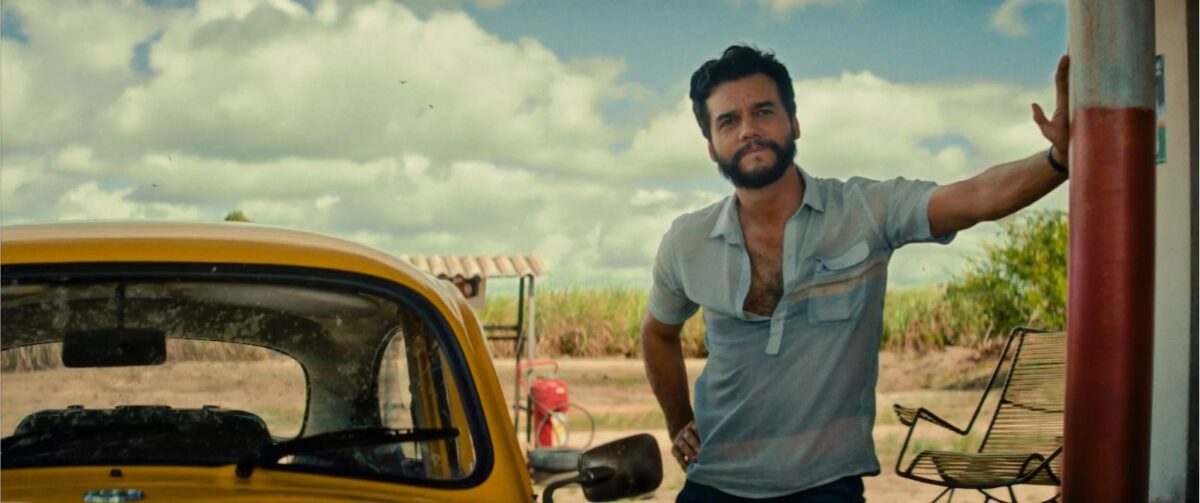
Through his four narrative features, each one expanding on the last in fascinating ways, Kleber Mendonça Filho has established himself as a filmmaker who refreshingly cares little for convention. His encyclopedic knowledge of film history makes for films less indebted to one particular director or even genre, but rather results in a melange of intoxicating, surprising structural and aesthetic decisions. The Secret Agent, a career peak thus far, is ostensibly a political thriller drenched in paranoia, but the ways Mendonça Filho diverts down various avenues that intrigue him most makes for a full-bodied cinematic experience one desires to return to again and again.
8. Eephus (Carson Lund)
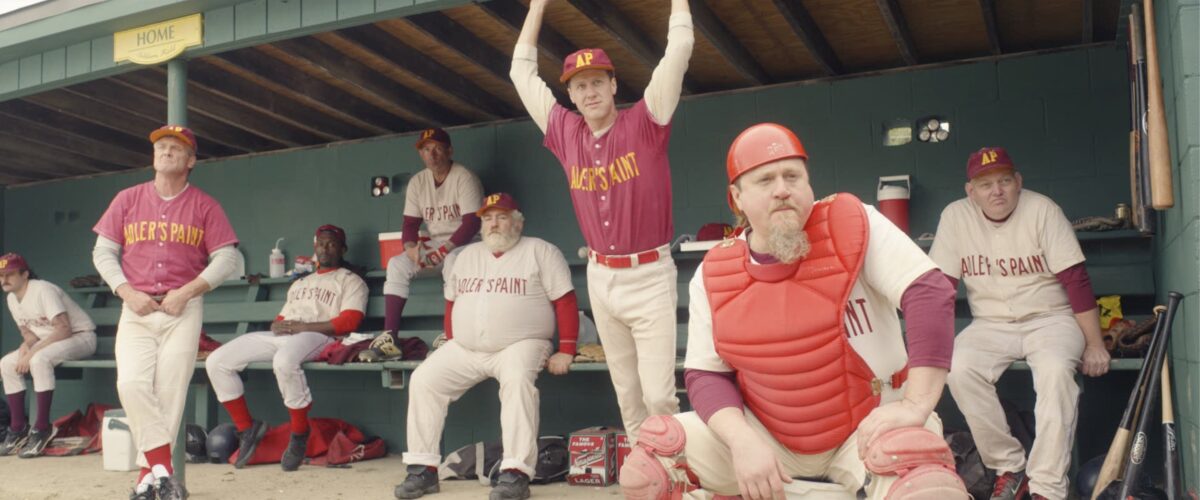
If the perfect sports movie illuminates the fundamentals that make one fall in love with the game, there may be no better movie about baseball than Carson Lund’s Eephus. Structured solely around a single round of America’s national pastime, Lund’s debut feature beautifully, humorously articulates the particular nuances, rhythms, and details of an amateur men’s league game. By subverting tropes of the standard sports movie––which often captures peak physical performance in front of legions of adoring fans––Lund has crafted something that is singularly compelling. Rather than grand slams and no-hitters, there are errors aplenty and no shortage of beer guts and weathered muscles amongst the motley crew. Lund is more interested in examining the peculiar set of social codes that only apply when one is on the field, unimpeded by life’s responsibilities and entirely focused on the rules of the game. Continue reading my full review.
7. Who by Fire (Philippe Lesage)
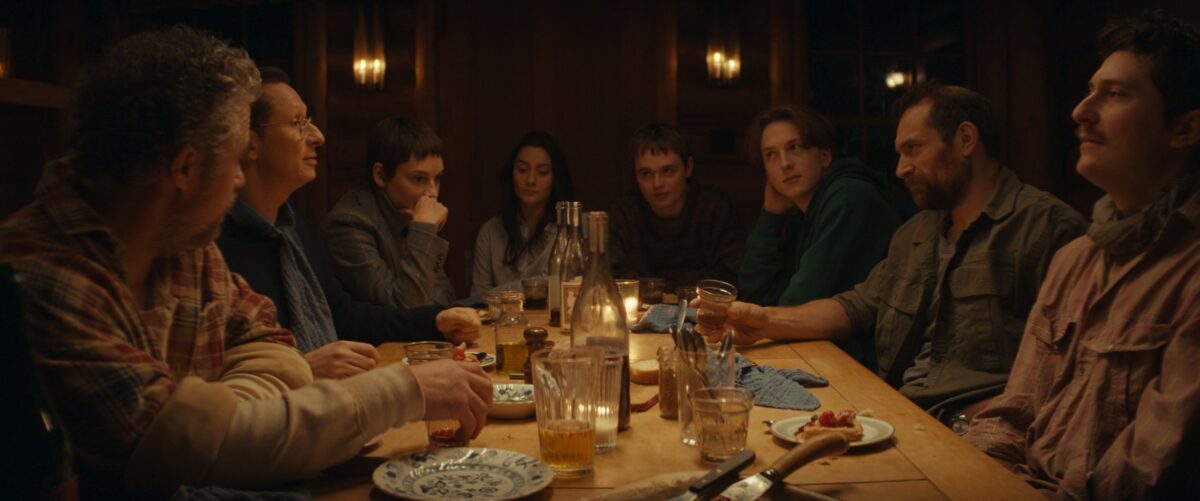
Philippe Lesage’s first landed on my radar (and year-end top 10 list) with his deeply moving, boldly structured coming-of-age tale Genesis back in 2019. The Quebecois filmmaker finally returned this year with Who by Fire, a follow-up that expands his expertise in crafting fully fleshed-out characters that still contain a wealth of inner mysteries. Following two families on a secluded getaway in a remote cabin as they contend with career and romantic jealousies, this is a lush, intimate, and psychologically riveting drama. It’s a film to get lost in as Lesage wonderfully immerses the viewer as if they were another member of the getaway.
6. BLKNWS: Terms & Conditions (Kahlil Joseph)

Celebrating and condensing centuries of Black history that would take more than a few lifetimes for any scholar to thoroughly ascertain in totality, Kahlil Joseph’s BLKNWS: Terms & Conditions eschews dryly academy ethnographic study to deliver a kaleidoscopic, vigorous, engrossing journey. Utilizing Henry Louis Gates and Anthony Appiah’s W. E. B. Du Bois-inspired “Africana: The Encyclopedia of the African and African American Experience”––the latest edition of which is nearly 4,000 pages––as its foundation, with page numbers presented throughout its plethora of references, the viewing experience is less daunting than one imagines the filmmaking process surely must have proved. Converging and clashing seemingly thousands of pieces of media to thought-provoking effect, this is a directorial debut that’s overwhelming in its rapid pace while also acting as a generous invitation to further examine any one of its sprawling tendrils of past, present, and future Black history. Continue reading my full review.
5. Sirāt (Oliver Laxe)

As Hollywood attempts to find new ways to shock audiences, it was an unlikely Cannes premiere that provided the most unforgettable cinematic jolts of the year. Judging from his accomplished but more sedate earlier features Mimosas and Fire Will Come, I had no idea Oliver Laxe was capable of delivering such an uncompromising, intense vision with Sirāt. Yes, Wages of Fear and its remake Sorcerer are clear touch points for this rave-fueled desert journey of a father searching for his missing daughter, but Laxe takes those pieces and creates something even more unsparing and visceral. After seeing this with a full crowd, you’ll understand this is 2025’s prime example of why the theatrical experience is unparalleled.
4. The Shrouds (David Cronenberg)

In his ninth decade on this planet, David Cronenberg is presumably more attuned than ever before to the intricacies of a degrading body not meant to last. With The Shrouds––his startingly mournful, slyly humorous inquiry into coping after the death of a loved one––the great Canadian filmmaker has crafted one of his most eloquent statements on mortality. While many have written off his later work as stilted and cold, it’s precisely that exacting, distinctive approach that sends an initial chill through the viewer’s mind and body, only to see the ideas he’s supplanted germinate into a fuller form in the months and years since initial viewing.
3. The Mastermind (Kelly Reichardt)
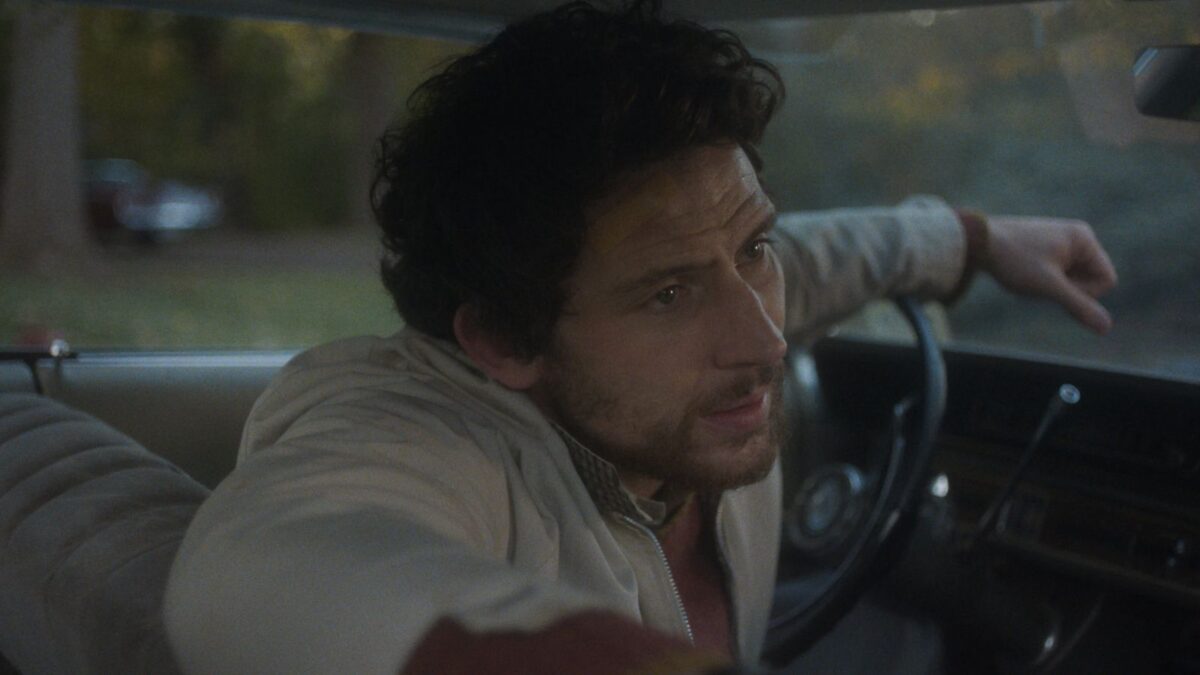
For those who adore seeing the ways Kelly Reichardt deconstructs a genre, The Mastermind‘s rather uncomplicated plot gives her the perfect canvas to dig into the details. Flipping the crime drama on its head, the relatively low-key heist at the center is finished within the first 30 minutes, giving way to a Bressonian slow burn of the aftermath. A family crumbles, and the self-destructing man at the center (a brilliant Josh O’Connor, his best performance of the four this fall alone) delusionally attempts to weasel his way back into a life of privilege. In her unassuming way, Reichardt’s final statement seems to be that leading a life completely unengaged with politics and the world around you is what actually will get you caught.
2. Caught by the Tides (Jia Zhangke)
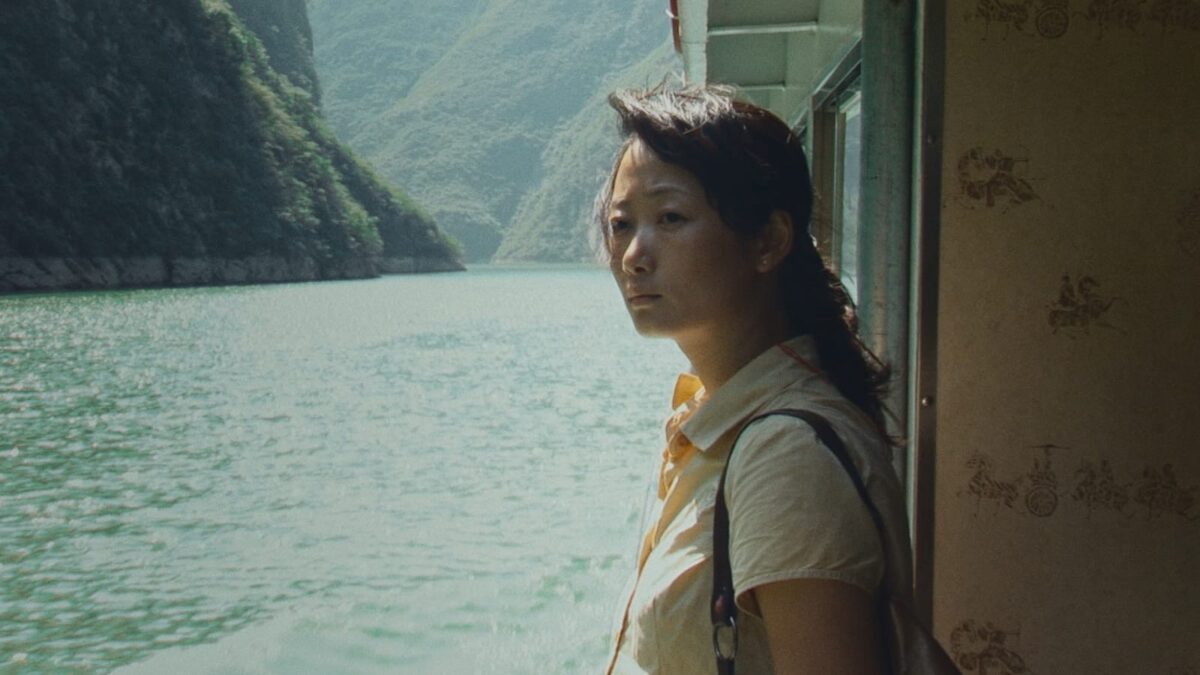
The culmination of a lifelong project, Jia Zhangke’s Caught by the Tides is less about a simple logline and more concerned with radically encapsulating decades of tumultuous change, both for a country and for Zhao Tao’s Qiao Qiao. With millennium-bridging footage, Jia plunges the viewer into a hypnotic whirlwind of life itself: a spectrum ranging from ecstatic dance to aching isolation. Leading to a denouement that has more to say about post-pandemic life than an entire book could hope to capture, this is a film composed of enigmatic feelings that carry the weight of a lifetime. That Jia is able to arrange such disparate formal strands into such a cohesive work feels like nothing short of a miracle.
1. One Battle After Another (Paul Thomas Anderson)
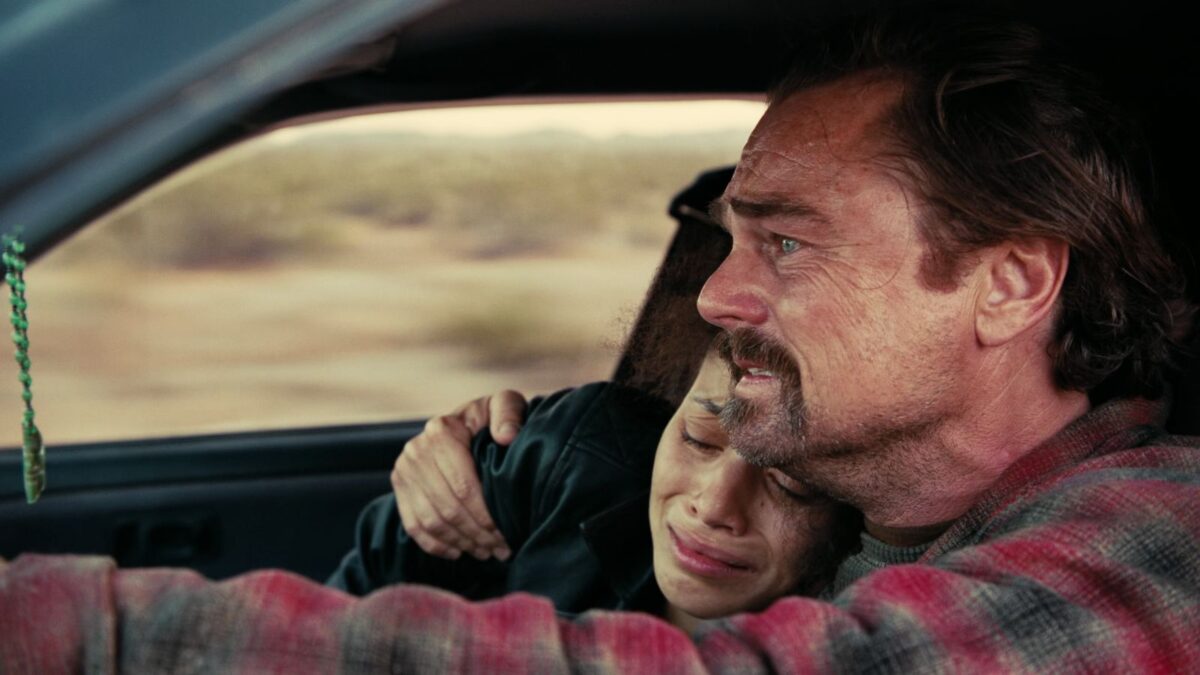
“16 years later, the world had changed very little.” Five viewings later, and Paul Thomas Anderson’s One Battle After Another continues to blossom. Expanding the structural tendrils of Thomas Pynchon’s Vineland into a world all his own, Anderson blends action, comedy, western, and family drama to create a surprisingly buoyant journey through America’s rotten underbelly. That certain images of true terror––kids locked up in government detention center cages, far-right militia preparing to murder a teenager––can co-exist in the same film that contains the funniest scenes of the year––a high-out-of-his-mind Bob Ferguson questioning the troubled legacy of America’s forefathers and Sensei Sergio’s joyous commitment to friendship and freedom––proves PTA’s total tonal mastery. This is a patchwork full of intensity, emotion, and humor, all often occupying the same scene. It’s a film about how true revolution will only exist through altruistic community. It’s a film about how bonds of family go far deeper than blood. It’s a film of hope. “We failed, but maybe you will not. Maybe you will be the one who puts the world right.”