
The world has long needed a memoir from Abel Ferrara, and now we’ve got one, along with smart studies of the lives and careers of Clint Eastwood, Jonathan Demme, and Ed Wood. Plus, a stunning exploration of The Crow and lots more––read on for our first column of the fall.
Clint: The Man and His Movies by Shawn Levy (Mariner Books)
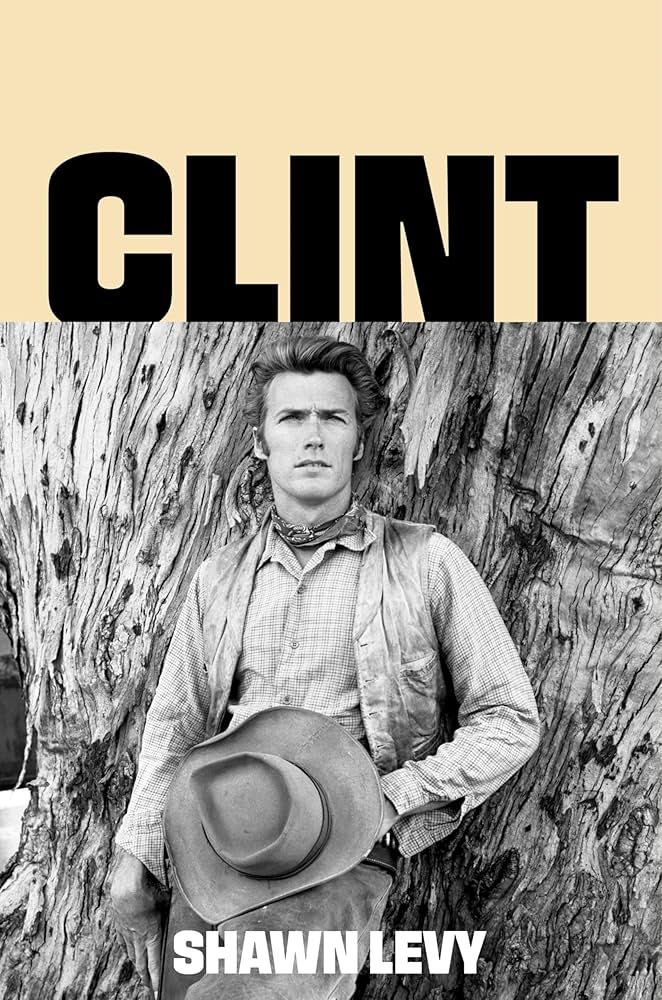
Clint Eastwood deserves an epic biography, and Shawn Levy delivers with The Man and His Movies. Surprisingly brisk for a 500-page book, Clint covers the entirety of Eastwood’s life while also detailing each film at length. Even lesser productions like Pink Cadillac and Jersey Boys are cataloged from concept to release. Levy does not hesitate to share his opinions; his thoughts on Hereafter are harsh but humorous: “No matter whether your beliefs about life after death conform to traditional religion or something more paranormal, you will likely find Hereafter a slog that makes life on this plane of existence less vital.” It also must be acknowledged that this is a warts-and-all biography, which is more than appropriate for a figure who has had his share of controversies. (See: Sondra Locke.) Through it all, though, Levy displays respect and admiration for his flawed, brilliant subject. As he says near book’s end, “[H]ere was a man in his nineties wrestling with themes and demons that had haunted his entire career. If that doesn’t define someone as a lifelong artist, then nothing does.”
Scene by Abel Ferrara (Simon & Schuster)
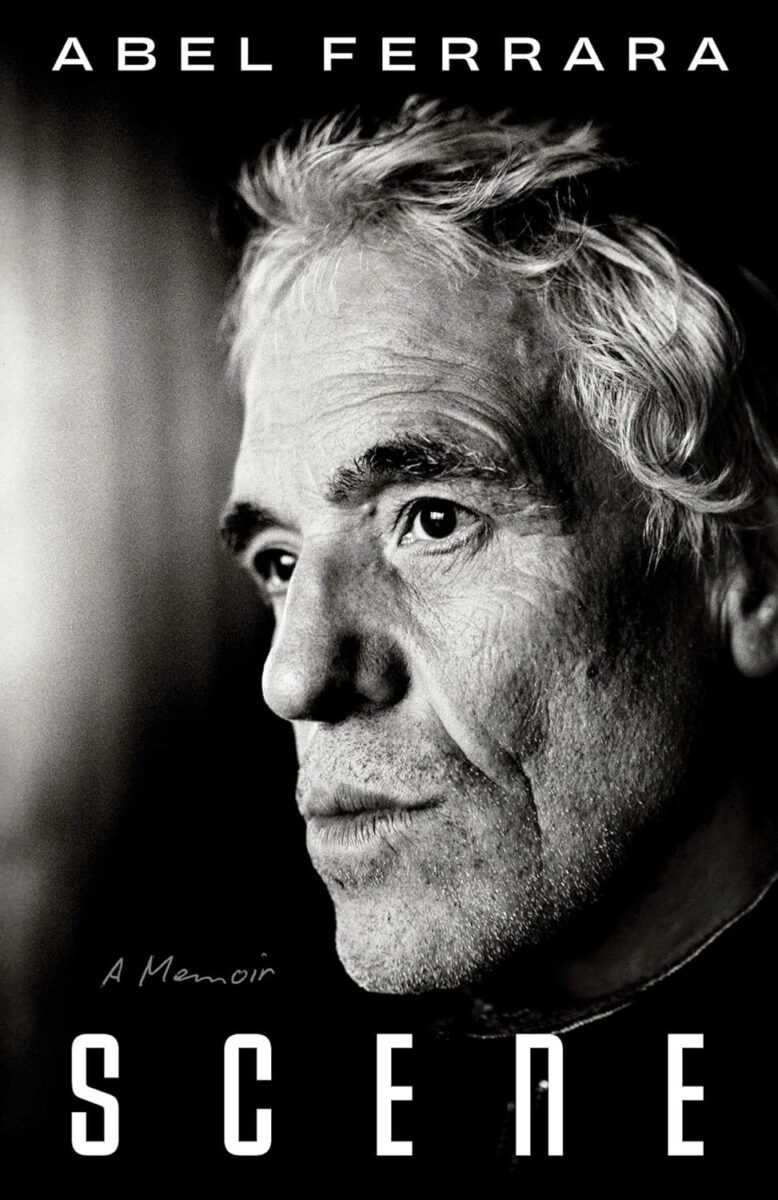
If you’ve followed the career of Ms. 45, King of New York, and Bad Lieutenant director Abel Ferrara at all, you’ll be unsurprised to hear his memoir, Scene, is blisteringly funny, delightfully profane, and startlingly honest. It is also filled with one-liners that are full of wit but tinged with sadness: “If you have never gotten evicted from your apartment I would suggest you pay your rent or leave voluntarily.” “My crew were all in recovery, so they were the last people I wanted to be around.” “I wrote a song called ‘Tonight Will be the Night’ for the soundtrack of The Funeral. It was a rip-off of Bob Dylan’s ‘Blind Willie McTell,’ but we couldn’t afford ‘Blind Willie McTell.’” Ferrara’s stories––of his alcoholic father and his own bouts with addiction, of dealing with producers and temperamental actors, of screw-ups and successes––are endlessly fascinating. Scene is one of those successes.
Ed Wood: Made in Hollywood USA by Will Sloan (OR Books)
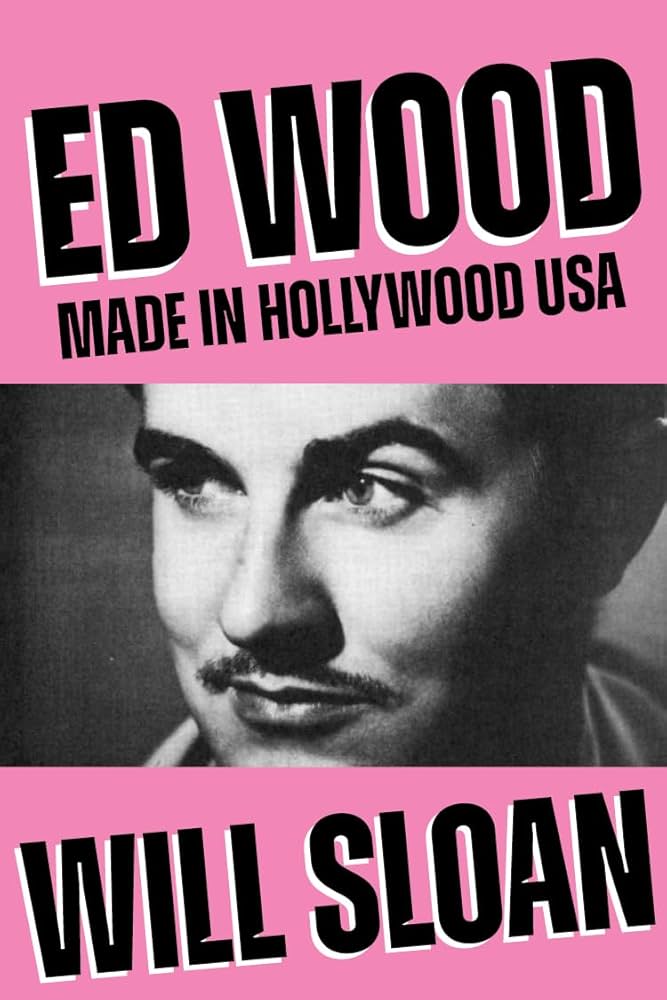
Will Sloan is one of the most entertaining and insightful cinema voices on the cursed X platform (@WillSloanEsq), so it is saying something when I tell you that Ed Wood: Made in Hollywood USA is his finest achievement yet. Sloan’s reappraisal of the “so-called ‘Worst Director of All-Time” smartly acknowledges what we already know of the director of Plan 9 from Outer Space, mainly from the Medveds’ Golden Turkey Awards and Tim Burton’s wonderful Ed Wood, which “tastefully elides the truth” of its subject’s sad final days. As Sloan writes, “My interest in Wood is strengthened, not diminished, by my belief that he is not fully reclaimable––either intellectually, aesthetically, or politically.” Wood produced something much “stranger,” Sloan believes, than “competent, professional movies in the classical Hollywood style,” and that makes he and his work truly captivating. (For more, listen to our interview with the author.)
It Can’t Rain All the Time. The Crow by Alisha Mughal (ECW Press)
There hasn’t been a film-related text in 2025 that has hit me harder than It Can’t Rain All the Time. Alisha Mughal’s entry in ECW Press’ “Pop Classics” series is an emotional atomic bomb, a book that beautifully highlights the greatness of Alex Proyas’ The Crow and the performance of its late star, Brandon Lee. More than that, though, it also serves as something of a memoir for its author. Mughal finds that Eric Draven’s onscreen journey in many ways mirrors her own: “[A]s I rewatched The Crow again and again as I wrote this book, I found myself tearing up. That I feel moved to tears watching this film, after a while of not being able to cry, makes me happy––my feelings are not only a celebration of my life but also the life within this film, a life that continues to hum.” It Can’t Rain All the Time is a book you may want to carry around and re-read––it is that profoundly impactful, even more so when the immortal soundtrack to The Crow (specifically songs like the Cure’s “Burn” and Medicine’s “Time Baby III”) swirls in the background.
There’s No Going Back: The Life and Work of Jonathan Demme by David M. Stewart (The University Press of Kentucky)
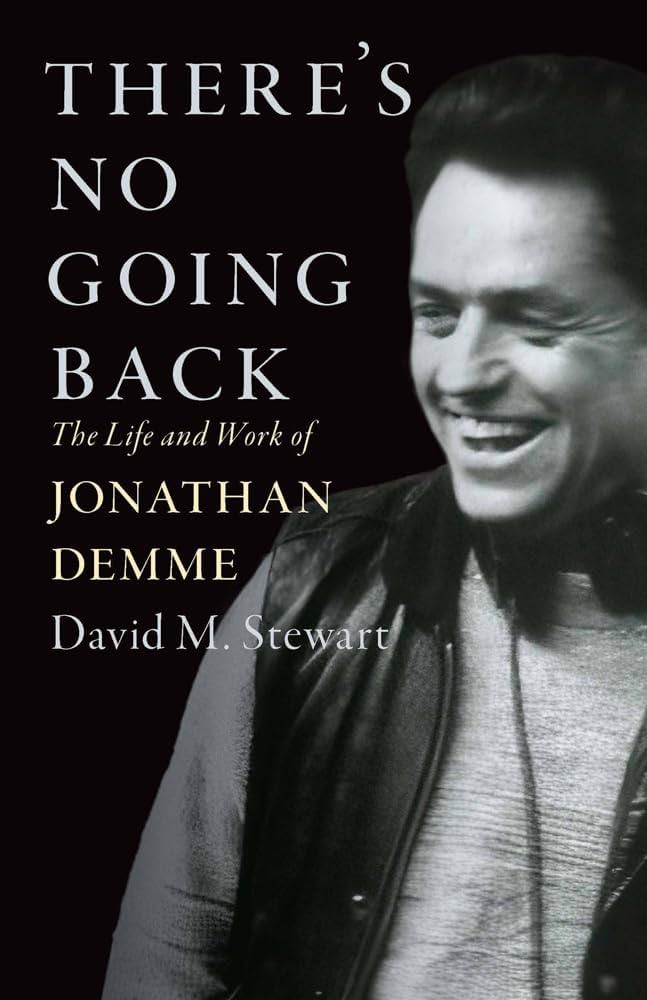
It might surprise you to learn that David M. Stewart’s There’s No Going Back: The Life and Work of Jonathan Demme is, as the dust jacket shares, “the first complete biography” of the late director of Melvin and Howard, Stop Making Sense, The Silence of the Lambs, and Philadelphia. Stewart uncovers plenty of charming details about Demme’s life, including his stint working for Embassy Pictures as a young man. However, once Demme starts directing for Roger Corman, the story truly begins. His was a complex career and one filled with struggle, including battles with star Goldie Hawn over the making of Swing Shift. The prevailing mood in There’s No Going Back, though, is of an artist who never stopped searching. As Stewart writes, “Jonathan Demme was a luminous figure whose ceaseless optimism and upbeat energy are as memorable as the films he made, the causes he fought for, and the stories he loved to tell.”
David Lynch: His Work, His World by Tom Huddleston (Frances Lincoln) and Wes Anderson: All the Films by Christophe Narbonne (Black Dog & Leventhal)
I’m not sure I’ve ever seen a book about the late, great David Lynch or director Wes Anderson that I have not devoured. Two of the latest are weighty coffee-table books, and both are recommended to fanatics. In David Lynch: His Work, His World, author Tom Huddleston smartly runs through the master’s life and career; the book concludes with Twin Peaks: The Return and Lynch’s untimely passing. Wes Anderson: All the Films is a more comprehensive study, running through every entry in the Anderson filmography, right down to his shorts and commercials.
Quick hits
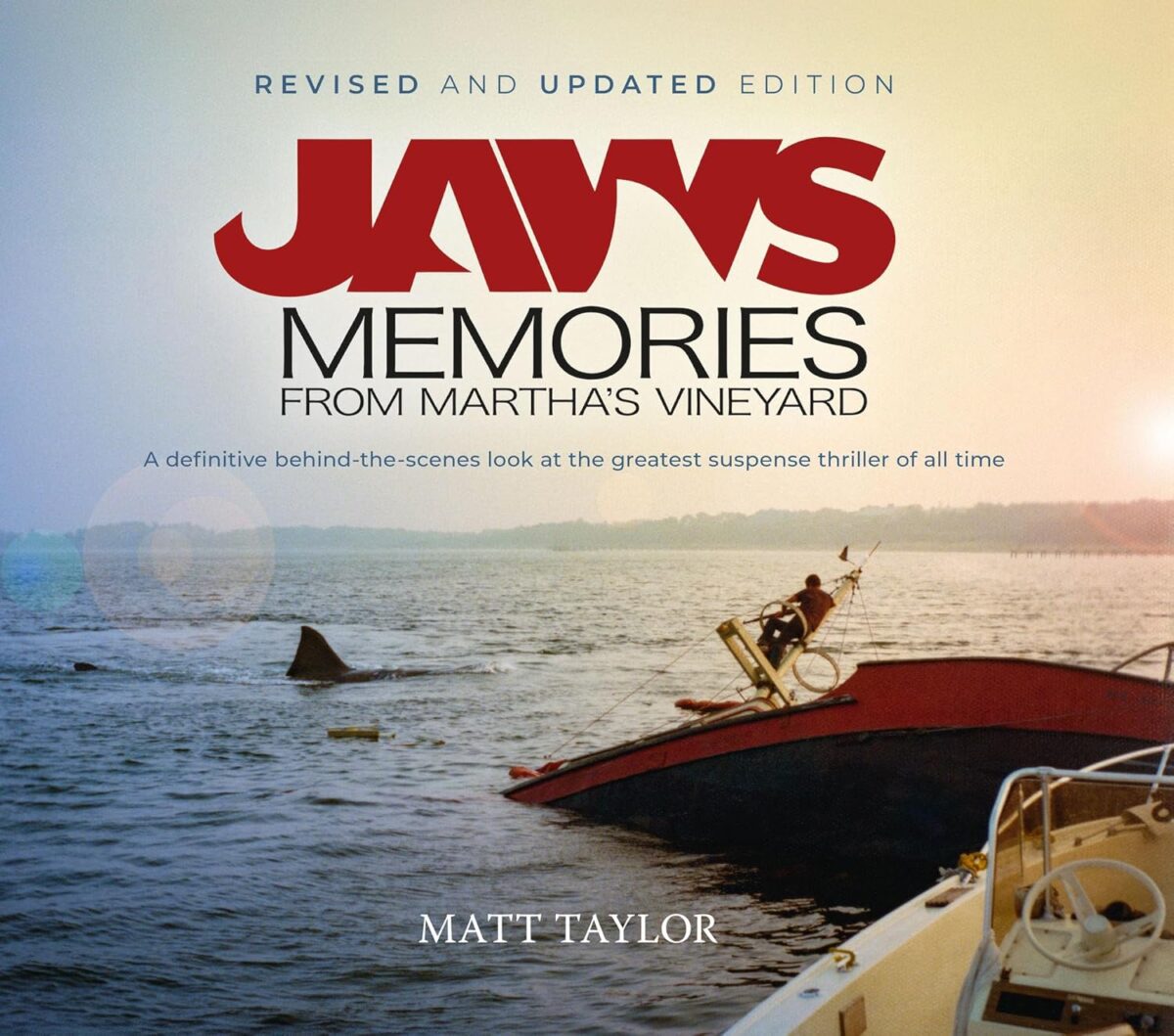
One of the greatest moviegoing moments of 2025 for me was taking my son to see Jaws on the big screen. It was his first time seeing it, period, and my first time seeing it on the big screen. Jaws: Memories From Martha’s Vineyard (Revised and Updated Edition) by Matt Taylor (Titan Books) is a fine tie-in to the recent successful rerelease of Steven Spielberg’s classic. I could read about (or watch) accounts of the perilous making of Jaws any time, but Jaws: Memories uniquely goes beyond the temperamental Bruce to share stories and photos from the Martha’s Vineyard locals who helped bring the film to life. Learn more about the book in a recent Film Stage feature.
Titan Books’ ongoing series exploring the making of the original Star Trek films continues with Star Trek III: The Search for Spock — The Making of the Classic Film, by John Tenuto and Maria Rose Tenuto. As the authors find, following the huge success that was The Wrath of Khan was a daunting task: “The general narrative goal of the film was obvious: resurrect Spock. But how to do that, both emotionally and believably, was the challenge.”
Fever: The Complete History of Saturday Night Fever by Margo Donohue (Kensington Publishing Corp.) is a comprehensive history of John Badham’s Saturday Night Fever, the gritty blockbuster that elevated John Travolta to icon status. Donohue also points out how, for many years, Fever was “caught in a bit of backlash against the 1970’s disco era it represented.” Today, the film (and disco) are rightfully acknowledged as vitally important. The Rocky Horror Picture Show was a more slow-building 1970s hit. As outlined in Absolute Pleasure: Queer Perspectives on Rocky Horror by Margot Atwell (The Feminist Press), the film has long been seen as a key text in the gay alternative canon. The essays in Absolute Pleasure seek to understand its impact on audience members from different eras. As Flloyd puts it, “Rocky Horror was my first family outside of the family I grew up with. It was my first cult.”
Scream with Me: Horror Films and the Rise of American Feminism (1968-1980) by Eleanor Johnson (Atria Books) consists of 10 essays exposing how horror classics like Rosemary’s Baby, The Exorcist, and The Shining shed light on cultural views of women, domestic violence, and reproductive rights. Most interesting is the inclusion of Sarah Polley’s Women Talking. As Johnson writes, “by my lights it’s a hard-core feminist horror film.”
Another fascinating examination of horror and feminism is That Very Witch: Fear, Feminism, and the American Witch Film by Payton McCarty-Simas (Luna Press Publishing). This is a riveting, essential study of the links between cinematic portrayals of the witch and the feminist movement. McCarty-Simas, an author and editor whose work has appeared in Film Daze and Bright Lights Film Journal, has crafted a remarkably insightful text.
Likewise insightful is The Superhero Blockbuster: Adaptation, Style, and Meaning by James C. Taylor (University Press of Mississippi). Taylor spends significant time analyzing movement in Superman: The Movie (he identifies the use of “trajectories through the depth of cinematic space”) and the Fox X-Men series of films (“The X-Men franchise is emblematic of a broadening of spatial locales beyond the urban metropolis in 1950s and 1960s US superhero narratives”). Rewinding the 80s: Cinema Under the Influence of Music Videos, Action Stars, and a Cold War, the latest in TCM’s series for Running Press Books, covers several of the films featured in The Superhero Blockbuster. However, John Malahy’s book is a more celebratory affair. It is also impressively diverse; while the usual suspects (E.T the Extra Terrestrial, Beverly Hills Cop) are here, the likes of Akira and The Vanishing are also represented.
Three dishy non-fiction entries are sure to please your inner Deuxmoi reader. Empire of the Elite: Inside Condé Nast, the Media Dynasty That Reshaped America by Michael M. Grynbaum (Simon & Schuster) exhaustively chronicles the rise and evolution of Condé Nast; it goes without saying that Vogue’s Anna Wintour is the most compelling figure here. You might want a shower after reading Hollywood Vampires: Johnny Depp, Amber Heard, and the Celebrity Exploitation Machine by Kelly Loudenberg and Makiko Wholey (Dey Street Books). Loudenberg and Wholey cover the whole sordid Depp-Heard affair, from marriage to fireworks to trial and aftermath. And as a longtime fan of Gwyneth Paltrow, I was thrilled to hear about the publication of Gwyneth: The Biography by Amy O’Dell (Gallery Books). Guess what? It’s as titillating, eye-opening, and Goop-y as you’d expect. Paltrow does not always come off well here, but O’Dell certainly shows us how ambitious and bold she is, and that she is far, far more than an actor.
New books on music
Oasis summer has sadly come to an end––although with any luck, Noel and Liam Gallagher will keep the party going in 2026. Joining the recently released Supersonic: The Complete, Authorized, and Uncut Interviews and A Sound So Very Loud: The Inside Story of Every Song Oasis Recorded (both covered here) are three more books, all with a unique focus. The most humorous? That’s Oasis Talking Shite, a collection of Gallagher quotes credited to “Not the Gallagher Brothers” (Simon & Schuster). A sampling of favorites: “[The royal family] are always going to be here, just like … the lampposts” (Liam); “[Liam’s] not as good as John Lennon. He’s not even as good as Jack Lemmon” (Noel); and “Rock stars exercising? I don’t think it’s right” (Liam). Gallagher: The Rise and Fall of Oasis by P.J. Harrison (Hachette Mobius) is a biography that does something few have: following the entirety of the band’s career, even the solo years. Finally, And After All: A Fan History of Oasis by Melissa Locker (Gallery Books) tells the Oasis story through the words of the band’s fans. It’s a comprehensive account that starts with the band’s first ever show (at King Tut’s Wah-Wah Hut in Scotland) all the way to the reunion announcement.
Wales legends the Manic Street Preachers famously opened for Oasis at Knebworth in 1996, and as documented in Keith Cameron’s 168 Songs of Hatred and Failure: A History of the Manic Street Preachers (White Rabbit), their career has been gripped by even more trauma and controversy than the Gallaghers’. For those unfamiliar with their story, the Manics started life as GNR-loving rock terrorists, created the dark wonder that was The Holy Bible, saw guitarist Richey Edwards disappear (never to be found), and then triumphantly returned with 1996’s masterful Everything Must Go. Featuring new interviews with the band and associates, 168 Songs chronicles their journey by marching through the history of songs like “Motown Junk,” “Motorcycle Emptiness,” and “A Design for Life.”
Our last music release is Greg Prato’s Alternative for the Masses (Motorbooks), an oral history of 1990s alt-rock. It’s a blast. The likes of Bucth Vig, Moby, Tanya Donelly, and Fred Schneider discuss MTV, Lollapalooza, Nirvana, and more. Prato also offers its interviewees the chance to recommend favorite 90s releases and songs. Alternative for the Masses is sure to inspire some stupendous Spotify playlists.
New and recent novels
Let us close the column with a few novels, including several that are just right for Halloween.
William author Mason Coile passed away in January. The Canadian author’s final work, horror-sci-fi hybrid Exiles (G.P. Putnam’s Sons), is a strange mystery set on Mars. It’s a fine posthumous release, one I highly recommend. Rachel Eve Moulton’s Tantrum (G.P. Putnam’s Sons) is a wild feminist horror novel that explores motherhood in strange, terrifying fashion. And Fiend by Alma Katsu (Putnam) is a deeply entertaining account of a wealthy family that––uh-oh––just may be cursed. A supernatural Succession, if you will.
Michael Wehunt’s The October Film Haunt (St. Martin’s Press) is a horror novel about the star of a cult classic, a dread-inducing videotape, and a demented “sequel.” It’s screaming for a film adaptation. The same is true of Caitlin Starling’s The Graceview Patient (St. Martin’s Press), a gothic delight in which a young woman suffering from a rare condition agrees to undergo an experimental treatment at a menacing hospital called Graceview Memorial.
Fans of novels set in the world of cinema will want to check out A Beautiful Way to Die by Eleni Kyriacou (Head of Zeus) and The Director by Daniel Kehlmann (Summit Books). The latter is the fascinating account of G.W. Pabst, the Austrian screenwriter and director who found himself sucked into the Nazi propaganda machine––historical fiction at its most morally complex––while Beautiful Way is the sharply drawn story of the collision between a young ingenue and a falling star in the early 1950s.
Finally, two new Star Wars novels tackle some of my favorite characters from the last two decades. First, the defective clones known as the Bad Batch take the lead in Star Wars: Sanctuary (A Bad Batch Novel) by Lamar Giles (Random House Worlds). And in Star Wars: The Last Order by Kwame Mbalia (Random House Disney), former Stormtrooper Finn continues reconciling with his past as part of the First Order regime.
New to Blu-ray and 4K
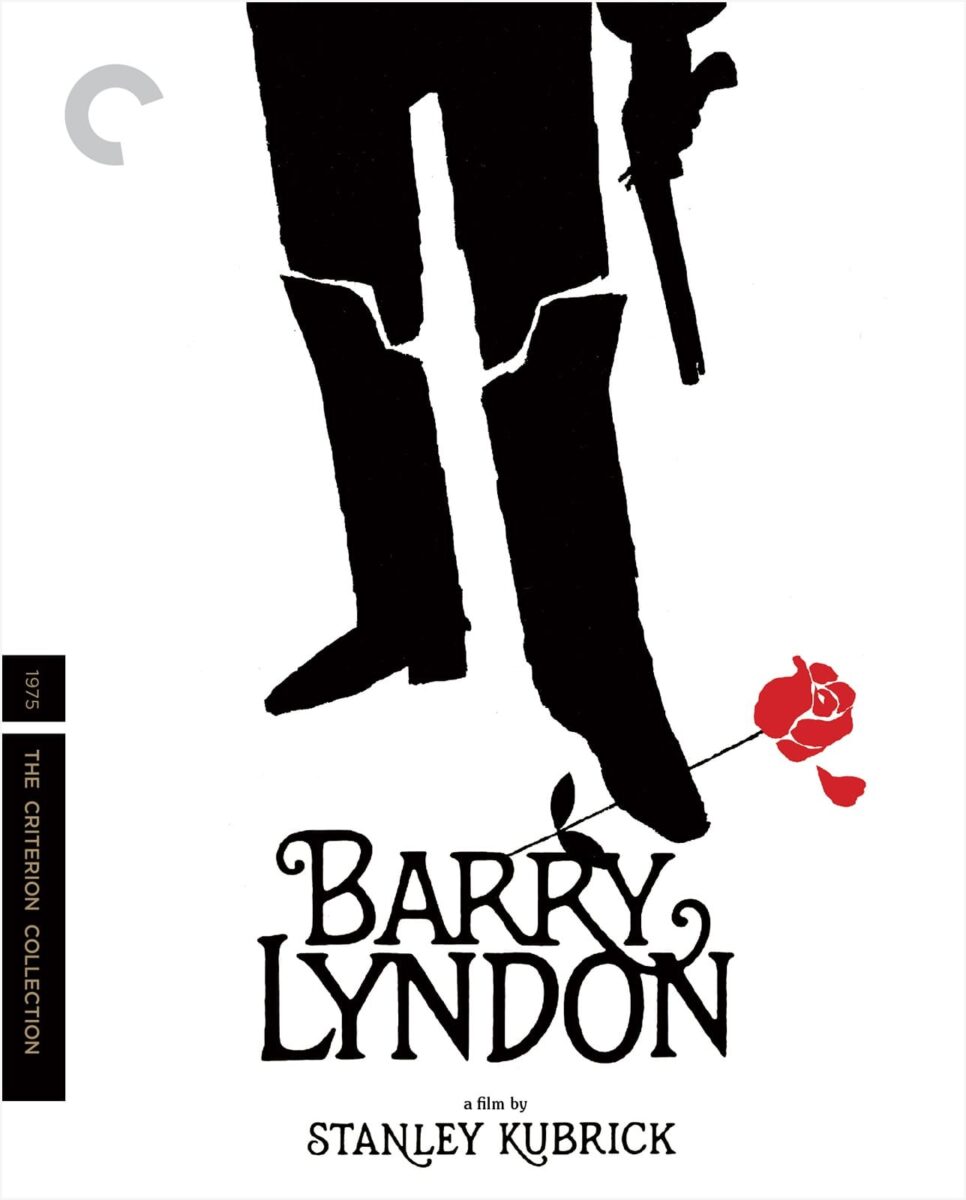
Recent Criterion Collection releases include two undeniable all-timers, Stanley Kubrick’s Barry Lyndon and Mike Nichols’ Carnal Knowledge. I think I’ve owned six or seven different transfers of Lyndon in my lifetime; this Criterion 4K is the most satisfying yet. Special features are plentiful, including an essay by Geoffrey O’Brien from the March 1976 issue of American Cinematographer. The addition of Carnal Knowledge to the Collection was overdue; it might be the sharpest film about masculine insecurity ever made. Features include an essay by scholar Moira Weigel.
Two of 2025’s most interesting blockbusters, Ryan Coogler’s Sinners and James Gunn’s Superman (both from Warner Home Entertainment), are bursting with special features. Most notably, Sinners offers a featurette in which Swarthmore College Professor Emeritus of Black Studies and Religion Yvonne Chireau explores the backdrop of Hoodoo in the deep south, while Superman includes several features exploring the legacy of Jerry Siegel and Joe Shuster’s creation.
Lastly, I can guarantee you that Andrew DeYoung’s Friendship (A24), starring the great Tim Robinson and a never-better Paul Rudd, will find a spot on my year-end favorites list. As usual, A24 is not messing around; the set of special features includes commentary, deleted scenes, postcards featuring set photography, and––wait for it––a 12-minute cut of the legendary Conner O’Malley garage scene. It’s supposed to be nuts.