
Florencia Martin’s second feature collaboration with Paul Thomas Anderson following Licorice Pizza and her second Oscar nomination following Babylon, One Battle After Another is a feat of instant-classic production design. From the redwood stump that Bob emerges from as he’s being hunted down by Lockjaw to Sensei’s labyrinthine, linked apartments to the Christmas Adventurers’ underground lair, each setting perfectly fits the characters and even serves as a fount of inspiration for the actors in their process.
As One Battle After Another returns to theaters and arrives on 4K UHD and Blu-ray, I spoke with Martin about getting more than two years to develop the design before shooting began, drawing from real-life people and locations, ensuring the time period was intentionally vague, hidden Easter eggs, and more.
The Film Stage: You’ve mentioned you started working on the project about two-and-a-half years before filming even began. What was that process like, having so much time to develop the project? And when did you start actually building sets?
Florencia Martin: We really appreciated that time. What the scouting process allowed was for us to build the visuals that we then infused into the sets. For me, it was an indispensable resource. Let’s just take one city like Eureka—which is actually three cities: it’s Humboldt, so it’s Eureka, and Arcata, and the surrounds—and you go into people’s homes and you hear their stories about how they live and what they collect, all of that then became part of the visual character of the film and the characters’ stories. We had the ability to keep going back to these cities to hone our work and hone the shots.
Once we started building, probably in November or December [of 2023], the year before we started filming [in January 2024], we were boots-on-the-ground in Eureka about five weeks before shooting. It was funny, because it was the rainiest season of all the two years and probably eleven times we went to Eureka; it was an absolute mudslide.
I remember getting off the plane and going straight to where we were building the redwood stump. That was an example of an incredible experience—going to homes and seeing that, historically in Humboldt, there was redwood mining. Those tree stumps get cut at about eight or nine feet, and that’s where the tree falls. People create spaces out of those [stumps], mostly outhouses or showers.
We knew we needed this punctuation of Bob getting the bag once he comes out of the tunnel. We found a location as a candidate for his house where the woman was a widow and collected miniature toy cars. Her backyard was the most wondrous thing you’ve ever seen—full of toy cars covered in moss. We took Bob and Willa on a walkthrough of the sets before we started filming and [Leo] was just jumping, going, “This is it! This is what I do. I’m hiding in the redwoods and I need a low-key job, so I’m going to sell these car parts.”
It was a really wonderful, magnificent way to work, when you’re able to shoot on location, practically, and in 360 degrees, building all these stories into the characters. That’s what I think the process really allowed us to do.
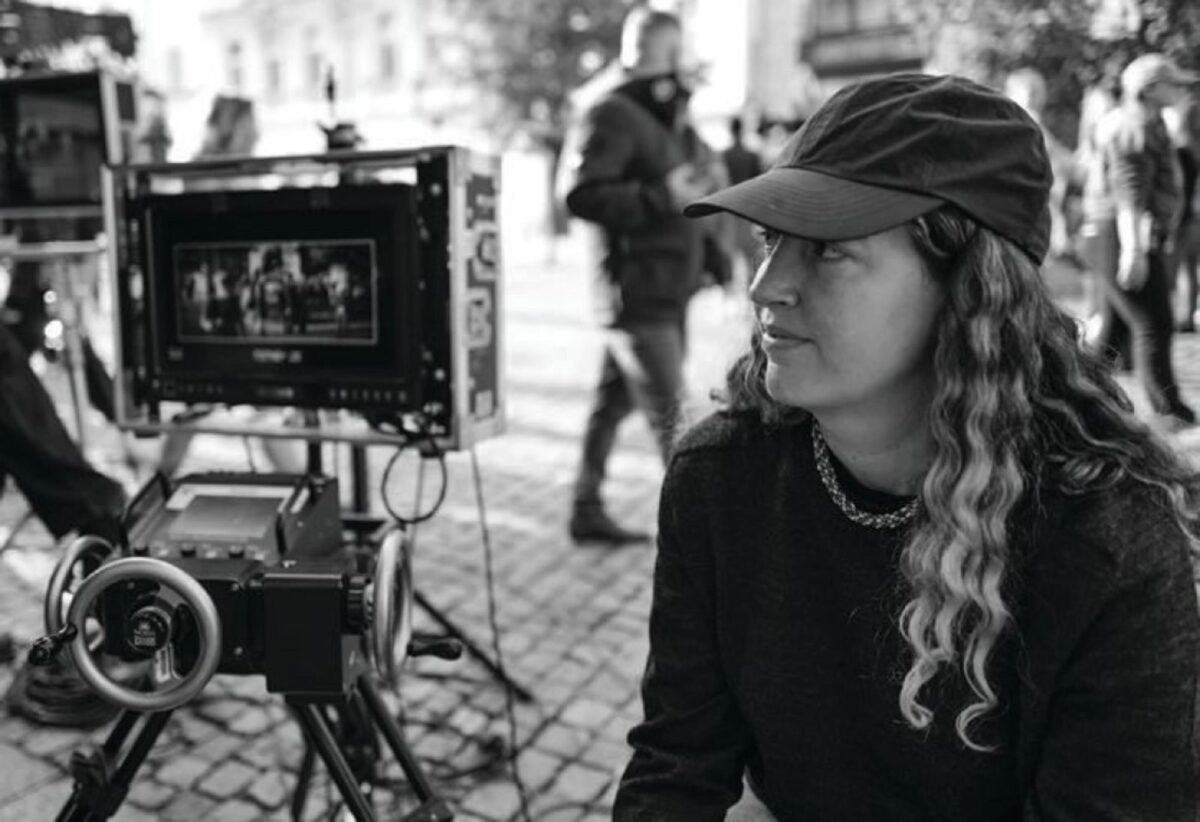
Florencia Martin
It was mentioned in an interview that in the high school scene where Leo is talking to the teacher, he only improvised the bit about the presidents on the wall because you guys had put those photos there. What was it like seeing that come to life, where the actors are directly responding to things in the design? Are there any other specific examples where something made it into the movie that wasn’t in the script, but was there because of what you had on set?
It’s the greatest thing because it makes it feel alive. I come from theater, so it makes you feel like it’s happening in the live moment, to be able to give an actor and a director a playground where they get inspired.
One of those examples reminds me of the high school dance. We got to attend a real high school dance, and it was so simple and banal. We thought, “You can’t recreate this.” So we used the actual DJ from that night with his playlist, along with the kids who worked at the dance, who recreated all of the posters for us on a “Pizza Day” that we threw them on a Sunday. So really, throughout the whole film, we tried to infuse it with that honesty so the actors felt like they were physically there.
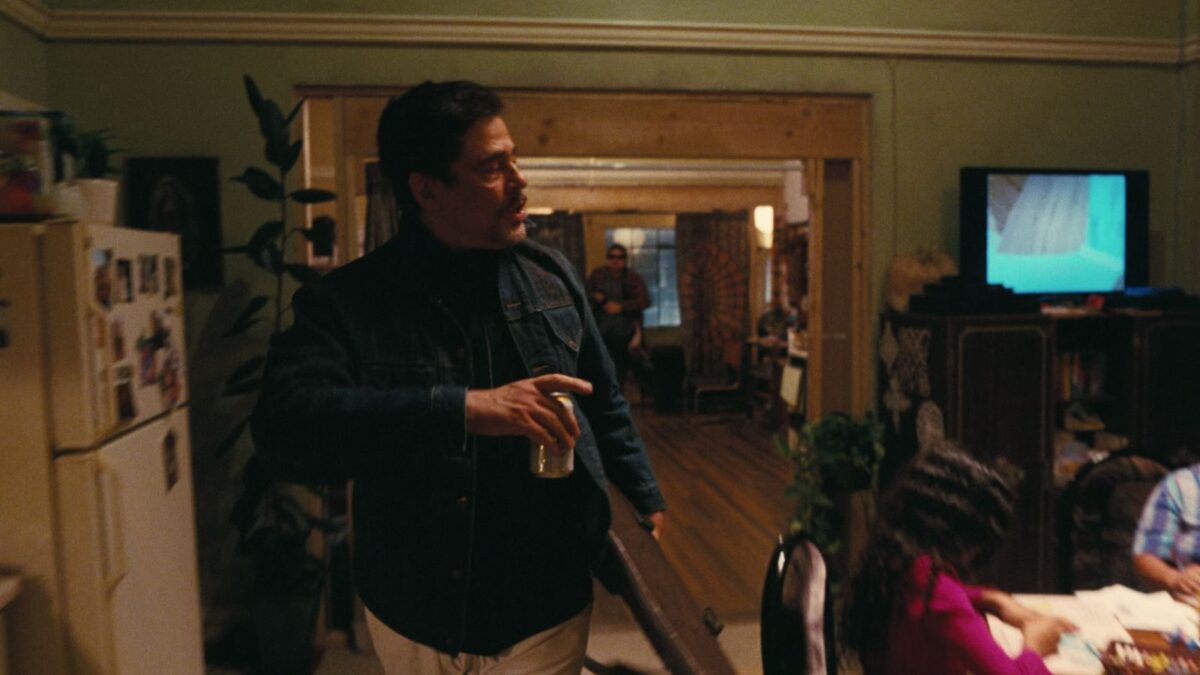
I think one of the best examples is Sensei’s apartment. We built that set practically on the second floor of the gutted storefronts Sensei goes to. We created that storefront perfume shop as his family’s apartment. He goes upstairs to a series of chained, interlinked apartments for his family, who are all in play together to save these immigrants and be a sanctuary stopping point in this underground railroad.
Everything in that set was practical—the ceiling fans worked, the fridge worked—so during rehearsal, Sensei just went and opened the fridge, grabbed two Modelos, passed one to Bob, and cracked it open. Then that became a beautiful part of the storyline. That’s what this way of working allows you to do: it gives you so much joy because you don’t even know in that moment how far that moment is going to go.
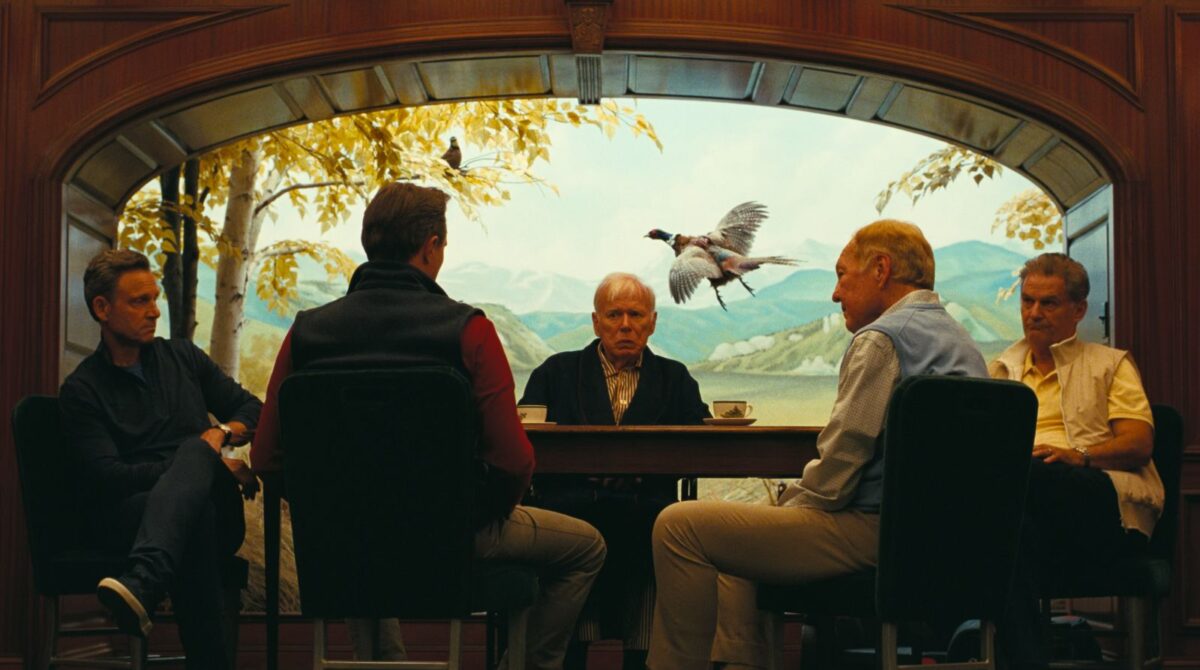
I wanted to ask something specific: there is this motif of birds throughout the film. They are in the diorama of the Christmas Adventurers’ lair, they are in the bank during the robbery, and there’s a bird flying overhead when Willa looks up from her house. They are present in scenes with danger or foreboding elements happening. Was that a discussion?
I have to be honest: this is the first time anyone has pointed that out! I want to be clever and say “yes,” but actually, this is a discovery for me too. So, subconsciously, yes!
I also talked to Andy [Jurgensen] about the editing process, and he mentioned how he and PTA wanted to keep the years the film takes place intentionally vague. Production design usually provides many signifiers of a specific year. Did you talk to PTA about the actual years, and was there anything you intentionally avoided to keep it vague?
We definitely did have many conversations about it because we didn’t want to date ourselves to the present day. It is actually a really delicate dance regarding how you deal with technology. We had a lot of conversations around the “picture cars.” We intentionally went with cars that were a little bit older for the hero cars [to not feel so contemporary].
It was a mindful daily activity, thinking: “What TV screen would Bob have? What is the technology behind the ham radios? What are the cards they are driving? What type of cell phone would they be using?” We anchored a lot of that around the characters. Bob and Willa have burner-style phones, which could be a little bit older. They aren’t in the most high-end economic state, so Bob’s TV is from a thrift store down the street. It’s something you could still find today, but it doesn’t set you so hard in an exact era and year.
That idea even evolved regarding Willa having a cell phone. Originally, we didn’t want anybody to have cell phones because it’s a slippery slope—you have payphone scenes, and you don’t want to get too “vintage” in your approach. At the end of the day, Bob and Willa just kind of came together and said, “There’s no teenager today that would not have a phone.” She’d have it hidden. That became an incredible part of their story and scene work—realizing she has a phone that can be tracked, which plays into the exact paranoia Bob has that he should have been concerned about. That is an example of the great collaboration through conversation.
I read that, for the scene in the grocery store, you left it an open set so there were actual customers in the store. From a production design and set dressing point of view, are you placing anything there, or are you just leaving it as is?
My creative process there was finding the supermarket, which was really fun. Through our work on music videos, we’ve realized the joy and incredible things that happen when you just let the real world exist behind you. We knew this was a moment where we wanted to try being in a working environment. I went to various supermarkets in Sacramento, and this one was open to letting a small unit come in. It was exciting because you see if it visually lines up, the way the fluorescents line up visually, the character of the area they are living in, and how the cashier is positioned. Then you just allow the camera to play and disappear. It’s one of my favorite ways of filming, when you can allow a space and environment to exist. Sometimes we have to block or “Greek” things [hiding logos], but for the most part, we tried not to touch anything.
The detention centers are a very striking part of the movie—the way it’s filmed as you walk through these impossibly tall wire cages. Was that a built set or something you found?
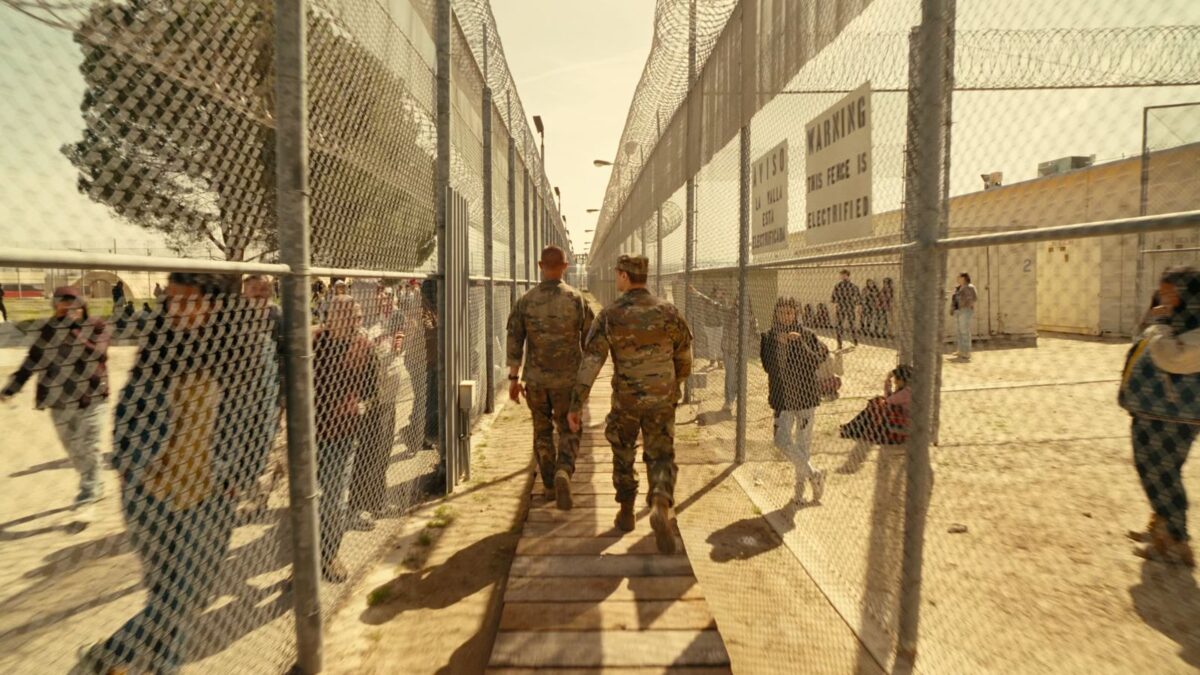
We wanted to be really sensitive in depicting those camps as they are. Detention camps have existed throughout history, so we looked at images from the turn of the century to today. Paul had a very clear idea of what he wanted the path to be. He knew he wanted to go through indoor cells and come out through a long path that led to Lockjaw.
For the intro, we knew we had the French 75 starting from one end and going to another. That intro was built from the ground up. We knew we wanted it to be underneath an overpass because that is where detainment happens for anyone captured near the border. We built that to be as accurate as possible, where detainment is in the front, the officers are in the back, and anyone of importance is in the center. It becomes this amazing study of blocking, of how they overtake this camp.
For Lockjaw, that was filmed at a detention camp in Lancaster that is now closed. We built the detainment inside of the gymnasium and then linked it through the existing chain work. It was meant to look temporary, because this whole system just pops up sometimes. That was the concept behind the U-shaped tents and the military style that Lockjaw’s units have. It was big work.
It’s also joyous to do everything practically, having Bob “the Rocketman” doing all of those fireworks displays at the beginning. The fact that we got permission to film that next to the border was a pretty unbelievable experience.
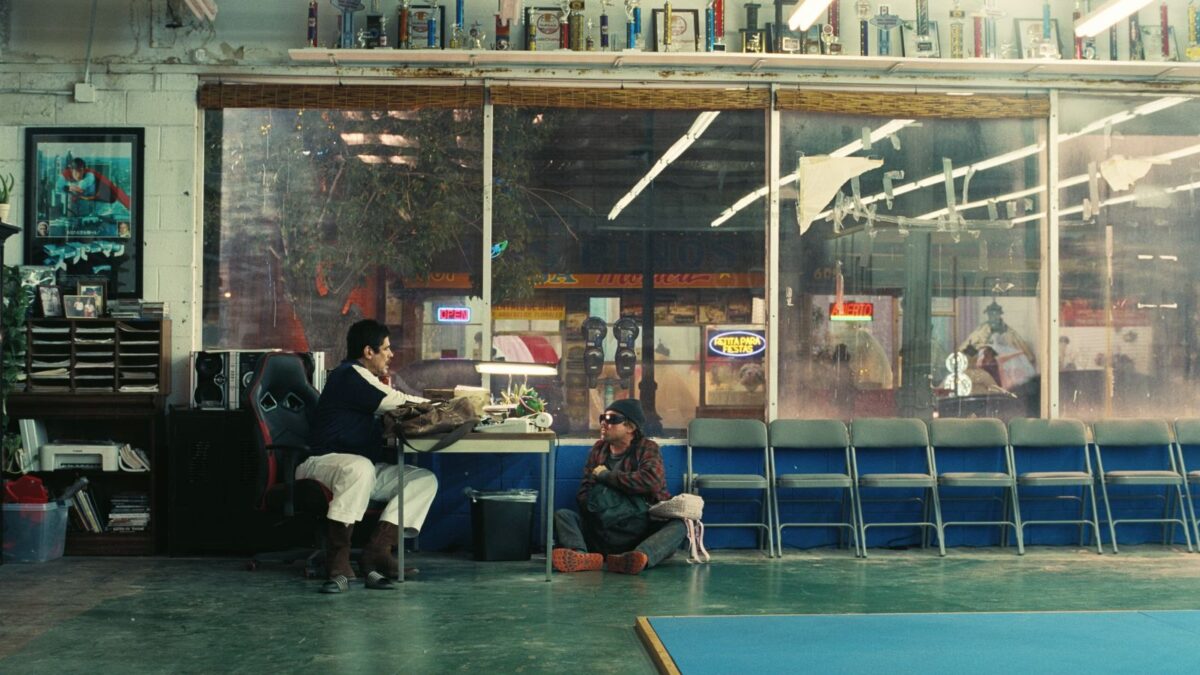
Regarding the collaboration between departments: I noticed Sensei’s wardrobe has that blue and white striped jacket, and then the dojo has white and blue walls. Does that decision come from PTA downward, or are you bringing that to him?
We got together early and just talked about the film as a collective. We did a lot of camera tests that were fantastic. We watched dailies every day, which is an amazing experience as a team because you’re always looking at color and seeing how it reacts and sharing progress photos.
I had illustrated that set early on, and we knew we wanted blue mats. I’m sure [costume designer] Colleen [Atwood] got her inspiration from that build-out. I know she had a lot of great options for Sensei regarding what he would keep for work versus what he throws on to be comfortable. It’s just a layered process across different areas.
How much involvement did you have with the Christmas Adventurers sequence—the long hallway and tunnel?
That was super fun because it is based on fiction. It’s the opposite of everything else we’ve talked about; it’s like, “Okay, what is this fantasy happening?” We found a house that had a basement with a secret door that was their safe room, through a painted mural. We stitched that together with a tunnel in Stockton, which was fantastic because it was this curving, endless feeling. We ended up building the set because we really wanted it to feel underground. I anchored the design in a molding company that retrofits basements. They have all this elaborate molding and recessed lighting. It was so bizarre; I thought, “This is it. This is the gentlemen’s meeting room.”
We were also inspired by Pullman train cars. [Set decorator] Anthony Carlino found a chair that we decided to recreate just to give it a sense of mystery. Like, “What happens here? Why is there a meeting room?” We left it a little bit up to the audience. And then the diorama was a great discovery—the idea that they need to be looking at something in this basement. We ended up with a depiction of the “perfect American West.” That’s how the taxidermy factors. They are preservationists and conserving America. It was a very fun set to create. There are a few Easter eggs, like the Christmas tea cups and St. Nick in the archway in the keystone.
The cast has talked about the tiger motif for Sensei. How did you find the balance for that, where it’s peppered throughout without being too much?
It’s fun because once you start building the character, you just go with it. There is a deep trust and collaborative sense working with Paul and the team. Through location-scouting, we found a real dojo in Eureka and its main logo was a tiger. We thought, “Well, that’s fantastic.” Jason, the sensei of that real dojo, said it would be an honor for us to use the image.
That became the main motif for St. Carlos within the dojo, the apartment, and his textures. His cell phone background was that dojo tiger. People love what they love, so you just infuse it. The beautiful thing about a sensei, which we found through research and meeting people, is the idea of projecting discipline, strength, and courage to students. So of course it would be this over-the-top visual that he would share with this student.
An amazing part of this film was building all these characters beyond the script—getting to know the sisters, getting to know Sensei, getting to know the French 75. You go to Perfidia’s mother’s house and there are all these other stories happening. It keeps you on your toes because you’re stepping into these worlds and stepping out of them really quickly. I hope there are a lot more Easter eggs that people find, like you did with the birds.
Well, if there are any exclusives you want to share here…
[Laughs]
I love that a lot of it is about the spaces you don’t see in the movie. With the militia scene, you’re so locked into Willa’s perspective, but you know something bad and terrible is brewing right behind a door that you don’t see. From a production design point of view, how important was it to know exactly what the camera was capturing versus designing the whole space?
I’d say a small percentage of the sets in this film were perfect and we didn’t touch them—like the perfume shop––or that recreational center [you are referencing]. Inside that white house is an incredible space where they hang out. That’s a good example of Paul working with his actors and with Adam Somner—of pulling back sometimes. There’s a huge shootout, stunt sequence, massacre there because it is a heightened point of the film. That was just the restraint they found and that we spoke about, actually. It’s always about Willa; it’s her story. What is going to take us through and get us back to Willa? That was always a big point in how we treated these sequences—remembering we have to sense it from Willa’s perspective.
Is there anything in the final chase scene that you had a hand in that audiences might not be aware of?
The final section of the movie in the desert is amazing because it’s three areas that are a couple of hours away from each other. It’s really about scouting and studying the landscape, and working with our cinematographer, Michael Bauman, about the time of day and the directionality of the road. It’s a lot of work collaging all of that.
For example: the Willa switch is an hour-and-a-half away from Borrego Springs, where the “Texas Dip” is, where all three cars end up. That’s the design work, collecting all of these roads and landscapes and working together to mount them into a sequence that is visually fluid. That goes for Lockjaw’s road, too: he’s on one road, and then we cut to a serpentine road in a canyon where his car flips over. Paul had a very specific idea of how that car would tumble and fly, so it was about finding that amazing piece of landscape.
You’re collecting bits as you go—like the area where Leo asks which way did they see the “bad hombres” go. There was this amazing fruit stand that was shuttered in that exact intersection where you see the whole desert. I wanted to get produce and met the man there. He had such a great face. He had no idea he was going to be part of the film; they just helped me set up the stands. There are endless stories like that: just being open to collecting stories and putting them in the film.
One Battle After Another has returned to theaters, available on 4K UHD and Blu-ray, and streaming on HBO Max.