
Coming off last year’s inaugural trip to the Tokyo International Film Festival, I noted how their devotion to world premieres and fresh Asian voices will effectively offset the sturm und drang––standing in long lines for films that have already formed a critical consensus, attempts to push back on said consensus, editorial pressure to prioritize titles for traffic-driving value––so typical of these environments. In Tokyo, one is more likely drawn to titles on vibe: a good title, strongly curated stills, and (sometimes, not always) the brief trailer that someone at a production or sales company could use to justify their yearly increase. Whether or not this gamble will pay off is anybody’s guess, but looking at a screening schedule likely reveals more about one’s taste than anything subsequently expressed with words.
I still think fondly of the best films I saw last year while rueing that not one received U.S. distribution––neither the top winner nor seemingly slam-dunk horror movie, certainly not the slow-cinema tableaux or gentle debut feature––and (at best) limited festival programming. I could suggest a difference in this, that a formally daring work by Jean-Luc Godard’s protégé would benefit Cinema Guild or a Korean social thriller seems the obvious choice for Film Movement or Kimstim. But nobody understands just how releasing films stateside should work in 2025 and nothing I’ve heard of the situation implies clarity for 2026. With one notable exception, the work listed herein might not escape containment; I can only hope to do them a mite of justice.
Tokyo’s dream-destination luster shines on a second trip. It is the kind that makes adherence to cinephile-journalistic practice more like a devotion, where the genuine desire to see a film you suspect will never play in any of the 50 United States really chafes against the awareness of affordable Michelin-star unagi or a shopping destination only several stops off their significantly more reliable subways. It’s a testament to each of these, and the Tokyo International Film Festival’s larger programming initiative, that they are worth time in a dark room.
Love Massacre (Patrick Tam)
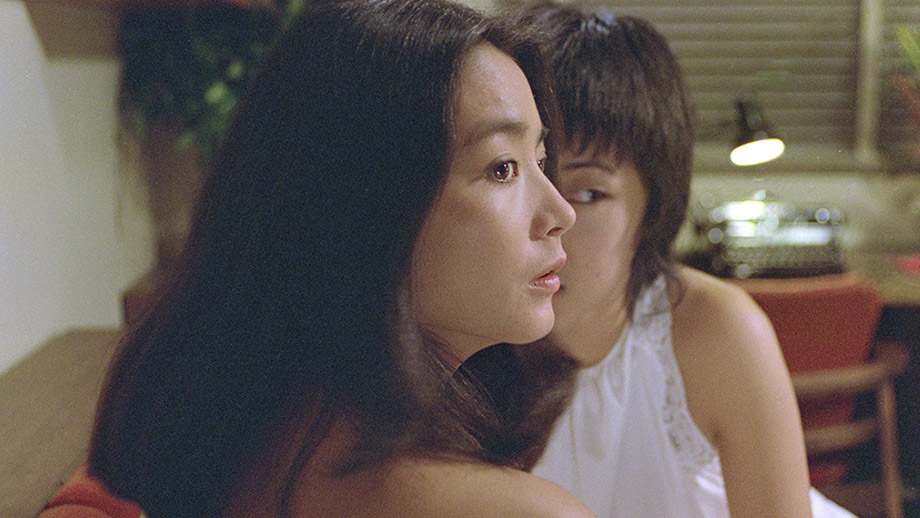
In foregoing alphabetical placement, I tacitly acknowledge that this inclusion is something of a cheat. But Patrick Tam’s 1981 feature, while watchable on YouTube right this moment, is practically the rarest film here, long needing restoration while (speaking from experience) 35mm prints remain unfathomably expensive to program stateside. Whatever kind of event it would be to anyone who knew of M-Plus’s recent work, Tokyo’s world premiere was a lowkey affair that also befit Tam’s spare form: his Hong Kong-produced, San Francisco-shot feature combines classic tenets of a diaspora narrative––regret, longing, and loss bound up in familial strife––with a transcendental style that, put against modernist paintings and cold architecture, does at least a little to recall Antonioni; these are then barn-stormed by a slasher picture. As in Tam’s Nomad, violence completely swallows the drama without betraying any core ideas. One sustained image of a woman’s thwarted escape initially left the audience unsure whether to laugh, as if witnessing Jason Voorhees tear through a summer camp, or be forced to sit with unmediated terror. We opted for the latter.
Love Massacre was my first film of the festival, and one whose ephemeral-seeming images––footprints in sand, a knife passing hands––probably stayed with me more than anything else seen through the next week. The terrible truth about white whales is that they often leave one underwhelmed, the ratio of waiting to fulfillment almost invariably untenable. Love Massacre, at just 80 minutes, overcomes this malady: I already want to revisit Tam’s corpus, maybe in anticipation of this restoration landing stateside (U.S. distribution has supposedly been secured) and becoming something like an event.
Halo (Roh Young-wan)
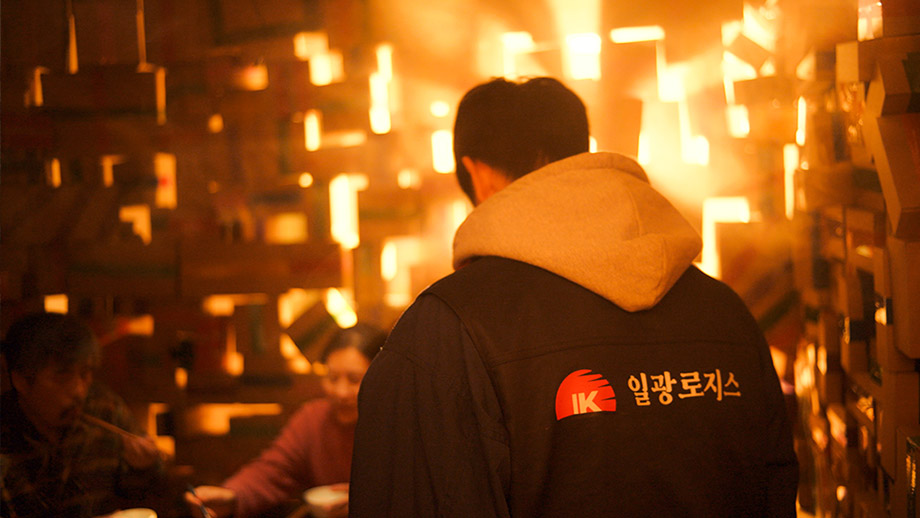
Likely the first thing you’ll notice about Halo is that its shots last for some length. One suspects this early announcement was rather intentional––any young filmmaker’s lean towards attention-grabbing long takes is vindicated the more overcrowded a programmer’s job becomes––but lest I seem to accuse Roh Young-wan (whose official bio deems him a “self-taught director through field experience”) of cynical ploys, I found myself admiring this visual approach for its lack of ostentation, preferring as it does to sit with characters through dialogue sequences rather than, say, follow them across increasingly elaborate scenarios. Perhaps because Halo’s on-paper premise––concerning Min-joon, a not-quite-young deliveryman who, caught between unlikely dreams and a difficult home life, tries scamming his way out––is grim enough to turn this muscular formal play into something like counterpoint.
I hold certain doubts about how Roh opts to prod his protagonist, though let’s posit it’s the basic necessity of thrillers––or, really, anything containing dramatic incident––to engage with deck-stacking. That it’s never wholly implied Min-joon will succeed with his scam (it never wholly seems like a good idea) alleviates both the dread and fallout somewhat. But this shouldn’t point towards easy resolutions. Little surprise that Halo ends on a stark moment; more impressive that it engenders enough honest empathy to earn the gut-punch cut to black.
Le Lac (Fabrice Aragno)
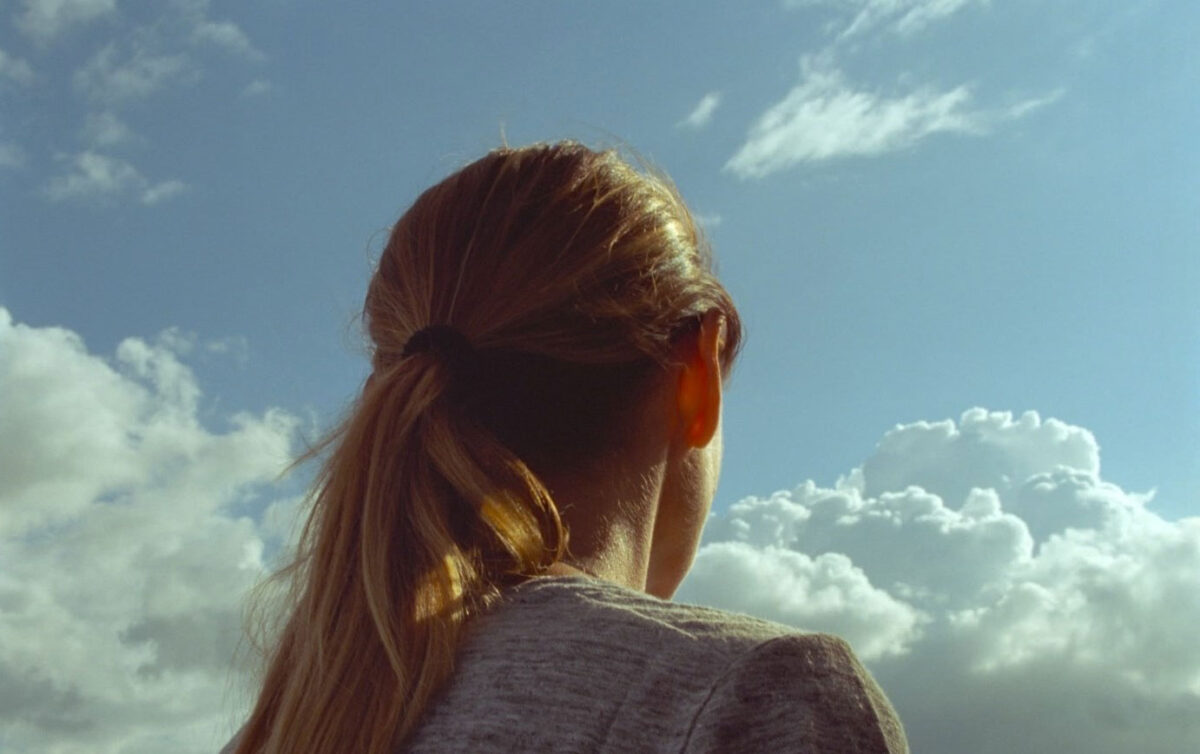
“Marriage est comme le lac” was my rib-nudging comment out of a screening whose volume rested somewhere between silence and impatient seat-shifting. I knew this was a cheap shot because I actually admired so much of what Fabrice Aragno managed between his spartan sailboat setting and hyper-digital cameras that are small enough to fit atop a ship’s mast or photograph the cabin bed like a landscape. While Le Lac’s statements on marriage could be largely established (even bloated) in a festival-crafted synopsis, I question how much this film should be treated as a work of stated ideas.
For every moment that induces some zone-out or offers too much cliché for comfort (a bit involving a soccer ball is especially doubtful), there’s two or three things to dazzle: Aragno’s great intelligence for juxtaposing the micro duration of an individual image with the macro concept of a scenario––including an honest-to-God unnerving underwater sequence that plays upon the dramatic tension of drowning while dislocating any structure as a time-based event––sounds forming images, images begetting sounds. Aragno had the enviable task of assisting Jean-Luc Godard in his final decades; where some anxiety of influence might be implied by the first moment’s appearance of his production company’s tres Godardian logo, I’d place this nearly wordless (or textless) sensory experience in another place. I’ll allow myself a moment to figure out just where.
Morte Cucina (Pen-ek Ratanaruang)
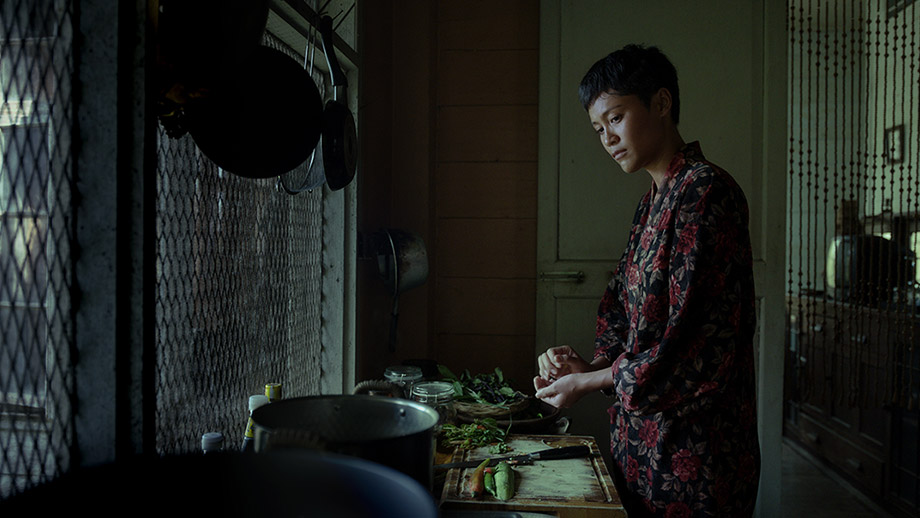
I take quick confidence in any film that establishes narrative and character information briskly. Case in point with Morte Cucina skip-trace pacing: Sao is a Thai chef and server who, one night, finds herself waiting on the man who caused her significant emotional and physical distress at some prior time, seen in flashbacks that oscillate between quick-footed establishments and creeping dread. Far faster than anticipated––while the foundation established by sequences of her enviable cooking skills and his generally uncaring attitude is sufficient enough not to discombobulate––they’re brought to a seemingly content state. But where Sao’s desire for revenge is ever-present and utterly comprehensible, Pen-ek Ratanaruang’s script (co-authored with Kongdej Jaturanrasmee) and Christopher Doyle-assisted mise-en-scène elide certain tethers, instead lacing psychology through insert shots (finally someone knows what it means to photograph cooking!) and location shifts.
Morte Cucina moves with such fleetness and confidence that one will follow the order of events without further elaboration. (Is this like entrusting a great chef will deliver a proper meal? Sure, though I hate that I’m even making the comparison.) If the film sacrifices some fluidity while establishing its third-act turn, Pen-ek curves from overly familiar territory (a character’s sudden reappearance, a car chase) soon enough that they’re justified as waystations towards final notes of emotional irresolution. Extra-special notice to hair and make-up work that lends the post-revenge sequences an immense gravity. When’s the last time an American production put so much thought in the human form?