
Few developments in Paul Thomas Anderson’s career—his ironclad collaboration with Jonny Greenwood or pivot to period pieces or embracing of long-dormant shooting and projection formats—are more consequential than his slow drift from traditionally defined cinematographer duties. A long-term relationship with Robert Elswit having ended with 2014’s Inherent Vice (just two years after Mălaimare Jr. shot The Master), Anderson embarked on Phantom Thread sans an established DP, a decision that’s rare for any project and nearly unheard-of on major feature productions. Working with him there—credited as the somewhat liquidly defined “lighting cameraman”—was Michael Bauman, his chief lighting technician on the aforementioned projects. Perhaps it was crafting one of the finest-looking films this century that allowed Bauman to come aboard Licorice Pizza as a co-cinematographer with Anderson, though as he told us at the time, such credit was hardly defined.
Jump four years later: One Battle After Another is among the first features shot on VistaVision since Lol Crawley helped resurrect the format with The Brutalist, and the first projected on such since Marlon Brando’s One-Eyed Jacks (a film possibly released before your parents were born). Anderson’s return to the contemporary world—notwithstanding a number of music videos on which Bauman collaborated—is also his first venture into full-tilt action cinema, including a slow-roll car chase that does things with speed, perspective, and distance I’m not sure I’ve seen before, and which dazzled so much that on first viewing I wasn’t 100% sure I was, in fact, seeing it.
With One Battle After Another arriving on 4K UHD and Blu-ray—a no-frills disc prefacing a collector’s edition this spring—I was able to talk with Bauman about the project’s many odds and ends: intended aspect ratios (and the one most people actually see), Anderson’s quantum leap into the present day, and embracing the ugliness that comes with it.
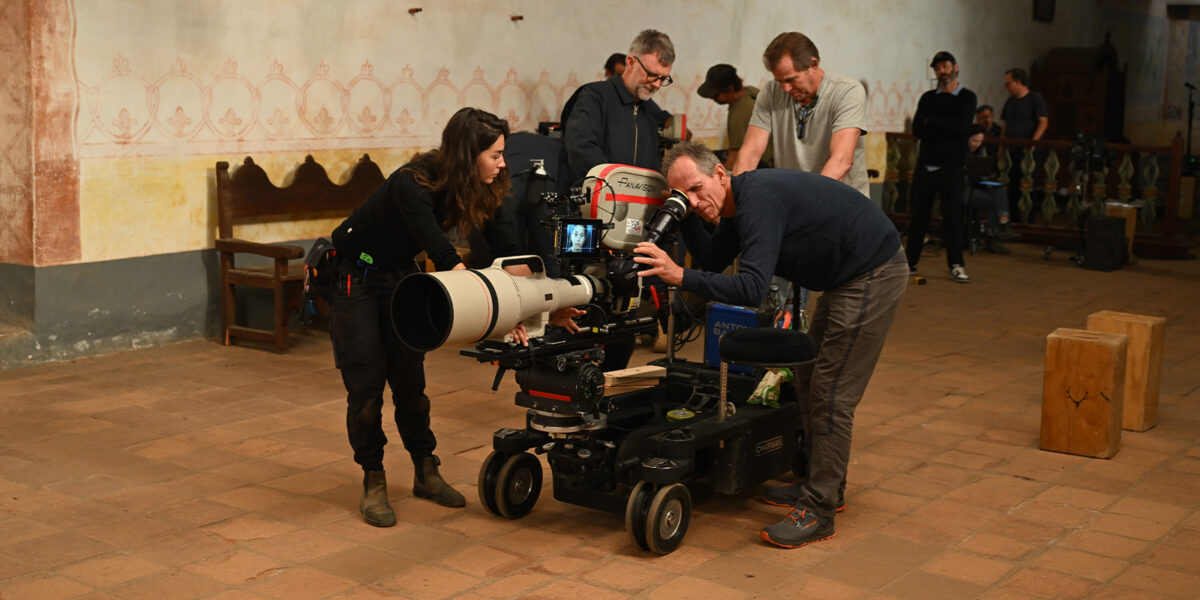
The Film Stage: I was looking at the 4K the other day, which is in a 1.85 aspect ratio, as most would see it. It was interesting to consider that the movie was shot in its perfect, intended 1.50:1 aspect ratio—VistaVision, which was in four theaters around the world—but how most people see it is another. And I kind of wonder what you feel about that disparity in how people view the film contra, maybe, ways that it was intended, which is an interesting tension.
Michael Bauman: Yeah. Yeah, because I think a lot of people, when the film finally settles in, they’re going to probably see it in 1.85, depending on when all the deliverables are coming. But I think the thing is: that’s what makes it special about going to see it projected—because you can kind of get, really, the original intention behind it, and seeing the full experience. I mean, you’re lucky to see it in Vista. Seeing it in Vista and seeing it in IMAX are really the two preferred formats to see it in if possible. I think the fact that people are experiencing different aspect ratios is always something we discussed, but I think it also kind of really helped out getting people to come out and see it because they could experience it in “the full glory,” so to speak.
I wonder about some of the reframing processes when you’re converting it to a DCP. Is there kind of a set, locked, “push a button, now it’s in 1.85” and you just run that way? Was it being reframed shot by shot?
Honestly, Andy [Jurgensen], who was the editor, was the one who sat through most of that process. We talked about stuff, but he went deep into it because he really sat with the film the longest, as far as doing the editing. Paul always has his editor with him through the production process. The editor isn’t, like, someplace else, so Andy was really with us for the whole production. So he had already begun editing and messing around. But then when he got into post, which took… we finished in early July of ’24, so he had another year and change that he was working with the film.
And one of the things he would do would be sit as close to the screen—you know, where they’re editing. They had a small projection setup. I mean, it wasn’t a huge screen like a regular theater, but he had figured out how close he had to sit to figure out what the IMAX experience roughly would be, you know? Because they couldn’t always do a film-out or a DCP-out and go look at it on an IMAX screen, so he was really kind of always looking at how to frame it. And he and Paul would just make subtle adjustments on how the framing ended up that Paul was happy with.
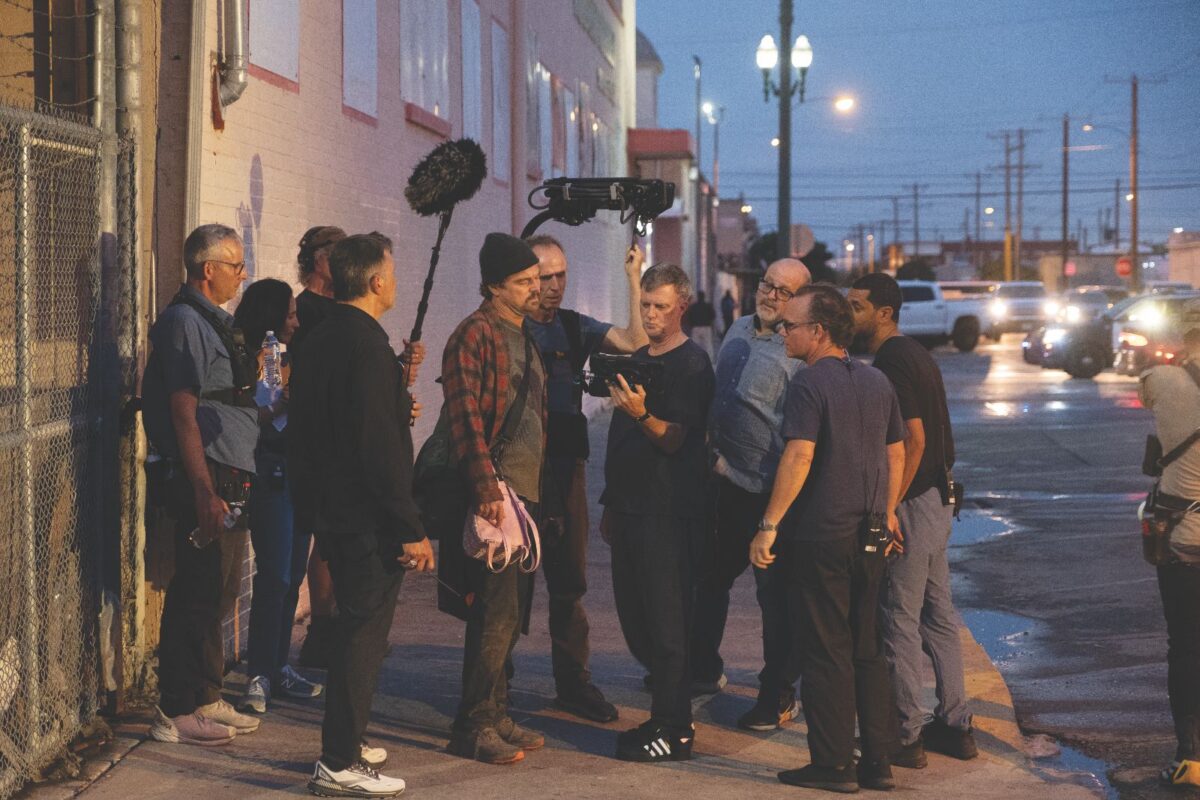
I had seen you say something about how there were some scenes that got reshot after you guys had reviewed footage and thought, “Maybe this could actually be X, maybe this would be Y, maybe this should be Z.” What had been reshot and what did some of the alterations look like?
I mean, it’s really like in every movie I’ve done with Paul: reshoots are not considered a dirty word—that’s just part of the creative process—and he prefers to do them while we’re in the production process rather than “let me cut the movie and then let me figure out what we have to redo.” A lot of times in his workflow, he can say, “You know, I gotta redo this, this isn’t right.” And so, for example, the beginning of the film, we had originally shot it at a different location—the concept of them coming in, getting the folks, all that—in central California. It had a couple of different things that were all going to come together. While it was good, it didn’t really have… I think, for him, there was other things he wanted to have: different energy, just the layout of it all, the sense of scale and scope that you get at the beginning with those wide shots where you actually see the border wall.
And so [the] locations [team] was able to get us down right there on the border, and that overpass that he’s walking on at the opening shot of the film. That was, like, an active truck lane that was just the way to get into Mexico. Every truck is traveling on it. There are these blocks that were shut down—they had periods—and then that’s when we could shoot up there. But it was constant traffic and things. And just the energy of that really, I think, creates some interesting tension that you start with. But the sense of scale at the beginning—you see the border wall, you see the group getting together, and you see the wall in the background—was just something that, I think, originally when he had cut with the first beginning, he’s like, “You know, this other option was a better choice.” And that we didn’t get to do until… that was one of the last things we had shot on the film.
Oh, wow.
Yeah. So we had kind of worked our way through a bunch of other stuff. And all these locations—a lot of them—just the amount of prep work that Michael Glaser, locations, had to do, and the team to get them to be able to shoot there: just some of that stuff took time. That was one of them. And then Sensei’s… a lot of times we have spaces like, say, El Paso. You know, the city of El Paso was incredibly gracious with the access they allowed us to have, and so one of the things was: we had a lot of the downtown almost as a backlot. We could shoot there at night, we could set up the big riot scenes, we had access to all the rooftops. But Sensei’s dojo was in a completely abandoned small warehouse, storefront that [Flo] Martin and the set decoration team were able to go in and dress it into the dojo.
But we had that space for, like, a month, so we would shoot in there, and then we’d go away, and then we’d come back and pick up some other scenes or try some other stuff or “let’s take another bite at this scene here.” So there’s a lot of things about… just moments. Because we had gone down for eight weeks waiting for Benicio to be available, so then when he joined the film, you know, as Paul’s kind of working through the Sensei character and he and Benicio were working together, there was opportunities to go back to these spaces and reshoot in there, and just kind of explore different details that they were kind of discovering with the character. That’s a long-winded answer, but that’s kind of the gist behind it.
No, that was great. It’s funny, because those are two of my favorite sections and pieces of the film. You guys are stronger than me—if I had to reshoot the opening scene, I think I would just say, “No, good enough.” I admire that it’s not Bob and Willa sitting around the coffee table. That’s real tenacity. And the work shows, truly.
Actually, that scene—Bob and Willa—was the first stuff we shot. That was, like, the first week of the movie in our production schedule. So it was interesting how we kind of led with that, as far as what we had shot, and then ended up shooting the beginning of the movie at the end of the film.
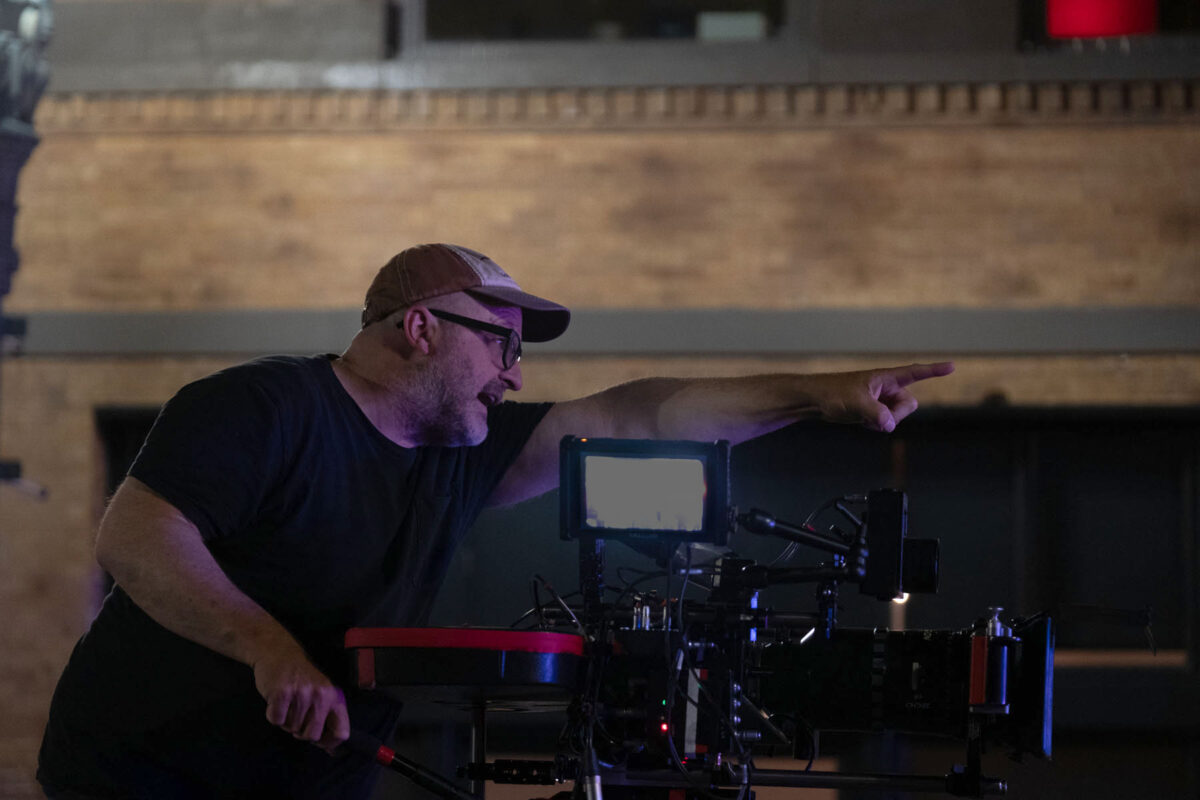
Anderson is certainly an acolyte of Thomas Pynchon. I was amazed, when I saw the film, how much Bob and Willa’s house conjured up what I had imagined while reading Vineland. Or the scene when Regina Hall finds her in the high school bathroom: that’s a differently contextualized scene in the book, but still the organization of it feels very synonymous. I wonder how much Pynchon’s novel was a reference and source for you, and how much you guys talked about any of that in shaping the film.
I had read the book, and he dabbles. While it’s a reference, it was really, I think, more a reference as far as script structure rather than actual aesthetic. Although he did want to really make sure that the Bob house was… the Bob house, we shot, like, every inch of that place. That place was maybe 500 square feet—I mean, it was an incredibly, incredibly small space—and I think that was part of it: to just kind of really build. Like, all the lights had to be outside, it was pouring rain the whole time we were shooting, and you could just barely fit the camera in there. Most of the visual references we were going off of were really more referencing, right out of the gate, so much more the 70s-cinema type of stuff: Last Detail, certainly The French Connection—that was a big one. That was kind of the direction he was thinking, the strongest reference he gave as far as visuals.
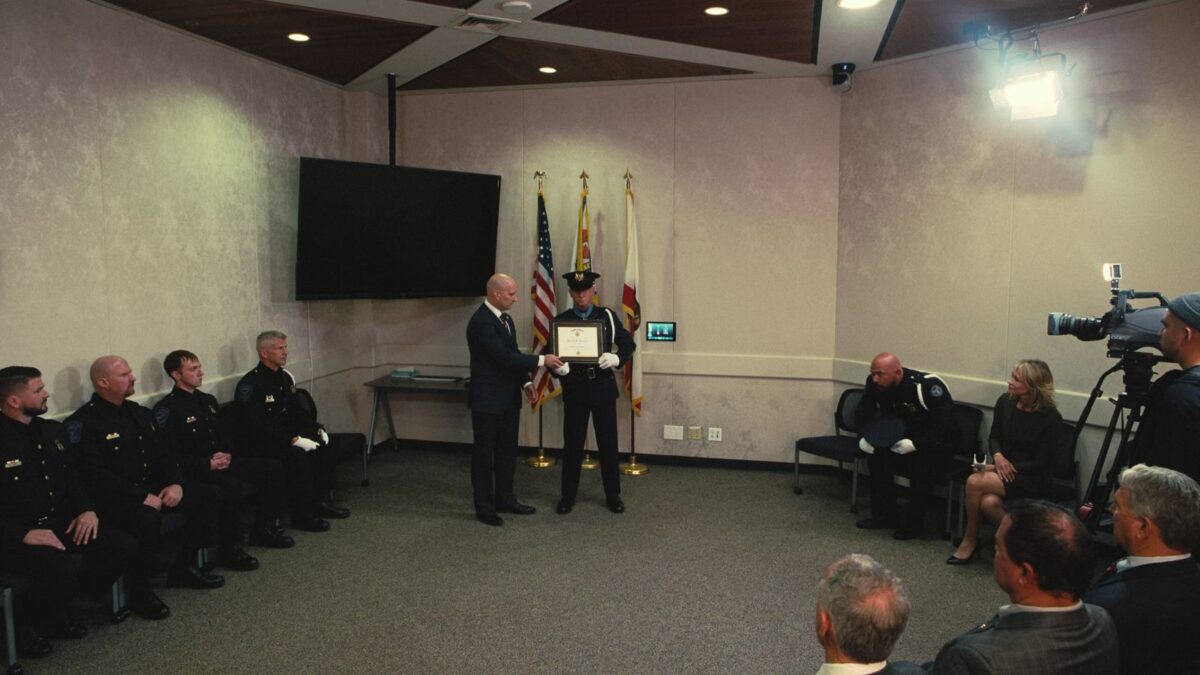
I definitely think it’s there, but it’s funny: you and Anderson have done some contemporary stuff in the form of music videos. But those are music videos, which one might say are their own medium with a unique visual sensibility. I’d like to know what conversations you guys had about finally taking the step into the contemporary world. Any conversations about photographing an iPhone cinematically or filming modern cars? The terrible, drab interiors of modern America, like where Lockjaw receives his medal? I’m interested in what some of the psychology was in, “We are going to make a film about modern America.”
Yeah, I think a lot of it had to do with the locations. I mean, his location picks were really more about really making decisions that were for… you know, it’s interesting you reference where Lockjaw gets his medal, because that was a super-drab space that he is like, “Oh, this is going to be perfect.” You know? And actually, there was some lighting that existed in there, and we just turned it on and started working with that. And multiple shadows on the face. There’s a lot of things that, like, you would not put an actor like Sean Penn’s stature in that kind of an environment and light them that way. But it was really interesting because he is all about, “It’s gotta be messy.”
So a lot of it was kind of embracing just the… we never shoot on stage. We only had a little bit of stage work, which is really the building of the tunnel at the Christmas Adventurers place—that kind of thing was really the only “stage” we really did. Everything else was practical locations. And so Flo and Michael Glaser and that team just would look for some of the most drab, just banal spaces. That was just like: “Awesome. Let’s go for it.” So he was really about just the ugliness in some of that—just how these buildings are what they are. We augment a little bit, but really he wanted to preserve as much of that kind of… I don’t know what the word would be. Just kind of the look of this drab nature.
Well, honestly, a word I might use is “oppressive.”
No, yeah.
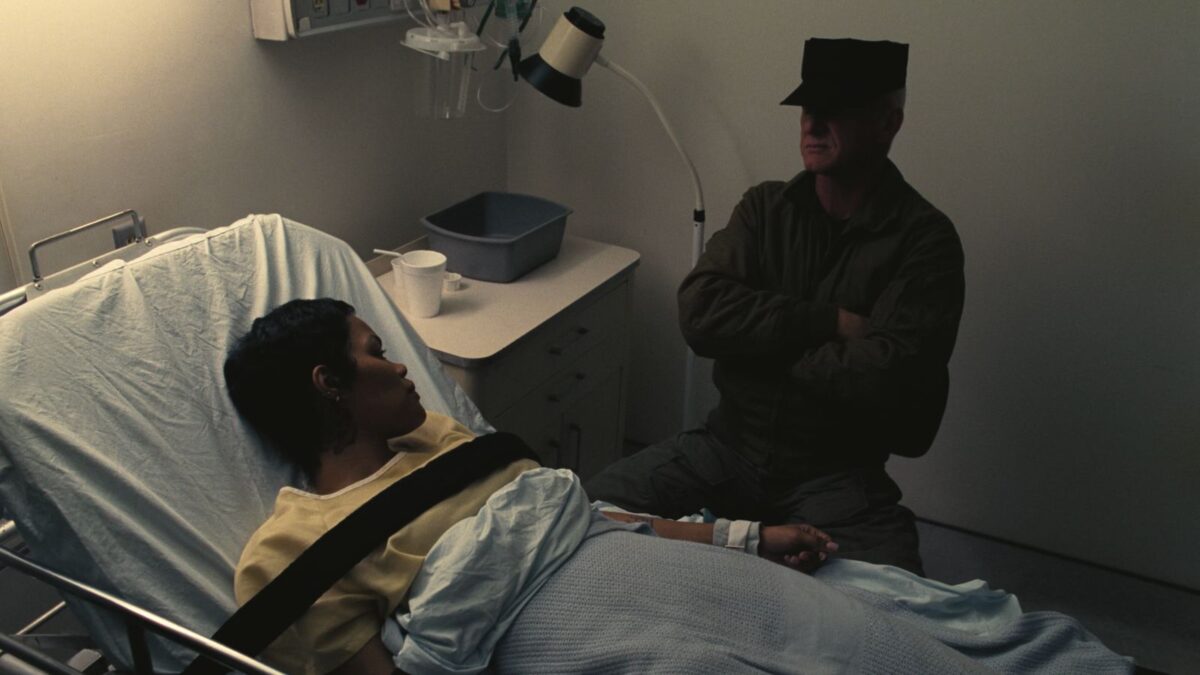
It’s funny watching the movie again. There’s a shot that I didn’t even realize how much it stuck with me until seeing it again—how much I had internalized it precisely because it is a plain, drab, banal image—which is the wide shot of Lockjaw and Perfidia in the hospital.
Oh, yeah.
It’s one of the least-pretty images in any Paul Thomas Anderson movie for being such a dark, sad moment. I’d like to hear a little bit more about you as a cinematographer, some of the instincts that you tap into—maybe some of the instincts that you go against—in capturing those things that are not pretty, and how you know when it’s not pretty but also is exactly what it needs to be.
A lot of it comes from just being comfortable in the uncomfortable, you know? Like, you reference that scene where the two of them are talking in the hospital bed. And it was like: that was some prison. That was a room in a prison that we were shooting in, and it was like, “Okay, let’s keep this.” It was something where you always had to be as true as possible to just the blandness of the aesthetic. And that’s not a comfortable space to be in because it’s like, you know, you’ve got these two actors, you’re really like, “Okay, let’s move the light in a more favorable position that just looks nicer on them.” And that was absolutely not an MO. Even with how the camera was placed and moved and, you know, the jitteriness of the camera throughout the whole thing that happens—just natural things that would happen—those were not flaws.
Those are the positives of the experience. And so one of the things about that scene in particular was really just: “We’re going to use the light over the bed. Let’s bounce a little something into the ceiling just to get a little bit more ambiance, and then there’s a little practical by the desk; turn that on.” It was really like, “Okay, it’s raw.” But that was the thing that he really responded to. One of the things with him is: we do a lot of tests. We do just tons and tons of tests over the course of a year or so. And those tests—some are big, some are small—it’s always about just throwing different things at the wall and seeing what he’s responding to and what really inspires him.
So the fact that he was so open to… you know, having worked with him on five movies, and what we did on Phantom Thread and Licorice Pizza and then this one was: you just had to be comfortable with, “All right, we’re going to go in a room and we’re going to turn on the lights and let’s just add a little thing here and we’re off to the races.”
I’ve certainly admired this run of period films, but I’m excited that Anderson’s back in the contemporary world. There’s this theory-of-sorts that a lot of the great American filmmakers today—of which he’s obviously part—aren’t making movies about the contemporary world because it’s so ugly. Do you think there’s any truth to this? And if you sensed he was at all, if not trepidatious about filming the modern world, at least he had a sense of, “Okay, this is a big step.”
Yeah, I think a lot of it had to do with the fact of the scale and scope of the film, and to be able to go out and shoot in these spaces, you kind of had to really embrace a lot of the modern things. Because yeah, like you said: most of his films are period pieces, and you can kind of lean into the beauty of the period and this was, like, the exact opposite—you’re leaning into the ugliness of the period. I think by shooting, by embracing modern it was like, “Okay, we’re just going to roll on stuff.” And if there was something that was really obnoxious, they’d clean a bit of it up in visual effects, but most of it—almost all of it—was just embracing it for what it is. He was really comfortable with that, because there were things that I was like, “Is this really in the period?” And he’d be like, “Look, this is going to be a quick shot, right, look here.”
It’s also just kind of a thing of where to put your resources. I think he just kind of went all in on the whole thing, at least in the communication I had with him. It was all about, “We’re just going to wrap our arms around this and give it a big hug and go,” you know? Because, like, the grocery store scene where the two of them meet—I mean, we went into a grocery store. We kept our footprint as minimal as possible because it was a working grocery store and you show up, you take one checkout lane—they’re still conducting business in the background. You just get there early, you shoot when you got it, but you’re embracing, like, “This is where the sun is and it’s just going to bounce around here, and let’s just take a little negative or add a little fill here and let’s shoot this thing.” And you kind of had to, as a cinematographer, just be able to embrace that kind of quasi-looseness to it and be happy with it, and that could be challenging at times. But it was really where the magic started to happen.
DiCaprio and Penn have been photographed so much. I think if you wanted to look up every known image of them it would take the rest of your life, right?
Yeah.
Getting that close to them, what did you find most surprising about them as people to photograph and people to study? Because they do make such great use of their faces in this film, obviously, but you’re a huge part of that.
I mean, Sean has an amazing face and an amazing look for this film. And the guy’s a chameleon, you know? Like you just said: you look at his body of work and just the incredible level of characters he’s played. So for this one it was just taking it even more over the top, including the makeup at the end, where he’s got, like, that World War I disfigurement-level. And it’s really impressive to see that and see that these… these guys would just go for it. One of the things is that we didn’t have a lot of last looks. Like, normally before you shoot, make-up department comes in—they clean stuff up, they do all that, they fix the hair, straighten up the wardrobe. You didn’t have any of that.
Like, very minimal, and so that kind of aesthetic was something to grab, and then you could go in and put the camera right there in their face and it was just… I mean, these guys are just such masters of the form, of being able to know how much of the little, subtle stuff they could get away with and just do. And we were right there, so we could always capture it—subtle little looks, like all the things when Leo’s sitting there and he gets the phone call and he’s in his house and he’s baked out of his mind, he’s playing stoned, but he’s also trying to not get paranoid. Playing those tensions and how he’s moving his eyes and things like that: you really just see some folks who, like you just said, have done it for so many decades. They just come right out of it—right into it, which is pretty impressive.
Maybe it’s too soon to even speculate on this, but you and Anderson obviously have such a fruitful collaboration. Have you guys talked about doing something else? Do you expect that you’ll kind of stay in, or is it just all this movie, still?
He’s certainly always working on different stuff, you know? I mean, the thing with him is: he always has a bunch of different things that are in various forms. Like, One Battle, he started writing this thing 20 years ago and it’s just kind of been percolating, and he’s done, you know, probably seven, eight movies since then. So it’s like: he has many different things that are always going.
And, I mean, he obviously loves Pynchon, so I’m sure… when I saw that Pynchon has a new book out I’m like, “Okay, give this 10 years and this will show up,” you know? I mean, his new book’s about a Wisconsin cheese heiress and there’s a submarine in Michigan. That’s like catnip to Paul. So yeah: he’s got a few things that he’s working on, and we certainly talked about it. I think it’s going to be a bit before he gets going again, but he’s always thinking. The guy’s always thinking.
The Shadow Ticket movie: we heard it here first. No, I won’t —
Yeah, that’d be great! I mean, look: I’m from Wisconsin. I’m like, “Dude…”
I’ve heard people from the area express amazement at how much Pynchon got right about it.
It’s a fun thing. So, you know—I don’t know. He’s never said anything about it, but he was the one who tuned me in that the book was coming out, like, months before they pre-announced it. I was like, “Oh, that’s cool.”
Well, maybe he’ll read this and we’ll incept the idea in his head.
Yeah, exactly. [Laughs]
And DiCaprio can put on a big hat. Congratulations on everything with the movie, which has been such a pleasure to watch and rewatch. While I know that there’s hope for awards, and hopefully something good will happen there, I will say: this movie is bigger than—better than—awards, truly. But it’d be a nice cherry on top, I suppose.
Oh, thank you so much. I appreciate the good vibes. Let’s see what happens. I thank you.
One Battle After Another is now on 4K UHD and Blu-ray.