With an awards season and year-end lists that tend to favor films that have been released in the last few months, many things can go overlooked. For our yearly feature highlighting the 50 best titles you might have missed––arriving before our overall top 50––we’ve sought to dig deep to find the gems that deserved more attention upon their initial release and have mostly been left out of year-end conversations. Hopefully, with many widely available on a variety of streaming platforms, they will begin finding an expanded audience.
While many documentaries would qualify for this list, we stuck strictly to narrative efforts; one can instead read our rundown of the top docs here. We also haven’t included 2025 films that only got awards-qualifying runs this year.
Check out the list below of U.S. releases, as presented in alphabetical order.
The Accident (Giuseppe Garau)
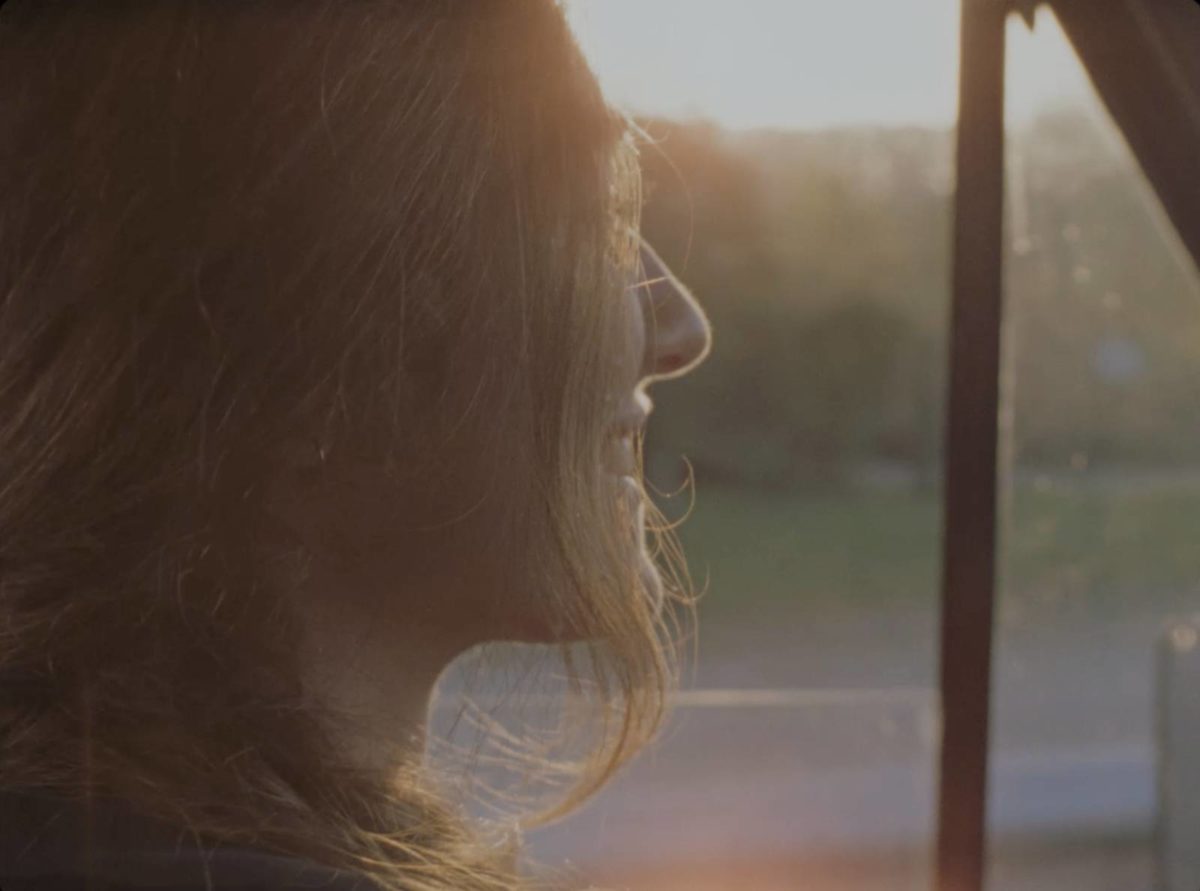
It’s nice when a film chooses not to overstay its welcome, as writer-director Giuseppe Garau understands in The Accident. For 65 minutes, Garau drops viewers in on Marcella (Giulia Mazzarino), a single mother whose life is falling apart. Over the course of one day where she’s late picking her daughter up from school, she gets fired by her boss (who also happens to be the father of her ex and grandfather to her child), gets into a minor car crash with her daughter, and ends up losing custody. By using a clever formal gimmick that limits events to a single perspective, The Accident makes for a kinetic, creative, surprisingly funny experience as we watch Marcella not so much climb her way back to the top as drag herself through the mud, one humiliation to another, just to come out the other side. – C.J. P. (full review)
April (Dea Kulumbegashvili)
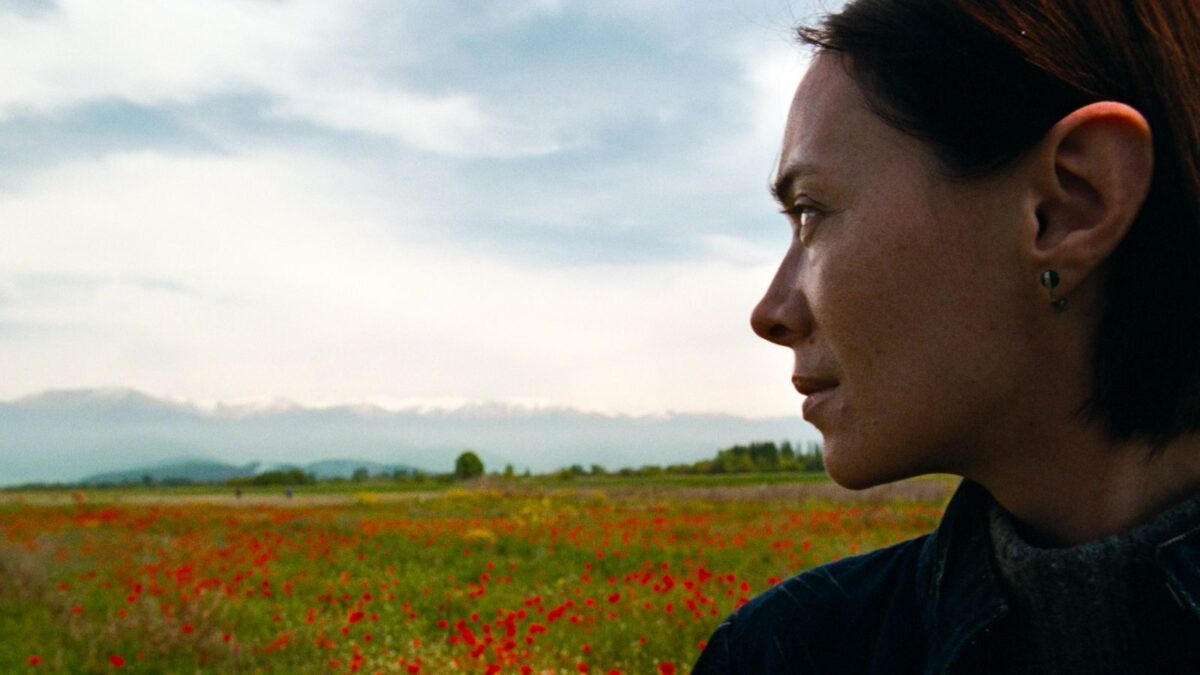
Like Beginning, April also carries the mark of reality, mediated. The director is inspired by fictionalized stories gleaned from the real world––especially her hometown, a village at the foot of the Caucasus mountains in Georgia and its people. Beginning’s sparse dialogue, long takes, and atmosphere of violence closing in on the main character––a Jehovah Witnesses pastor’s wife played by the new film’s lead, Ia Sukhitashvili––made space thicken and swell, while April breathes. Arseni Khachaturan’s patient, somehow insistent camera uncovers a world that is both familiar and uncanny: a world split between rumbling storms, rainfall, a gorgeous sunset seen from angles almost as low as the grass itself, and a rotting patriarchal society that squashes female independence with its body politics. Nina (Sukhitashvili) is an OBGYN who, despite best efforts, has to report a newborn’s death as the result of a previously unregistered pregnancy. The local woman’s husband demands an investigation, well aware of rumors that Nina performs illegal abortions in the village––something the patriarchy cannot allow. – Savina P. (full review)
The Balconettes (Noémie Merlant)
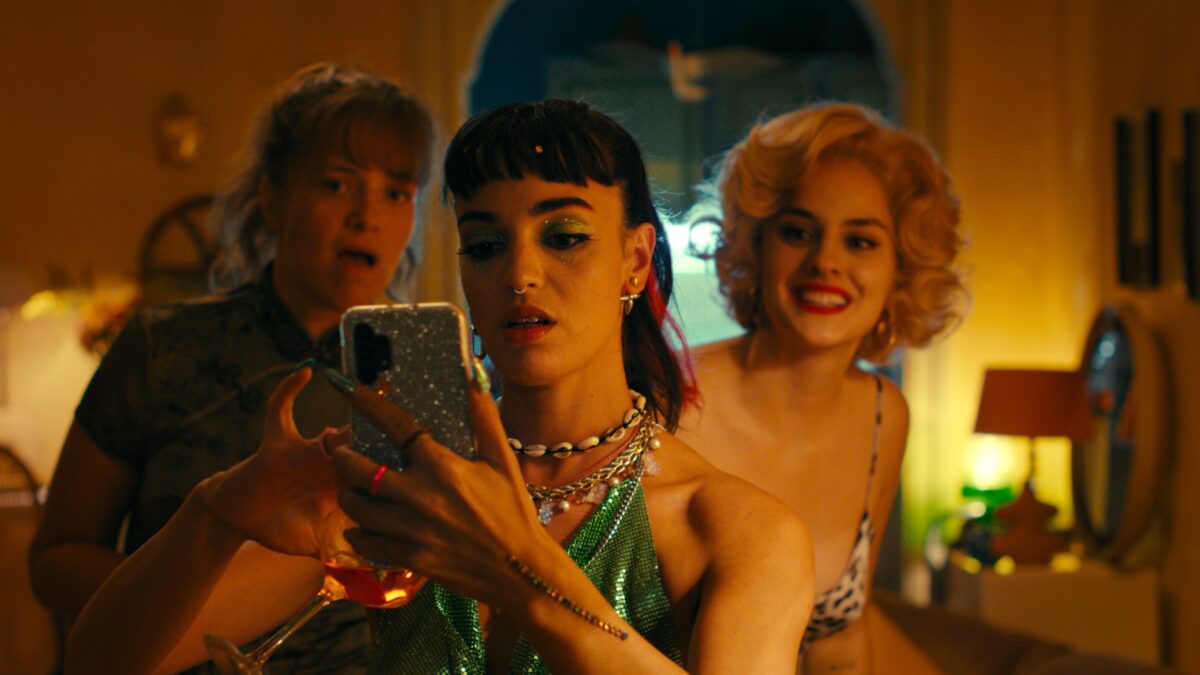
The chic balconies of Marseille certainly offer an image that is photogenic enough to open Noémie Merlant’s sophomore feature, The Balconettes, especially as seen from the meandering perspective of a crane shot. As the camera traces facades and their baby-blue window blinds, we’re perhaps reminded of Rear Window. Yet small figures of women and men try to cope with the heat and we, as spectators, have the privileged viewpoint into their flats. On one of those balconies, a woman is being beaten for what seems to be the thousandth time. But now she fights back. This is only the beginning of a film that will blend comedy and supernatural horror tropes to show the many ways women can look after one another in the face of violence. – Savina P. (full review)
The Ballad of Suzanne Césaire (Madeleine Hunt-Ehrlich)
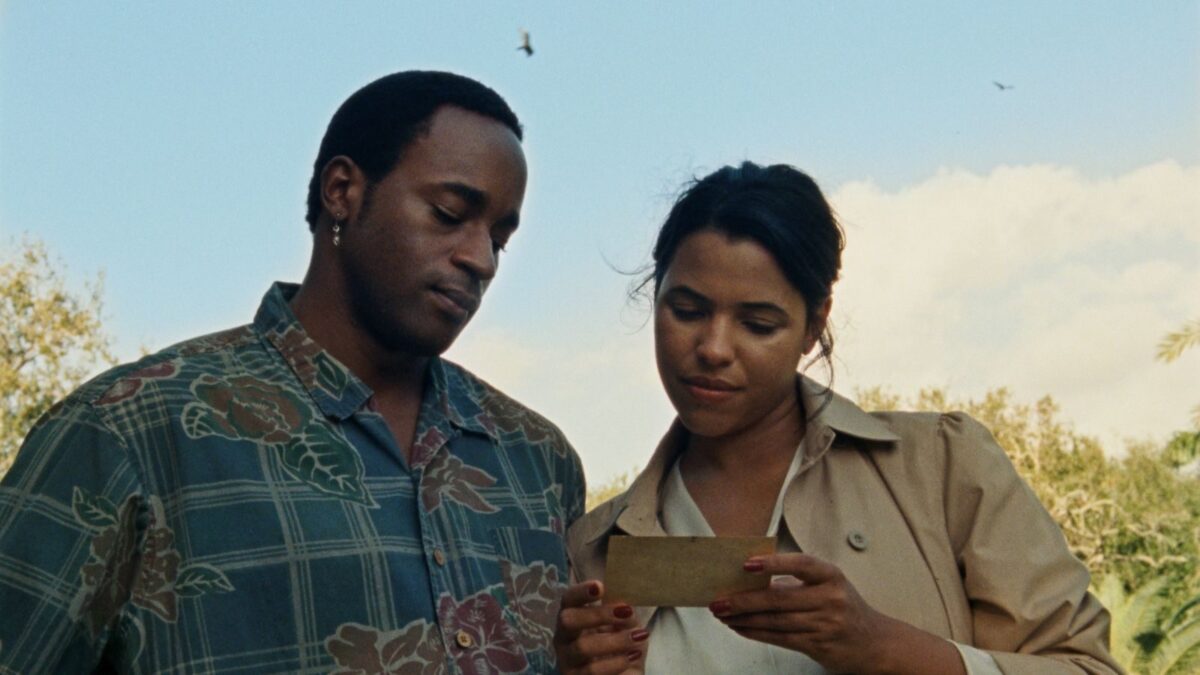
The Ballad of Suzanne Césaire, the feature debut from artist and filmmaker Madeleine Hunt-Ehrlich, aims to foreground its primary literary material and historical context, but instead directs more attention to its oneiric touches and environmental phenomena––the “wind in the trees,” so to speak. The title figure, together with her more widely known husband Aimé Césaire, were both at the forefront of the négritude movement, which sought to put Francophone literature by colonized peoples in greater dialogue with their African ancestry, and to depict this with a supple, surrealistic view of the world. Assembled from deep research, assistance from academic specialists, and consultations with the Césaire offspring, Hunt-Ehrlich’s bold formal schema still prevents us from fully absorbing these efforts: “feeling” does outpace our full understanding. The vibrant Caribbean music and torch songs on the soundtrack make plain it’s a ballad, not a pedagogic Lecture of Suzanne Césaire. – David K. (full review)
The Baltimorons (Jay Duplass)
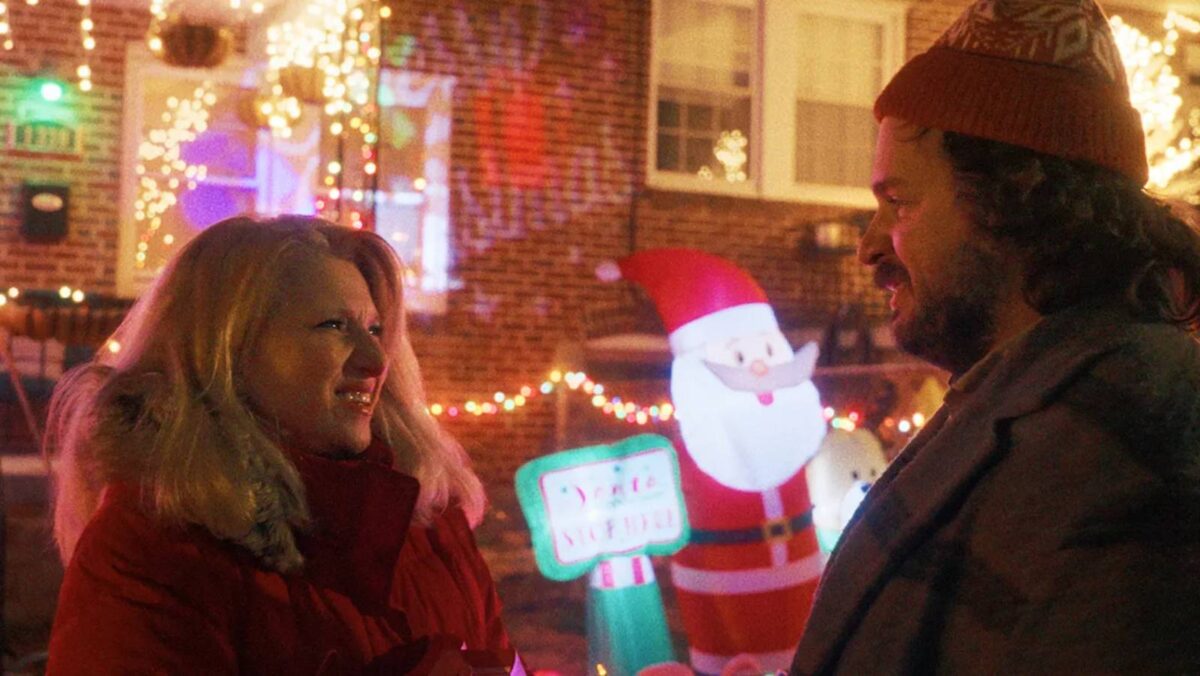
A return to form for Jay Duplass, who’s also making his solo-directing debut, The Baltimorons is a charming throwback to the low-budget indies he directed with his brother Mark. Written and starring burly stand-up comedian Michael Strassner, the Baltimore-set film follows the mis-adventures of an unlikely romantic duo: Strassner’s Cliff, a stand-up comedian six months sober, and his older workaholic dentist Didi (Liz Larsen). Cliff is bantering with his fiancée Brittany (Olivia Luccardi) when he falls and chips a tooth, sending him frantically searching for a dentist who will take him on Christmas Eve. Didi is the only one who takes his call, agreeing to meet him in her empty office for surgery. – John F. (full review)
Blue Sun Palace (Constance Tsang)
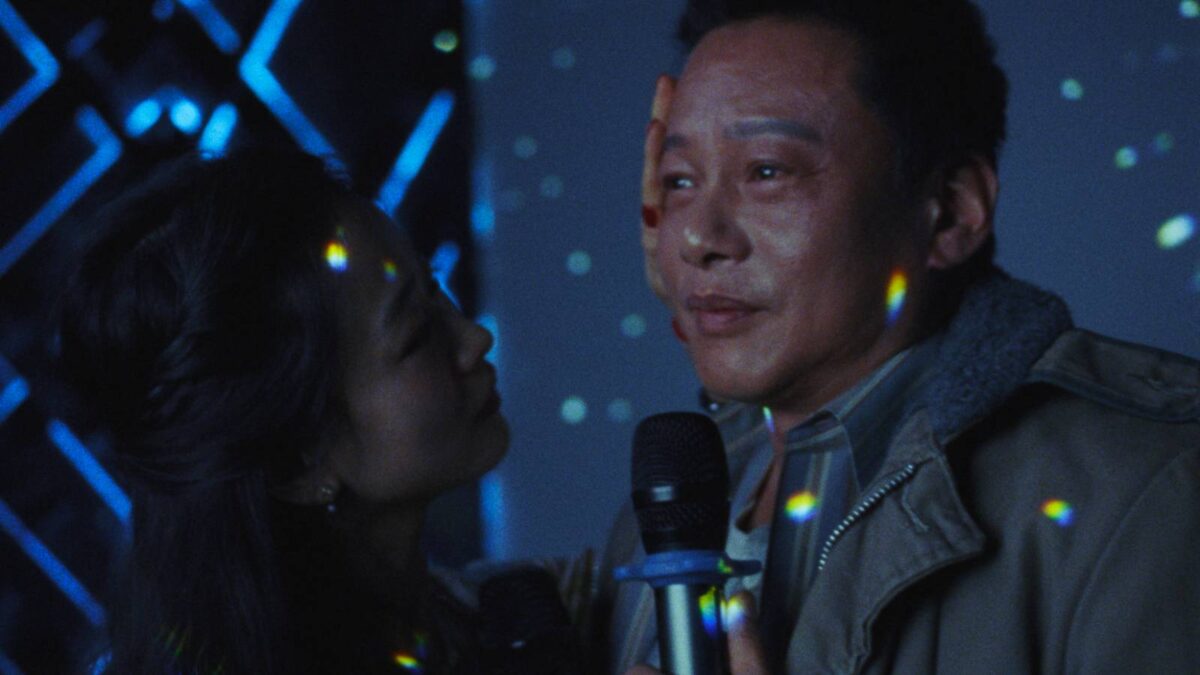
With cinematographer Norm Li’s deliberate distance and editor Caitlin Carr’s practiced patience, Constance Tsang’s Blue Sun Palace initially follows Didi (Haipeng Xu), an effervescent, soft-hearted masseuse in love with client Cheung (Lee Kang-sheng) and friends with co-worker Amy (Wu Ke-xi). Then the film—a seemingly by-the-numbers immigrant affair—is destabilized with an act of violence that completely pivots its focus; what subsequently emerges, instead, is a tender portrait of the fallout from grief in the lives of drifting souls. The confidence with which Tsang executes her vision, along with her attunement to the power of her enigmatic performers’ faces and implications that can arise from the repetition of sequences, render Blue Sun Palace one of the most studious debuts of the year. – Nirris N.
Bogancloch (Ben Rivers)
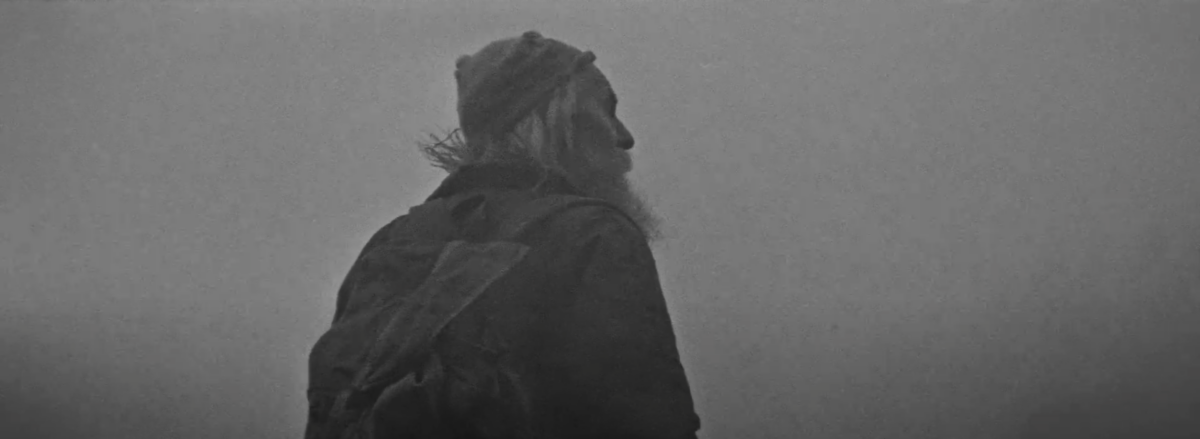
Like the best cinema––or, at least, the kind I respond to most passionately––the films of Ben Rivers immerse us in stories that aren’t as interested in solving enigmas as letting us luxuriate in them. To say that very little happens in Bogancloch––a follow-up to the director’s 2011 feature debut, Two Years at Sea––is both technically correct and frustratingly reductive. For a little less than 90 minutes, Rivers’s latest tracks an old man as he go about a life of self-subsistence in the middle of the woods––all we do is watch him bathe, cook, hike, hunt, and sleep. – Leonardo G. (full review)
Boys Go to Jupiter (Julian Glander)

Boys Go to Jupiter, an animated feature directed and written by Pittsburgh-based 3D artist Julian Glander, is truly a product of its time. And that time is now. As the press notes mention: “[The film] was self-produced and animated entirely over 90 days on the free open-source 3D modeling program Blender. Peisin Yang Lazo executive produced.” Running about 85 minutes and featuring an impossibly stellar voice cast (including Elsie Fisher, Julio Torres, Sarah Sherman, Joe Pera, Janeane Garofalo, Demi Adejuyigbe, Cole Escola, and Eva Victor, to name just a few), this film is often funny and sometimes introspective about this land of screens we find ourselves trapped inside. A bit long in the tooth at times, it is undeniably engaging and reliably weird. – Dan M. (full review)
Broken Rage (Takeshi Kitano)

Split into two chapters, the film kicks off as a crime thriller before switching tones altogether and revisiting the first part scene-by-scene in a more delirious light. Kitano stars in both as a gun-for-hire. Infallible in the first and hopelessly clumsy in the second, he’s “Mouse,” a hit man whose murderous routine is upended once cops recruit him to infiltrate a drug ring. Tonally distinct as they may be, humor permeates both parts. Even in the ostensibly more “serious” first, Kitano’s script moves with a childlike logic: it only takes Mouse a couple of punches in a staged brawl with another mole to ingratiate himself with the mobsters he’s been asked to spy on. His killing-machine loner is a comic riff on the other unbeatable assassins he played in the past (think of Otomo, the thug of his Outrage saga). But the commitment to poking fun at his onscreen personas is something I hadn’t seen him do since 2005’s Takeshis’, a comedy that nonetheless spiraled into self-indulgent flights of fancy. Nothing farther from Broken Rage’s spirit. This isn’t just a wildly funny film––the kind that sent people around me at the press premiere into convulsed laughter just a few scenes in––but a pointed rebuke to the discourse that saw the director’s two impulses (popular comedy and artful seriousness) as opposite poles in a magnetic field. – Leonardo G. (full review)
By the Stream (Hong Sangsoo)
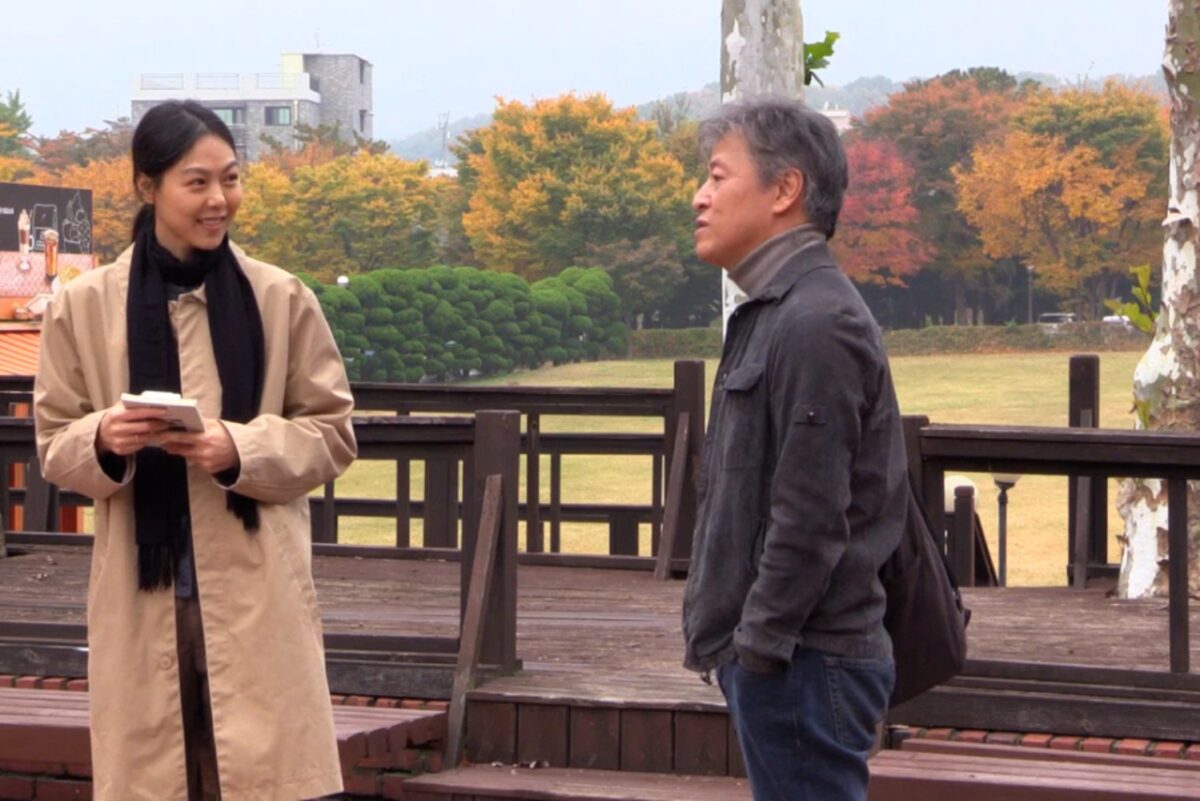
If Hong’s self-repetition can cause doubt, there’s something equally reassuring seeing his two stars, Kim Minhee and Kwon Haehyo, take up space in a two-shot, their figures seen from the knee upwards. The former is Jeonim, a textiles artist and lecturer at a Seoul women’s college; the latter plays her uncle Sieon, an actor and director banished from his once-eminent career in the aftermath of a scandal (that’s only opaquely explained in the script) and now the proprietor of a bookshop in the Kangwon Province. Sieon has been called upon by her adoring, seldom-seen niece to, proverbially, recover his sea legs: he has to devise an informal skit for her Western Art class to perform at semester’s end, after the previous director (Ha Seongguk, incarnating youthful folly in recent Hongs) also exited the troupe in disgrace. And we know the “why” more starkly: he “separately” dated three members of the group, who all dropped out in solidarity. – David K. (full review)
Dag Johan Haugerud’s Oslo Trilogy

If you were going by the synopses alone, you’d be forgiven for assuming director Dag Johan Haugerud’s trilogy of loosely romantic tales set in the Norwegian capital were mere provocation. In Sex, the friendship between two co-workers, one deeply religious, is tested when the other decides to cheat on his wife and experiment with another man; in the Golden Bear-winning Dreams, a teenage girl’s all-consuming crush on a schoolteacher (who may be encouraging it) is put under the spotlight; and in Love, a middle-aged single nurse takes advice from her gay co-worker to embrace a life of open, casual sex. But the filmmaker’s tales are far more insightful about modern relationships and our constantly evolving attitudes to sexuality, never condescending to the audience by exploiting their highly charged premises for exploitation or cheap laughs. Simultaneously, the trilogy’s earnestness extends towards those who have become marginalized from having a sex life altogether, with a subplot in Love introducing us to a gay therapist who came of age during AIDS, and has since been diagnosed with prostate cancer—overcoming a formative fear of sex only to be unable to experience it when he finally became comfortable. Haugerud exhibits openness and tenderness towards all his characters, and this warm, humane approach makes his trilogy one of the most mature, moving explorations of sexual expression in recent memory. – Alistair R
Desert of Namibia (Yoko Yamanaka)

A busy shopping district in Tokyo—hustle and bustle, chattering and noise around every corner. Then we zoom in. Yoko Yamanaka’s beguilingly elusive debut feature is at once a self-reflexive litmus test for the perspectives of Japanese society in macro and a defiantly individualistic portrait of one young woman and her adrift generation. Yuumi Kawai plays the flat-faced Kana with a kaleidoscopic unreadability. She’s the most striking element of Yamanaka’s scenes, and every spectator—man or woman; young or old; Japanese or non-Japanese—has a different opinion of her. This film is female—no compromises, no concessions. – Blake S
Drowning Dry (Laurynas Bareiša)
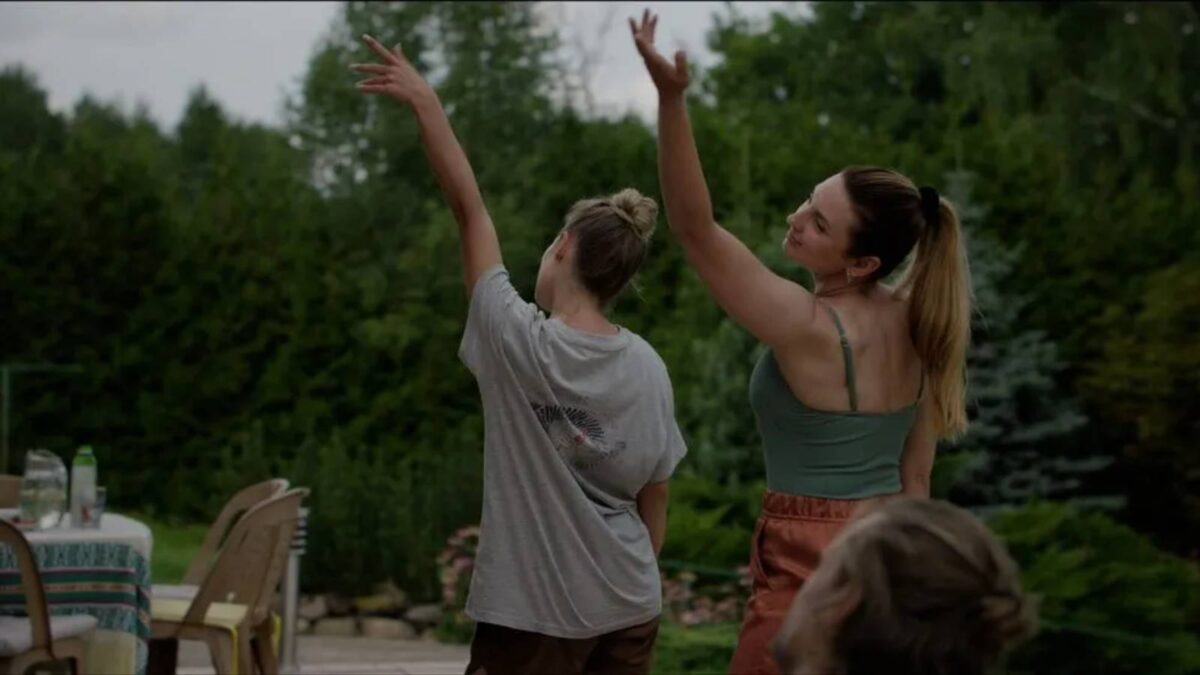
Memories can be slippery things. Take what happens around the halfway point of Laurynas Bareiša’s beguiling second feature: two women––more specifically Ernesta (Gelminė Glemžaitė) and Juste (Agnė Kaktaitė), sisters on holiday with their respective families (a husband each, with one son and one daughter, respectively)––start dancing to Donna Lewis with what looks like an old routine, part half-remembered movements, part muscle memory. This entrancing sequence is cut short when their kids ask to go swimming, where one of the children appears to drown. The film then jumps forward in time, where Ernesta is visiting a man whose life was saved by one of her late husband’s organs. Before finding out how he died, we jump back again: same holiday, same sisters, same dance, only this time it’s Lighthouse Family. “When you’re close to tears, remember,“ Tunde Baiyewu sings, “someday it’ll all be over.“ – Rory O. (full review)
East of Wall (Kate Beecroft)
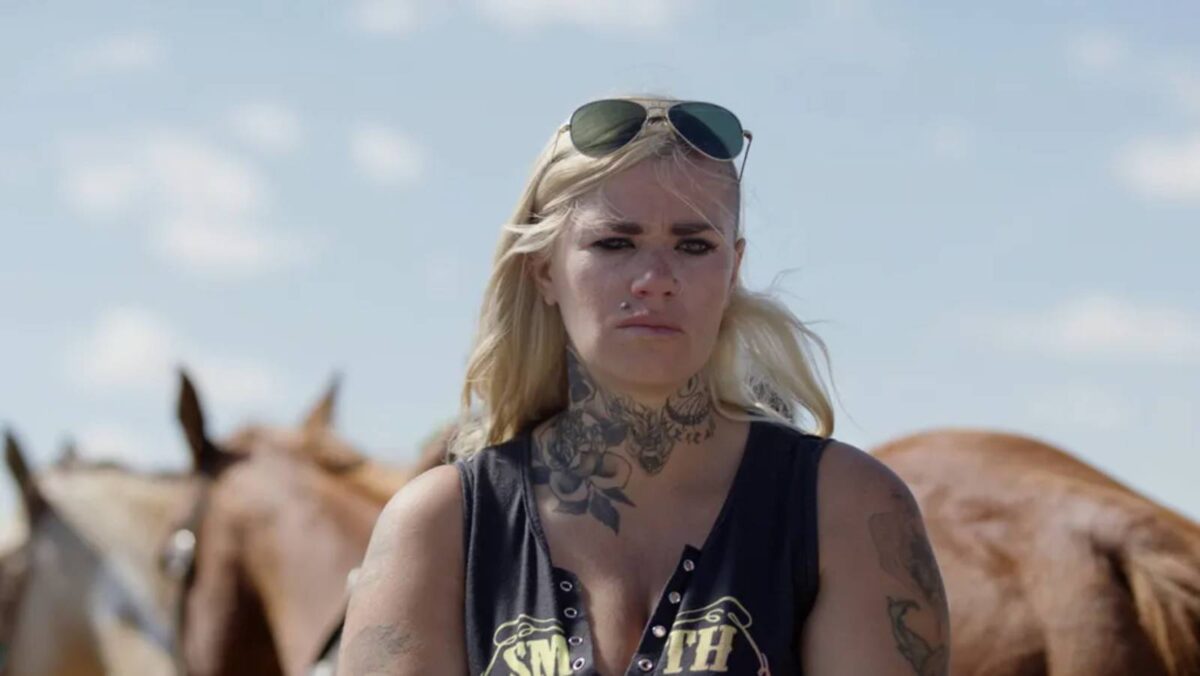
The degree of difficulty in making East of Wall must have been enormous: a small budget, a series of remote locations, a slew of non-actor performers, and the incredibly arduous task of working with horses. Written and directed by Kate Beecroft, the film stars Tabatha Zimiga as a version of herself. In real life, Zimiga runs a South Dakota ranch where she raises horses she then sells via social media. Her daughter Porshia also stars here, and is quite good. The film as a whole is a fictional narrative wrapped up in the facts of the Zimiga clan. Following the untimely death of her husband, Tabatha is burdened with significant financial responsibilities as well as a large chosen family that lives at her ranch: a number of older children with no place to go have found a home with her and her biological children. – Dan M. (full review)
The Fishing Place (Rob Tregenza)
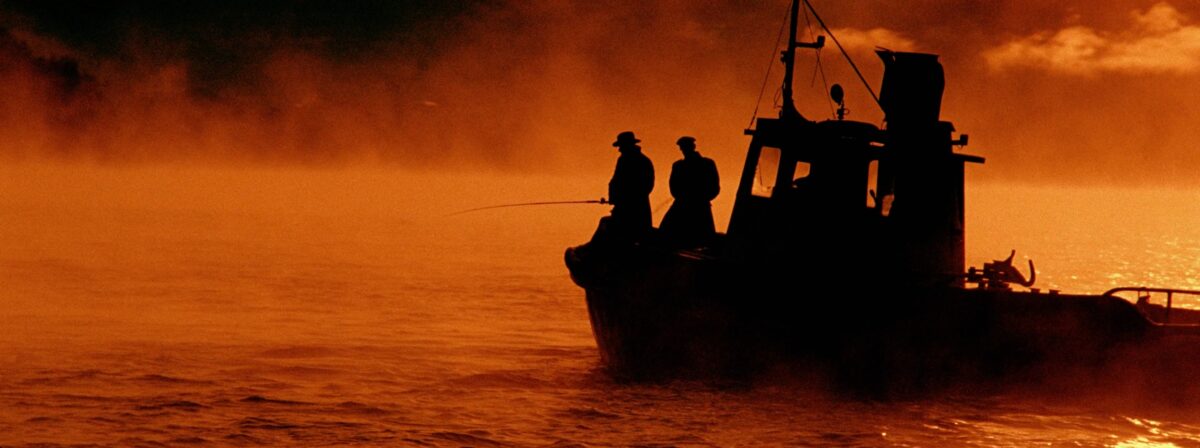
Rob Tregenza’s first film in nearly a decade suggests no diminishment in power or vision; if anything The Fishing Place embodies the dual influence of pent-up energies and careful refinement. On the surface a tale of faith and espionage in rural Norway circa World War II––snowy landscapes, candlelit rooms, and the cold light of day shining through church windows––the film hums with secret histories and spiritual tension, culminating in both long-take assassinations and a beguiling denouement that yanks the film from its ‘40s trappings and emulates Taste of Cherry. One hopes it isn’t the 74-year-old filmmaker’s final statement, but as such it would properly close a sui genesis career in American cinema. – Nick N.
Ghost Trail (Jonathan Millet)
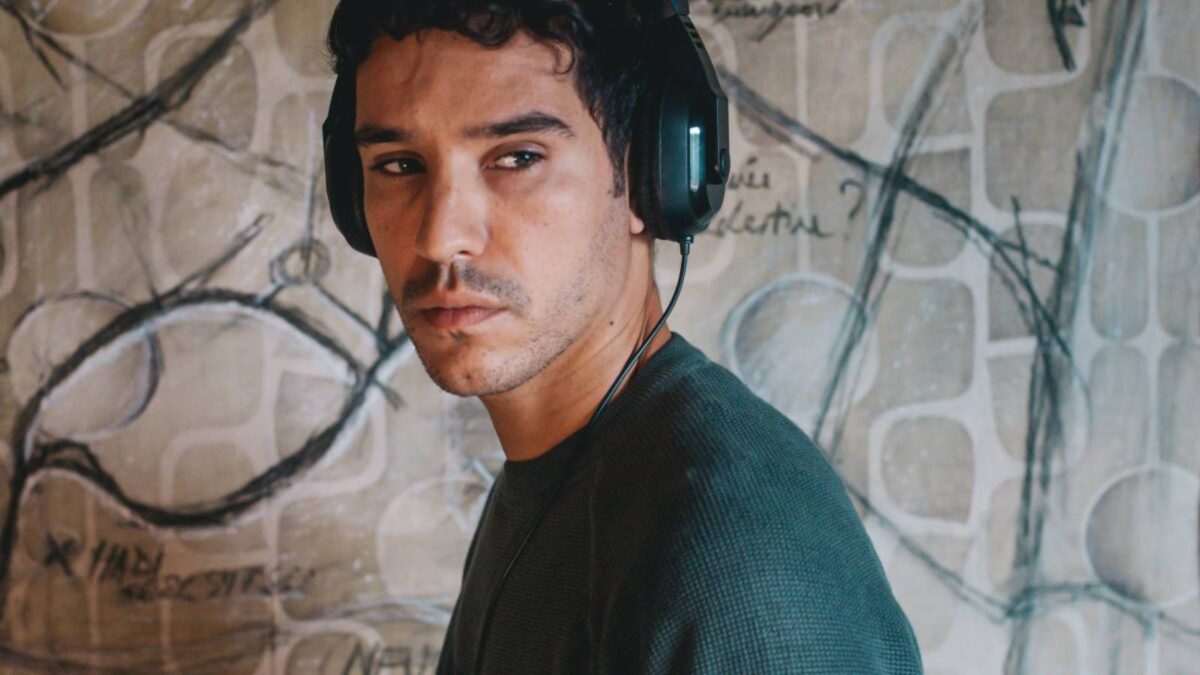
The wars in Gaza and Ukraine have dominated headlines for the past several years, yet receiving relatively little coverage today is the Syrian civil war, sparked in the wake of 2011’s Arab Spring. It is yet ongoing and stands now at an uneasy stalemate. Over a decade of fighting, horrifying humanitarian and war-time crimes were committed; all the while 13 million Syrians were displaced from their homes. These refugees, lost in foreign countries offering asylum, are still looking for answers and perhaps a reckoning and retribution. Director Jonathan Millet’s debut narrative feature Ghost Trail dives deep into one survivor’s psyche and lays bare the cost of a conflict from which the world seems to have moved on. – Ankit J. (full review)
Grand Tour (Miguel Gomes)

If Chris Marker and Preston Sturges ever made a film together, it might have looked something like Grand Tour, a sweeping tale that moves from Rangoon to Manila, via Bangkok, Saigon and Osaka, as it weaves the stories of two disparate lovers towards a fateful reunion. The stowaways could scarcely be more Sturgian: he the urbane man on the run, she the intrepid woman trying to track him down. Their scenes are set in 1917 and shot in a classical studio style, yet they’re delivered within a contemporary travelogue––as if we are not only following their epic romance but a director’s own wanderings. – Rory O. (full review)
Happyend (Neo Sora)
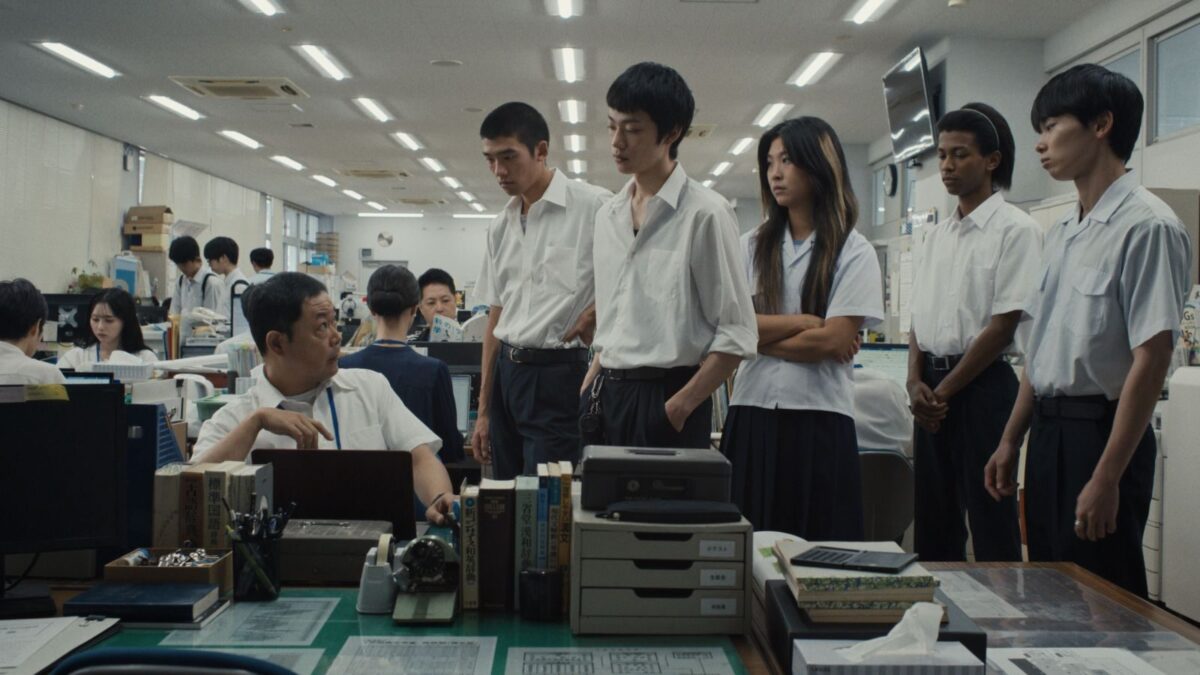
“Something big is about to change,” is surely one ominous beginning for a debut fiction feature, but director Neo Sora knows how to calibrate the fine balance between anticipation and inevitability. A story set in the near future, Happyend makes Tokyo a vast playground to high-school seniors gathered around childhood pals Yuta (Hayato Kurihara) and Kou (Yukito Hidaka). Life is blooming and the future is ripe for those teenagers, even if the whole city is constantly preparing itself for a catastrophic earthquake. Daily drills and false alarms interrupt an otherwise-smooth rhythm where Yuta and Kou gather their classmates at their Music Research Club, an extracurricular that’s more enjoyable than practical in purpose. With a fully equipped school room at their disposal at all times, the gang can build a secure microcosm for the shared love of electronic avant-garde and a generally good time. – Savina P. (full review)
Harvest (Athina Rachel Tsangari)
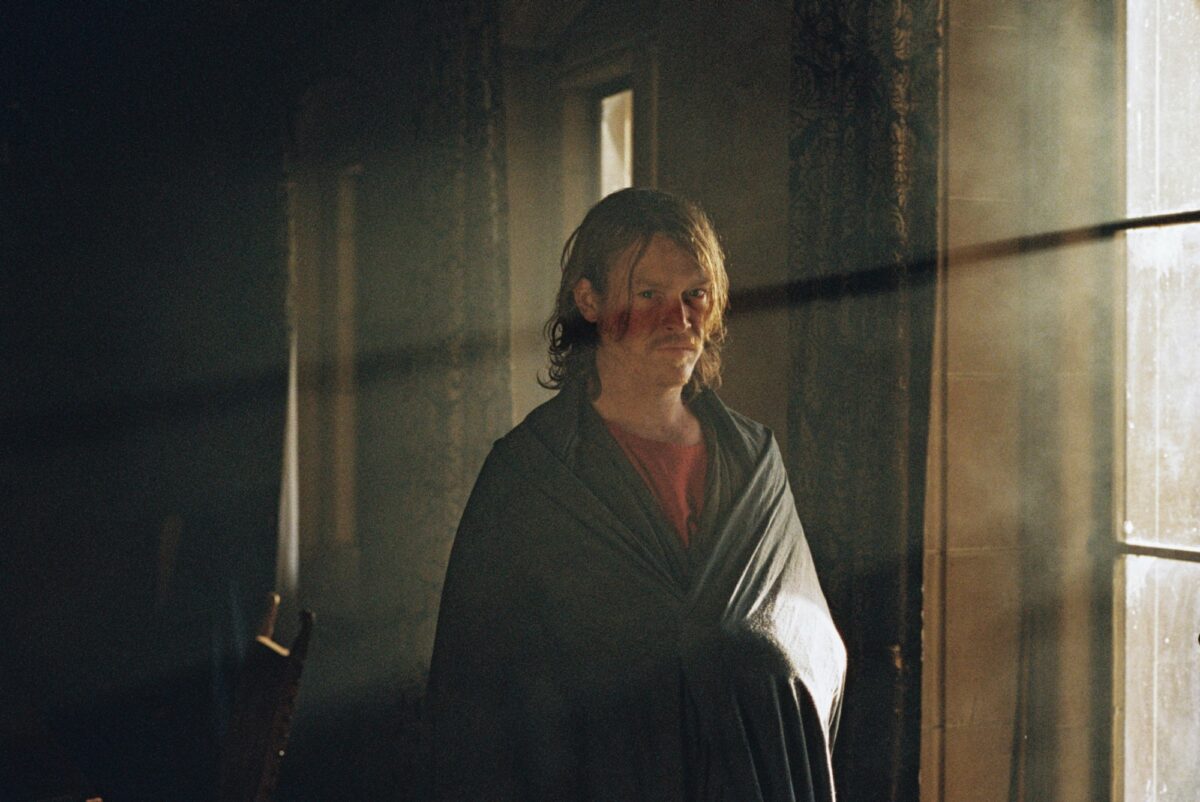
An unnamed village, an unknown time; somewhere in Britain, sometime in the Late Middle Ages, something is about to end. Athina Rachel Tsangari’s Harvest sees the twilight of an old social order, but is not mourning a paradise lost. That would be too simplistic a comparison for a filmmaker whose work has always succeeded in weaving the allegorical with the political, such as gender constructs in Attenberg or Chevalier. Nine years after the latter, the Greek director returns to feature filmmaking with an adaptation of Jim Crace’s acclaimed book of the same name, making Harvest her third film and first period piece. – Savina P. (full review)
The Heirloom (Ben Petrie)
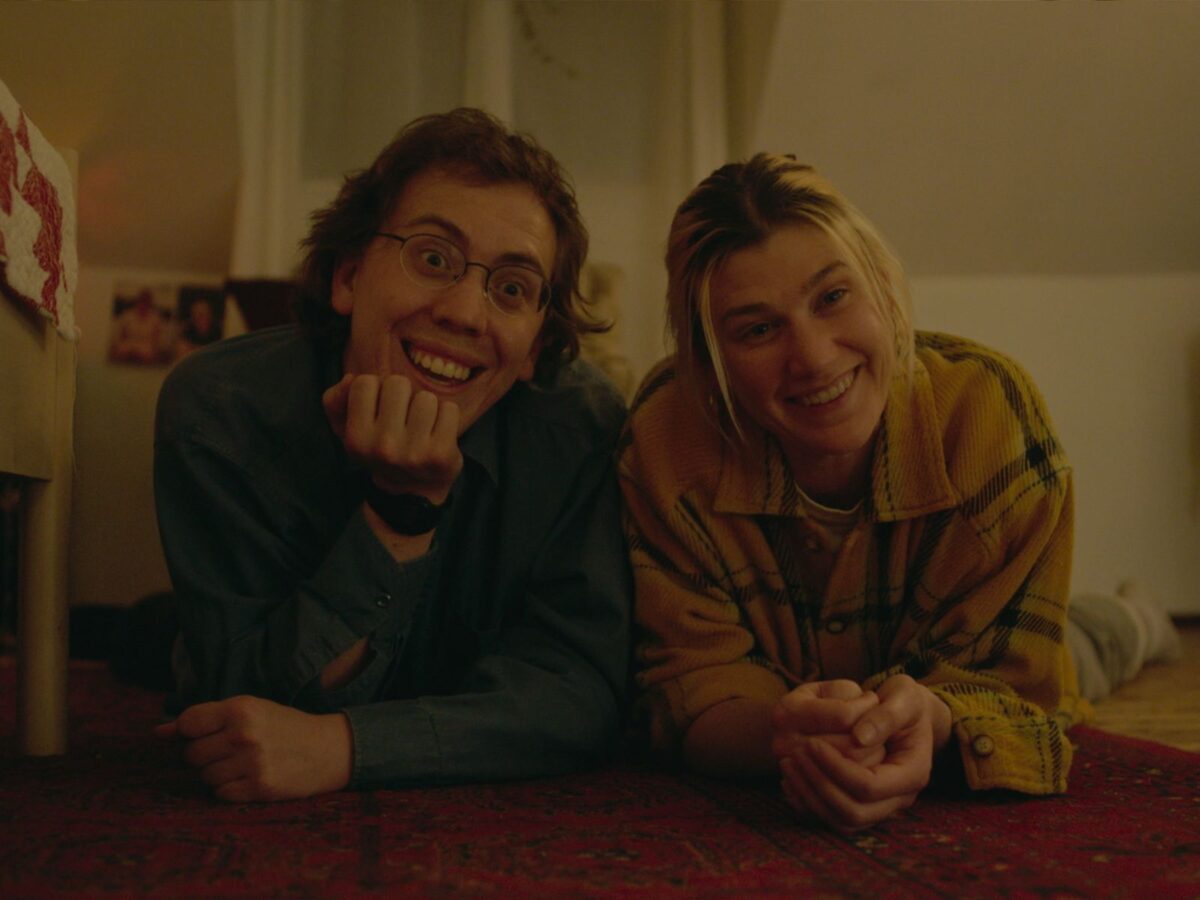
This is often very funny, even as Eric’s narrativizing threatens to further hinder the relationship. Petrie allows Eric’s new obsession to spill into sequences that feel genuinely Kaufmanesque (an overused word, granted, but a distinction well-earned here). In one example, shot from Eric’s POV, Allie excitedly turns around to inform him that Milly has peed; Eric then begins seeing the moment repeated as if in multiple takes, Allie’s performance straining to hit the desired note. Whether these repeats are real or imagined is never explicated, though it’s fevered enough to appear like a figment of Eric’s lockdown brain. In a later scene, a boom mic operator crosses the shot without disturbing the character’s flow, a jarring intrusion during a moment of real vulnerability––and a sharp directorial choice that both douses the tension and accentuates its source. – Rory O. (full review)
The Ice Tower (Lucile Hadžihalilović)
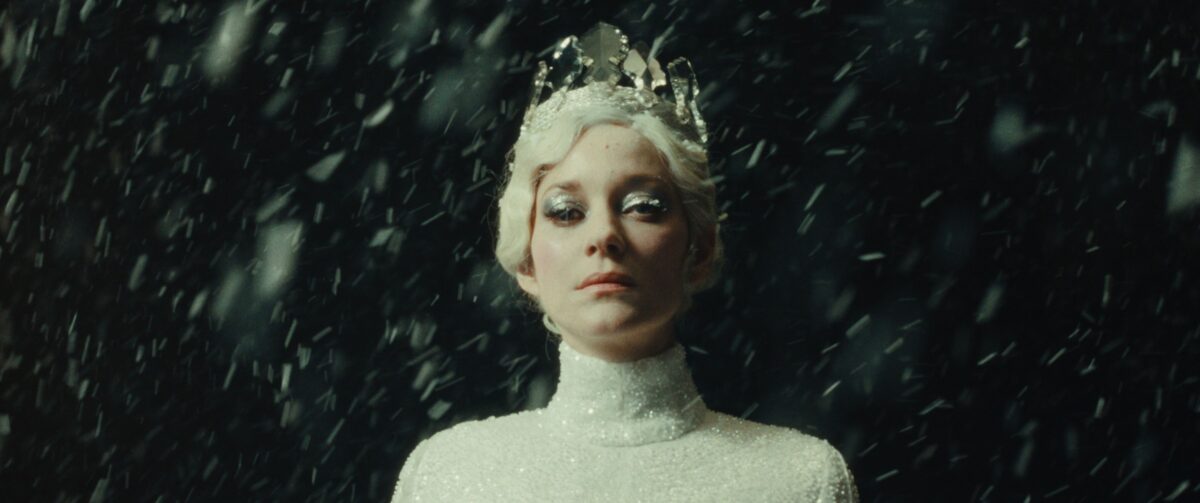
If there is a filmmaker whose work can be described as “elemental cinema,” that’s Lucile Hadžihalilović. It’s easy to chronicle her 2015 film Evolution as fluvial for its many water (and underwater) scenes, but also how its rhythmic flow steers the mysteries of a post-humanist plot. One might say that Innocence is earthy with a soil that’s dry––there, the woods are where secrets are concealed––and the San Sebastian Special Jury Prize winner Earwig is as ethereal as it is enigmatic. The way Hadžihalilović borrows from elements serves to alchemize the images we see onscreen, lacing them with a thin veil of unknowability. Yet their meaning is never fully out of reach; these are coming-of-age stories at their core. Hadžihalilović’s newest film, The Ice Tower, was billed as her most accessible work yet, borrowing from a source more familiar than she has before: Hans Christian Andersen’s fairytale “The Snow Queen.” – Savina P. (full review)
Invention (Courtney Stephens)
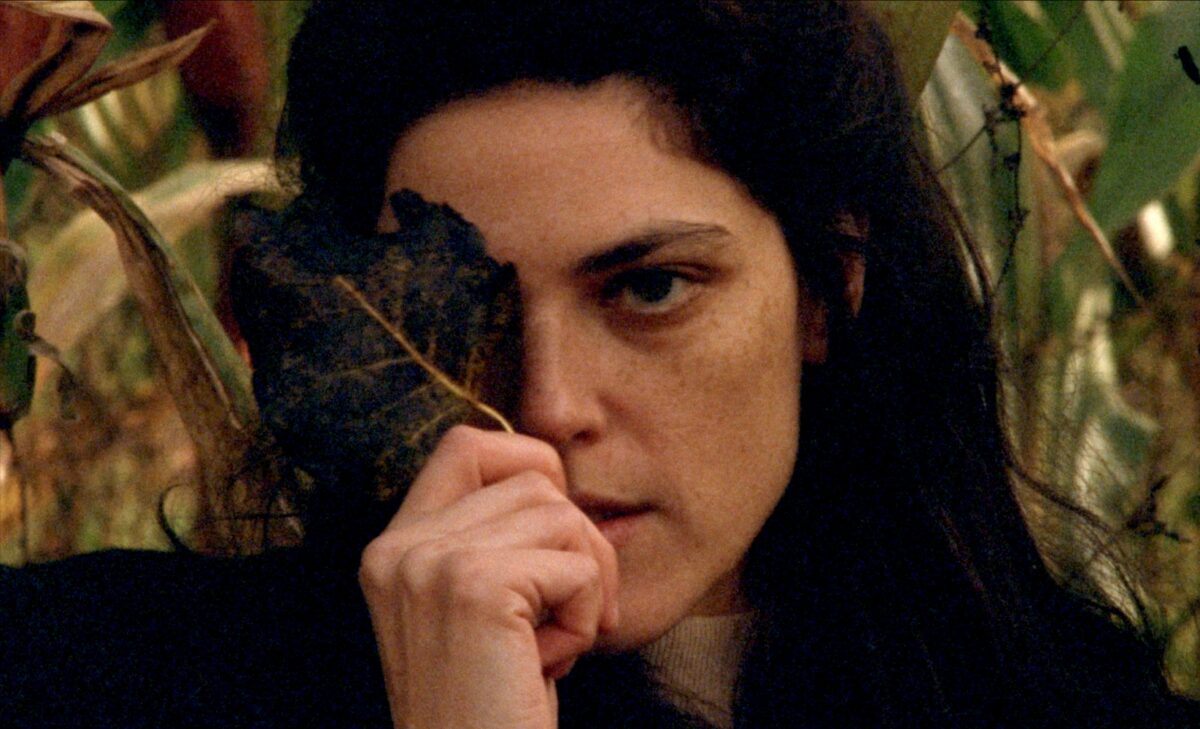
Grieving comes in many guises. In Courtney Stephens’ Invention, speculative fiction blends with personal history to explore the ways we process death. The subject is Callie Hernandez, an actress and filmmaker whose father died of a COVID-related illness in 2021. There’s much archival footage of the man, mostly television recordings from his times as a kind of telemarketer for new-age healing methods, but Stephens and Hernandez go one further, suggesting an alternative timeline. In this ersatz world, a patent for an electromagnetic healing device is left to her in her father’s will. No categorization does the film justice: it’s about death and mourning, of course, but it’s just as interested in people’s susceptibility to conspiracy. – Rory O. (full review)
A Little Prayer (Angus MacLachlan)
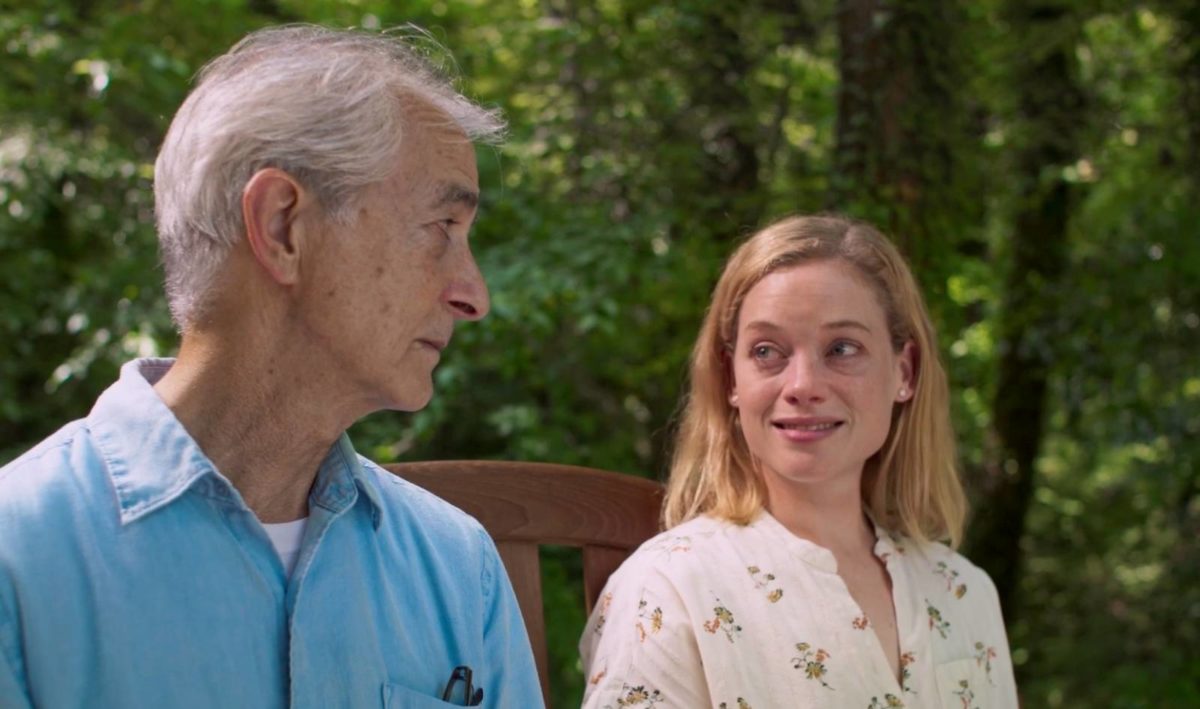
In the quiet, peaceful mornings that ease your way into writer-director Angus MacLachlan’s A Little Prayer, a woman belts out gospel songs that echo down the block. They’re a bleary-eyed nuisance to many waking in this small, North Carolina neighborhood, but Bill Brass (David Straitharn) and his daughter-in-law Tammy (Jane Levy) have a mutual fascination with them, rising early with curiosity and wonder. Why does she sing them? Where do they come from exactly? The pair eventually attempt to investigate their leafy streets to find the source, yet as the spirituals dissipate and leave them alone in bird-chirping silence, they seem to revel in their beautiful, unsolved mystery. – Jake K.S. (full review)
No Sleep Till (Alexandra Simpson)
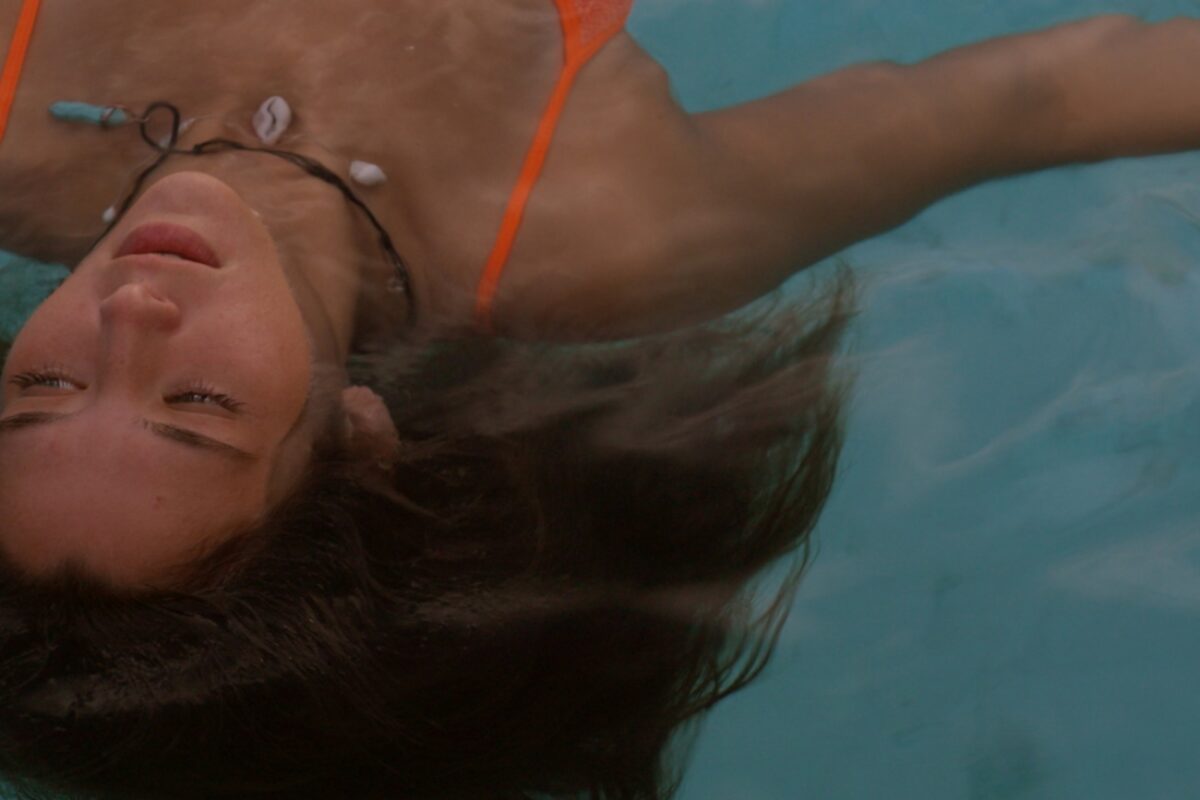
A hurricane is coming and Atlantic Beach, Florida is directly in its path. The tourists have already left. Most residents remain. Why? Because this is hurricane country. None of this is new. Maybe the storm will hit. Maybe it won’t. Is that chance worth the time and effort of skipping town? Or is the excitement of experiencing it as it washes over you too good to pass up? And what about those who simply can’t be bothered either due to age or complacency? This is home, after all. For some, this is all they’ve ever known. Alexandra Simpson’s No Sleep Till plays out in a slice-of-life documentarian style. It’s a quiet piece with gorgeous images (kudos to cinematographer Sylvain Froidevaux) and interesting characters engaged in the seemingly wild juxtapositions inherent to maintaining a mundane status quo through the uncertainty of impending chaos. – Jared M. (full review)
On Becoming a Guinea Fowl (Rungano Nyoni)
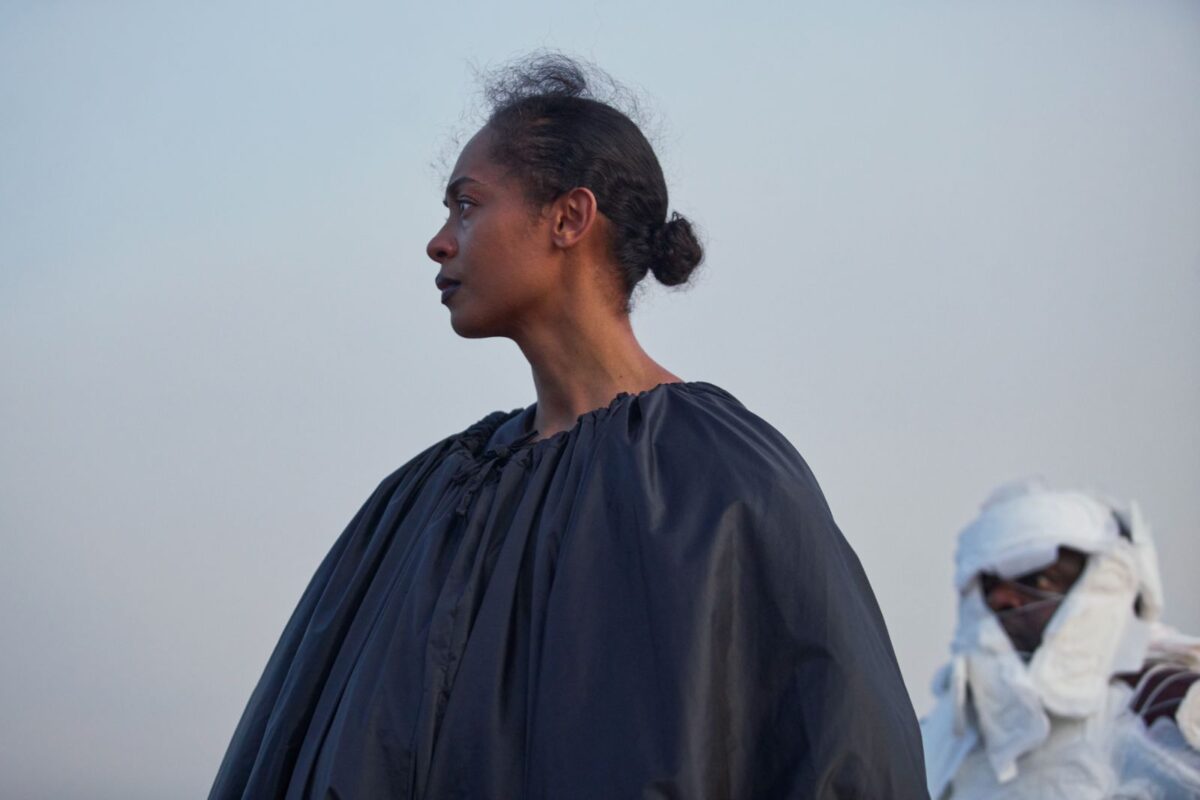
With her second feature film, Zambian-Welsh director Rungano Nyoni looks at the pain, memory, and absurdity of familial Zambian tradition. On Becoming a Guinea Fowl follows Shula (Susan Chardy), who finds her uncle dead in the middle of the road one night. Shula and her cousin Nsansa (Elizabeth Chisela) spend the first minutes of Nyoni’s film in a car, waiting for the night to end and police to arrive. Her uncle is wearing a sumo suit and has been found near the town’s brothel, making him to be a neighborhood clown acting without restraint or limitation. – Michael F. (full review)
Pavements (Alex Ross Perry)
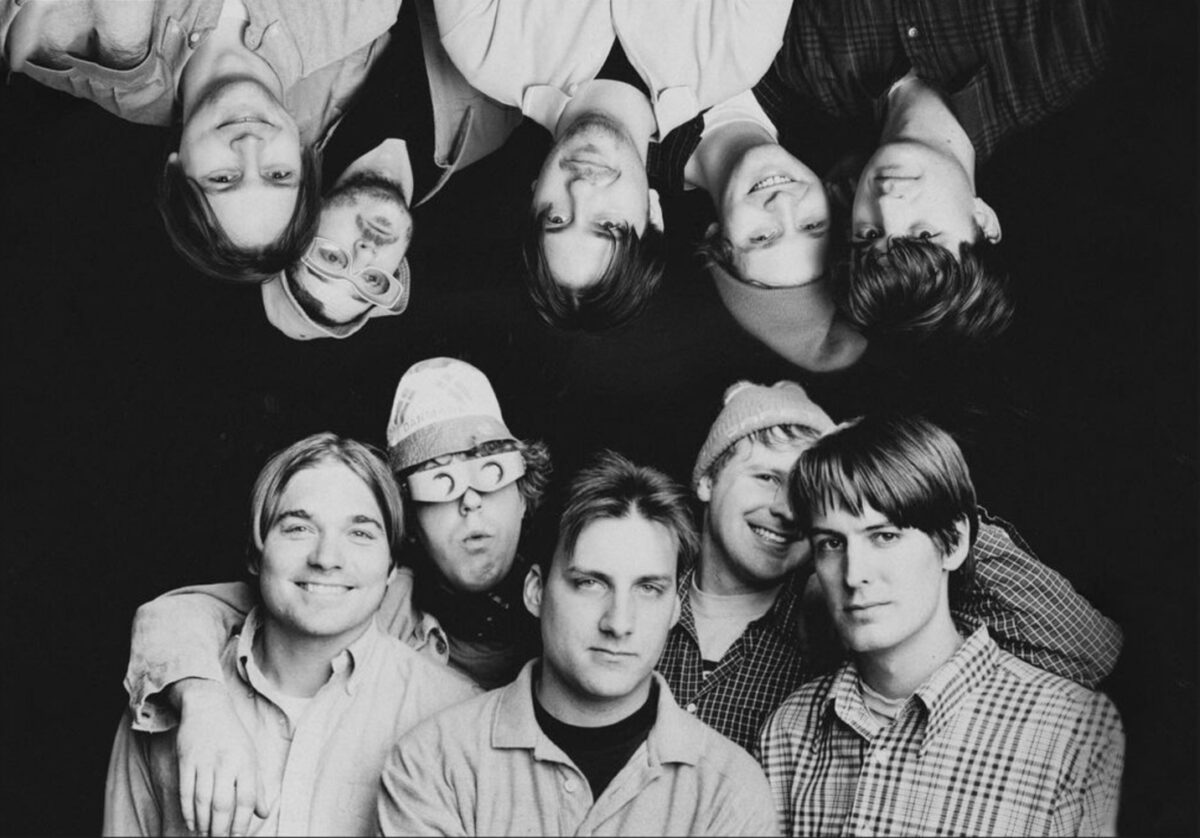
If the Hollywood superhero-industrial complex is perishing, the Rolling Stone and Spin magazine extended universe is hastily being built. What better defines “pre-awareness” for the studios like the data logged by Spotify’s algorithm, where billions of track plays confirm what past popular music has stood the test of time, and also how––in the streaming era––you can gouge ancillary money from it? But unlike the still-brilliant Walk Hard: The Dewey Cox Story, which stood to excoriate the nostalgia sought by such films, recently reinvigorated by the success of Bohemian Rhapsody, Alex Ross Perry’s Pavements, on the eponymous ’90s slacker idols, justifies that every great band deserves a film portrait helping us to wistfully remember them, and also chuckle as pretty young actors attempt to nail the mannerisms of weathered, road-bitten musicians. So good luck, Timothée. – David K. (full review)
Pepe (Nelson Carlo De Los Santos Arias)
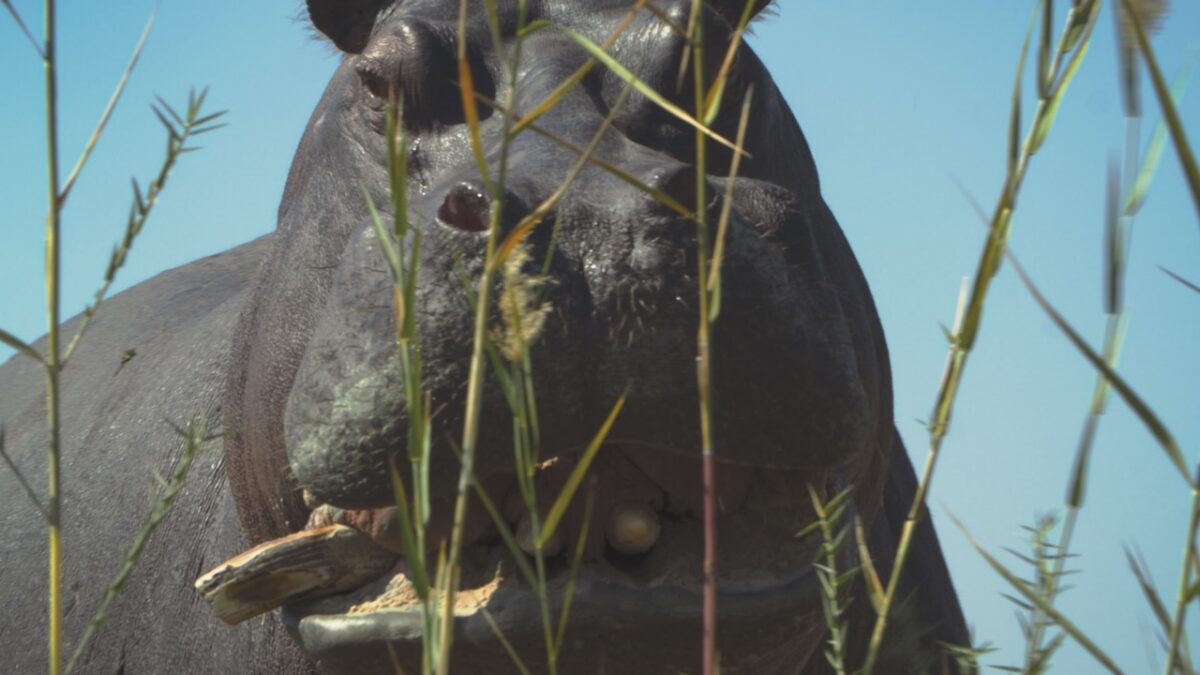
Nelson Carlo De Los Santos Arias’ 2017 fiction debut Cocote was the dazzling, textured arrival of a new voice; the director doesn’t disappoint with his invigoratingly peculiar follow-up. Pepe, which premiered at Berlinale and arrived on MUBI at the start of the new year, takes us inside the mind of one of Pablo Escobar’s dying hippos. Anything close to The Lion King or Dr. Dolittle, this is not, thankfully, as the director uses his ambitious conceit to explore global political strife, ecological dangers, and animal cruelty. In what would make for a great double feature with Mati Diop’s Dahomey—another Berlinale highlight that gave sentience to the unexpected—Pepe is a formally radical odyssey that’s hard to shake. – Jordan R.
Queens of Drama (Alexis Langlois)

The relationship the queer community has with an ever-expanding and rotating lineup of pop divas goes back decades, even if the current iteration of that relationship in the social media age––via the wars between unhinged stan accounts and, of course, endless posts about flop stars doomed to the “Khia asylum”––feels like an entirely new evolution in parasocial fandom. The decades-spanning pop industry satire Queens of Drama might skip over the present day altogether, spending more time reflecting on the mid-2000s dominance of stars manufactured by the Simon Cowell machine than anything more contemporary, but it feels completely of-the-moment for how it establishes the ways in which cultural backlash has transformed for the digital age. It’s reductive to view this as solely a product of the pearl-clutching right when this toxicity can often originate within the queer community––particularly for openly queer artists, who tend to receive just as much vitriolic scrutiny within the LGBTQ community as they do those wanting to erase them from existence. – Alistair R. (full review)
Reflection in a Dead Diamond (Bruno Forzani, Hélène Cattet)
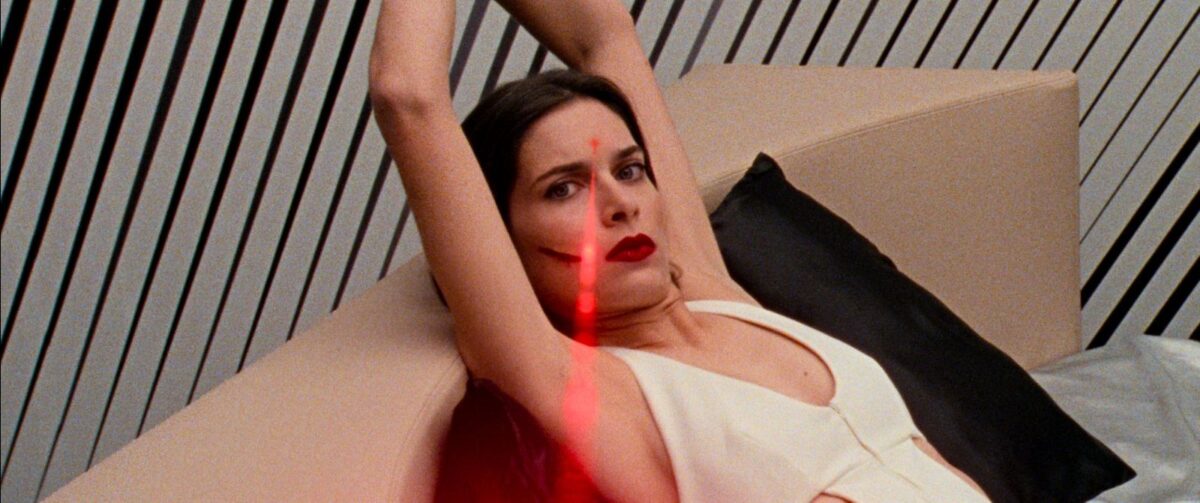
Anyone familiar with Cattet and Forzani’s oeuvre will know the kind of thrills their films unfailingly elicit. For newcomers, the encounter might amount––I say this as the highest of compliments––to an assault to the senses. Like its predecessors, Diamond unfurls as a sort of feverish mirage. It’s a film where the camera seldom stays still, shots rarely last more than five seconds, and the frame keeps splintering with the same orgasmic joy that characters experience whenever stabbing or slashing through human flesh (which happens a lot). Manuel Dacosse, who’s shot all the couple’s previous features, works with a palette that’s drenched in lurid crimsons and blues, toggling between extreme close-ups of eyes and mouths redolent of Spaghetti Westerns and Argento-styled shots of blades and stilettos tearing through skin. This is a film where the camera need only tilt skyward and back to earth for the story to shift from present to past, one fiction to the next. There are images culled from nightmares––a giant millipede crawling over a corpse––and others that are almost disarming in their inventiveness, such as an evening dress worn by one of John D’s female associates made entirely of sequins the size of a two-euro coin that can dart in all directions like scintillating daggers, killing everyone in their wake. – Leonardo G. (full review)
Sacramento (Michael Angarano)
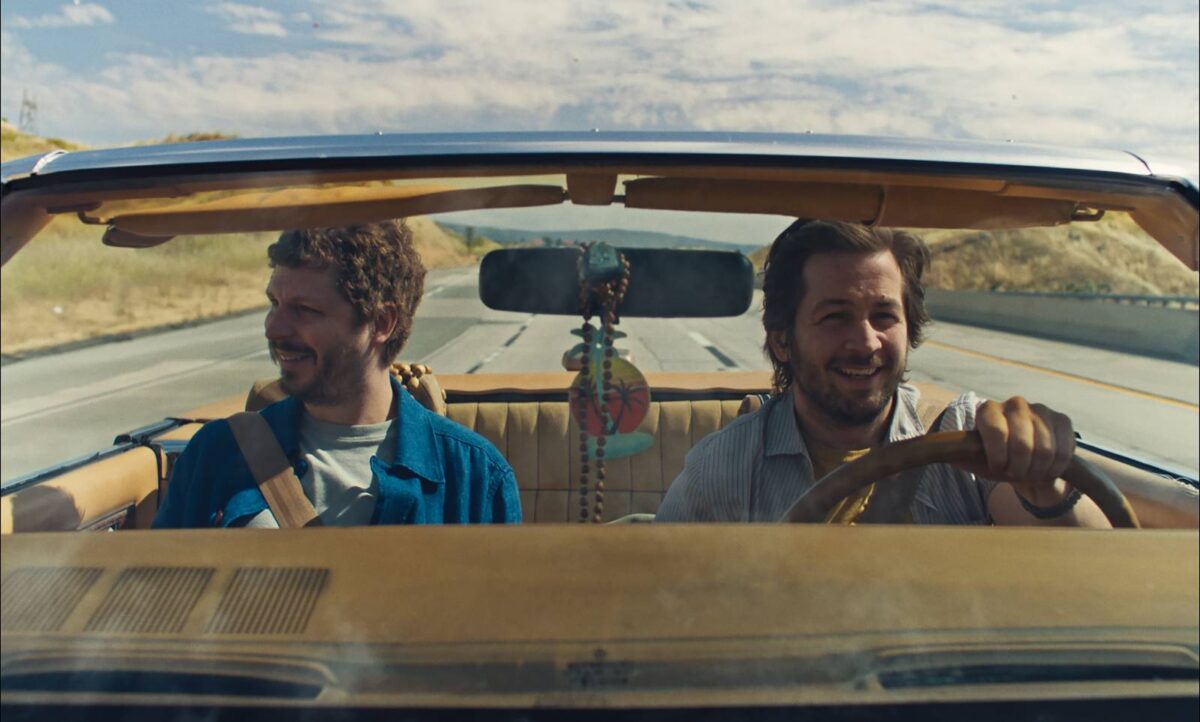
With a plucky, inherent likability as a performer that extends to his leisurely directorial aesthetic, Michael Angarano’s second feature Sacramento is an amiable, freewheeling road trip dramedy that rides on its central performances, courtesy of Michael Cera and the actor-writer-director as strained best friends. In exploring fatherhood, mental health, and the lies we tell ourselves (and others) to keep trucking along, Angarano and co-writer Chris Smith haven’t uncovered a wealth of revelations on tried-and-true thematic ground, yet there’s just enough smart comedic timing and dramatic perceptiveness to make this an adventure worth taking. – Jordan R. (full review)
Sanatorium Under the Sign of the Hourglass (Quay Brothers)

Timothy and Stephen Quay have developed an entirely unique style in the world of stop-motion animation: vigorously kinetic yet meticulously controlled; balletic in its interweaving of aural and visual rhythms; full of the sort of trivia and esoterica that fascinated Borges and Pessoa; and given to looped sequences of pure, sensual, cinematographic abstraction. Their latest production, Sanatorium Under the Sign of the Hourglass, which draws generously from Bruno Schulz’s novel of the same name, adds yet more stylistic oddities to the foregoing list, albeit in a more conventional, narrativized context. – Oliver W. (full review)
She Rides Shotgun (Nick Rowland)
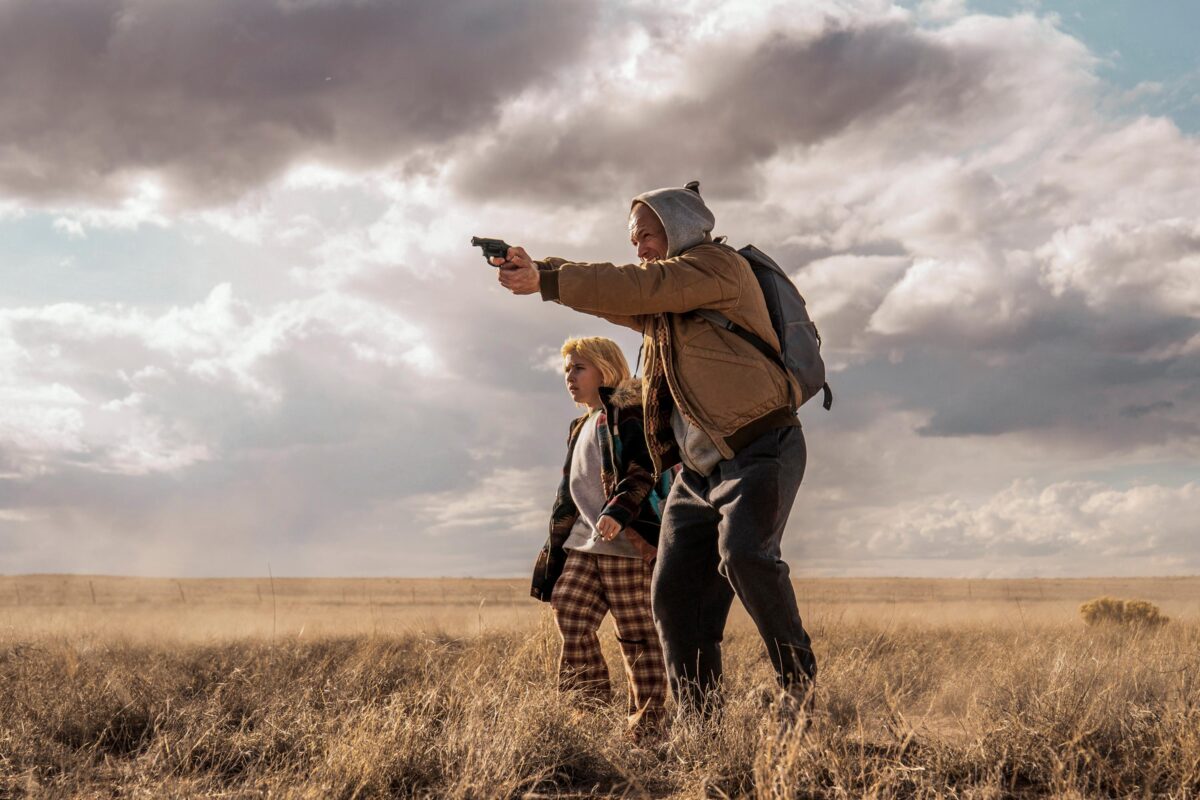
Based on the novel by Jordan Harper, with a screenplay by Harper and Ben Collins & Luke Piotrowski, and directed by Nick Rowland, She Rides Shotgun is a punchy, elemental thriller featuring Taron Egerton in an intense, engaging lead role. He plays Nate, just out of prison and immediately on the run from Aryan Steel, a neo-Nazi gang he crossed inside in order to get out. Now the order is out for Nate and his entire bloodline to be killed. Once he’s picked up his 11-year-old daughter Polly (Ana Sophia Heger) from school, the duo is on the road and driving fast, trying to figure out a way to stay alive. From stolen car to cheap motel to a wayward friend’s house, the duo learns about each other for the very first time. – Dan M. (full review)
Sister Midnight (Karan Kandhari)
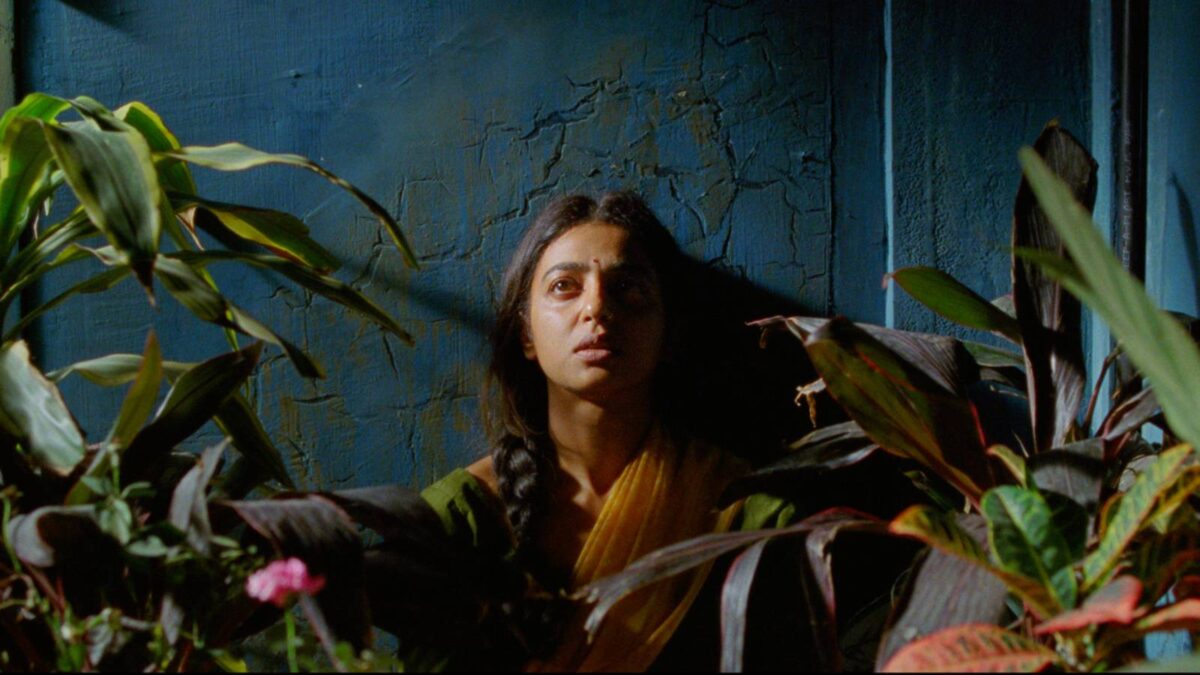
Despite Wes Anderson not having a film at the 2024 Cannes, apt comparisons were found in Matthew Rankin’s Universal Language and, flying more under the radar, Karan Kandhari’s humorously deadpan Sister Midnight, following the humdrum early days of an arranged marriage. Radhika Apte gives a pitch-perfect performance as Uma, a wife who finds her own creative ways to rebel in an isolated life among a patriarchal society. While a vignette-style approach may wear out some early momentum, Kandhari’s sharp eye and Apte’s fierce performance make it well worth a watch. – Jordan R.
Souleymane’s Story (Boris Lojkine)

Souleymane’s Story delivers a political fable with all the grit and urgency of a thriller. It follows a Guinean food-delivery driver (Abou Sangare, brilliant in his first screen role) who rides his bike through Paris’ busy streets with alarming haste. En route from client to client, he recites a script he plans to perform the next day at his asylum meeting. His pay is determined by how many jobs he completes, but a slice of those commissions are taken by the man who operates his account––and when money is needed (Souleymane remains in arrears to the man who wrote his script), he’s not always easy to pin down. Each day ticks like a time bomb, leading up to when the last bus leaves for Souleymane’s refugee shelter. Miss it and he sleeps rough. Run afoul of the delivery app’s anonymous moderators and his only source of income vanishes. Run afoul of the police and he’s on his own. – Rory O. (full review)
The Sparrow in the Chimney (Ramon Zürcher)
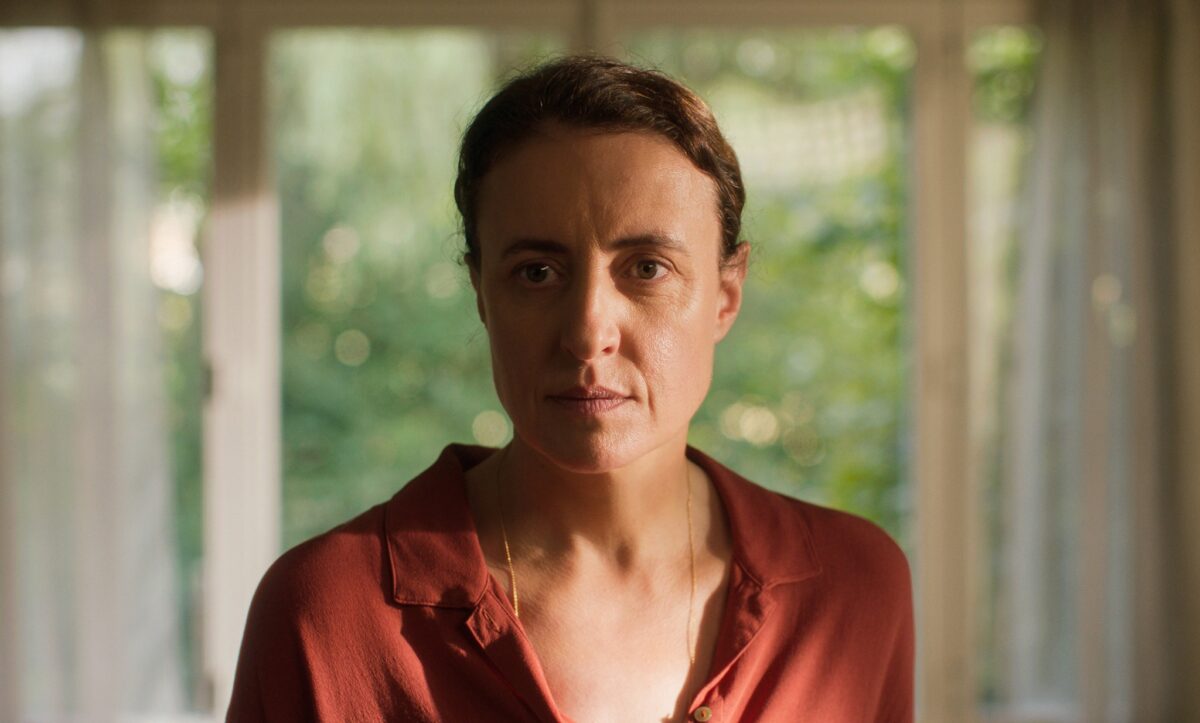
There’s something electrifying about watching a filmmaker break free from well-worn formulas and push themselves into new, uncharted territory. The Sparrow in the Chimney, Ramon Zürcher’s third feature, is the final installment in a trilogy of highly flammable chamber dramas. Anyone familiar with the previous two, 2013’s The Strange Little Cat and 2021’s The Girl and the Spider––the latter written and directed with twin brother Silvan, who’s produced all his sibling’s projects––will likely remember the clash between their austere mise-en-scène and the tempestuous conflicts that coursed through them. Captured in largely static shots among contained locales (an apartment, a house) and timeframes (Cat spanned a day, Spider two), the films suggest exercises in geometry whose immaculate compositions are always on the verge of collapsing. Pushing against their steely facades are family feuds, acts of wanton cruelty, and violence; watching them, the tension at times is so unbearable you’re left crouching in anticipation for the frame to burst. – Leonardo G. (full review)
Stranger Eyes (Yeo Siew Hua)
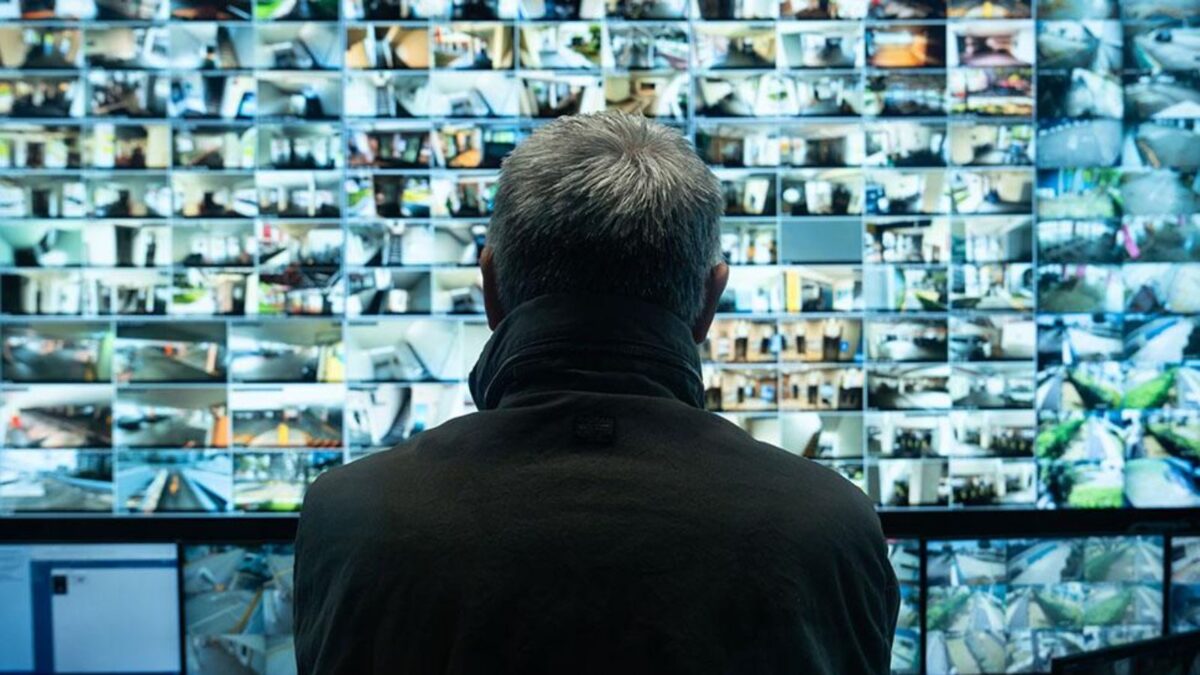
In a film so concerned with our current media regime––the way we produce and consume images of each other––Lee saunters into Stranger Eyes as a kind of anomaly. There is a stark contrast between the surgical eyes of CCTV cameras and the actor’s own, the way surveillance devices capture reality and how Lee’s Wu processes it. I do not mean to downplay Wu and Panna’s turns. The former in particular channels a feverish angst, and his transformation from object of Wu’s obsession into voyeur himself largely works. But Stranger Eyes belongs to Lee. Whether or not Yeo wrote it with him in mind, I can’t think of a better performer to flesh out the chasm that powers the film: between different ways of looking, between fears as old as time itself and the state-of-the-art technology used to bring them to light. – Leonardo G. (full review)
Sunfish (& Other Stories On Green Lake) (Sierra Falconer)
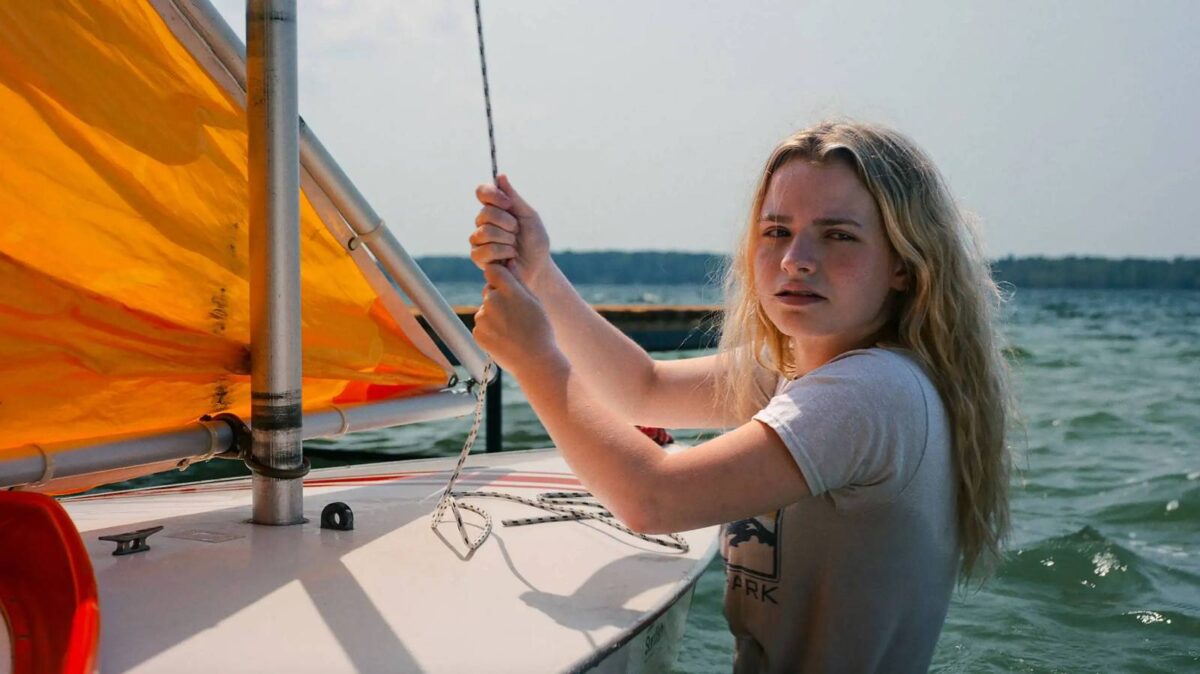
Filmmaker Sierra Falconer’s Sunfish (& Other Stories on Green Lake) captures a bittersweet feeling. That feeling of endings and beginnings, happening at the same time. For eighty minutes, we watch four short stories unfold in and around Green Lake. One involves a young girl (Maren Heary) learning how to sail after being dumped at the doorstep of her grandparents’ lake house by her neglectful mother. Another concerns a young boy (Jim Kaplan) at the fancy summer camp on the other side of the lake. He’s facing intense pressure from his mother to make first chair violin in the camp orchestra. An extended sequence of him practicing is particularly tense. The third story features an overworked young mother (Karsten Liotta) seduced by adventure in the form of a charming, wayward bar patron (Dominic Bogart) and a once-in-a-lifetime fish to be caught. Finally, there’s the lovely tale of two sisters (Tenley Kellogg and Emily Hall) running a lakeside bed-and-breakfast, the older of the two teaching the younger every needed task to completion before leaving for college. – Dan M. (full review)
Suspended Time (Olivier Assayas)
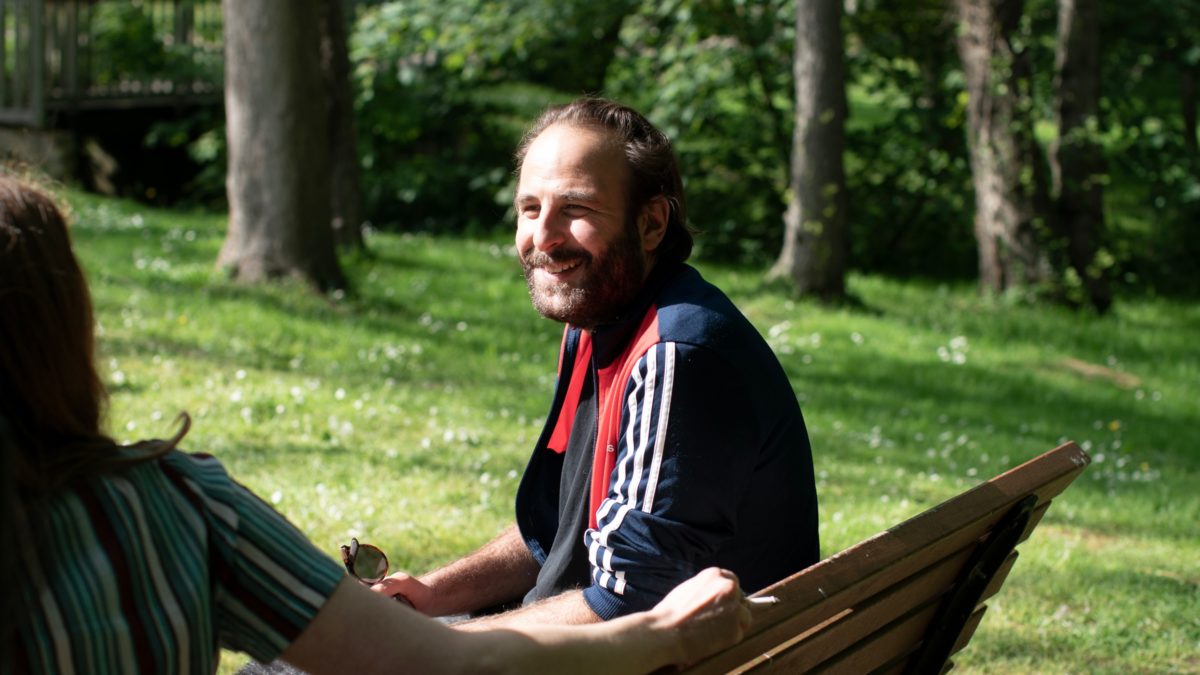
The memes won’t let you forget, but 2019 was half a decade ago. That was also the year Olivier Assayas’ Wasp Network––an odd return to the realm of his TV series Carlos, and subsequently picked up by Narcos-era Netflix––premiered at the Venice Film Festival. That was Assayas’ last feature, making the intervening period (Irma Vep for HBO aside) the longest dry patch of his 38-year career. The dexterous director returns this week to the Berlinale with the aptly titled Suspended Time, a personal essay wrapped up in an effortless comedy that shows no signs whatsoever of long gestation. – Rory O. (full review)
Suze (Dane Clark, Linsey Stewart)
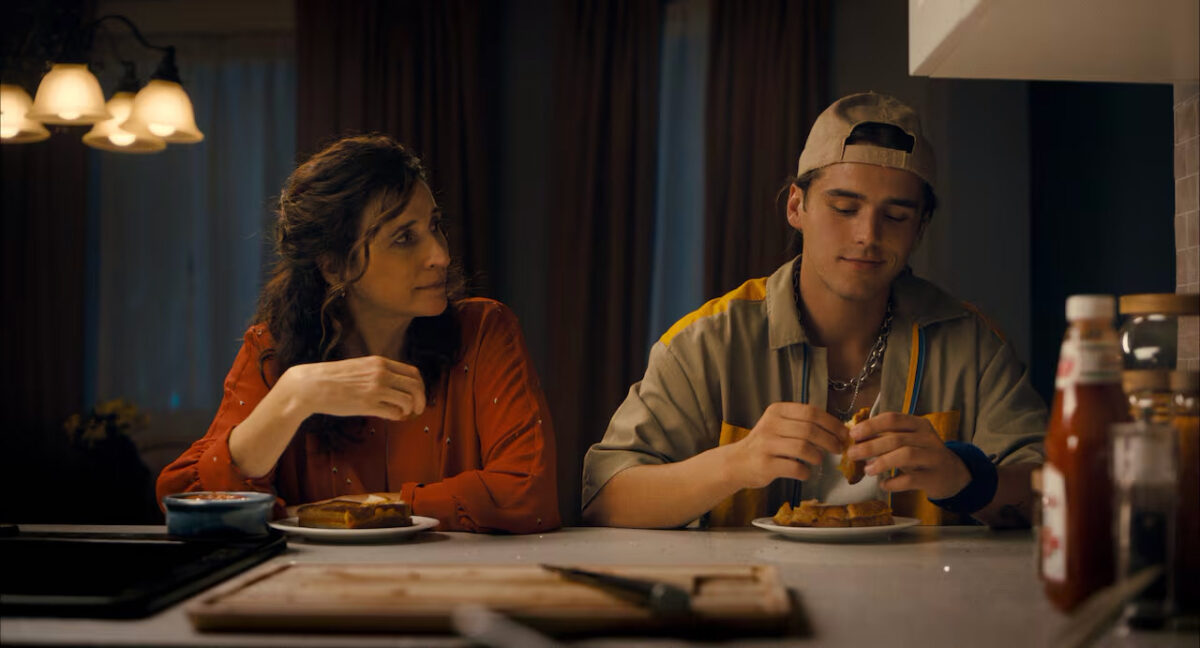
Led by Michaela Watkins in her finest performance yet, Dane Clark and Linsey Stewart’s humorous and thoughtful dramedy Suze captures a unique perspective on shared heartbreak, following a single mother who is in low spirits after her daughter heads to college. Meanwhile, through a series of unfortunate circumstances, she takes in her daughter’s ex-boyfriend (Charlie Gillespie) who is reeling from their breakup. While Clark and Stewart may not be exploring anything new formally, there’s a real emotional perceptiveness and sense of empathy as the unexpected scenario builds, while never losing a sense of when to inject the right dose of comedy. – Jordan R.
Tendaberry (Haley Elizabeth Anderson)
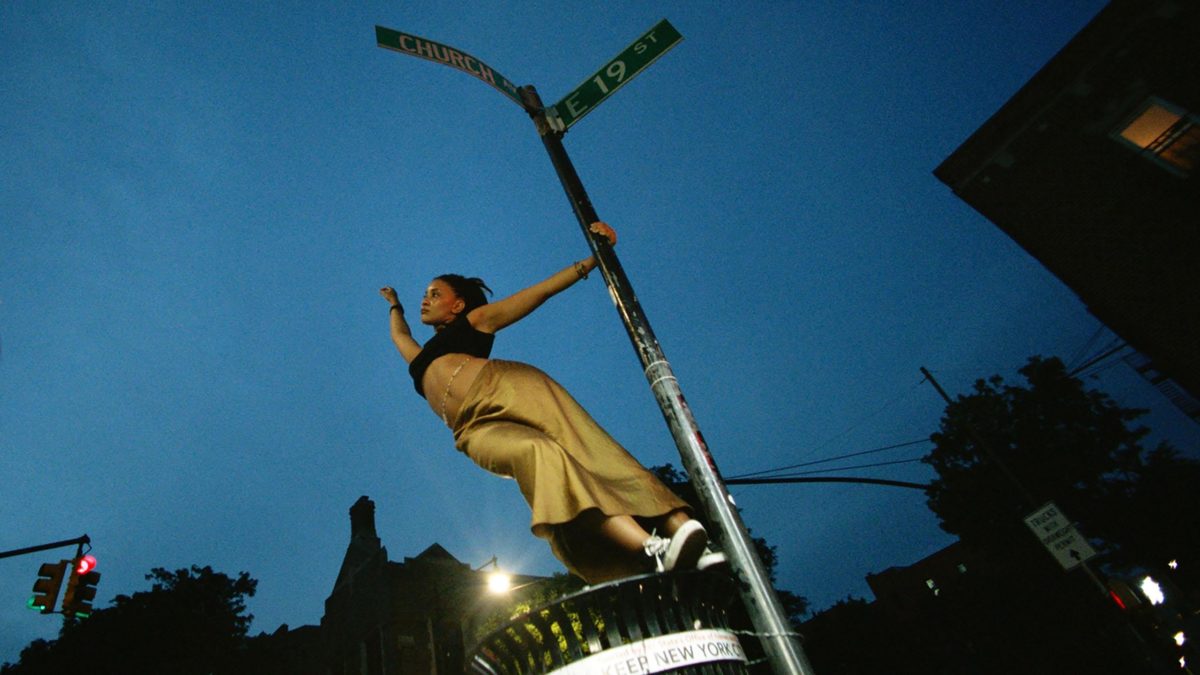
A soulful coming-of-age story with far more on its mind than the here and now, Haley Elizabeth Anderson’s Tendaberry is an ambitious directorial debut mixing various storytelling forms to achieve its poetic patchwork of ideas. Combining recollections of the past, a present way of life, and hopes for the future through the eyes of 23-year-old Dakota (Kota Johan), it follows her journey juggling romance, work, friendship, and family. The nature of its scattershot hybrid approach––incorporating narrative, documentary, and archival materials––results in certain passages feeling a bit stretched, but the cumulative effect is one of an impressive new voice. – Jordan R. (full review)
To a Land Unknown (Mahdi Fleifel)
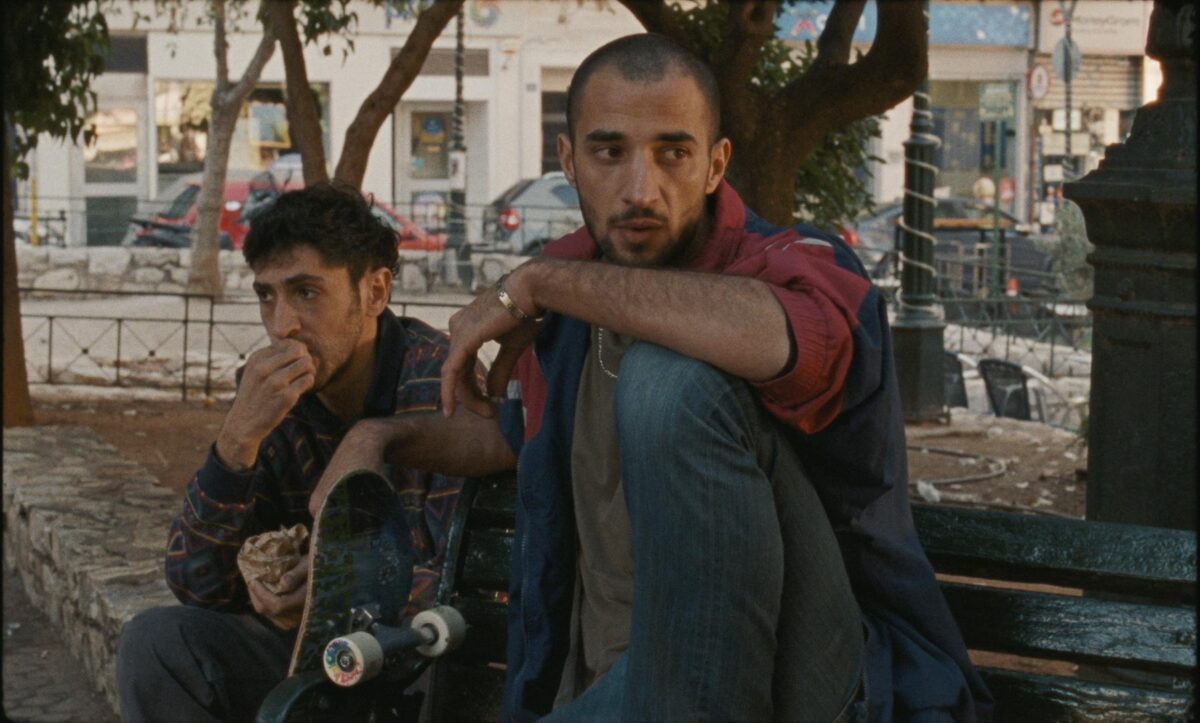
The tragic predicament of the Palestinians and what they’re now being subjected to begs to be analyzed and dissected, with various areas of dubious historical consensus put to new scrutiny; in Mahdi Fleifel’s fiction debut To a Land Unknown, we’re solely in a disorienting present tense, where there’s seldom time to think and reflect, only to agitate for survival. – David K. (full review)
Toxic (Saulė Bliuvaitė)

It’s a shame Toxic wasn’t around for the recent excretions of body-horror discourse. Saulė Bliuvaitė’s debut feature, winner of the Golden Leopard at this year’s Locarno Film Festival, does at least as much to turn the stomach with its tablet of tapeworm eggs than either of The Substance or A Different Man‘s Faustian cures. The rub in Bliuvaitė’s film is that such a pill exists, if only for those willing to wade onto the dark web––even Googling its side effects, as the protagonist discovers, should be done with some degree of caution. The anatomical anxieties and queasy professional demands that create a market for such horrors are the subject of Bliuvaitė’s film, which follows two teenage girls living in the shadow of a Lithuanian power station whose best hope for escape––a dubiously dangled carrot of catwalk fame in Tokyo or Paris––rests on their willingness to stay matchstick-thin. – Rory O. (full review)
The Ugly Stepsister (Emilie Blichfeldt)
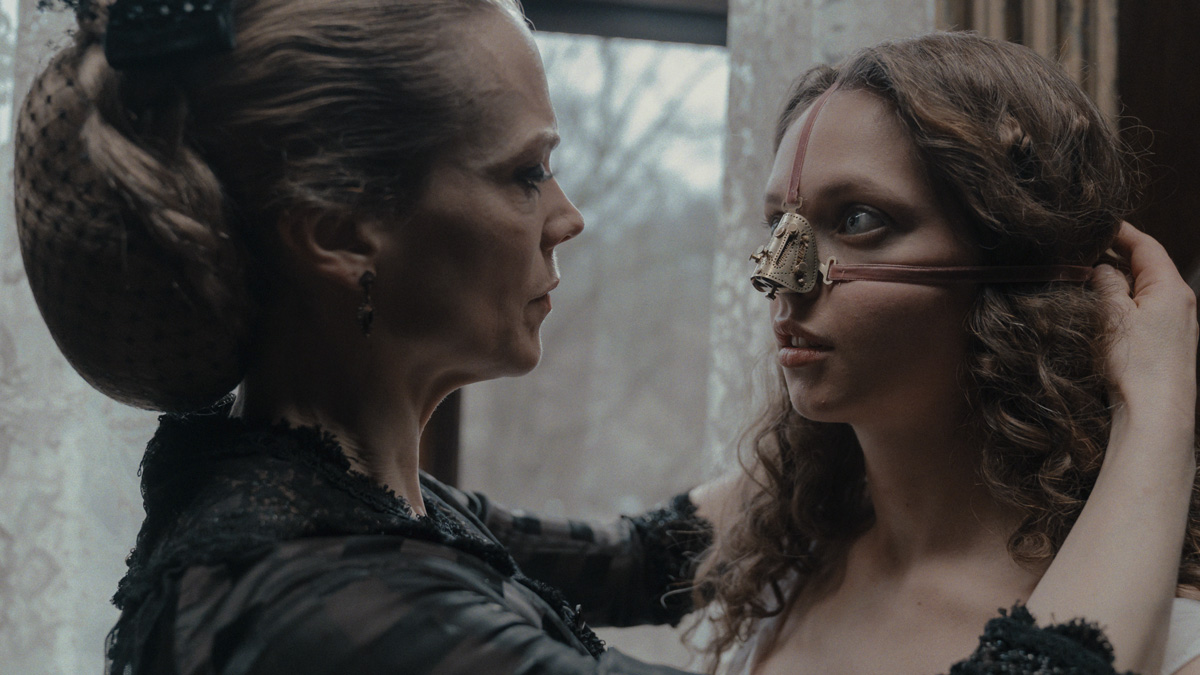
If the disheartening lack of creativity in Disney’s live-action remakes leaves one thinking these timeless stories have, in fact, run their course, leave it to Norwegian director Emilie Blichfeldt to find new life (and blood) with the Cinderella tale. Her impressively mounted, darkly macabre first feature follows Elvira (Lea Myren, in a fantastic feature-debut performance) living in the shadow of her stepsister Agnes (Thea Sofie Loch Naess) as they vie for the attention of the Prince (Isac Calmroth). A twisted body horror take on the classic tale for how it explores the costs of beauty, The Ugly Stepsister is not afraid to dive into the unflinchingly gruesome while packing an impressive sense of empathy. – Jordan R. (full review)
The Visitor (Bruce LaBruce)
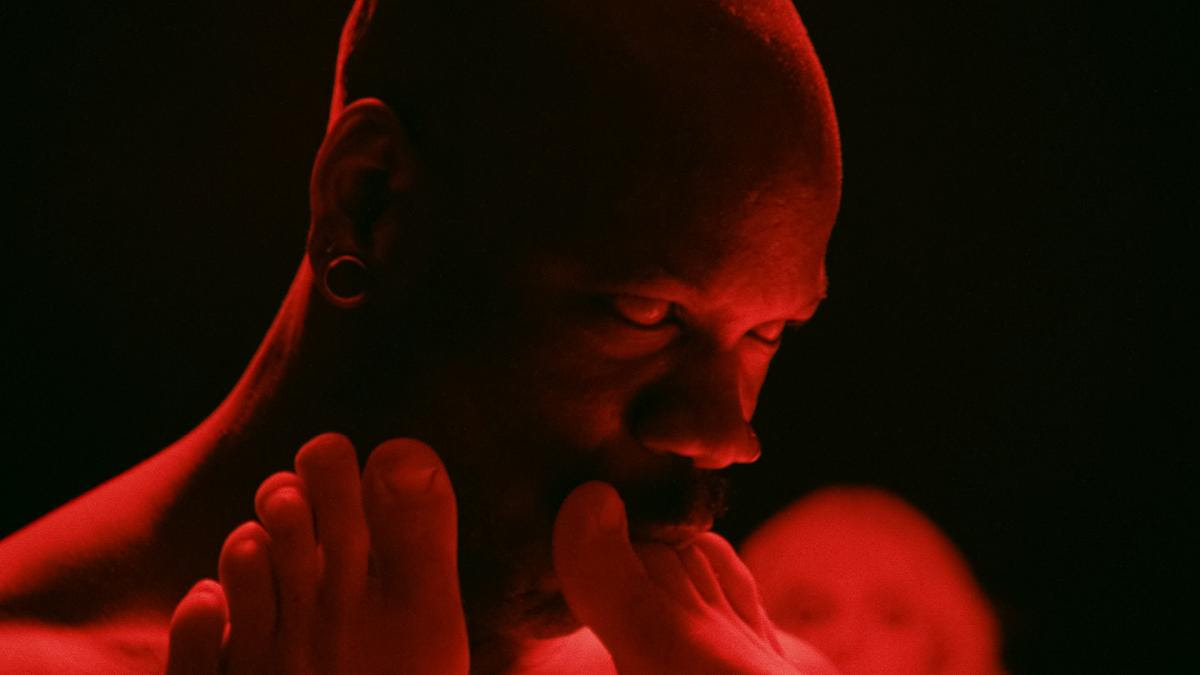
Pasolini takes aim at the fascistic upper class and turns the use of sex and humiliation as a means of control against its members, but LaBruce brings an effervescence to every bit of the original. Stylistically, The Visitor updates Teorema by making it look ultramodern. Colorist Andrea Gómez drowns the frame in sultry reds and bottomless blues, strobing intercuts a scene time and time again, and the screen is often split in four, each bit with its own angle and color. The multiplication of images, lights, and tints forms a rhythm of its own to guide us through the plot of a porn movie: a mansion, a knock on the door, surprise, sexual appetite, consummation, transformation, end. – Savina P. (full review)
Việt and Nam (Trương Minh Quý)
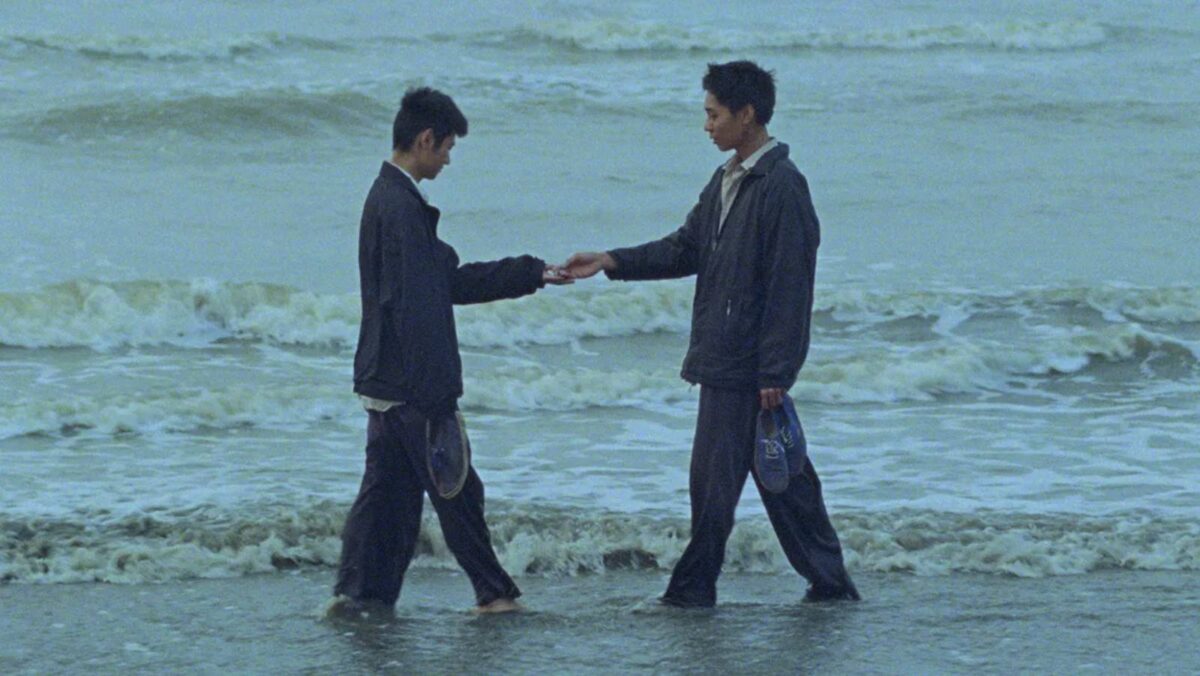
The opening shot of Việt and Nam, writer-director Trương Minh Quý’s sophomore film, is a feat of cinematic restraint. Nearly imperceivable white specs of dust begin to appear, few and far between, drifting from the top of a pitch-black screen to the bottom, where the faintest trace of something can be made out in the swallowing darkness. The sound design is cavernous and close, heaving with breath and trickling with the noise of running water. A boy incrementally appears, walking gradually from one corner of the screen to the other. He has another boy on his back. A dream is gently relayed in voiceover. Then, without the frame ever having truly revealed itself, it’s gone. – Luke H. (full review)
Vulcanizadora (Joel Potrykus)
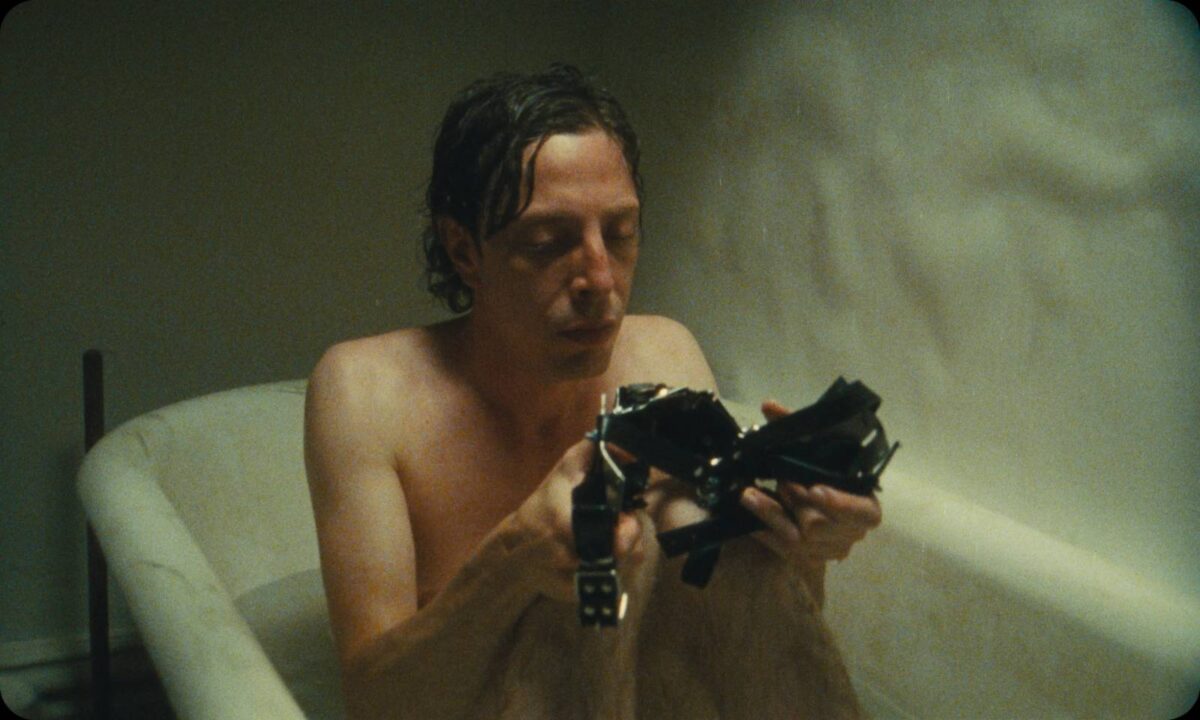
Like the punk-rock cousin of Kelly Reichardt’s Old Joy, Joel Potrykus’ Vulcanizadora also concerns a voyage in the woods that pinpoints the exact moment an old friendship abruptly dies. The film also represents a maturing-of-sorts for the Michigan-based provocateur, revisiting characters first introduced in his 2014 film Buzzard and a few themes explored in his lesser-known 2016 feature The Alchemist Cookbook. Like many artists shifting from early to mid-career, Potrykus explores themes of having a family––or, in this case, abandoning it––while still retaining the edge present in his nascent works. It suggests a conundrum of sorts, but while other indie filmmakers start small and work towards scaling-up, this filmmaker refreshingly hasn’t. (His 2018 masterpiece Relaxer took place in the corner of an apartment, rather than expanding his slacker universe). – John F. (full review)
Where to Land (Hal Hartley)
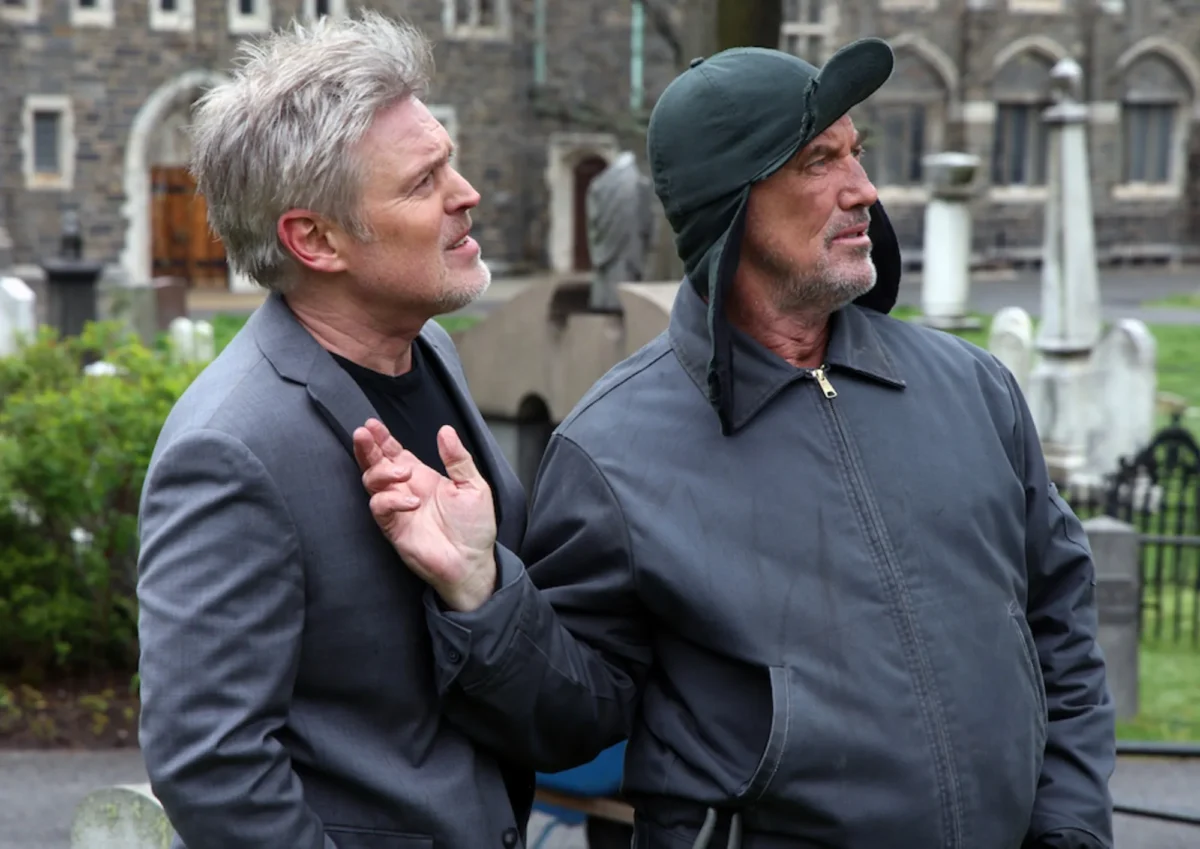
Much like the great slapstick auteur Preston Sturges, indie stalwart Hal Hartley has always been able to tap into the contradictions, uncertainties, and swooning emotions of a specific era much sooner than any of his contemporaries. Where to Land, Hartley’s great new film about a famed rom-com filmmaker who has reached a philosophical and moral crossroads, does just that for this stressed-out moment in history. Mixing Hartley’s patented machine-gun banter with a deep sense of empathy and surprise, the film seamlessly critiques modern America’s culture of assumption and opportunism that threatens to derail us from seeing what matters most in our daily lives. Where to Land is a true marvel of a movie: equally enthralled by wind in the trees and a momentary pause in conversation, patiently rediscovering a calm power that resides in-between the chaos of 21st-century existence. – Glenn H. (full review)
Who by Fire (Philippe Lesage)
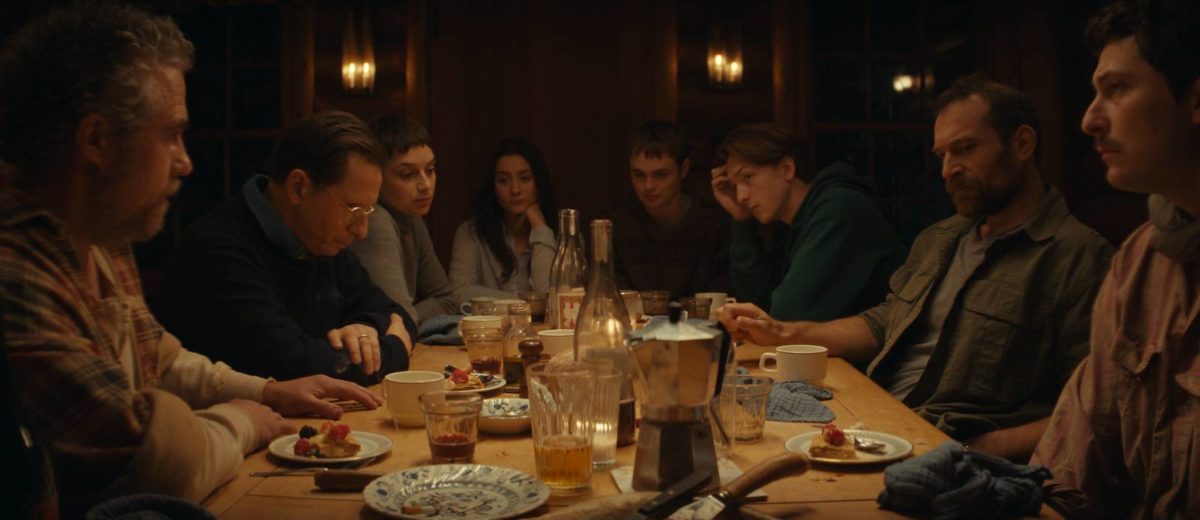
You’d expect the pivotal music cue in Philippe Lesage’s Who by Fire to be its namesake by Leonard Cohen, a beautiful and plaintive prayer of a song. But instead it’s The B-52s’ infectious slice of bubblegum “Rock Lobster,” initially seeded through a dialogue reference, then heard fully in an eccentric sequence I won’t further detail. The funny, noteworthy quirk of “Rock Lobster,” though, is its structurally well-earned length of just under seven minutes. Who by Fire, running 161 minutes itself, also seems to be up to something, committing to that runtime as such a contained, semi-domestic drama: a provocation through duration. – David K. (full review)
The Woman in the Yard (Jaume Collet-Serra)
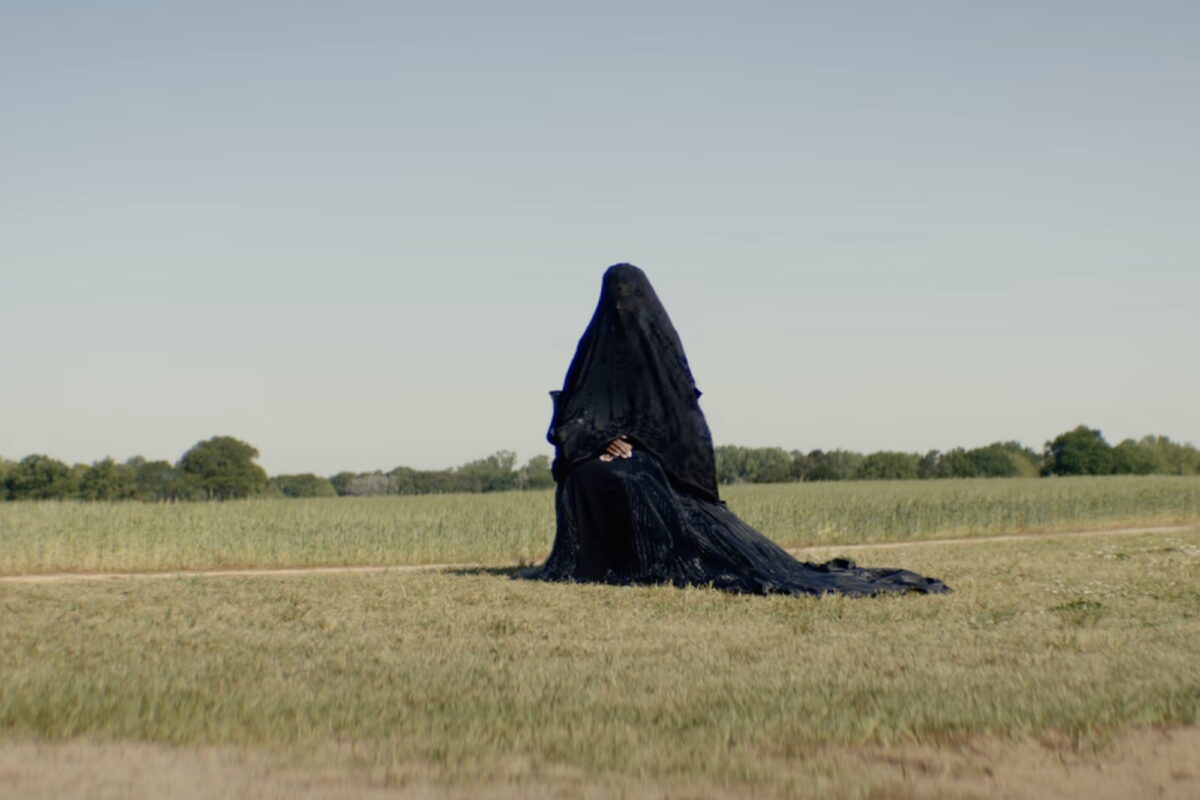
While horror films function as an important part of this writer’s interest in cinema, it’s been hard not to feel some growing personal contempt for the genre. The reason being not just the high/low budget demands of the market over-saturating us, but the punishing self-awareness of Gen X and Millennial genre nerds now making them and the post-Get Out flop sweat over needing “metaphor.” So when a new horror film is not just kind of good, but also genuinely scary and tense, it’s cause for celebration. Such is the case with the modest proposal that is The Woman in the Yard. – Ethan V. (full review)
You Burn Me (Matías Piñeiro)
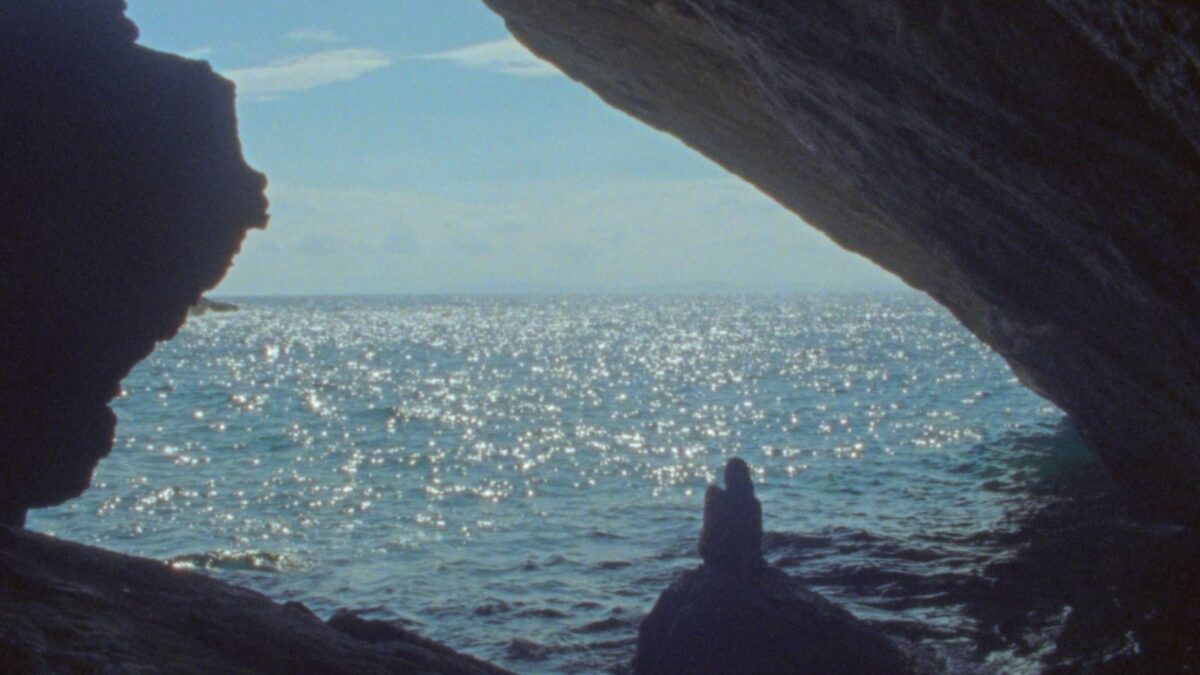
With his latest feature, Matías Piñeiro playfully, gorgeously adapts “Sea Foam,” a chapter in Cesare Pavese’s Dialogues with Leucò. Centered on a fictional dialogue between the ancient Greek poet Sappho and the nymph Britomartis (Gabi Saidón and María Villar, respectively), Piñeiro’s latest is a feat of effervescent poetic beauty, melding poignant words with stunning images to a a dizzying, transcendent effect. – Jordan R.
Read: The Film Stage’s Top 50 Films of 2025