
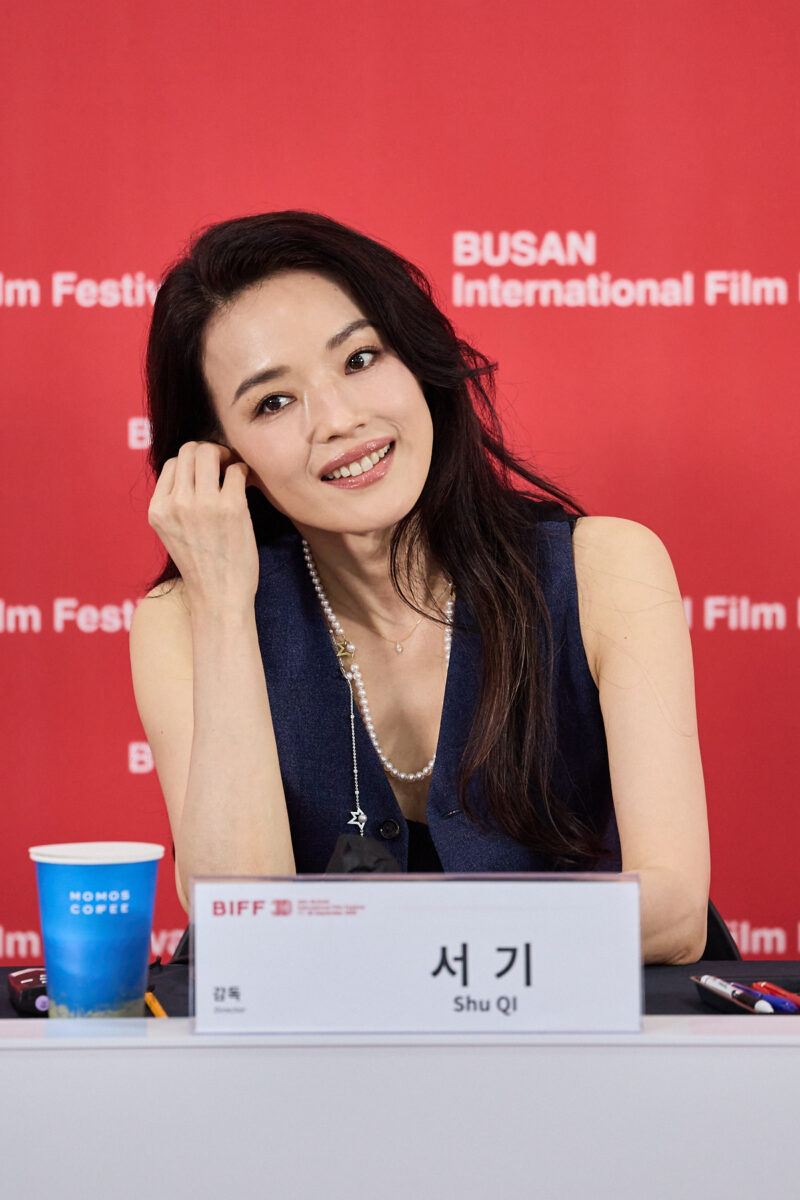
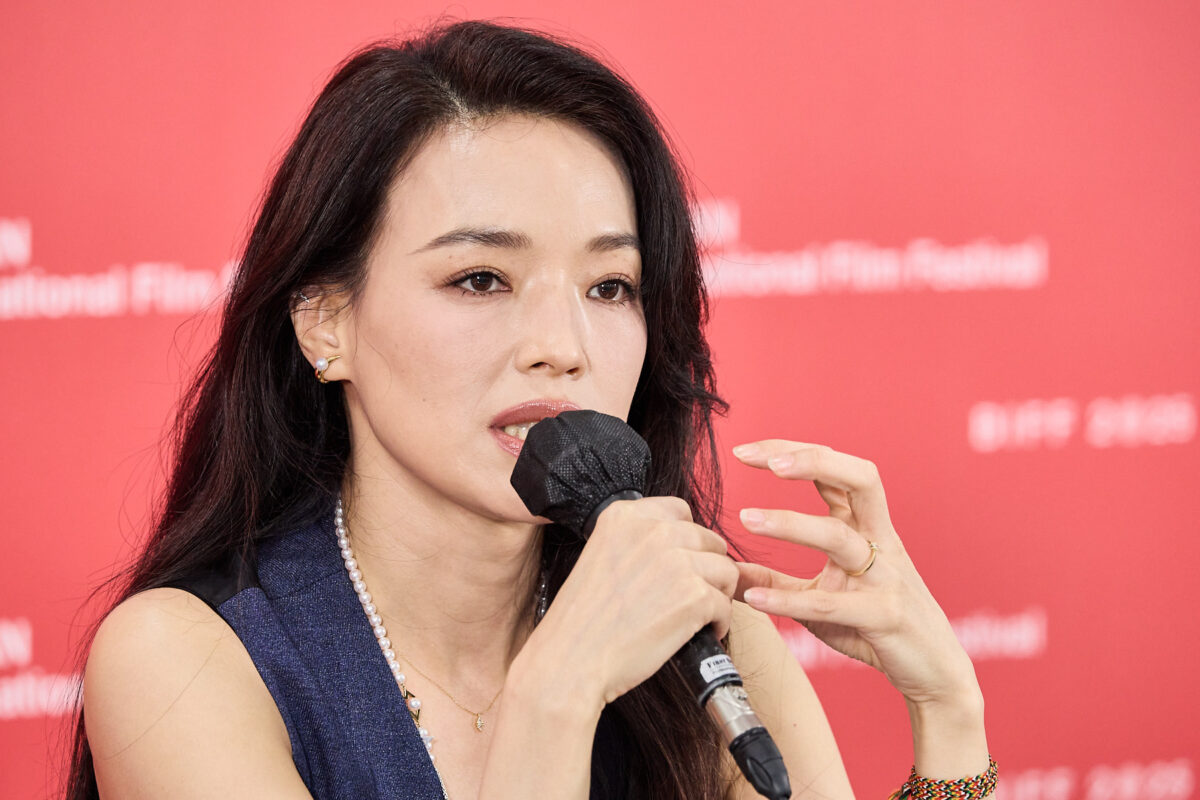
While preparing her feature-directing debut, Taiwanese actor Shu Qi was working on a screenplay that troubled and confused her. “I got stuck,” she said at a Busan International Film Festival press conference. “I couldn’t move forward. Hou Hsiao-hsien advised me to tell stories I knew about. Tell the stories I want to tell. Even if that included writing about the scars of my childhood.”
The result is Girl, a moody coming-of-age story set mostly in 1988 Taipei. Bai Xiao-ying plays the adolescent Hsiao-lee, who lives in a cramped apartment with her younger sister, mother (Joanne Tang Yu-chi, a singer known as 9m88), and alcoholic stepfather Chiang (Roy Chiu Tse). The film shows in unsparing detail rape and physical violence, but also Hsiao-lee’s efforts to escape the realities of her life.
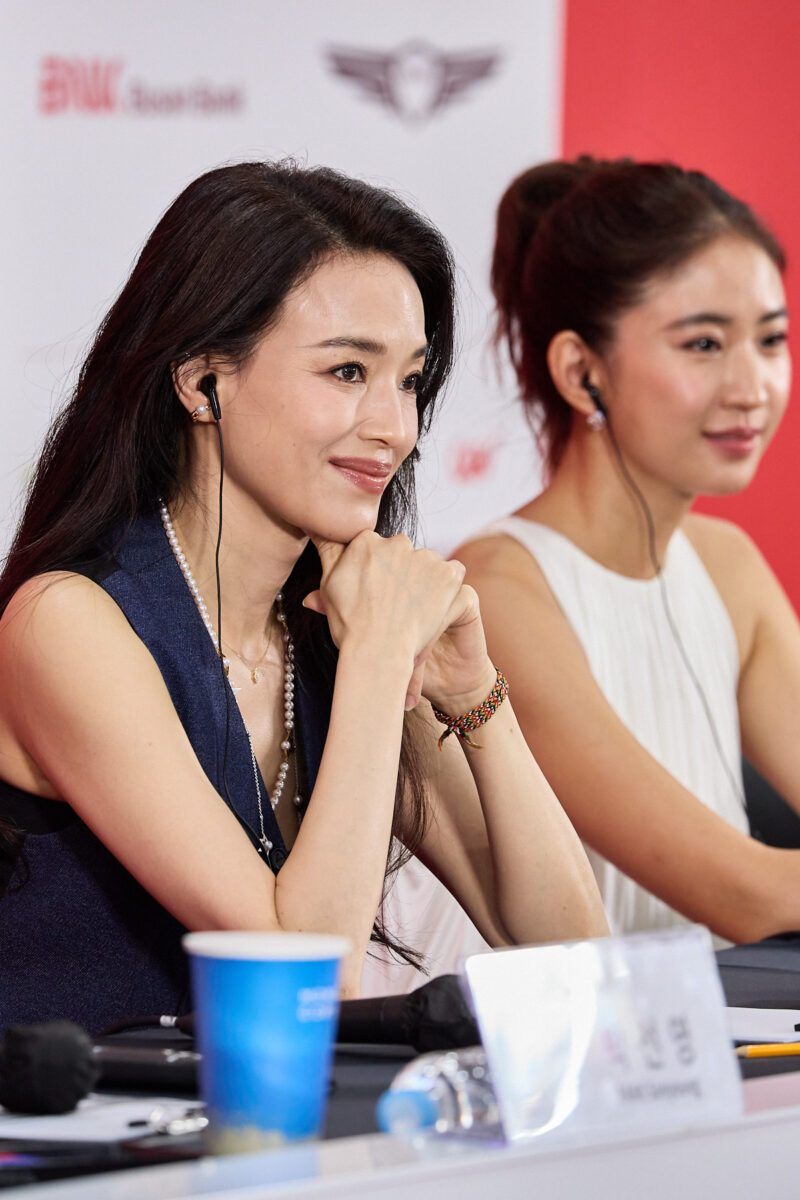
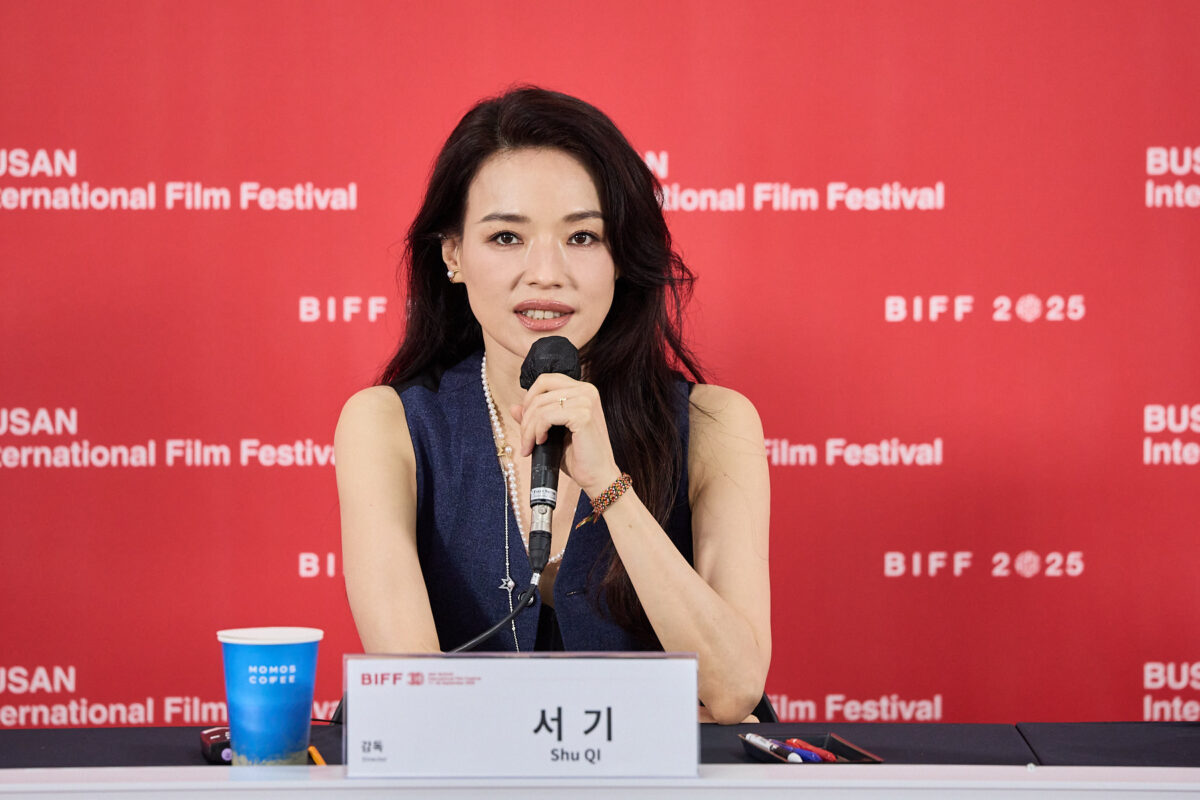
The movie is one of 14 titles in the new Competition category at the 30th Busan International Film Festival. Shu Qi met with reporters the morning after a sold-out public screening.
Shu credited Hou Hsiao-hsien for encouraging her to direct. “I was happy as an actress,” she said. “I didn’t dream of directing, but Hou pressed me to try my hand. You can see his influence in my use of camera movement, in the long takes at Hsiao-lee’s school, in the market, at home. Even in the production design.”
She added, “I also learned from him how to create a safe and comfortable environment on set.”
The director has had a long career as one of Taiwan’s most popular performers, a standout in romances and comedies like If You Are the One (2008), but also as the lead in Hou Hsiao-hsien’s Millennium Mambo (2001) and the martial-arts epic The Assassin (2015).
“The difference between acting and directing is that when I’m acting, I get to wear beautiful clothes and don’t have to think that much,” she said, laughing. “As a director, I have to be constantly filling in details, answering questions, making decisions. It’s a lot harder.”
It was even more difficult dealing with scenes evoking her childhood. Producer Yeh Jufeng said that “she cried a lot on set. Every day she cried. Some were worried about her ability to direct, but after the first scene I could see she knew exactly what she wanted.”
Shu Qi said that while researching the 1980s, she came across several stories about children who were victims of domestic abuse. They broadened her approach to the script. Still, she worked her own experiences into key scenes.
Bai Xiao-ying performs in emotionally charged moments where she is menaced by her father. At night she is afraid to sleep in her bed, hiding in a cabinet instead. “She immersed herself in the character,” Shu said. “I wanted her to feel a little bit lonely during the shoot. You can see the results on the screen. But if I ever thought there was a situation that might be traumatizing, we were ready with psychological support. I paid special attention to make sure the actors felt safe.”
Shu admitted that her perspective on the script changed once she started shooting.
“I thought the story was about Hsiao-lee,” she said. “But on the first long take, when her mother wakes up in the morning, makes breakfast, gets the girls off to school, cleans the house, cleans the bathroom, does the laundry, the dishes, all these chores that the camera watches from behind her––it brought tears to my eyes.”
She halted, tearing-up from the memory.
“After shooting that scene, I was able to being the process of reconciling with my mother. I began to understand the weight of responsibilities on her shoulders. The pressures on mothers are enormous, bigger perhaps than those on breadwinners who only have to work at jobs. The persistence, the tenacity of my mother I could see for the first time. She didn’t have the time to describe emotions or explain love to me, and now I can forgive her for that.
“The message of Girl is that you shouldn’t feel lonely. You’re not alone. You need to make peace with yourself, something I had to do myself.”
Girl screened at the 30th Busan International Film Festival.