
Paul Thomas Anderson is taking another strike at Thomas Pynchon in One Battle After Another, a modern-day reworking of the reclusive author’s 1990 novel Vineland. And Pynchon himself is back in the news with a new novel, Shadow Ticket, out in October (plus, a potential sighting of the reclusive author on Getty Images).
But the naysayers and soothsayers have beaten the film to market. They say it’s not commercial (even with DiCaprio). They say it’s too highbrow (even with guns and secret agents). They say its reported $130 million-plus budget, larger than any previous Anderson film’s box office, is insurmountable (even with premium screens). With all this speculation, I think it’s time for more data. As my contribution to the discourse, here is a survey of Pynchon and his fellow American Postmodern novelists on film.
Postmodernism is a tricky term––it covers everything from Andy Warhol to Decolonial Theory to The White Album. In common parlance, it can refer to anything avant-garde since WWII, anything pretentious since WWII, or anything with left-wing politics since WWII. In this case it is something more specific: a small, critically acclaimed group of American writers that rose to fame in the ‘60s. This group almost always includes: Thomas Pynchon, John Barth, William Gaddis, Robert Coover, John Hawkes, William H. Gass, Kurt Vonnegut, and Susan Sontag––all of whom conveniently met up for dinner to mock the moniker. For my purposes, I’ve also included Don DeLillo (who rose to popularity in the ‘80s) and Ishmael Reed (who should have been invited to the dinner and, famously, is name-checked in Gravity’s Rainbow).
Artistic movements emerge from historical opportunity. The critical acclaim and readership of these authors can be traced to a clear set of conditions: the rise of the highbrow comic novel (almost exclusively attributable to the runaway success of Joseph Heller’s Catch-22 in 196), the large role of literature in the counterculture (especially after Jack Kerouac’s On the Road in 1957 and William S. Burroughs’ Naked Lunch in 1959), the influence of continental thought (Wittgenstein, Heidegger, Sartre), and the literary challenge posed by modernism (Woolf, Joyce, Proust, Nabokov). Or briefly: this was a group of extremely literary counterculture writers who wrote philosophically serious comic novels in the ‘60s and ‘70s, many of which were extremely long. (As with any rule, there are exceptions––John Hawkes only wrote short novels, Susan Sontag wasn’t funny, William H. Gass had nothing to do with the counterculture.)
Avant-garde writing, even funny avant-garde writing, isn’t the best fit for adaptation. Mainstream narrative film is rooted in middlebrow melodrama: books like The Grapes of Wrath and Gone with the Wind make great films, while books like Ulysses and Lolita make puzzling ones. In anticipation of another Pynchon adaptation, I think it’s interesting (and funny) to consider the cinematic offerings of Pynchon’s peers.
1. Duet for Cannibals (Susan Sontag, 1969)
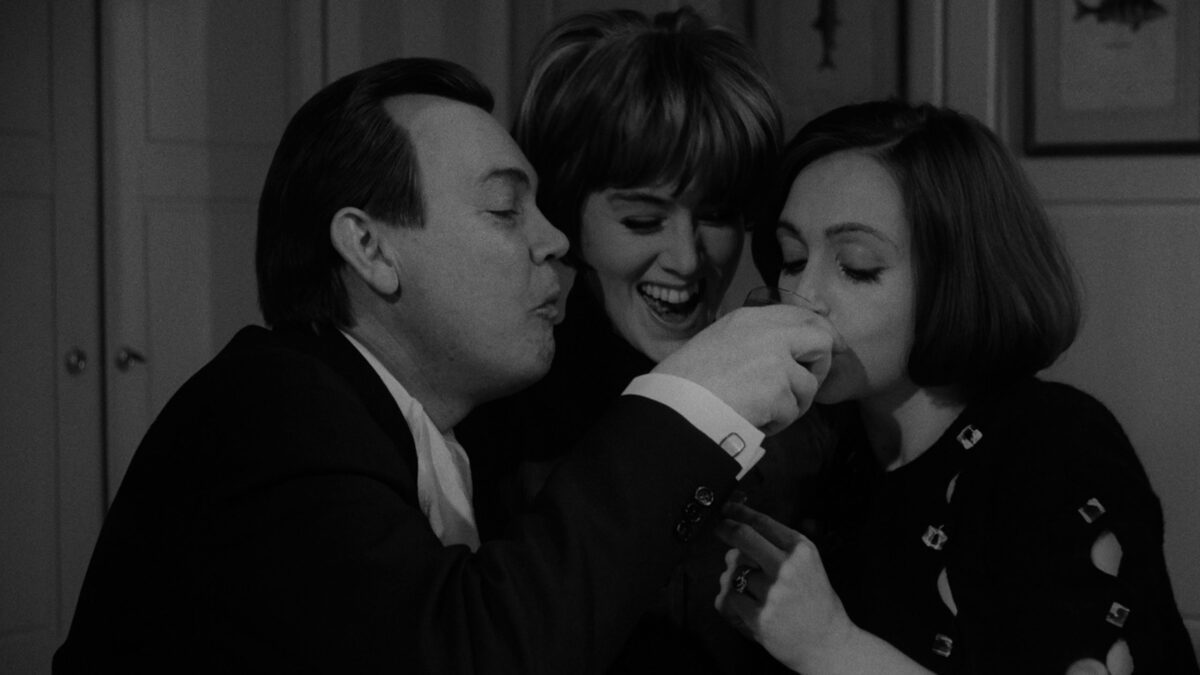
Susan Sontag had already written two novels and published two essay collections, including Against Interpretation, when she tried her hand at directing. Her novels had been influenced by Bergman and Godard; her films, she imagined, might look like theirs. Duet for Cannibals, which was filmed in Swedish––a language Sontag did not speak––was the first of four she would direct. An ambitious, tightly controlled study of sophisticated Swedish sex games involving poetry, potential suicide, and shaving cream, it never quite takes off. Like Sontag’s novels, Duet for Cannibals is handsome and well-mounted but lifeless and uninspired. Her lack of cinematic glory does not seem to have inspired her literary peers; none of the writers mentioned below would subsequently try their hand at directing.
2. End of the Road (Adam Avakian, 1970)
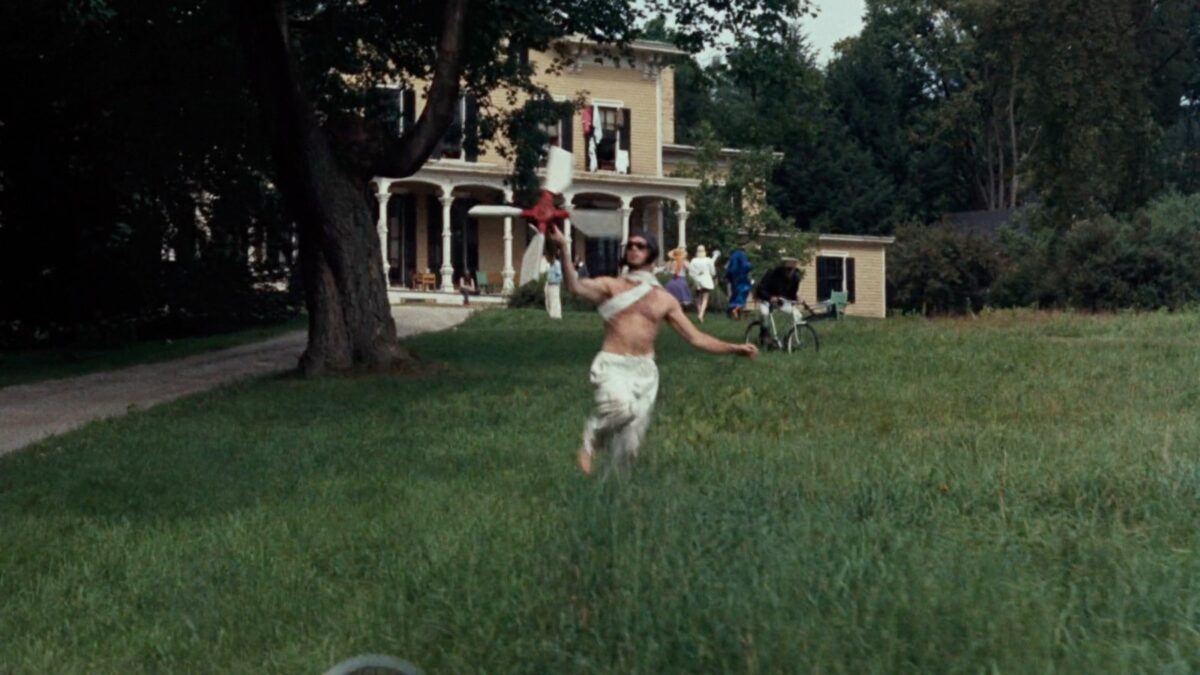
John Barth’s 1958 novel The End of the Road was the soberest, straightest thing he ever wrote––an intellectual ménage à trois turned sexual, a woman becomes pregnant with ideas allegorically and faces literal consequences. There is no evidence of sophistication and restraint in the looniness of this film adaptation.
Refashioned by Adam Avakian and Terry Southern (who wrote Dr. Strangelove, Easy Rider, and Barbarella) for 1970, Barth’s characters go from disaffected beatniks to proud hippies. The opening 20 minutes of Avakian’s film are a frenetic collage of modern life––the holocaust, World War II, nuclear bombs, and a lot of flashing American flags. Including some things—the moon landing, JFK, MLK—which had not happened when Barth wrote the novel. The rest of the film is faithful but dull, preserving the novel’s talky dialogue in endless scenes of blackbox repartee.
John Barth said the film was “X-rated by the Production Code Administration” and “Z-rated by the muses.” The undistinguished cinematography is by Gordon Willis, who would go on to shoot Manhattan, Klute, and The Godfather.
3. Personal Problems (Bill Gunn, 1980)

Bill Gunn (best-known for the cult vampire movie Ganja & Hess) and Ishmael Reed (best known for the comic novel Mumbo Jumbo) were both drawn to the same kind of sardonic Black revisionism; making a film together was logical. But the end result, Personal Problems––a “meta soap opera” about life in Harlem––made a lot less sense and (initially) failed to find an audience.
“It’s not that I’m unhappy; it’s just that I’m not happy,” says the female half of the central couple, the Browns. And that’s the essential idea: this isn’t a film about true unhappiness, the great global ills, but about barriers to happiness and small personal concerns: parents dying, bad parties, Con Edison bills piling up. What Reed and Gunn are arguing is that, as horrific as life can be for Black Americans, plenty of their concerns are petty––that a soap opera can be as true to their life as Roots.
“Check out Ishmael Reed,” says Pynchon about halfway through Gravity’s Rainbow. And in time it seems the world has. Not only are Reed’s books increasingly prominent, but Personal Problems has been reevaluated too: in recent years it’s become increasingly prominent, thanks to a 2018 restoration, especially as a touchstone in Black and experimental film.
4. The Blood Oranges (Philip Haas, 1997)
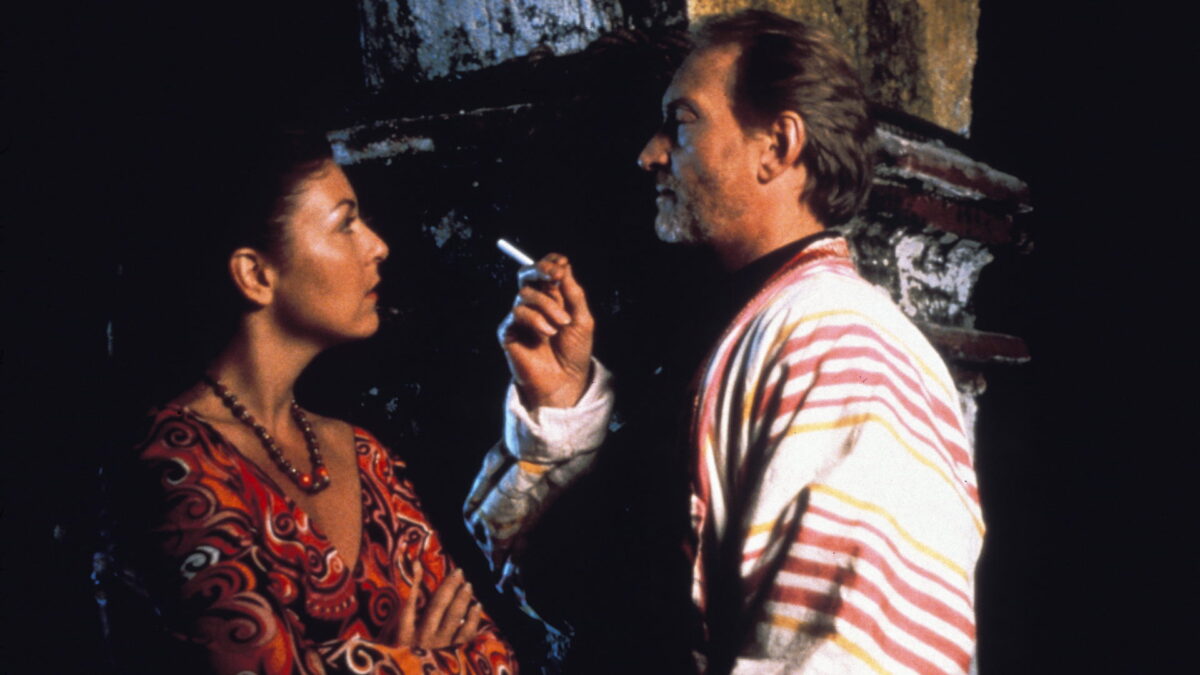
John Hawkes’ 1971 novel is among his best––a sexy daydream full of sunshine and foreign shores––and Philip Haas’s film (like Duet for Cannibals or End of the Road) is about sex games.:Two couples meet on a made-up Mediterranean isle; They swap spouses; Disaster and death ensue. Hawkes’ novel was a reaction to the pro-swinging sixties, but Haas’s film is more in line with the post-AIDS ‘90s, a period that spawned a great deal of agonizing sophistiporn: Bernando Bertolucci’s Stealing Beauty, Adrian Lyne’s Lolita, Anthony Minghella’s The English Patient. Movies where what’s titillating isn’t sexual openness, but the sexually forbidden.
Charles Dance wears colored teashade sunglasses; Sheryl Lee (Laura Palmer in Twin Peaks) slinks around in a garter belt; the other couple doesn’t stand a chance. It’s a cheap, dreadful adaptation. In the grimmest, most horrific sequence, the title is literalized: fruit covers the floor for a bout of swinging sex, but instead of oranges all we get are crates of apples—expense was spared, viewers are not. A workmanlike Angelo Badalamenti soundtrack occasionally intervenes on the lack of action.
5. Breakfast of Champions (Alan Rudolph, 1999)

Alan Rudolph’s adaptation of Kurt Vonnegut’s meta-satire of modern life, consumer culture, and writerly ambition stars Bruce Willis as suicidal, toupeed car dealer Dwayne Hoover. Audiences, agents, and insiders received Willis’s performance with abject horror—on release, the film was swiftly repressed. It’s hard to believe someone as an action star when you’ve seen them crying with a gun in their mouth.
Last year, for the 25th anniversary, it came back in a 4K restoration. Rudolph gave his very first interview for the film with our own Ethan Vestby, and many bold cinephiles (such as Richard Brody at The New Yorker) were thrilled by its reevaluation.
Unfortunately, it is a dreadful, mixed-up movie. On the one hand, it’s an on-the-nose critique of consumer culture. Says one character, “This would be a perfect location for a fried-chicken franchise, you know, right next to the prison.” On the other, it’s an off-kilter comedy––Bruce Willis in a caveman tunic, Owen Wilson as a bow-tied James Lipton figure, Nick Nolte in drag, Buck Henry as a talking $1,000 bill. Few funny lines, many funny hats.“Painful to watch,” said Vonnegut. Seconded.
6. Impolex (Alex Ross Perry, 2009)
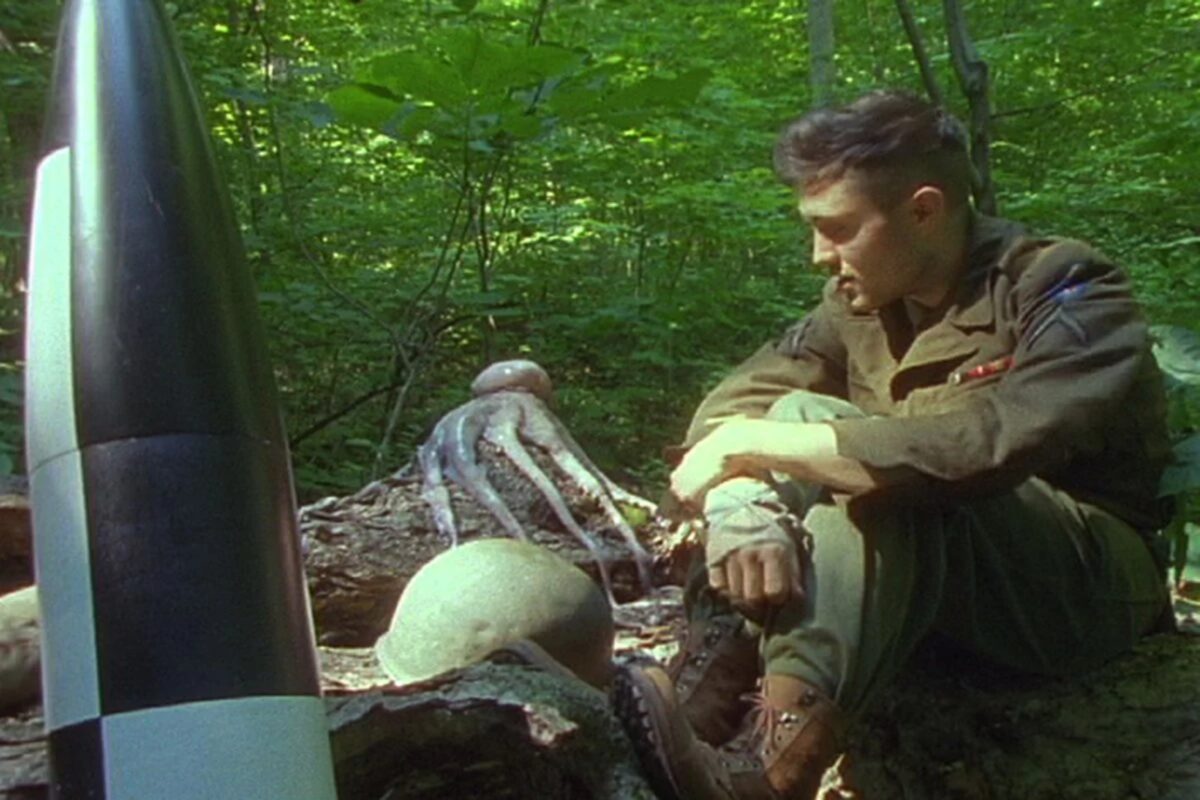
Alex Ross Perry, age 24, decided to shoot an adaptation of Gravity’s Rainbow on 16mm. He had $15,000. Those numbers don’t add up but the movie somehow does: it’s an impressive, if limited, 70-minute trip. Tyrone, a hazy agent, works to locate not one but two V-2 bombs, both signed Laszlo Impolex. On the way he meets a guy with an eyepatch, an old man with a gun, a suspicious escaped prisoner, and a talking jellyfish (voiced by Gene from Bob’s Burgers).
There are elements of Pynchon’s novel here––the V-2 bomb, mentions of the Kenosha Kid, nonsensical made-up songs, several scenes of banana-eating––but this is more A Gravity’s Rainbow Story than Gravity’s Rainbow: The Movie. In Impolex, the hero is just named Tyrone; he’s not fully Tyrone Slothrop. Which makes sense, as this movie speaks far more to Perry’s later work than any deep insight into Pynchon. We see his halting, off-key humor: “Why would it explode now?” says one character of a V-2. “Because it’s a rocket and rockets explode,” replies the other. As in The Color Wheel, Impolex closes with a long dialogue––here between Tyrone and a girlfriend who has been, puzzlingly, appearing on the mission to chide him and reveals (spoiler alert) that she made the whole story up while at home, sick with worry.
7. Inherent Vice (Paul Thomas Anderson, 2014)
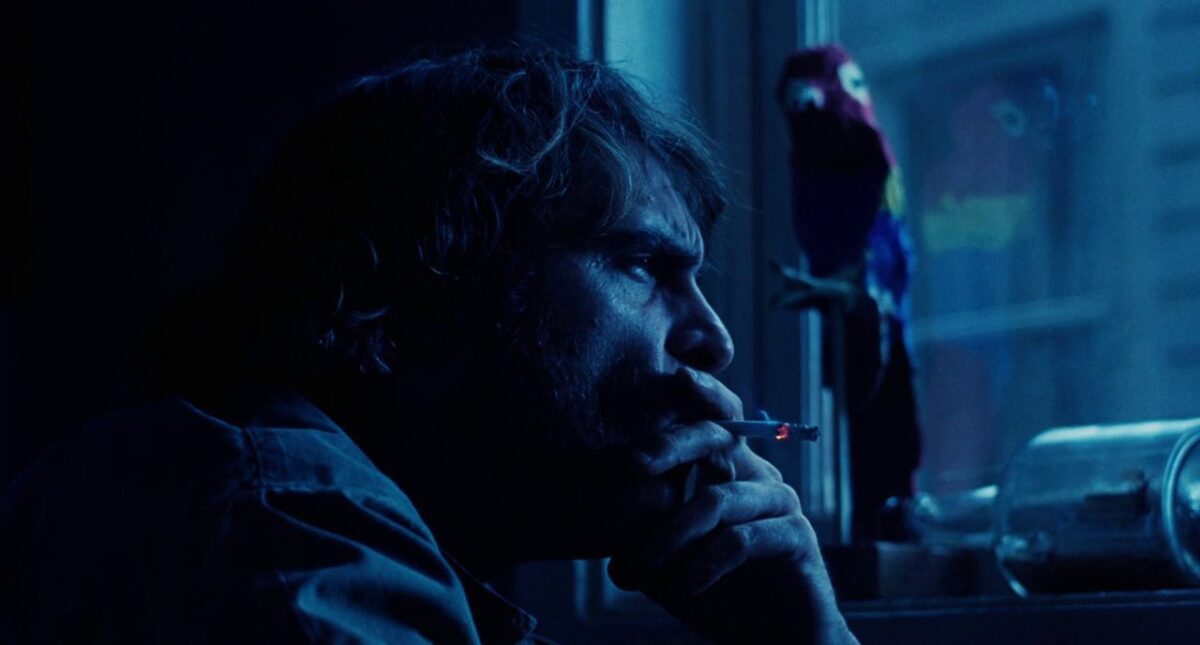
Paul Thomas Anderson’s seventh film, Inherent Vice, is a straightforward page-to-screen adaptation of Pynchon’s late-career detective novel. Not immediately a particularly large critical or commercial success, its regard has grown over time (especially as Joaquin Phoenix has become a bigger and bigger star). I’ve seen this film half a dozen times, including at the recent 70mm revival at Film at Lincoln Center, and think it’s both Anderson’s best film and a significant improvement on the source material (which is source material that I quite like).
Unlike Perry, who simply substituted his own sense of humor for Pynchon’s, Anderson matches the layered humor of the novel; every frame has a visual joke and you want to laugh at every line twice. More than that, Anderson brings real depth to some of Pynchon’s more spiky characters. Owen Wilson as Coy Harlingen, Benicio Del Toro as Sauncho Smilax Esq.––both are more rounded and compelling in the film. Unlike in End of the Road where the ostentatious collaging distracts from and weakens the content, the images of Inherent Vice––the view of Manhattan Beach between two squat houses, the last supper scene, the curved and canine golden fang headquarters––add to the texture of the work. The music––Can, Neil Young, the Jonny Greenwood originals––is brilliant too. It’s a really accomplished piece of work.
8. White Noise (Noah Baumbach, 2022)
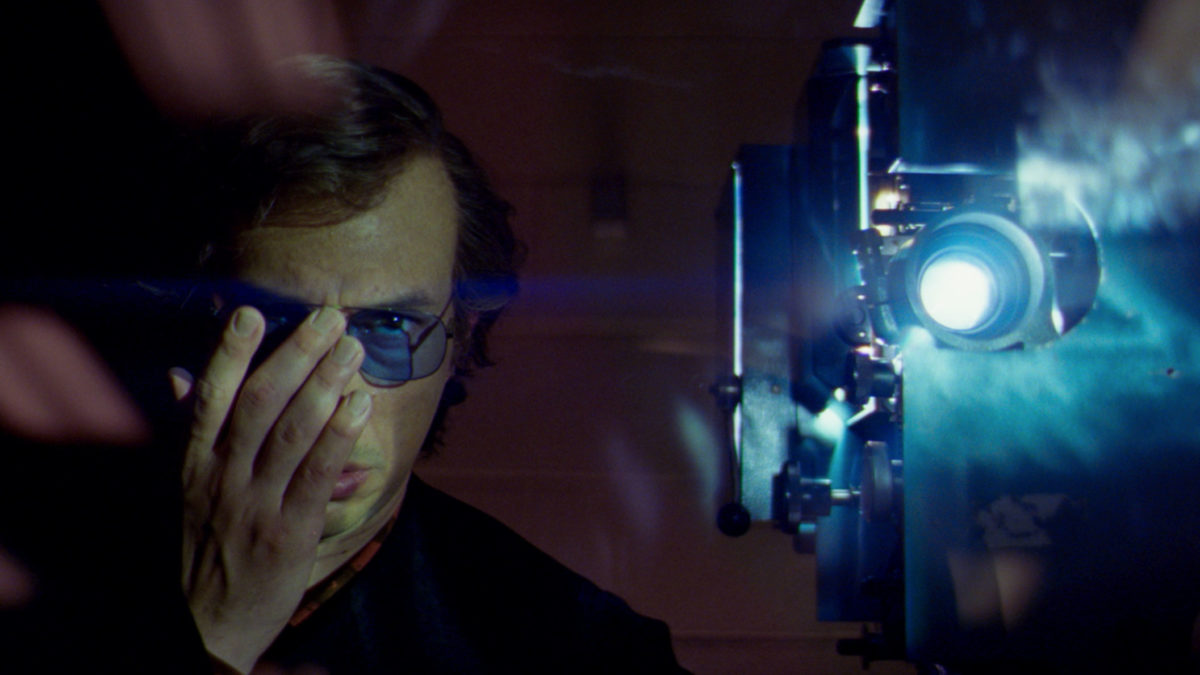
The only project here of a comparable budget (estimates vary that White Noise cost Netflix anywhere from $80-140 million) to One Battle After Another, and a misfire. Bursting with the excitement and happiness of starting a family, post-Gerwig Baumbach was too sweet for Don DeLillo. White Noise, the movie, replaces paranoia and alienation with kindness and camaraderie. Worse yet, Baumbach insists on preserving great amounts of the book, creating an uneasy tension between adaptation and original. The bright and colorful vision of the ‘80s, the spousal camaraderie, the happy family––none of them make sense alongside the depressive dialogue quoted from DeLillo’s hysterical book.
Fans of Baumbach’s De Palma documentary will enjoy a spinning camera shot quoting Blow Out, but otherwise the final project is at best forgettable, at times––such as the LCD Soundsystem music video ending––embarrassing.