
Sunfish (& Other Stories on Green Lake) is the kind of small film you hope to discover at a festival. Written and directed by Sierra Falconer in her feature debut, this lovely drama is built from her own personal history. Set on and around Green Lake in Michigan, it comprises four stories that, as I said in my Sundance review, “play like bittersweet passages from some Raymond Carver short story only recently discovered.”
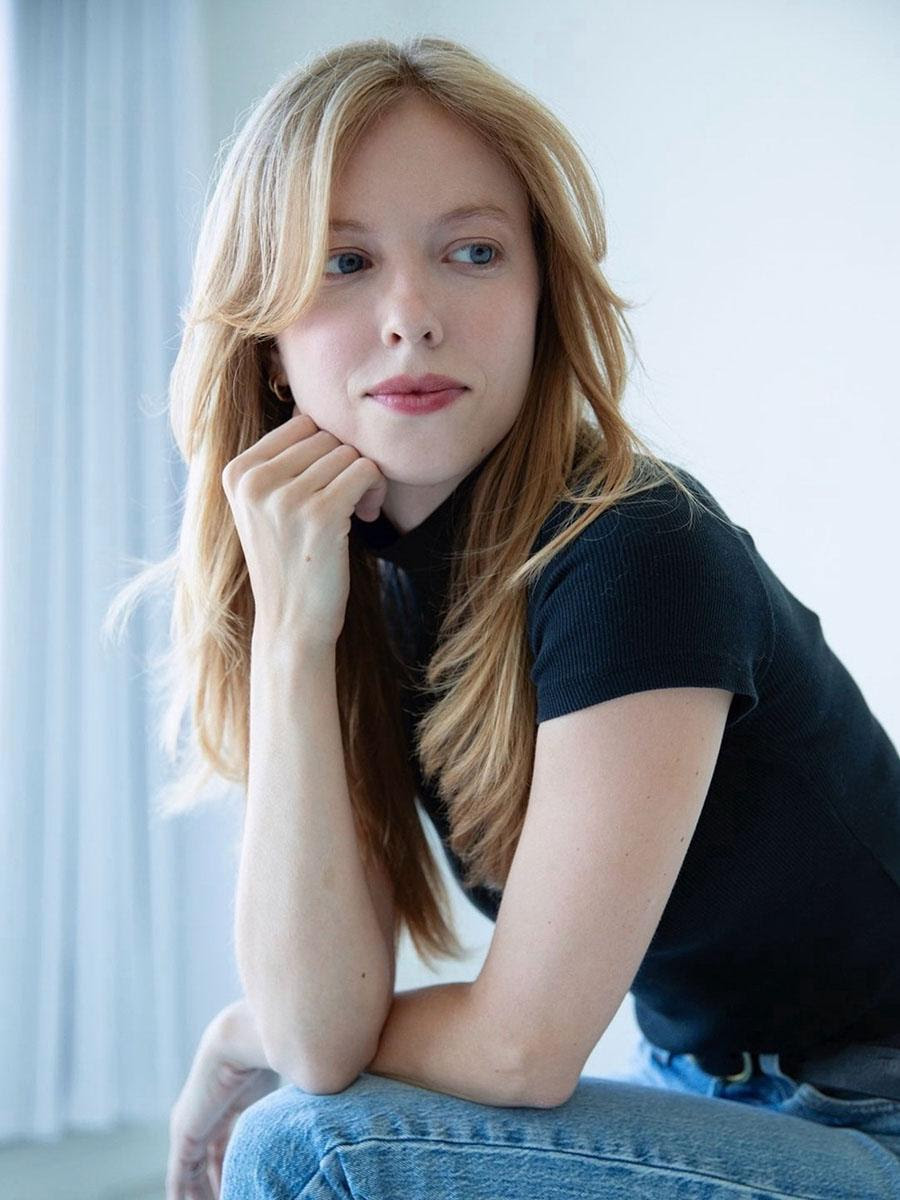
Ahead of Sunfish‘s theatrical release beginning this Friday, it was a pleasure to speak with Falconer about her film and its inception. We talk about everything from casting, to finding the locations, to On Golden Pond, and the beauty of quiet films.
The Film Stage: Where do you begin with something so autobiographical? I know it’s not exactly autobiographical, but you grew up around that lake. Are there moments in your life where you think, “One day I’m just going to capture these things”? How does that come together?
Sierra Falconer: The idea for the film really started with this place. It’s a very specific place. I grew up spending every summer at that cottage. The cottage the grandparents live in is my grandma’s cottage, so we would go there every summer. I remember, as a kid, there was no Wi-Fi and also no cell service. We would go, and it was like we were in a little bubble. It had this really specific feeling, like you were the only people in the world and the lake was the only thing that existed. You’re so disconnected, and you’re also so bored. We would just sort of lie around on the dock and in the hammock. I wanted to capture that feeling.
Then, as I was growing up, you start to learn about what else is on the lake. I grew up in a town that was about 20 minutes outside [of the lake], so very close. But the camp was there, the grocery store, the pub we filmed at––it was all in this community. So I knew I wanted to hit all these different places. I think it really came from locationally specific truth. The specific stories aren’t necessarily autobiographical; this didn’t really happen to me, but I was trying to find in each story a moment of change in a character’s life or where they learn a lesson. That was something that I experienced growing up and living there. So all put together, it’s this feeling of what it’s like to grow up here. That was the idea.
That’s so cool. Was there a first story of the four? Was there one thing that then led to multiple stories, or was the idea always an anthology?
“The Sunfish” was the first one that I wrote, with the young girl and the grandparents, because that really felt the closest to home. My grandparents are the reason why I go to that cottage. The Sunfish sailboat that we filmed on was my grandpa’s Sunfish. He taught me how to sail. My grandparents love bird-watching and they love the loons, and they watched On Golden Pond every summer. So that was really where I started and then went from there.
On Golden Pond! That’s great. If you love lakes, that’s the movie.
It’s the ultimate lake movie.
The “Summer Camp” sequence where the young Jun (Jim Kaplan) is practicing, it was so visceral for me to watch because I played the saxophone in school, although I wasn’t as good as someone like Jun. But the practicing, it was so stressful. Where did that come from? It was so well depicted––you have, like, a mini Shine in the middle of your movie.
I played violin as a kid, but I quit. I went to that camp for violin, and I got last chair and it traumatized me, so I quit. I can’t do things when I’m the worst. So I quit violin, and then I went into sports. I played tennis all through high school, and I had the same sort of competitive energy where you just hate yourself if you’re not getting it right and you need to be the best. I was really pulling, mostly, from my tennis days because the violin didn’t last long for me. But I love seeing the process and seeing people learn something, especially with a competitive edge. That’s something that feels very true to me. So I knew I wanted to capture that and to sit with him for long enough where it feels like we’re getting very uncomfortable.
That is probably the shortest of the four stories, right? But the practicing and the chicken fight… I was like, “This is the awkward weirdness of the chicken fight when you’re that age.” What a weird thing, and that being such a moment for the main character. That sequence is so lovely because it is so specific. I kept coming back to Raymond Carver. When it becomes an anthology, are you looking to any short-story writing as a guide, or is it too different from that medium?
No, I love short stories. I definitely think a lot of my influences come more from literature than filmmaking. But I did watch a lot of anthologies as well. I wanted something that felt like one full movie rather than four shorts back-to-back. Some short-story collections feel more like that than others. So I was definitely looking for some inspirations, but also trying to create something that felt like a full beginning-to-end story without the stories bleeding into each other, because obviously they’re all independent.
The lake is the thing, right? In Coffee and Cigarettes, for example, the diner is the thing. If you can pinpoint that… let’s almost walk around the lake and see what’s going on. My grandparents lived across from a lake in the Berkshires, and I remember when we were old enough to walk around it, you realize there are other lives happening. This speaks to the short-story feel; “less is more” is certainly a phrase you could apply to this movie. There are not a lot of big moments. I’d even argue big moments open and maybe end the stories, but in the middle you’re capturing these “small lives” that, of course, are not small to the characters. How tempting is it to get more operatic? Did you have to fight against, or maybe even cut out, more direct, emotional moments to drive home a point? I think it’s such a credit to you that there isn’t a lot of that.
That’s so interesting. One specific scene: the scene where Lu [from “Sunfish”] is yelling at the mother bird for leaving her baby bird. We shot the coverage for that scene in close-ups, and it just felt so on-the-nose. Like we were hammering it into the viewer. So that was one time where we decided we needed to only use the wide shot, which I was only going to use for the very end of the scene. We ended up using it for the whole scene and turning down the volume because everybody gets it. There were moments where less is more, for sure. I like films that are quieter in their execution.
Quiet is interesting. When you got to the sound design, did you find yourself bringing things down more than you thought you would?
Yes, and you realize how much is there. We put in so much sound design––so many birds and bugs––and we were capturing a lot practically while we were there. We wanted the location and the characters to be equal. I didn’t want it to feel like this was just a story about the people; I wanted it to feel like a story about this place and the people in the place, and how the people are the place and the place is the people. So we were taking down a lot of the dialogue in some portions and just allowing the background noises to come in––more so than in a traditional film.
Was there a first person you cast? Tell me a little bit about how it all came together.
The casting process took forever. We spent seven months just trying to find the best people. We had a lot of early-career actors and some veteran theater actors coming out of New York. We didn’t have the budget for a big star, and it also didn’t really make sense to put a big star in the movie because it would have made the whole thing unbalanced. It’s just not really a star vehicle. So we were just looking for people who felt authentic to the place. We did not really cast locally because there are not a lot of local actors, and people there like their privacy. We were casting all over the U.S. I think Maren [Heary], who played Lou, was one of our first attachments. I knew I wanted Lauren Sweetser, who played her mom, from the moment I saw her in Winter’s Bone.
Yes! Oh my gosh, that’s what it was. Winter’s Bone just came up when we talked to Jordan Harper about his movie, She Rides Shotgun. He’s from the Ozarks, and we went on a five-minute tangent about how Winter’s Bone is the best book and movie. I forgot she was in Winter’s Bone.
The last person we cast was Jim Kaplan, who played the violinist [in “Summer Camp”]. It was really hard to find someone who could play violin to that level and also was comfortable acting. But he was actually a violinist at that school, at Interlochen. I got a recommendation for him while we were on a location scout. I’d written it for a female violinist, but we remade the story for him. He’s amazing.
He is amazing. The moment when he’s looking at the board. Honestly, rewatching it, that whole story hit harder than on the first watch. It was funny to watch it again and have that jump out more. Karsen Liotta though [in “Two Hearted”], in terms of star quality, probably yes for her. That is a truly great performance. And when I mention Raymond Carver, “Two Hearted” feels like it could have been from 1975. She has to really own that because it’s the most fantastical story but still fits well within the world. Can you tell me about the distribution? It’s a cool story, how this movie is getting out there.
Caryn Coleman of The Future of Film is Female is doing our U.S. theatrical release, and she is incredible. This will be her second release; she did The Graduates last year. Her whole thing is: she’s looking to platform female and non-binary artists. She does a lot of exhibition and short-film grants, so it’s just incredible to have her on our team. She’s also able to do a very bespoke strategy for us. We’re targeting the Midwest in a way that feels very special and specific. So we’ll go to Michigan and Chicago and hit a lot of smaller theaters around there, which is really exciting. We feel very lucky to have her helping us with this.
It feels like what indie film needs to evolve into. It’s almost old-fashioned because movies used to open like that. Big movies would open in markets where they would succeed, and then word of mouth would allow them to expand. It feels obvious, honestly. So hopefully that all percolates and works. You shot everything on and around the lake. When you were scouting and prepping, what were some discoveries you made at the lake? Was it revealing, where you were like, “Oh my God, I didn’t even realize this was here”?
So many of the locations were in my head, but some of the most difficult ones to get… the bait shop [in “Two Hearted”] was difficult. Nobody wanted us to film in their bait shop, so we had to go kind of far away. That one was the furthest trek for us, about an hour drive to this tiny bait shop.
And that’s the one with Wayne Duvall in that?
Yeah. He’s so good.
He’s so good! I feel like I have met that bait shop owner.
It’s so funny: we showed up to shoot the scene and the real bait shop owner was there. He walked out and he looked exactly like Wayne Duvall. They were looking at each other, and the shop owner was like, “You look like a bait shop owner.” It was like they were looking in a mirror. We hadn’t met him before, so we were surprised by that. A lot of the locations… for example, when Annie (Karsen Liotta) had to drop off her daughter at her own mom’s house before she went to work, we needed to find that house. So we just walked up and down the street and knocked on people’s doors. We were like, “Can we film here?” Some people said no, and one guy was like, “Sure, whatever.” It was a big community effort. We spent no money on locations.
So it was really just, “Here’s a release”?
Yes.
Wow.
It was a student film; it was an independent film. People don’t really understand what it means to shoot a movie. A lot of it was making sure they understood we were bringing a lot of people and it was going to be rather disruptive. But I think that helped us to get into some places that maybe we wouldn’t have otherwise.
How big was the crew when you were filming? Not a huge crew, I’d imagine.
No, I think maybe about fifteen of us.
That’s amazing, because it looks great. When you’re going into post-production, do you have a color palette in mind for the color session? Or is it all about naturalism?
I had pulled a bunch of old family photos that were taken at the cottage. My grandma had them just sitting there forever. I pulled a bunch of them out, and they were sort of a little faded. My D.P. [Marcus Patterson] and I looked at all of those, and that was a big inspiration for how we were shooting the film. Then we also gave those photos to our colorist [Nate Seymour] and he was sort of capturing a similar look. We didn’t want anything that felt overly changed; we wanted a natural look and were sort of trying to capture this feeling of an old photo.
You definitely did. That’s a great answer, because that’s what it feels like. But you didn’t shoot on film, did you?
No, no.
Because it does feel worn. Was there a hardest story to crack or film?
The third one, the giant-fish one [“Two Hearted”], was the hardest. Writing it, I didn’t know if it was going to work.
Were you ever going to show the fish?
No. I wanted people to wonder, “Maybe there is, maybe there isn’t.” I think that’s why it needed to be in the story, is to show the small-town chatter and the gossip, and how stories become bigger than themselves. That was what I really wanted in the film. But at the same time, it was so tonally different, I didn’t know if it was going to fit.
You know why it fits: the bait shop! The bait shop really grounds it. But that makes sense, because it’s a bigger thing.
It’s different and it’s supposed to be different. You’re supposed to laugh at it because it’s such a departure.
Placing it third is smart. Because if you end with it, maybe that feels too grandiose.
I also wanted it third because I wanted some energy at that point in the anthology. Then the last one obviously returns to the tone of the first one and it brings us down.
Do you have a next thing you’re hoping to do, or is the focus just on this right now?
I am very excited to do the next thing, but I’m not sure what it’s going to be yet. There are a few things. I’m excited for the release, but sometimes it’s helpful to think about what’s up next. It keeps you sane.
When did you shoot [Sunfish]?
We shot in summer of ’23… we finished in early July, so we missed the first Sundance deadline and had to wait.
Do you still get back to Michigan?
I do. I went earlier this summer just for fun and that was amazing. I try to go about once a year.
Sunfish (& Other Stories on Green Lake) opens at IFC Center this Friday, September 12, and will expand.