
Edward Burns’ career is a fascinating one. The lifelong New Yorker has a discovery story that is too good to be true. After putting together $25,000, he made an indie film on the cheap over the weekends with a small crew and local cast of actors. He was working as an assistant at Entertainment Tonight at the time, and was able to get a copy of his film, The Brothers McMullen, into the hands of Robert Redford when he came to the New York set to be interviewed. Redford, who just recently passed away, was the creator of the much-vaunted Sundance Film Festival. Months later, The Brothers McMullen won the Grand Jury Prize. Then it was a hit in theaters, grossing over $10 million. The next year, Burns’ follow-up, She’s the One, was in theaters. By 1998, Burns was in the main cast of Steven Spielberg’s Saving Private Ryan.
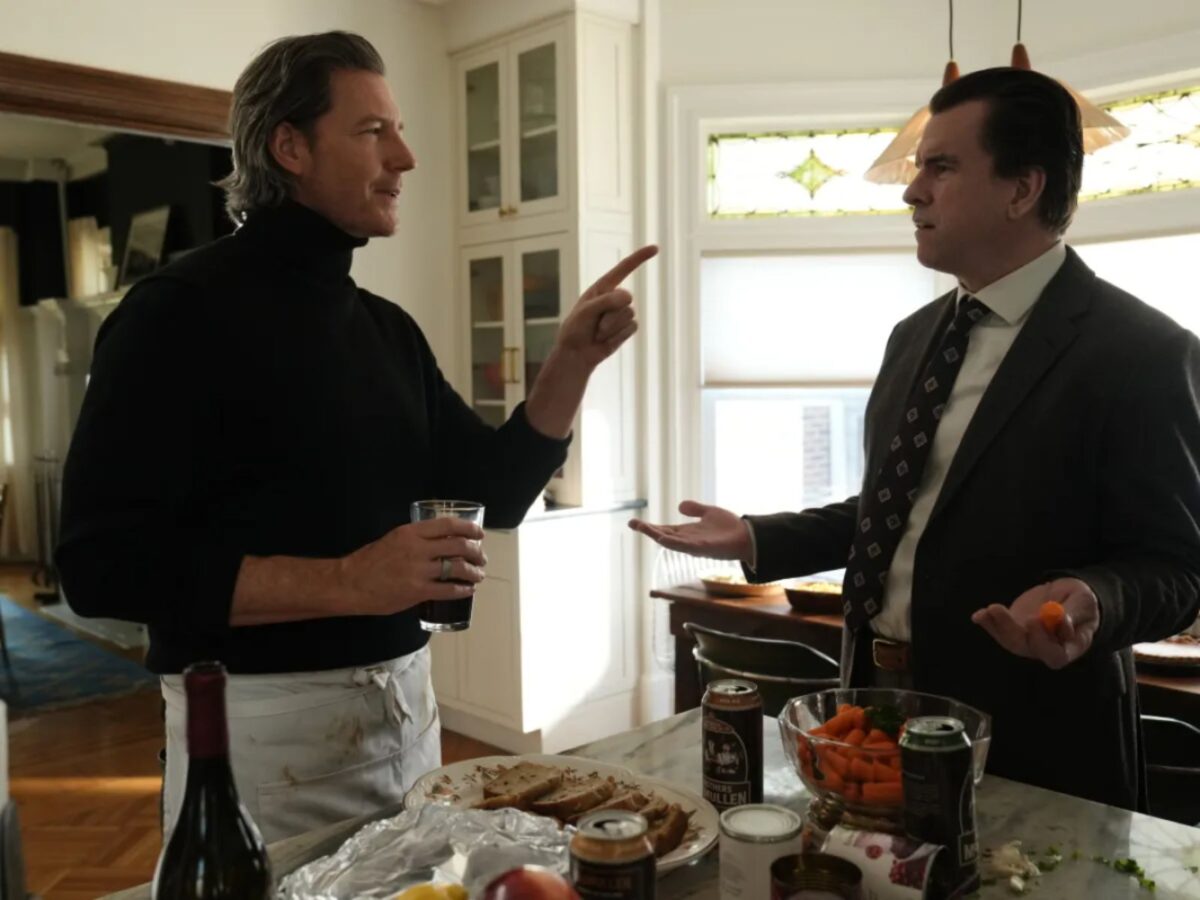
Since then, Burns has been the leading man of films big and small while he continues making modest indie dramedies of a certain niche. This holiday season, Burns returns to his original film family with the sequel The Family McMullen, arriving on HBO Max this Friday, December 5. It’s a confident, mature piece of filmmaking and one of his very best films.
We spoke with Burns about the new movie, his most underrated films, the future of his acting career outside of his own work, and how he’s improved as a visual stylist over these 30 years. Watch or read the conversation below.
The Film Stage: You’ve been doing this for 30 years now. [Even longer really], since you were filming The Brothers McMullen. You’ve gone from shooting on film to digital, and you’ve done every version of digital. What has not changed [amongst] all of the change that has happened?
Edward Burns: The thing that never changes is what happens after you call “action.” The actors are in front of the lens, and I’m either behind the camera or in front of it with them. It doesn’t matter how big or small the scene is; what is happening there just doesn’t change. That is the magic. That’s the thing I’ve always been attracted to. If you know my work, you know I fell in love with screenplays and dialogue before I fell in love with, let’s say, visual storytelling. I’m not the most cinematic filmmaker, but I would like to think that my characters are grounded in reality. They feel authentic and relatable. That never changes. Whether we were shooting 16mm on McMullen or shooting on the RED on this film, that has always got to be the same.
It’s funny you mention the visual, because watching Millers in Marriage, which came out earlier this year, and rewatching The Brothers McMullen last night, you can obviously tell you have a keen sense of visual space. You really have mastered that Woody Allen master shot. Millers has a lot of that; it’s really beautifully done with not much editing. Was there a turning point for you? You’ve made 15 or 16 movies now. When did the visual sense become more comfortable for you?
You know, when McMullen came out, there was a lot of criticism of the look of the film. And I was the first to admit that we had a three-man crew, we couldn’t afford to move the camera, and we didn’t have a lighting kit. That was what it was. So moving forward, I still work with limited budgets, but I tried to educate myself, get the camera moving more, and learn how to tell a story visually. You mentioned Woody Allen and those moving masters—I definitely fell in love with that. I did a television show in 2015 called Public Morals, set in 1962 New York. That was the first time I had a real budget, a big crew, and all the toys that all of my peers had been playing with for fifteen years. I still work with the same DP, Will Rexer. That was the one where we finally had the time.
Again, on this new film, I think we shot it in 22 days. Which, as a producer, you know, is a rock-and-roll schedule. On Public Morals, we had a real schedule. Getting prepped for that is when I just watched all of the filmmakers I admired and really studied what they did with the camera. That was the changing moment for me. That’s where I learned how to be a filmmaker in that respect.
What I loved about The Family McMullen is that you go back to the internal monologue. I had honestly forgotten it was in The Brothers McMullen because you don’t revisit that a lot. Sidewalks of New York has the documentary-style testimonials, but that’s different. Was it fun going back to that? It feels like a fun “cheat code.”
It really was. It’s funny—I had forgotten about that as well. I wrote the first version of this script and it didn’t have that. Then I went back and watched chunks of McMullen—it’s hard for me to sit there and watch the whole thing—but I saw those sections and thought, “Oh, I forgot I’ve got these internal monologues. That should be a fun thing to bring in.” So that was fun to revisit. There were other little Easter eggs we wanted to plant for the diehards. But really, I wanted to make sure that while it was a true sequel to the film, if you never saw the first film, it would work on its own. I think for the most part, it does.
Juliana Canfield is so good in this new movie. You worked with her on that Amazing Stories show. Is that where you met her?
That’s where I met her. We played government agents, with really stilted dialogue. She is so funny in real life. I was like, “Juliana, one day I’m going to write you a part one day that matches your personality.” And I had worked with Pico [Alexander] as well and wrote this part for him. They kind of remind me of one another in their deliveries. I thought, “If I can get these two on screen together, that’s going to be magic.”
You’re so good at casting younger people, even going back to Connie Britton and Mike McGlone at the beginning. Why do you think that is? Do you have a specific eye for it? The DIY of it all?
It might be the DIY nature of it. Part of it is: we can’t afford to hire someone who’s already a star. But I have to give a lot of credit to my casting director I’ve been working with forever, a woman named Maribeth Fox. What’s great about Maribeth is that she’s here in New York going to showcases and Off-Off-Broadway shows. If she sees a young kid she likes, she makes sure to bring them in. There have been cases where she says, “This actor has come in for me for the last five years. He was very green when he first came in, but he’s getting better and better. He got a guest spot on this, he got a small part on this, I think he’s about to pop.” She’s been enormously helpful. We like to take chances on young people. You can’t get the job unless you’ve been in the big studio movie. We’re kind of a place where those actors knocking on the door can get the exposure that gets them the next big gig.
It’s so interesting. I discovered you through Saving Private Ryan, and you have one of the great monologues in that movie. And I remember watching Sidewalks of New York after that thinking, “Who is this guy?” And it just seemed like a cool movie and I was younger. And as I got more into film, I went down the rabbit hole of your work. The writing always stands out. I read your book (A Kid From Marlboro Road) when it came out last year. You’ve worked in so many different mediums, even a comic book once. How does one medium help another? Does that broaden your horizons on how to achieve things narratively?
I think so. My start was as a storyteller. On the book tour, I told stories about growing up in a big family where there was real value in being able to “hold court.” My uncles and cousins were so funny. As we got older and hung out at bars, the guys or gals who could tell that story… there was real value in that. I fell in love with oral storytelling first. As I became a writer, I was attracted to smaller stories, character-driven stories. The reason I love dialogue is because of that talk in the bar or around the dinner table—the overlapping dialogue and stories. So whether it’s the novel, the films, or trying my hand at the comic book, it’s kind of what I love.
You once said that when you were working with Tyler Perry he told you to “super serve your niche.” For someone who has done it their own way their whole career, you’ve also strangely been at the forefront of new things—like Purple Violets being the first movie exclusively released on iTunes or working with the 5D camera before others were [on Newlyweds]. And now basically all of media is that Tyler Perry phrase: “super serve you niche.” You’ve been perfecting your own genre. Do you think you’ll go back to acting in other people’s projects?
I don’t think so. Quite honestly, I haven’t had an agent or a manager in about 12 years—the last time I acted in someone else’s thing. You know, you get to a certain point where… look, I was so lucky with my career. The first movie I acted in that wasn’t one of mine was Saving Private Ryan. The second was 15 Minutes opposite De Niro. Then on Confidence with Dustin Hoffman.
I wanted to ask you about Confidence. I love that movie. James Foley just passed away. They’re re-releasing At Close Range and I wrote one of the essays in the booklet. Do you have a James Foley story?
Foley was a great, great friend of mine. Anytime I went to LA, we had dinner. We stayed in touch all the way to the end. He was a special, beautiful guy.
I always think of the coverage in Confidence when you are planning the con, and he uses the traffic as the cross-cut.
I stole that! What did we steal that in? We may have stolen that for Public Morals—the long lens from across the street using the cars as wipes.
It’s amazing. On the DVD commentary, he talks about not being able to afford to do it another way, so they just used the long lens. So you really are in a space now where you’re just like, “I’m going to write my books and make my movies as long as they’ll let me.”
As an actor, if you aren’t lucky enough to play the sort of lead… like you’re getting to be a lead in a Dustin Hoffman movie. At a certain point you start becoming the schnook dad or the goofball cop who gets killed in the horror movie or whatever it is. That was never for me. I started as a writer, then a director, and became an actor by default. When the parts got less rewarding, I bowed out. Also, my kids were at an age where I could guarantee being home in New York by making my small indie movies. Now that my kids are in college, if the right role came along, I would consider it, but it’s not something that I’m actively pursuing.
Looking back, was there a hardest movie to make?
Oh, yeah. A movie called Summer Days, Summer Nights. That was the hardest movie to make. We shot in 22 days, it was [a period piece]. It was a big ensemble. We were completely restricted by where we could point the camera because it was set in 1982. So every street—literally just outside the frame—it was the year 2018. We dealt with a lot of water, which requires safety crafts and “aquamen” to be standing by. And we had a lot of company moves, which I usually try to avoid. That one required an amount of focus and, who knows, maybe I was just a little bit older.
Another period movie you made is Ash Wednesday, which is ripe for rediscovery. I’ve been lucky enough to interview Ethan Hawke. I don’t know if you know this, but his novel of the same name came out that same year!
Yes, yes. We actually ran into one another in a restaurant that year.
Going back to producing in New York City, I gotta tell you how much I love your commercials for B&H. [Note: B&H Photo Video is an A/V superstore located on 9th Avenue in NYC.]
I’ve been going there for years! I loved it when they asked me to do it. And they’re very New York. I gotta lean into my New York [accent].
That’s what I love about it! If you work in production there, you think, “Oh, this is the perfect guy to do these commercials.” As we come to the end: is there a movie from your past that you feel has aged well and should be rediscovered?
It’s a good question. A lot of people come up to me and love two movies that disappeared without a trace: The Groomsmen and Purple Violets, which are two films I’m really disappointed in. I looked at them maybe five years ago and there are things I wish… I wasn’t disciplined enough as a screenwriter on both of those movies. Sidewalks of New York is definitely my favorite film that I’ve made. But I made a movie called No Looking Back ––
I was going to bring that up!
That’s got some of my favorite stuff in it. And it’s interesting, the casting… I got slammed for casting Lauren Holly and Jon Bon Jovi in the movie. But when you look at it now, removed from 1996 or ’97, you just see two actors. You don’t think about who they were in that moment. That movie, I really do love.
I rewatched it recently and thought, “This is great.” The compositions in it are really good. If there’s a way to [re-release it] in 4K, they should do it. Before we go, I need you to tell me the story of how you got Tom Petty to score your second movie [She’s The One]. How did that happen?
It’s a great story. When we sold The Brothers McMullen to Fox Searchlight, they wanted to put a pop song on the title credits because a lot of artists were doing that back then and they were turning into hits. They wanted to do that with McMullen. At the time I was 27, young and arrogant and naive. They suggested this to me and I said, “No, you can’t do that, Seamus Egan has the song at the end of the movie.” Seamus, traditional Irish folk music with an instrumental. And he gave me all of his music for free so I was like, “No way.” They asked if I’d consider Seamus collaborating with an artist he liked. Seamus listed Sarah McLachlan. We sent her the movie, she loved the song that was there, and decided to just write lyrics on top of it and we’ll record that. That becomes “I Will Remember You.” Seamus went from playing traditional Irish music in bars in Boston, Philly, and New York to getting a co-writing credit with Sarah McLachlan.
Seamus, now, since he did the music for The Brothers McMullen, did the music for The Family McMullen. Finally able to pay him. So for She’s the One, we also make it with Fox. They want to do the same thing. Someone at Fox was friends with Tom Petty’s manager. They sent him the movie, he loved it, and asked me to come to his house in LA. I’m like, “Are you fucking kidding me?” Like anybody, I’m a huge Petty fan. Fly to LA, go to his house, we hang out, we bullshit for a little while, and he’s like, “I wanna play the song for you.” I think he’s going to like put in a CD. We go into his room, he plugged his guitar into an amp, sat three feet from me, and he plays me “Walls.” He’s like, “What do you think?”I couldn’t believe I was there! I was like, “This is fucking fantastic.” Then he said, “I have another one if you want to hear it,” and then he played “Angel Dream.” He asked which one I wanted to use, and I said, “I have a crazy idea. You know how Simon & Garfunkel scored The Graduate using songs? Would you be interested in that?” Three weeks later, I’m in the studio with Tom, Mike Campbell, Benmont Tench, and the band, and they are scoring the film to picture. It was the most incredible experience.
Wow. A great story to end on.
The Family McMullen arrives on HBO Max on Friday, December 5.