
No festival in the world wears its history on its sleeve quite like Sarajevo. Sitting in for a screening of La Grande Bellezza (after Paolo Sorrentino had rather grumpily accepted his lifetime achievement award) last month in the festival’s main open-air theatre––surrounded by buildings still pockmarked with bullet holes on their outer facades, a regular sight in the city––I asked a local why the organisers had held onto the location instead of switching to a prettier part of town. She explained that it would never change because the gathering that took place there in ’95 was the first time the city felt free.
Grown from the seed of wartime screenings held by Mirsad Purivatra and Izeta Građević in the early ’90s, the story of how it came into being is almost too romantic to bear. The city was still under siege at the time, and citizens would risk life, limb and sniper fire simply to make it to the basement of the Apollo theatre for a VHS screening—movies like Basic Instinct , Field of Dreams, or whatever else could be smuggled in that day. When the system worked, it did so on generators donated by the UN; entrance cost a cigarette, which was used to pay the technicians; and occasionally, an emissary from from another festival would be brought in using tunnels otherwise used for food. “The war cinema Apollo was crystal clear, diamond hard in its purpose,” Mark Cousins once said. “To defibrillate. To keep Sarajevo alive.”
The festival proper began in 1995, a few months before the siege officially ended. No one at the time knew what to expect from the war-wary populace, but people came out in droves. 31 years later, they still do: for two weeks each August, Sarajevo becomes one big noisy party, attracting cinephiles and Balkan holidayers looking to down a few plates of cevapcici, wander the Ottoman-era buildings of the Muslim neighborhoods, and maybe catch a glimpse of Stellan Skarsgård. This year’s main prize went to Wind, Talk to Me, a moving family portrait from the Serbian filmmaker Stefan Đorđević. Writing about it back in IFFR earlier this year, our own Leonardo Goi described it (beautifully) as “an act of faith: a son learning to surrender to the world and finding his mother flowing through it still.“
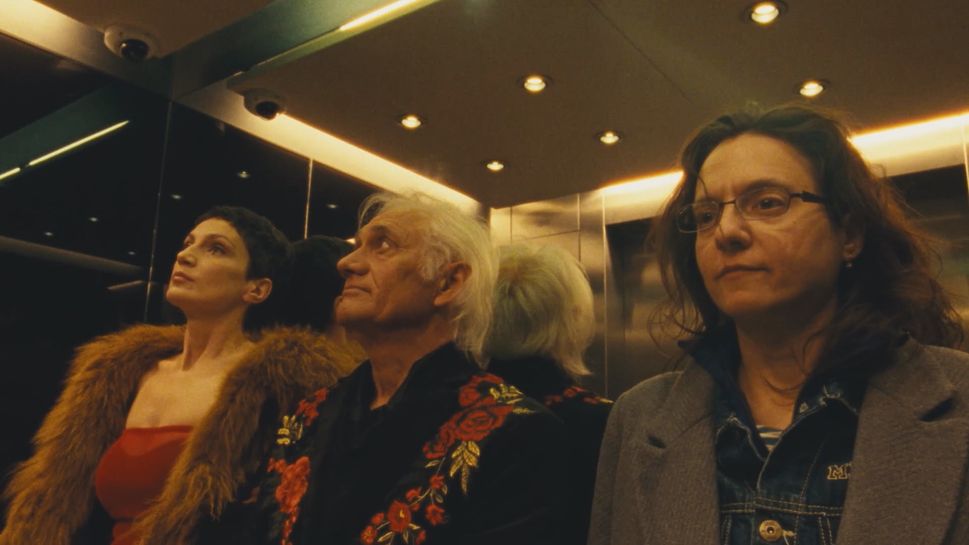
Sorella di Clausura
There’s nothing quite so wistful going on in Ivana Mladenović’s Sorella di Clausura, a surrealist farce that feels somewhere in the lineage of Radu Jude, the director’s countryman, but with its own idiosyncratic brand of erudite bad taste and textural flourishes. It stars Katia Pascariu, an actress whose hang-dog performance in Jude’s Bad Luck Banging and Looney Porn was, I believe, among the key factors to elevate that movie to its shock Golden Bear win in 2021. In Sorella, Pascariu plays Stela, a worryingly insular 36-year-old who carries a high torch for a famous crooner named Bodan (played with greasy charm by the director’s own father).
The movie follows Stela through her lust and infatuations in moments that blur between dreams, reality, and absurdity, yet always with a nose solidly thumbed to societal shifts that, at least in the movie’s late-00s setting, were being sold to women (in Romania and elsewhere) as some kind of progress. Sorella has dick jokes, sex-toy jokes, jump cuts to beat the band, and one recurring visual idea that I’m not sure I’d ever seen before. This is funny, smart, inventive filmmaking from a director who is well worth keeping an eye on.
One of the more relatively established European filmmakers to attend was Julian Radlmaier, who managed to introduce his screening in what sounded to me like pretty decent Bosnian––certainly good enough to delight the home crowd (his wife, he told me recently, has roots there). As someone who almost broke out in hives reading the title to Radlmaier’s breakout, Self-Criticism of a Bourgeois Dog, I have to admit that it’s taken me some time to warm to his work. His 2021 Bloodsuckers soothed my nerves; but this latest, Phantoms of July, is a low-key triumph.
Set in the East German town of Sangerhausen––the original title, Sehnsucht (or Longing) in Sangerhausen, is one of those rare Ws for the German language––it follows a spattering of eccentric characters and interweaving stories over the course of two days. There is a local waitress who falls for a visiting musician. There is an Iranian influencer who makes travel videos for TikTok. There might even be some ghosts in the mountains. Bright, punky, and genuinely funny, Phantoms is a rare thing: a collectivist-leaning comedy that manages to be both honest and empathetic about the simmering tensions of East Germany (and places like it) without throwing its subjects under the bus. It’s a wonderful movie, one that carries the courage of its convictions while offering no shortage of cinematic wonder.
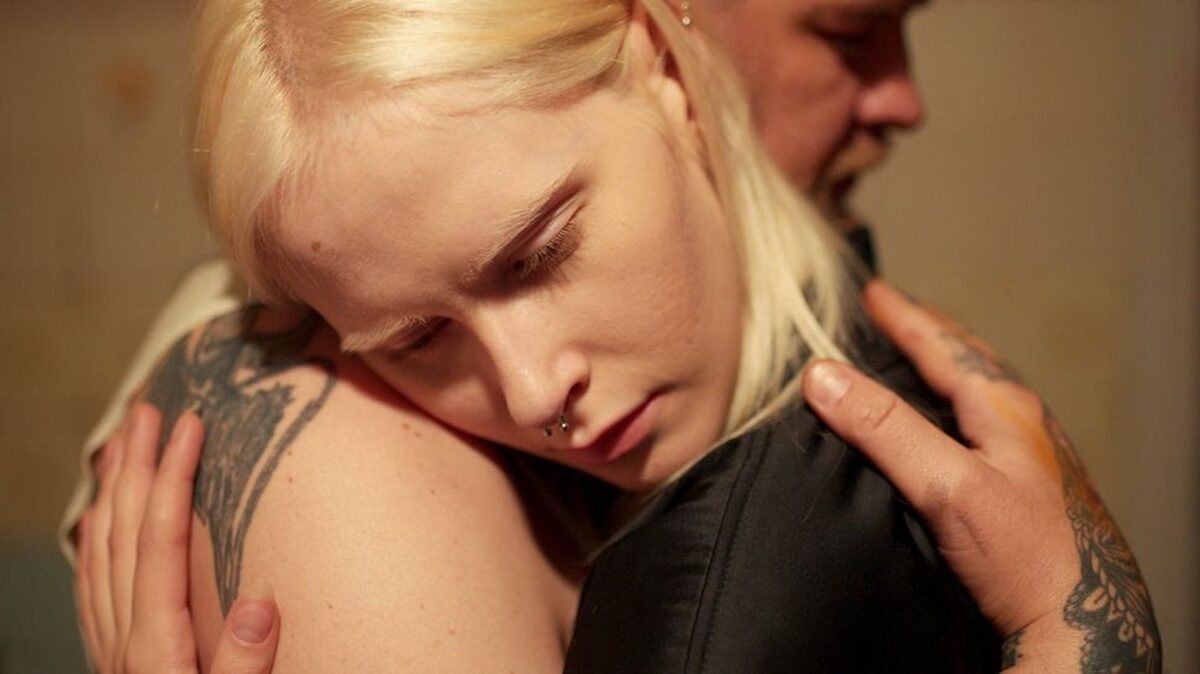
White Snail
I can’t argue there is quite as much fun to be had with White Snail, but it’s a movie that similarly managed to catch me off-guard––not least for the central romance between a wafer-thin model and a morgue worker who likes to paint in his downtime. The movie actually played in Locarno a couple of weeks before, premiering roughly 12 months to the day since Saule Bliuvaite’s awkwardly similar Toxic––another movie about the hazards that await young models––won the Golden Leopard; but it’s a shadow from which White Snail soon escapes. This is the first narrative feature by Elsa Kremser and Levin Peter, the German-Austrian filmmaking duo behind the 2019 documentary Space Dogs. The transition to narrative work here is not without effort, but their ability (as shown in that doc) to blend cosmic elements with a sense of biological vulnerability to the forces of state and capital is very much alive.
The model here, Masha (Marya Imbro), dreams of leaving Belarus for a career in China. For this, she takes interviews over video-call, allowing her potential employers to survey her body. The filmmakers then seem to mirror this with Misha’s (Mikhail Senkov) profession––the couple’s first date is spent miming out a postmortem, with no grizzly stage left unmentioned. Somewhere in this fugue of anatomical disassociation, the filmmakers seem to propose a macabre thesis on the realities faced by some bodies in certain parts of the world right now, while also acknowledging the healing potential of simply being seen by another human. It’s a compelling watch.