
As the year nears its conclusion, November brings another incredible slate of films, including a few that’ll certainly be among my top ten of 2025 list. While not included below, this month also brings a handful of one-week, awards-qualifying runs for films officially opening in 2026, most notably Oliver Laxe’s astounding Sirāt.
15. The Running Man (Edgar Wright; Nov. 14)
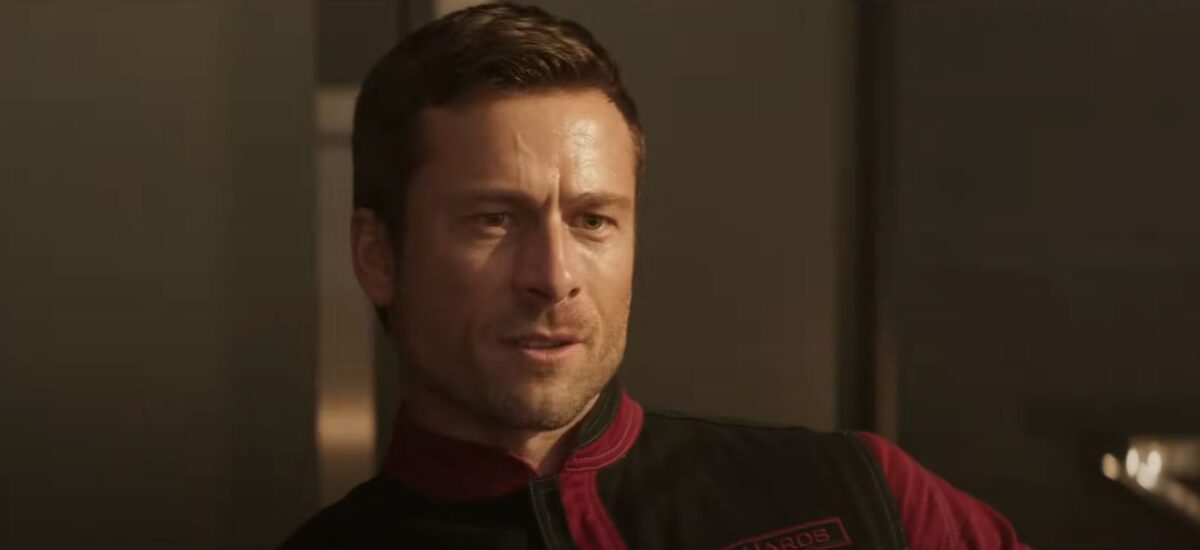
After a busy last summer with Hit Man and Twisters, Glen Powell is back this fall with Edgar Wright’s adaptation of Stephen King’s The Running Man. With a cast also including Katy O’Brian, Daniel Ezra, Karl Glusman, Josh Brolin, Lee Pace, Jayme Lawson, Michael Cera, Emilia Jones, William H. Macy, David Zayas, Sean Hayes, and Colman Domingo, the dystopic thriller will hopefully be a bounce back for the director after his stylish-yet-hollow Last Night in Soho.
14. Left-Handed Girl (Nov. 14 in theaters and Netflix on Nov. 28)
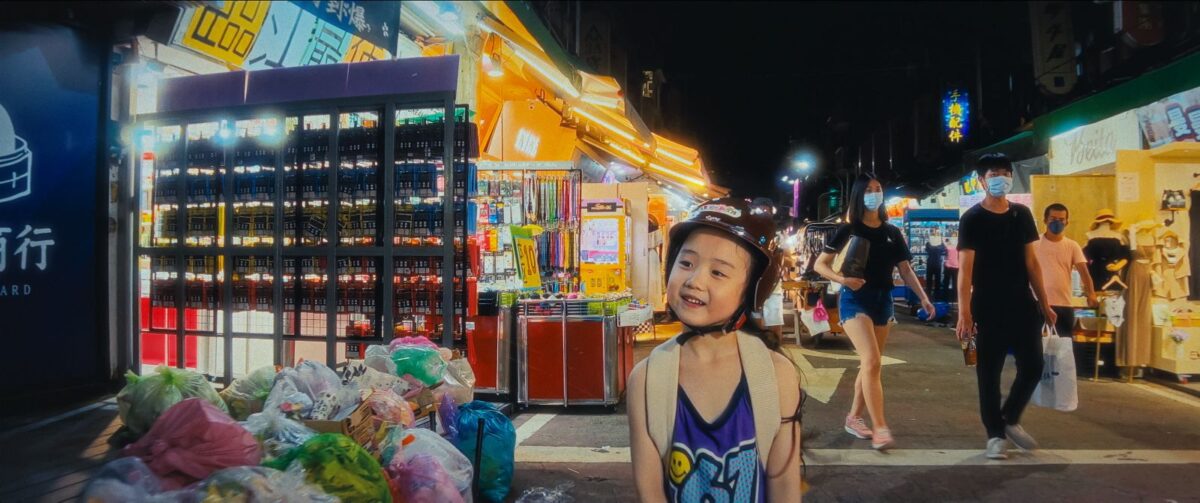
Coming off his Oscar sweep with Anora, Sean Baker returned to Cannes as co-writer, producer, and editor of Left-Handed Girl, the directorial debut of his long-time collaborator Shih-Ching Tsou. The film, which was selected as Taiwan’s Oscar entry, follows a single mother and her two daughters as they return to Taipei after several years of living in the countryside to open a stand at a buzzing night market.
13. Cutting Through Rocks (Sara Khaki and Mohammadreza Eyni; Nov. 21)

An engrossing documentary portrait of a woman fighting the patriarchy in her Iranian village, Cutting Through Rocks follows the hard-fought journey of Sara Shahverdi. The first elected councilwoman in her community, she strives to upend the female societal rituals of complacency and subservience under suffocating male dominance. Whether it’s asking a class at an all-girls school to sign pledges to not surrender their young lives away to forced marriages or simply providing a sense of freedom by letting female teenagers ride her motorcycle, the film offers a detailed look at dedicating one’s life to a cause that has a million roadblocks at every step.
12. Die My Love (Lynne Ramsay; Nov. 7)

Lynne Ramsay returned to Cannes this year with Die My Love, her first feature since 2017’s You Were Never Really Here, which brings together Jennifer Lawrence and Robert Pattinson. Rory O’Connor said in our review: “Die My Love‘s purest moment of catharsis comes at the very beginning, where a noisy guitar song sets the scene for a hot, heavy, coarsely edited sex scene between our doomed lovers. Their names are Grace and Jackson and they’re played by Jennifer Lawrence and Robert Pattinson, who––despite some provocative choices over the years––have rarely exuded this kind of carnal physicality onscreen. That brazen energy has been a hallmark of Ramsay’s cinema ever since Ratcatcher landed in Un Certain Regard in 1999, announcing the Glaswegian as a new and vital voice in British cinema. That remains the director’s only original screenplay; for various reason, those who revere her have had to wait patiently for each subsequent project. It will be eight years next week since Here closed the Cannes competition, and while no work is responsible for an audience’s expectations, it’s difficult to watch Die My Love and not think of similar films––most glaringly Lawrence’s performance in Darren Aronofsky’s mother!, but also Mary Bronstein’s awfully recent, Rose Byrne-led If I Had Legs I Would Kick You.”
11. Jay Kelly (Noah Baumbach; Nov. 14 in theaters and Dec. 5 on Netflix)
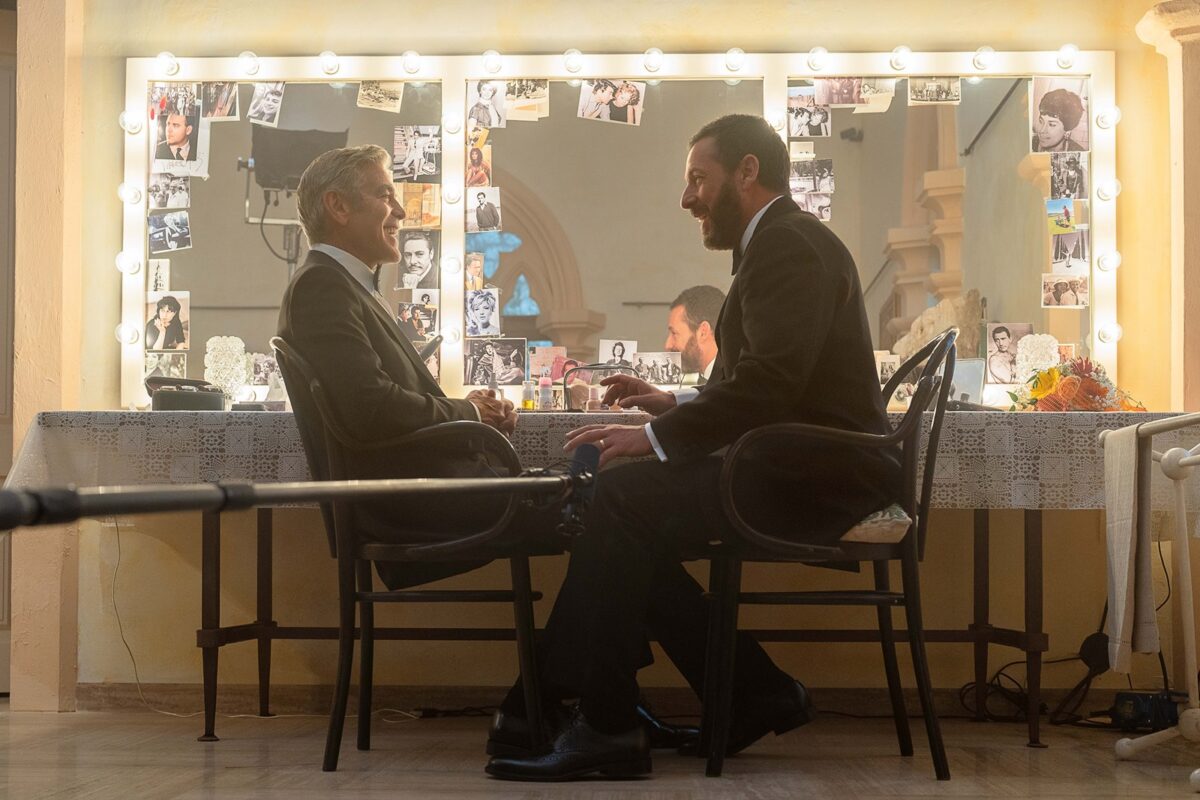
Reteaming with Netflix after his ambitious misstep White Noise, Noah Baumbach is getting introspective. Jay Kelly stars George Clooney and Adam Sandler as a movie star and his manager, respectively, as they reflect on life and their careers on a trip through Europe. Dan Mecca said in his review, “Baumbach is making his Fellini film, and it’s a joy to watch. There are funny, recurring jokes involving cheesecake and a lonely man never being alone. There are heartfelt, regretful scenes that nearly always involve Sandler, this film’s co-MVP with Crudup. And Clooney is doing both sides of what he does best. He’s downbeat and ponderous in moments of introspection, big and goofy in the few sequences of physical comedy. Clooney’s always been a bit shakier in the middle, playing it straight. One of the great ironies of his career is that perhaps no one alive has looked more like a matinee idol, yet he is best when complicating that image with absurdity or starkness. Here you have both, and they’re harnessed expertly by Baumbach.”
10. Wake Up Dead Man: A Knives Out Mystery (Rian Johnson; Nov. 26 in theaters and Dec. 12 on Netflix)
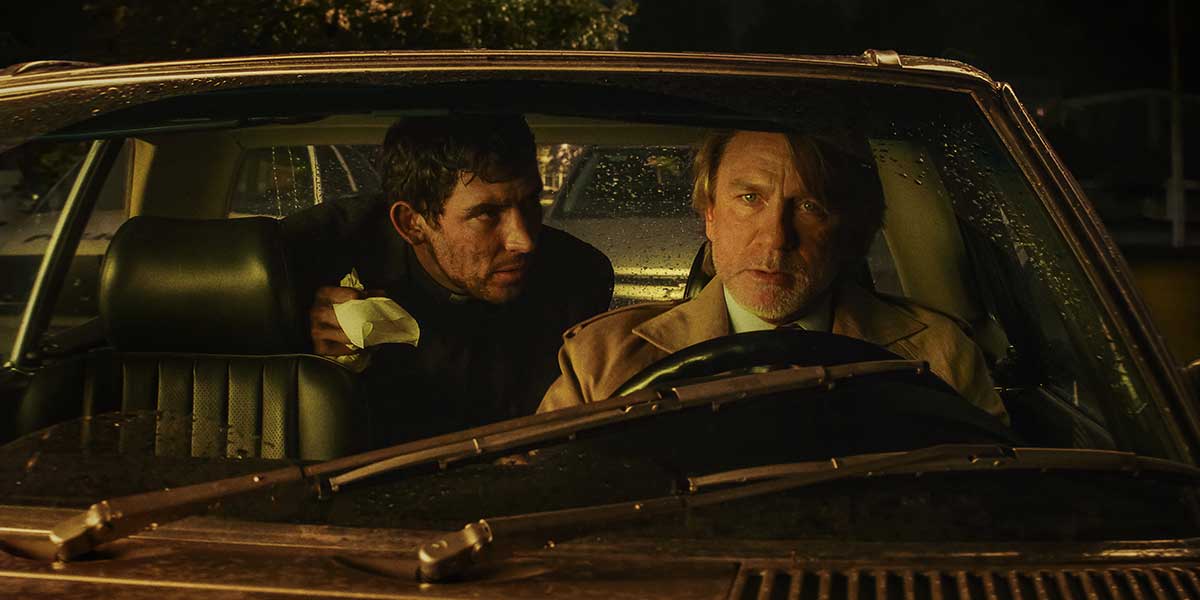
Taking up the majority of his last decade of filmmaking, Rian Johnson’s Knives Out franchise continues. Christopher Schobert said in his review, “Let’s eschew the type of slow-burning, big reveal that Daniel Craig’s Benoit Blanc excels at in the Knives Out series, and cut to the chase: Rian Johnson’s Wake Up Dead Man: A Knives Out Mystery is another satisfying, impossible-to-predict yarn featuring all the series’ hallmarks. There’s a wildly diverse ensemble, including a few stellar character actors and some rising stars. There’s a seemingly unsolvable crime carrying a whiff of Agatha Christie (and others, including Edgar Allan Poe). And there’s a reliable whodunit trope: Knives Out had a family of backstabbers with axes to grind, while Glass Onion offered a vacation setting and ‘friends’ with revenge in mind; Wake Up Dead Man presents a ‘locked-door mystery’ in a small town.”
9. Peter Hujar’s Day (Ira Sachs; Nov. 7)
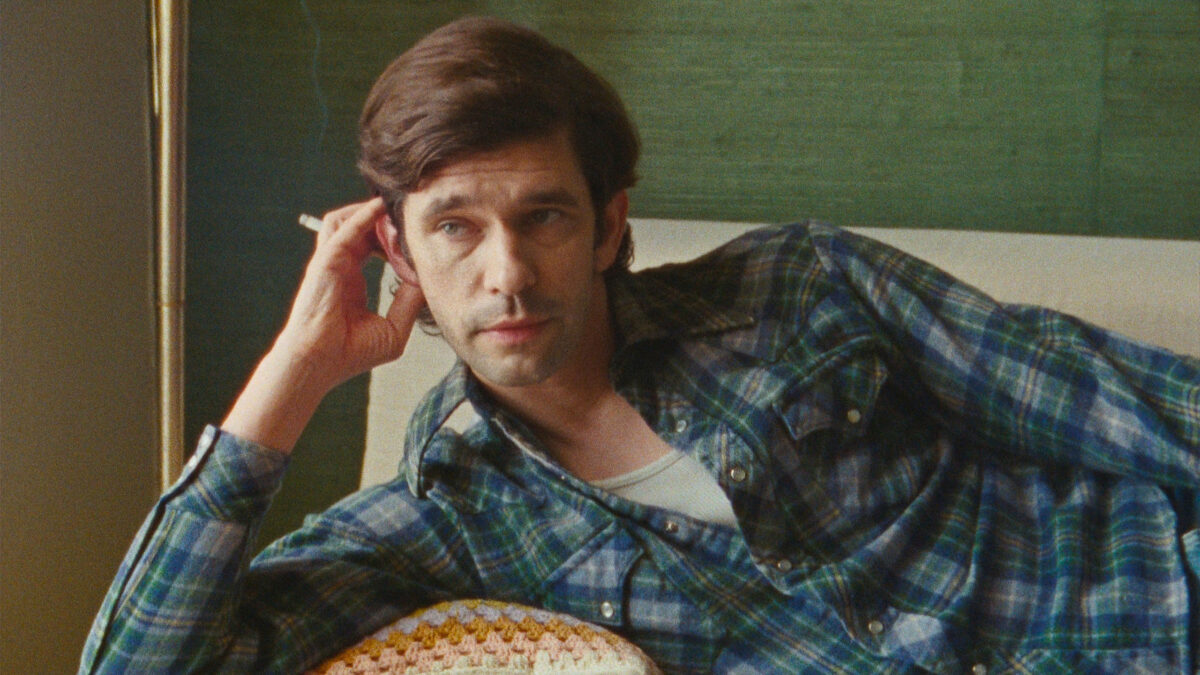
Passages and Love Is Strange director Ira Sachs returned to Sundance earlier this year to debut Peter Hujar’s Day, a drama starring Ben Whishaw and Rebecca Hall, depicting a conversation recorded in 1974 between photographer Peter Hujar and writer Linda Rosenkrantz. Kent M. Wilhelm said in his review, “When I look at Peter Hujar’s portrait of poet Allen Ginsburg, taken on December 18, 1974, it’s strikingly nonchalant. Ginsberg is standing on the sidewalk, one hand in pocket and the other looped through the straps of a bag draped on his shoulder. He’s looking right down the barrel of the lens with an ‘okay, you’re taking my picture’ expression on his face. Ginsberg is perhaps the most recognizable name to come out of the beat generation of poets but he looks like he could be anybody––he could be your buddy Carl. It was taken for the New York Times but certainly doesn’t have the gloss and sophistication of celebrity portraits we see in major publications today. The austere street beside him is on the Lower East Side, a neighborhood now flooded with tourists, boutiques, and banality. Just as Hujar’s photo is indicative of an era of artistic renaissance in New York City, so is Ira Sachs’ Peter Hujar’s Day.”
8. Sentimental Value (Joachim Trier; Nov. 7)
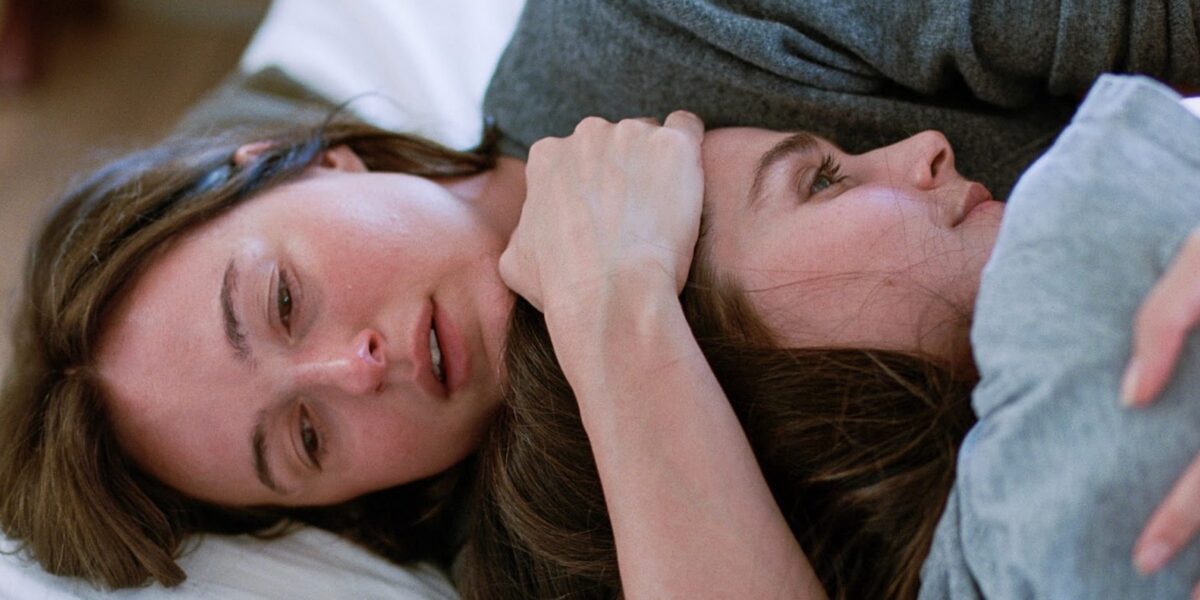
Following the sensation that was The Worst Person in the World, Danish-Norwegian director Joachim Trier returned to Cannes with Sentimental Value, a story of family and filmmaking that earned him the festival’s Grand Prix. Led by Renate Reinsve, Stellan Skarsgård, Inga Ibsdotter Lilleaas, and Elle Fanning, Luke Hicks said in his review, “Like all of Trier’s features, Sentimental Value is co-written by Eskil Vogt. Their screenplay is magnetic in how it draws viewers towards something so mundane without ever saying too little or too much. It’s a talky film; that’s not typically a compliment, but here the talking is a treat, and one that could help any viewer unpack some of their own family trauma. The talking could, in fact, go on much longer. The characters are so fleshed-out, the diction so lived-in, the backstories and present stories so engaging. Their conversations seem less like scripted scenes than real moments lucky to have been captured.”
7. Hamnet (Chloé Zhao; Nov. 27)
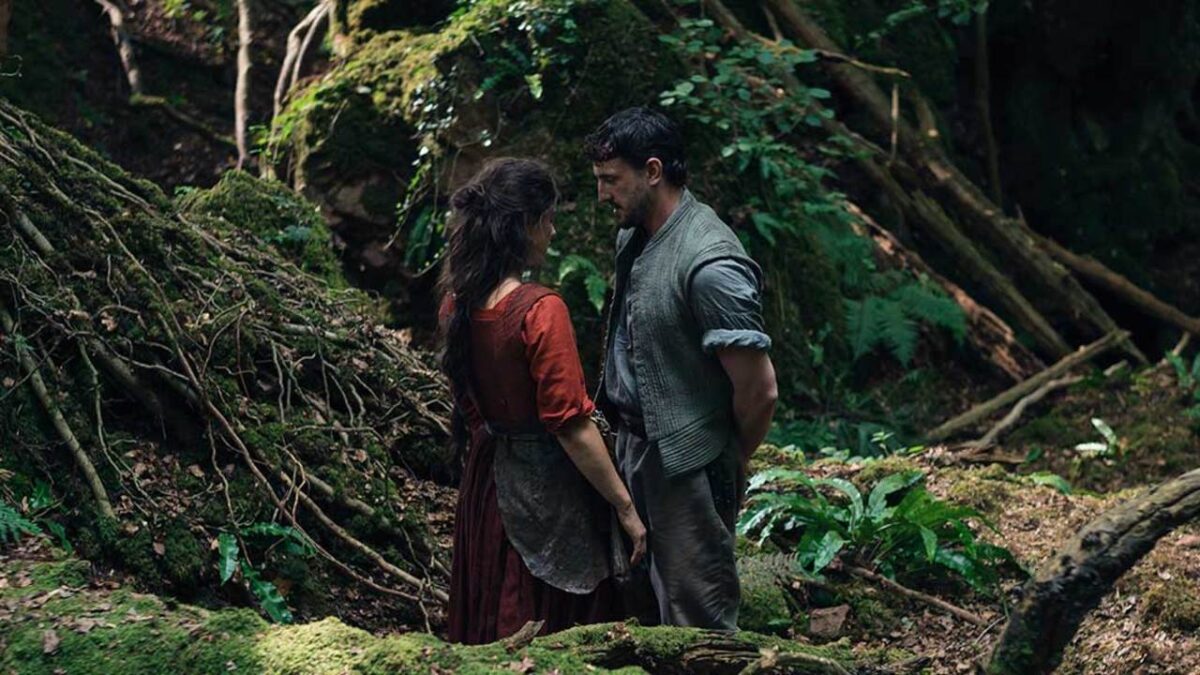
After her Marvel detour, Oscar winner Chloé Zhao returns to more dramatically compelling fare with a story, in fact, centered on the most famous dramatist of all time. Based on Maggie O’Farrell’s novel, Hamnet tells the fictional story of William Shakespeare (Paul Mescal) and his wife Agnes Shakespeare (Jessie Buckley) following the death of their 11-year-old son. Shot by cinematographer Łukasz Żal, marking his first film since The Zone of Interest, Dan Mecca said in his review from the Telluride world premiere, “Hamnet is a great work of empathy and the best film Chloé Zhao has made by quite a wide margin. Adapted from the 2020 novel by Maggie O’Farrell, who returns here as co-writer, the film serves as a lovely reminder of why art is important, how watching something can make you feel, make you understand, make you consider.”
6. Zodiac Killer Project (Charlie Shackleton; Nov. 21)
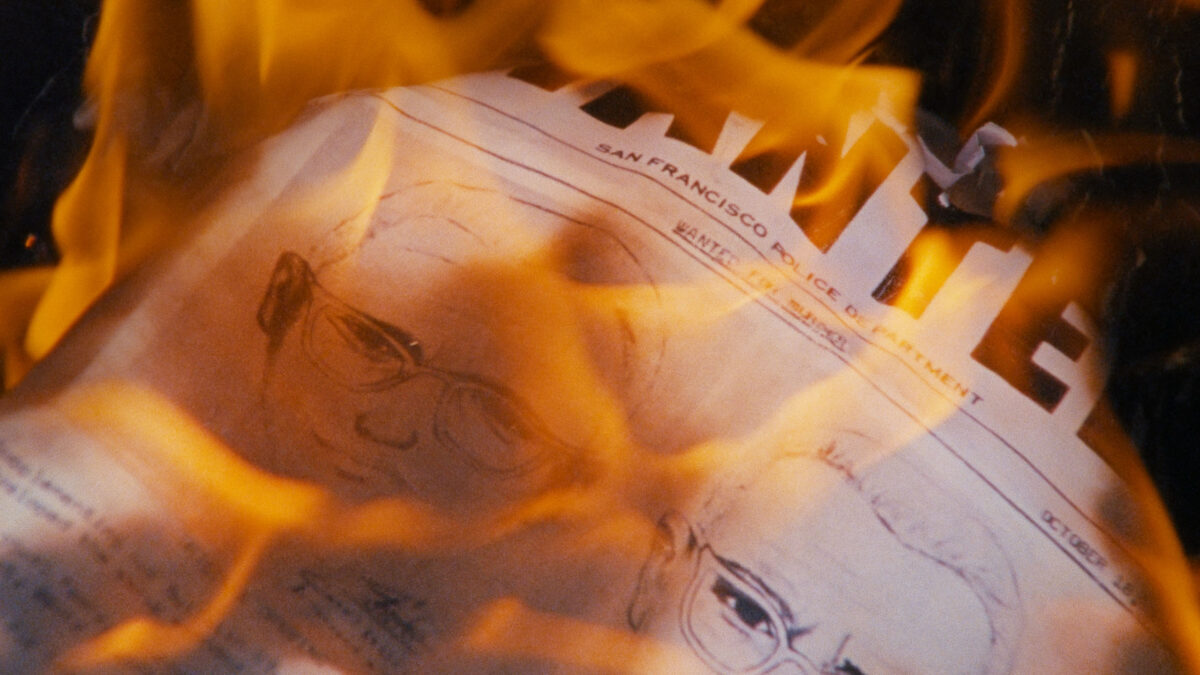
What would a feature-length director commentary look like when the film was never made? This is the slippery, fascinating conceit of Charlie Shackleton’s rather brilliant Zodiac Killer Project, which finds the director walking through his failed attempt to adapt Lyndon E. Lafferty’s book The Zodiac Killer Cover-Up: The Silenced Badge into the first major documentary on the unsolved case. What emerges, one could argue, is even more intellectually stimulating than the original intentions: a sui generis, often humorous stream-of-consciousness journey highlighting the ever-mounting mass of repeated cliches of various true-crime documentaries and series. Instead of a simple hit piece, however, Shackleton investigates why such familiarity often works on the viewer while ensuring you’ll never watch such a program the same way again. Continue reading my full review.
5. Put Your Soul On Your Hand and Walk (Sepideh Farsi; Nov. 5)

One of the most heartbreaking documentaries of the year, Sepideh Farsi’s Put Your Soul On Your Hand and Walk premiered at Cannes just weeks after the Israeli occupation murdered the film’s subject, 25-year-old Palestinian photojournalist and poet Fatma Hassona. Constructed through passages of the director speaking with Hassona through FaceTime conversations, we get a glimpse at the day-to-day life under siege, both a powerful testament of living through terror and a damning cry for the Israeli government to stop destroying innocent lives.
4. Train Dreams (Clint Bentley; Nov. 7 in theaters and Nov. 21 on Netflix)
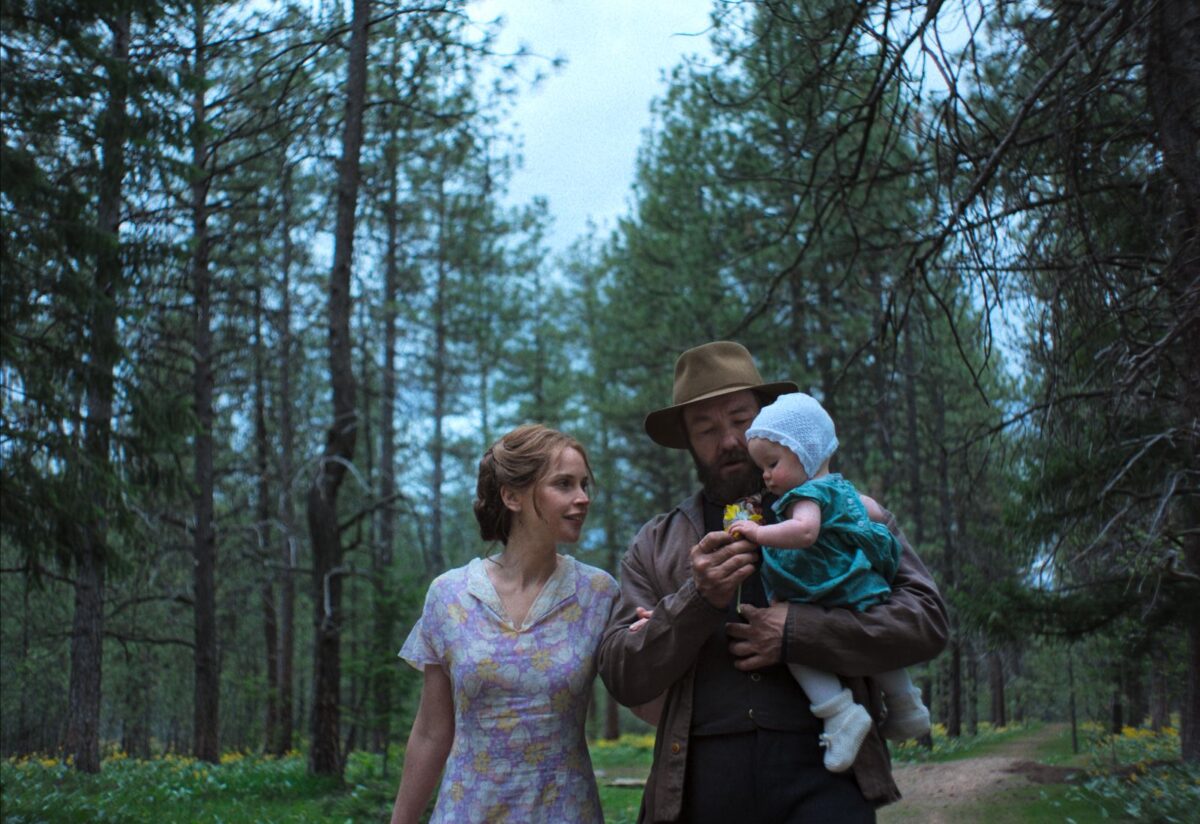
One of the year’s most beautiful, aching films is Clint Bentley’s Train Dreams, a Denis Johnson adaptation that premiered at Sundance and features Joel Edgerton, Felicity Jones, Nathaniel Arcand, Clifton Collins Jr., John Diehl, Paul Schneider, Kerry Condon, William H. Macy, and narration by Will Patton. Dan Mecca in his Sundance review, “There is a moment in Train Dreams, directed by Clint Bentley, where a tree gracefully falls to the earth, surrounded by lush green. Particles explode from the impact, the sunlight illuminating these small, insignificant specs. As the frame holds for an extra few seconds, these particles gleam as beautiful as anything else in the image. It’s a powerful exclamation that underlines the larger theme of the film: there are wonders both big and small. Tragedy, too, and who will remember any of it? And, perhaps more importantly, does it matter if anybody does?”
3. Rebuilding (Max Walker-Silverman; Nov. 14)
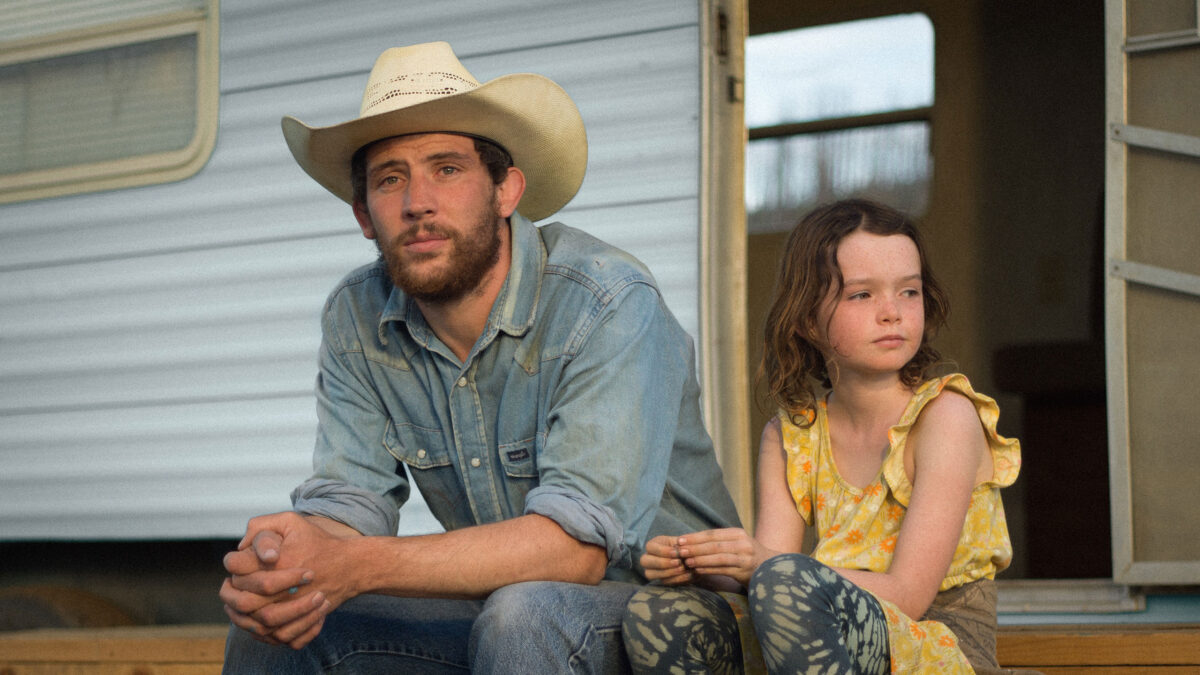
Carrying through with the patient lyricism of his impressive debut A Love Song, Max Walker-Silverman has followed it up with the equally tender drama Rebuilding, which premiered at the Sundance Film Festival earlier this year and will now arrive this month. Kent M. Wilhelm said in his Sundance review, “We can all feel lonely. Even if we’re constantly surrounded by people, we can find ourselves detached or isolated––lost in our own minds. For some, that feeling is brought on by devastation. The kind that arrives out of nowhere, takes everything, and leaves rubble. Many of us see it in the news, think “how awful,” maybe donate some money, but chalk it up to the indifference of fate and move on. In Rebuilding, Max Walker-Silverman considers if loss and destruction are part of life, then healing and rebirth must be, too.”
2. The Secret Agent (Kleber Mendonça Filho; Nov. 26)
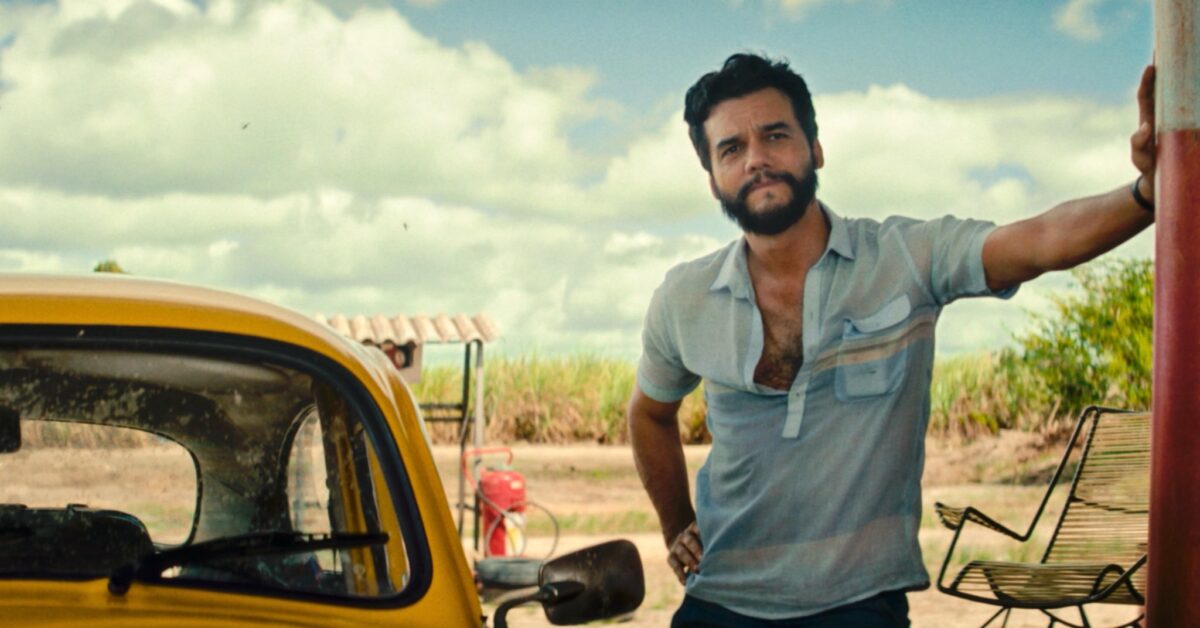
Returning after Bacurau and Pictures of Ghosts, Kleber Mendonça Filho has garnered the most acclaim of his career thus far with the thrilling political drama The Secret Agent. As Leonardo Goi said in his Cannes review, “Mendonça Filho’s gaze is far more receptive to the surreal, and his cinephilia winds up shaping the film’s style. Photographed by Evgenia Alexandrova in Panavision and rife with vintage wipe edits, split-diopter shots, and needledrops, The Secret Agent doesn’t just exist in conversation with the genre films from the decade in which most of it unfurls; it also testifies, time and again, to the director’s unwavering belief in cinema’s capacity to disquiet and mesmerize.”
1. BLKNWS: Terms & Conditions (Kahlil Joseph; Nov. 28)
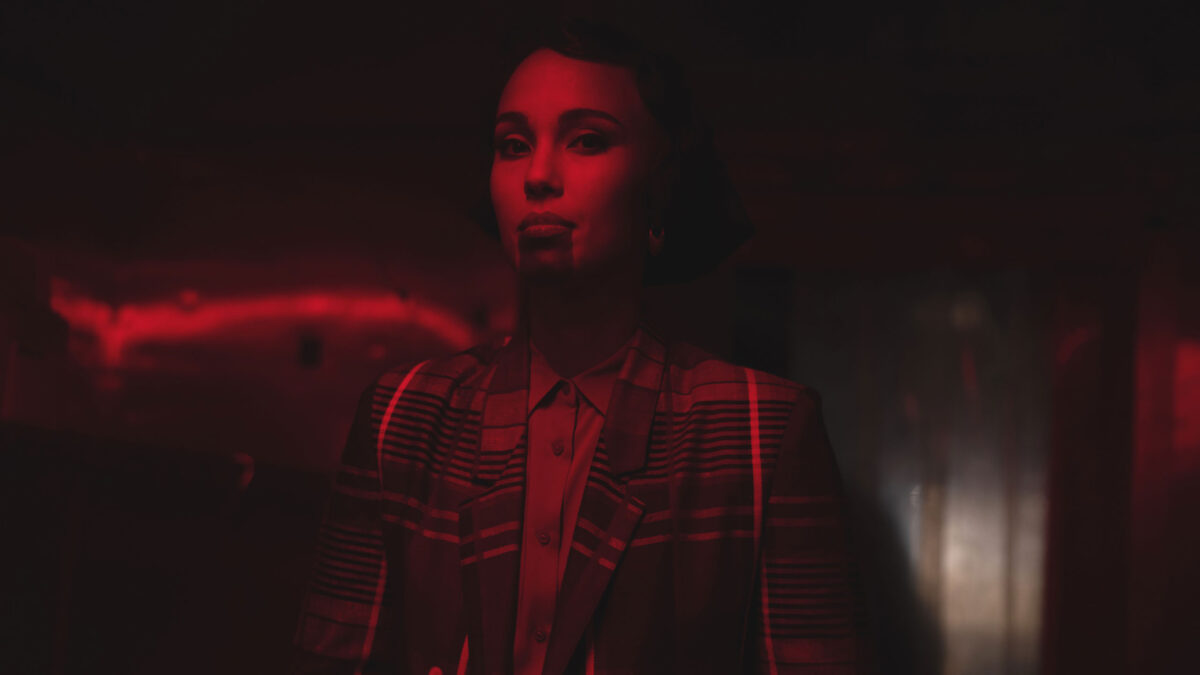
Celebrating and condensing centuries of Black history that would take more than a few lifetimes for any scholar to thoroughly ascertain in totality, Kahlil Joseph’s BLKNWS: Terms & Conditions eschews dryly academy ethnographic study to deliver a kaleidoscopic, vigorous, engrossing journey. Utilizing Henry Louis Gates and Anthony Appiah’s W. E. B. Du Bois-inspired “Africana: The Encyclopedia of the African and African American Experience”––the latest edition of which is nearly 4,000 pages––as its foundation, with page numbers presented throughout its plethora of references, the viewing experience is less daunting than one imagines the filmmaking process surely must have proved. Converging and clashing seemingly thousands of pieces of media to thought-provoking effect, this is a directorial debut that’s overwhelming in its rapid pace while also acting as a generous invitation to further examine any one of its sprawling tendrils of past, present, and future Black history. Continue reading my full review.
More Films to See