
It’s time for our first column of 2026, recommending the best in new filmmaking books, and there is no better way to begin than with a new book exploring the heyday of three iconic filmmakers.
The Last Kings of Hollywood: Coppola, Lucas, Spielberg — and the Battle for the Soul of American Cinema by Paul Fischer (Celadon Books)
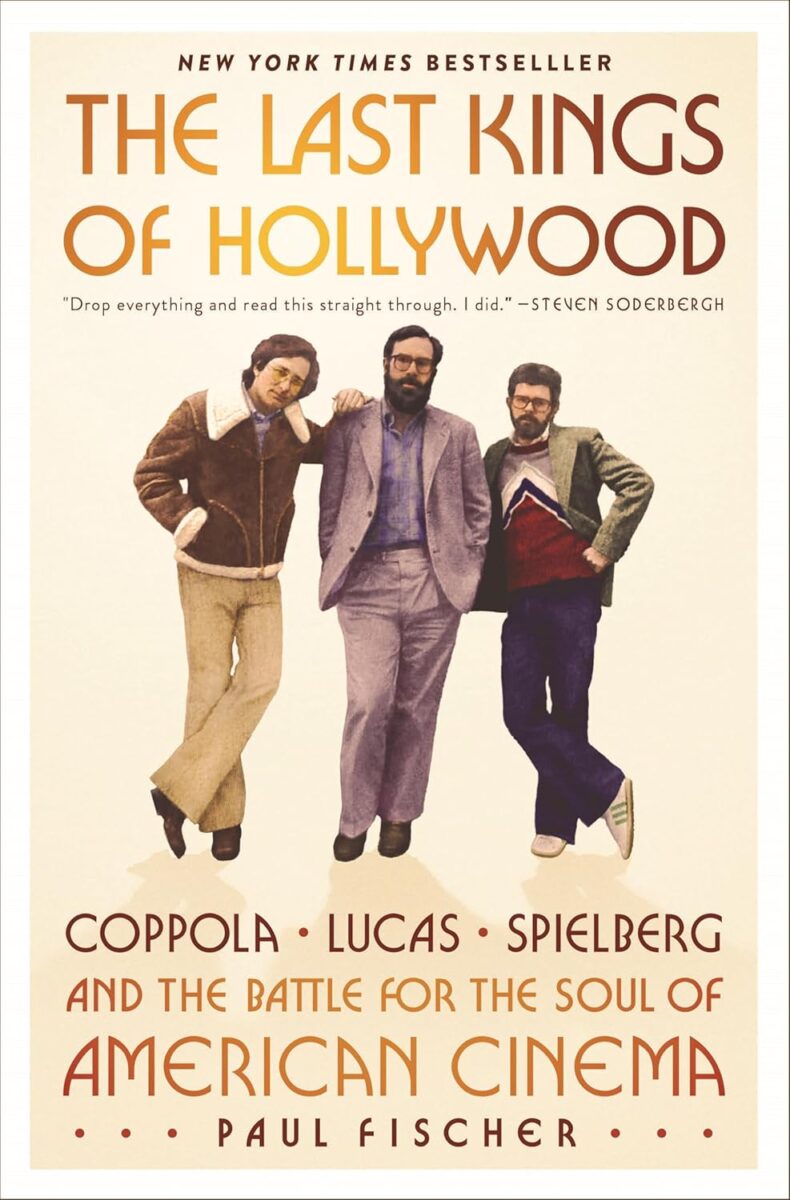
Post-Easy Riders, Raging Bulls, Is there more to say about the 1970s and 80s work of Francis Ford Coppola, George Lucas, and Steven Spielberg? Author Paul Fischer says yes, and The Last Kings of Hollywood proves he’s correct. The greatest hits are here, of course—Lucas and Coppola meeting on the set of Finian’s Rainbow, Spielberg’s tumultuous Jaws experience, the zeitgeist-altering success of The Godfather and Star Wars. But there are fresh moments that resonate profoundly. Example: Lucas sitting down with Terry Semel and John Calley at Warner Bros. to help raise funds for Paul Schrader’s Mishima. Warners, of course, was the studio Lucas blamed for the failure of THX-1138. “It wasn’t about his film; it was a question of respect and an exercise in saving face. George wanted Warner Bros. to sign a check, for no other reason than his asking.” The check was signed; as Fischer writes, “[i]t never felt like business, with George; it was always personal.” That’s an apt word choice, as Fischer succeeds in making the story of these three titans feel personal.
Tilda Swinton: Ongoing by Tilda Swinton (Rizzoli)

Most mesmerizing cover in this column goes to Tilda Swinton: Ongoing—and how could it not? It’s a black and white shot of the back of a head which could belong to no one else but our Tilda Swinton. This breathtaking release from Rizzoli is adorned with stunning photographs, stills, and posters (nothing tops the poster for Derek Jarman’s The Last of England), and packed with conversations between Swinton and the likes of Luca Guadagnino, Apichatpong Weerasethakul, Joanna Hogg, and Pedro Almodóvar. My favorite moment comes from her chat with Guadagnino, in which the duo propose curating a series of films about America. “Yes, I propose Idiocracy [2006] by Mike Judge. I love that film, but it’s no longer a satire, it’s like a documentary, what with the former president of World Wrestling Entertainment and Gatorade coming out of the taps.” It’s a treat to page through Ongoing, and to read the words of arguably our greatest actor.
Welcome to the Family: The Explosive Story Behind Fast & Furious, the Blockbusters that Supercharged the World by Barry Hertz (Grand Central Publishing)
As his pithy X posts demonstrate, Globe and Mail critic Barry Hertz was the perfect choice to tackle the history of the Fast & Furious saga. Even as someone who has never cared much about Dominic Toretto and company, I was riveted and entertained by Welcome to the Family. Hertz catalogs how the series moved from ho-hum action to international phenomenon, all while dealing with combustible talents (e.g., Vin Diesel and Dwayne Johnson), increasingly ludicrous action sequences, and the sudden, shocking death of a lead actor (Paul Walker). Interestingly, the book ends on something of a cliffhanger, with the saga’s ending in doubt and all eyes on Vin. “Across ten films and a quarter century, Diesel made the world believe that a car could fly,” Hertz writes. “But how long could he keep it up there, suspended in air? Every road comes to an end, and every driver eventually hits the brakes — or dies trying.”
John Williams: A Composer’s Life by Tim Greiving (Oxford University Press)
On February 8, composer John Williams celebrated his 94th birthday. Wonderful news, that, and made even better when remembering that Steven Spielberg’s upcoming Disclosure Day will feature a new Williams score. The timing of the release of Tim Greiving’s John Williams: A Composer’s Life, then, could not be better. This is a mighty book—nearly 600 pages—befitting the life of a man who somehow dreamed up the music of Jaws, E.T. the Extra Terrestrial, and the Star Wars, Indiana Jones, and Harry Potter series. What makes A Composer’s Life so noteworthy is its focus not just on those aforementioned scores but also on his music for films like Empire of the Sun and JFK. (Oliver Stone tells Greiving that he wanted Williams because his “music came to stand for the American culture and national pride.” Above all else, A Composer’s Life reminds us not take John Williams for granted.
Quick hits:
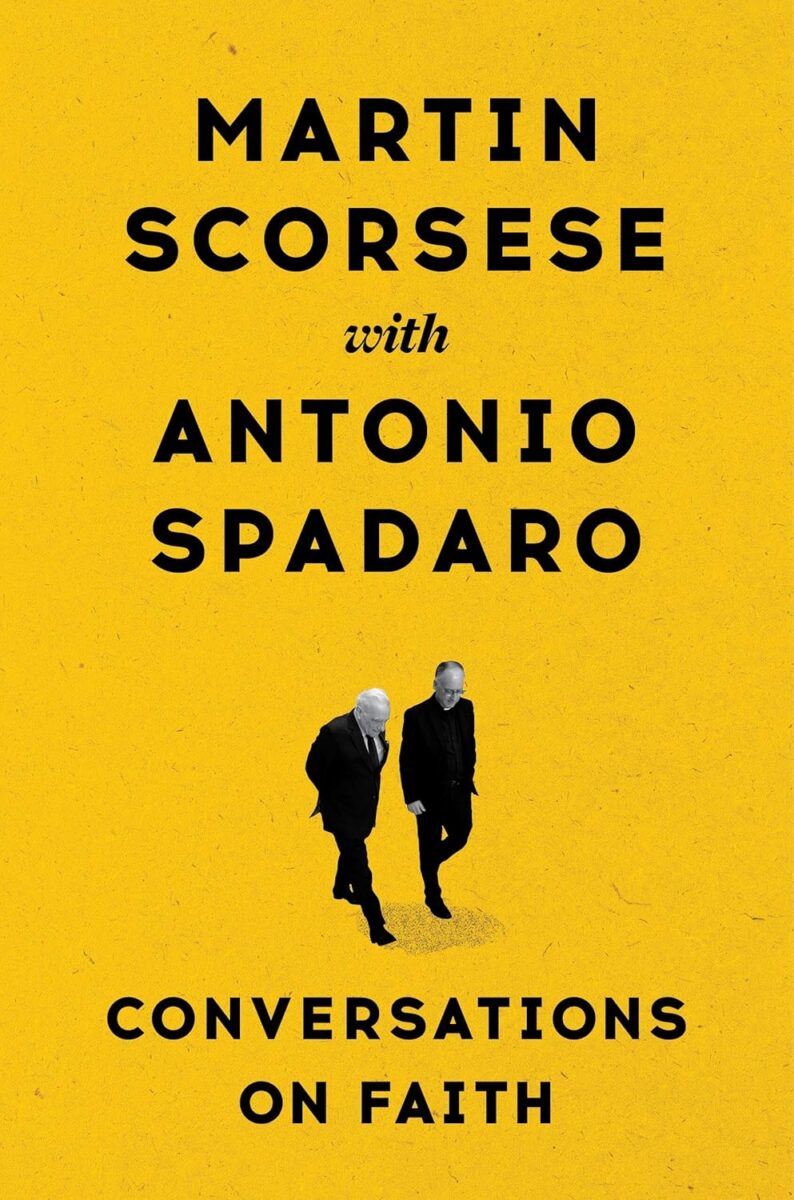
Two individuals with key roles in The Last Kings of Hollywood are Eleanor Coppola and Martin Scorsese. The former sadly passed away in 2024. Her final book, Two of Me: Notes on Living and Leaving (A24), rivals her great Notes on the Making of Apocalypse Now and Notes on a Life. In Living and Leaving she ponders and confronts her cancer diagnosis with bravery and even curiosity. And throughout, she asks tough questions about her life and marriage. Consider: “How much of my life has been in reaction to the force field of emotion that surrounds Francis?” In Conversations on Faith (Grand Central Publishing), Scorsese and Italian Jesuit, theologian, and essayist Antonio Spadaro discuss faith, art, and doubt as only Scorsese can. Most notable is the discussion of Silence; as Scorsese states, “I look back and I see it all coming together in my memory as a kind of pilgrimage—that’s the way it felt. It’s amazing to me, to have received the grace to be able to make the film at that point in my life.”
This column has often covered the works of Scott Ryan, including his essential efforts on David Lynch’s Lost Highway and Twin Peaks: Fire Walk with Me. Twin Peaks: Through the Red Curtain (BearManor Media) is a compilation of Ryan’s interviews with key Peaks folks like Kyle MacLachlan, Sheryl Lee, Ray Wise, Mark Frost, Jennifer Lynch, and Sabrina Sutherland.
Lynch, and Twin Peaks: The Return, are among the works covered in Quantum Screens by Martha P. Nochimson (University of Texas Press); the humorous front cover features the unforgettable sight of Lynch as Gordon Cole seated in his office, in front of a black-and-white photo of a nuclear mushroom cloud. The author’s analysis of episodes 17 and 18 of The Return, in particular, is riveting. The book also covers films like The Tree of Life and BlacKkKlansman, and TV series such as The OA.
The ongoing Iconic Filmmakers Series from Greenfinch continues to entertain; the latest handy career overviews feature Sofia Coppola, Christopher Nolan, James Cameron, and Tim Burton.
Back to another iconic Coppola; Staying Gold: The Oral History of The Outsiders by Danny Boy and Jimmie Tramel (Viking Books) covers the original novel by S.E. Hinton, FFC’s movie adaptation, and even the opening of The Outsiders House Museum in 2019. There are some great quotes about the superstardom that followed Tom Cruise’s performance in the film; Risky Business was up next for the star.
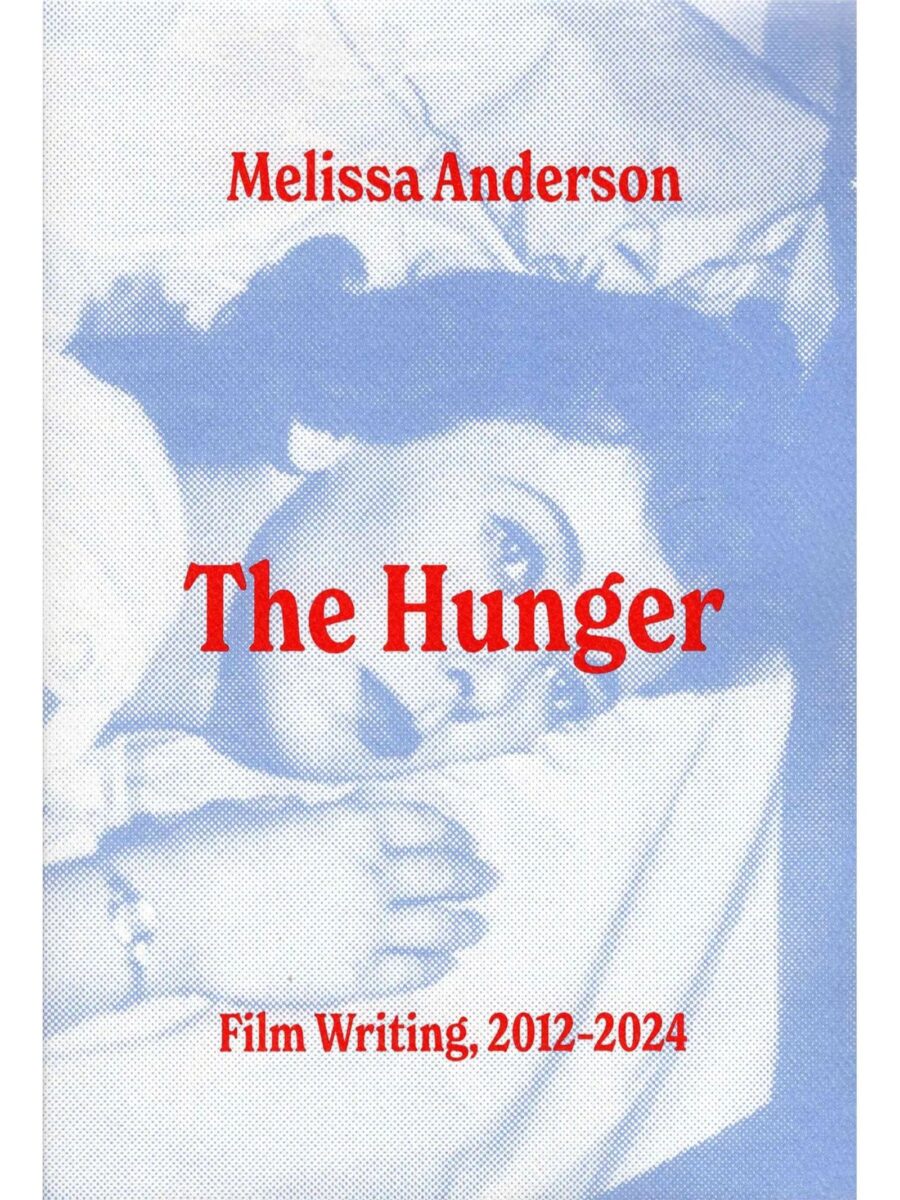
The Hunger: Film Writing, 2012-2024 compiles the work of film critic Melissa Anderson (Film Desk Books), and cements her status as one of the world’s foremost analysts of cinema. A favorite of mine is Anderson’s takedown of Ken Russell’s Women in Love, which “features Alan Bates and Oliver Reed, both nude and sweat-slicked, their dongs jouncing, wrestling in front of a roaring fire … The lusty grapple lasts three minutes and feels like 30.”
Joan Crawford: A Woman’s Face by Scott Eyman (Simon & Schuster) is a remarkably insightful study of the actor whose career included work with everyone from Clark Gable to Steven Spielberg, and whose personal life continues to raise eyebrows. As Eyman writes, “she embodied all the contradictory facets of the human condition.”
Jane Birkin: Icon of Style by Sophie Gachet (Harry N. Abrams) is an elegant, photo-heavy tribute to the stunning “mix of French nonchalance and British cool.” The book is divided into chapters focusing on key elements of Birkin’s style, including “The Jeans,” “The Tank Top,” and, of course, “The Birkin Bag.” And yes, there is plenty of Serge here, too.
The memoir Anthony Hopkins: We Did OK, Kid (S&S/Summit Books) offers some extraordinary moments, including an analysis of the inspirations for Hopkins’ performance as Hannibal Lecter. One key influence? Bram Stoker’s Dracula: “In the book, the protagonist Jonathan Harker nicks himself with a razor and senses Dracula’s rapt attention. The sounds I imagined Dracula made in that moment, thirsting for Harker’s blood, was a very particular combination of hissing and slurping. That’s where I got the sound I made with my lips as Hannibal.” For more, listen to our recent deep dive into Hopkins’ career on The B-Side.
Hopkins has had an, ahem, complex personal life, and so did the late Sam Shepard. His work as a playwright and actor is the focus of Coyote: The Dramatic Lives of Sam Shepard by Robert M. Dowling (Scribner), but there is plenty here about his relationships with women like Patti Smith and Jessica Lange, too. Coyote leaves the reader feeling quite sad, but isn’t that in keeping with his greatest plays?
Lastly, several new behind-the-scenes coffee table books warrant a mention. Xavier “X” Atencio: The Legacy of An Artist, Imagineer, and Disney Legend by Tori Atencio McCullough, Kelsey McCullough and Bobbie Lucas (Disney Editions Deluxe) highlights the life and art of one of Disney’s key “Imagineers.” Marvel Studios’ The Infinity Saga — Spider-Man: Homecoming — The Art of the Movie and Marvel Studios’ The Infinity Saga — Thor: Ragnarok — The Art of the Movie, both by Eleni Roussos (Titan Books), continue the series of lovely art books exploring the Infinity Saga. Superman: The Art and Making of the Film by James Field (Abrams) includes some fascinating glimpses at the designs of locations in James Gunn’s film, including the breathtaking Fortress of Solitude. And The Toxic Avenger: The Art and Making of the Movie by Dan Jolin (Titan Books) is an enjoyably goopy study of an enjoyable goopy future cult classic.
New to Blu-ray and 4K:
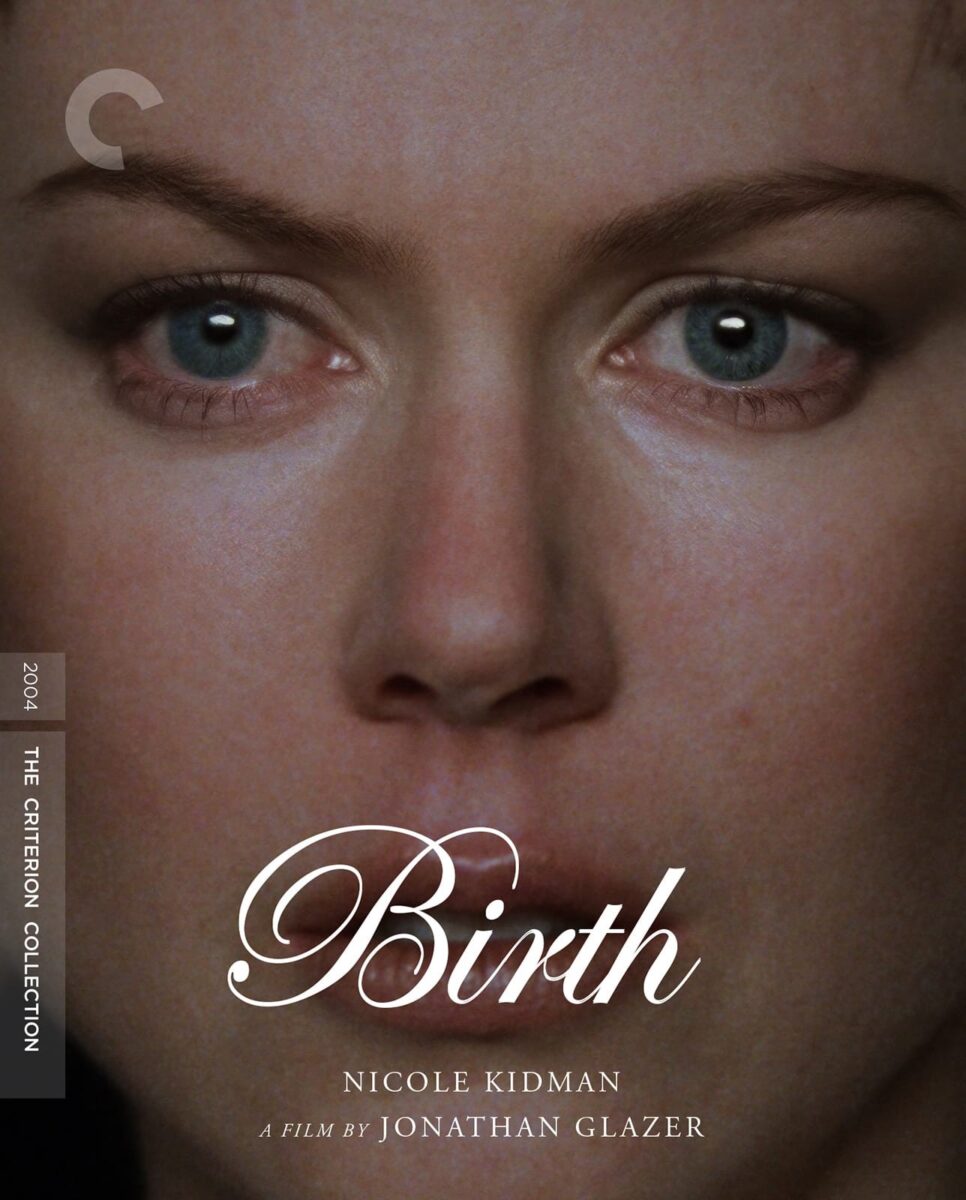
We’re now a few months into 2026, so let’s stop worrying about 2025 releases and instead dive into some recent Blu-rays and 4Ks of note. I’m blown away that Criterion released one of my childhood faves, Tim Burton’s Pee-Wee’s Big Adventure; highlights of the Paul Reubens starrer include a new interview with Burton and Richard Ayoade, as well as an essay by podcast host and culture critic Jesse Thorn. More from Criterion: Powell and Pressburger’s I Know Where I’m Going has never looked better than it does in this new 4K digital restoration by the BFI National Archive and the Film Foundation, supervised by Martin Scorsese and Thelma Schoonmaker. Jonathan Glazer’s Birth was ludicrously misunderstood upon release but is now rightly celebrated; the standout feature is a new documentary on the making of the film. Jim Jarmusch’s existential Western, Dead Man, finally makes the jump to 4K, and like the original Blu-ray Criterion edition includes essays by Amy Taubin and music journalist Ben Ratliff. And one of the Coen Brothers’ most exhilaratingly dour films, The Man Who Wasn’t There, is ripe for rediscovery. This long-awaited Criterion release features an essay by novelist Laura Lippman
Lastly, a trio of Warner Home Entertainment releases qualify as must-owns. Paul Thomas Anderson’s One Battle After Another and Boogie Nights are, of course, among his greatest creations. The latter’s special features include two American Cinematheque panels, one with Anderson and another in which the director is joined by John C. Reilly. And with each passing day, Alan J. Pakula’s All the President’s Men seems more relevant. This 4K upgrade adds two features, “All the President’s Men: The Film and its Influence” and “Woodward and Bernstein: A Journalism Masterclass.” But nothing tops the film itself.