
Prismatic Ground is a film festival I have been attending in-person for nearly three years, and while my streak of such attendance unfortunately ended this year, I have continued to watch and cover since its inaugural edition in 2021. Prismatic Ground remains so special because it maintains the tenets of its conception, which founder and director Inney Prakash explained as an attempt to fill the void of festivals dedicated to experimental cinema and a festival that doesn’t treat the COVID pandemic’s shift to online-accessible film-viewing as merely a “stopgap,” but an actual “effort to rethink the experience” of a festival.
The radical shift and change to the festival circuit for both cinema viewers and filmmakers—which includes actually paying the filmmakers for their work to be presented and removing geo-blocking so as many people as possible who can’t attend in-person screenings can still see some films online from anywhere—ties nicely to this year’s closing film, Isiah Medina’s Gangsterism. Always a self-assured and divisive artist, especially post-Inventing the Future, Medina, in his latest, is both his most combative and self-reflexive. Gangsterism is combative for how it seems to deconstruct the criticisms leveled at Medina’s previous films, such as their supposed obtuseness or the heavily academic framework for theorizing things like theft of art and liberation of technology that seems removed from material reality. Its self-reflection emerges from a major topic of discussion: that the central character, Clem, considers it insulting that potential financiers find his movies difficult to understand. Medina’s style is as distinct as ever. The patterns of repetition, sound, and image interrupting each other are contrasted through drawn-out sequences of characters forming arguments on the current economy of cinema, the financing of being a filmmaker, the social responsibilities and roles of academia, and, central to its plot, the proliferation of film via digital piracy.
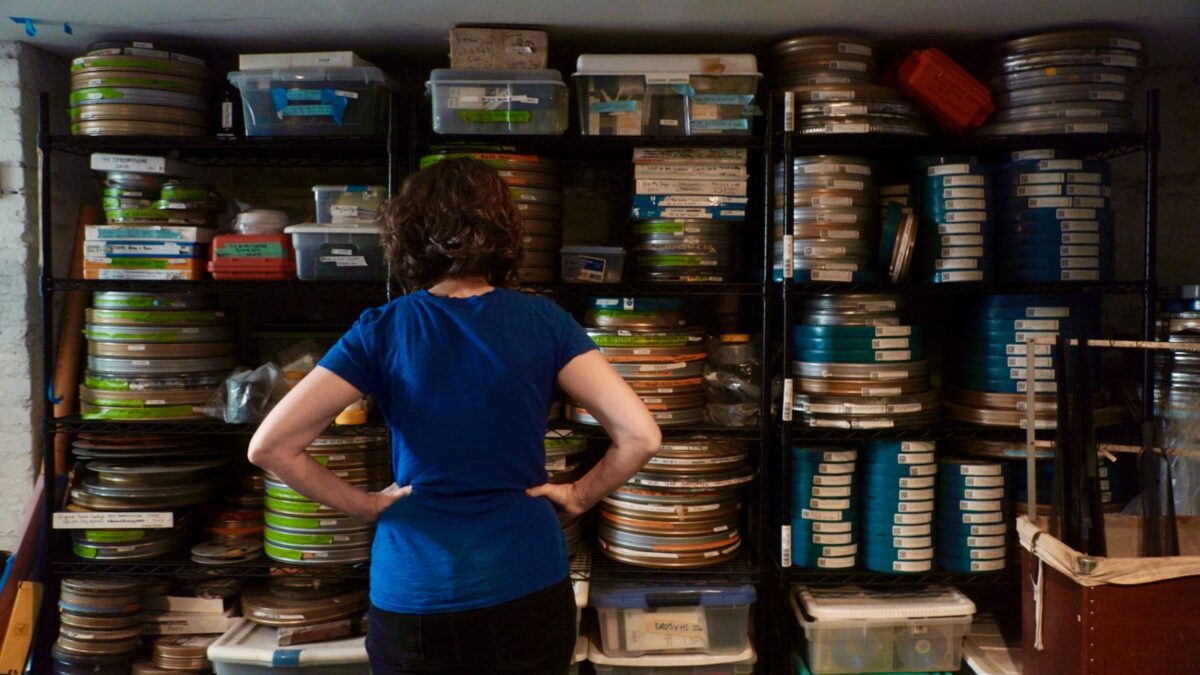
Every Contact Leaves a Trace
The festival gives out only one prize per year: the Ground Glass prize, a career-achievement award. In its inaugural year, it went to Brooklyn-based artist Lynne Sachs, and this year it went to Japanese experimental artist Kohei Ando. Sachs also has a film this year, Every Contact Leaves a Trace, which pairs well with Ando’s work. Sachs’ film is a self-insert documentary where the filmmaker looks back to remember and re-encounter people with whom she shared and kept business cards. These encounters vary from friendly to awkward to uncomfortable, both in the memories they bring back and the inherent ideas that shoving a camera into someone’s face might elicit. Considerations of “performance,” “simulation,” and “vulnerability” seep into the forefront through the lens. Sachs considers aloud, while shuffling through the business cards, which of these people would be welcoming to meeting her again. A German festival director named Angela, whom Sachs met 30 years ago, recounts post-war Germany and the history of the Holocaust in people’s collective memory as another genocide in Gaza is unfolding today. Experimental filmmaker Lawrence Brose speaks about the persecution he faced as a gay artist while scenes from his film play in montage over conversation.
Like Sachs’ film, Kohei Ando’s cinema is very much tussling with ideas of time, memory, and connection to people. The most direct work that mirrors Sachs is the fun short My Friends in My Address Book, which goes through a montage of Ando’s friends smiling for the camera and holding up pieces of paper with their names. Other shorts, like his Passing Train series, exhibit time as something continuous and through multiple angles—intimate and unrelenting rather than something that creates distance. There is a sense of sentimentality that warmly lingers throughout these movies—especially On the Far Side of Twilight, which uses a saccharine piano score and cute narration that highlights his memories from childhood to old age. The image composition is immaculate, distinct in its bright coloration, and imaginative for how it breaks the fourth wall of the film plane, burning it, cutting it out, and transforming it into various shapes while moving it at different speeds.
It’s worth highlighting a number of shorts that bring forth examination and consideration for where experimental cinema is today. Rajee Samarasinghe’s A Flower Falling Back Into the Earth comprises excerpts and outtakes from the filmmaker’s remarkable feature documentary Your Touch Makes Others Invisible on missing children in Sri Lanka. The recontextualization of these outtakes from interviews—many of which feature the imperfections of sound, framing, and focus—confront us with how the difficult and traumatic experiences of real people cannot be decontextualized from the filmmaking process. Eislow Johnson’s Injured? is the most “action-packed” and funny of the shorts—a rapid-fire montage of a drive on a highway focusing on the litany of billboards for law firms for car accidents. It is ironic in its clear connection between America’s obsession with cars and suing people, but also fashioned as a sort of intense action film, mimicking the volume and ferocity of one of cinema’s great entertainments: the high-speed chase.
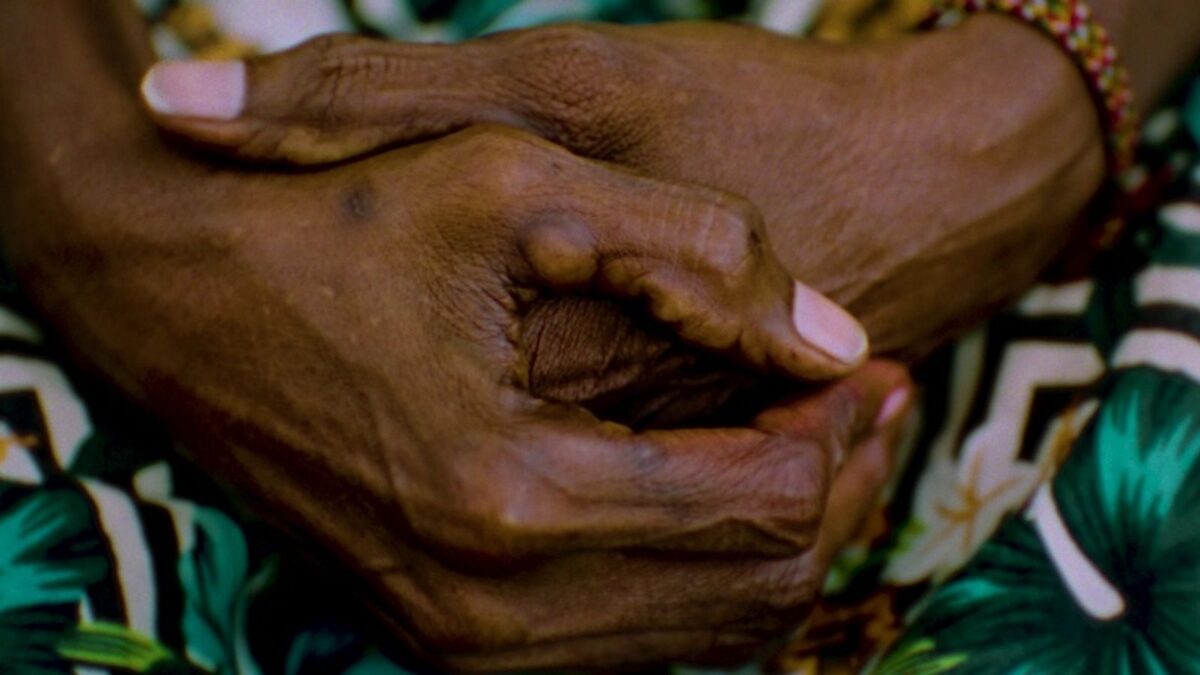
A Flower Falling Back Into the Earth
Yusuf Demiror’s Archura Leaves the City Forever is a beautiful, hypnotic fable. Its warm lighting and cold urban exteriors, mixed with fantastical costumes and lush natural highlights, make for a transportive work reminiscent of a mix between Jim Jarmusch’s Permanent Vacation and Nobuhiko Obayashi’s Emotion. Michael Barwise’s That Sanity Be Kept is a melancholy and nostalgic film, but also terrifyingly contemporary in its depiction of surveillance and the destruction of privacy as government agencies track the movements, faces, and clothing of various young people during a ceasefire amidst The Troubles.
Finally, three phenomenal and rare treasures by Iraqi filmmaker Parine Jaddo––Atash, Aisha, and Teyh––all highlight the artist’s conflicts (or false conflicts) of sexuality with religion, and modern discourses of fiction and the roles of men and women in Iraqi society in a rapidly westernizing world. All this occurs amid constant reminders of bombs and how post-war existence for the Middle East is always a pre-war state.
Primastic Ground 2026 takes place April 29-May 3 in venues across NYC.