
Jane Alexander has one of those careers that seems impossible. Four Academy Award nominations in fourteen years. A Tony Award in 1969 for the Howard Sackler play The Great White Hope. She wrote a book (Wild Things, Wild Places: Adventurous Tales of Wildlife and Conservation on Planet Earth) and she’s won two Emmys.
Criterion is releasing the Lynne Littman film Testament, starring Alexander, on March 17th, packed with director-approved Blu-Ray special edition features. This includes Littman’s superb documentaries Number Our Days and In Her Own Time. Testament, originally released theatrically in 1983, earned Jane Alexander her fourth Oscar nomination.
We were lucky enough to speak with Alexander about Testament, her eclectic and accomplished career, and her upcoming projects.
The Film Stage: Testament’s legacy is so interesting. It’s aged so incredibly well. It’s this small movie that came out of a very specific time. Do you find it lives on more than other things you’ve been a part of?
Jane Alexander: I have to say: it was a limited experience for a lot of people because they just didn’t have access to it. There were many years when I think Paramount just wasn’t releasing it after it had been out. And that was probably for good reason, because it scared a lot of people. In my mind, it’s always been there because I’ve been active in nuclear disarmament for maybe 60 years or more. I first started marching with Dr. Spock way back in the late ’50s. Dr. Spock was concerned about Strontium-90 hitting the ground from aerial testing; the cows were eating the grass and passing it to us and our babies in the milk. So that was the beginning of stopping atmospheric testing, which was good. So it’s been with me certainly as an issue, and as a film that I feel tells the story well because it’s so familial. It’s right there.
I was reading the short story [on which the movie was based] last night. It’s so sparse, right? But so effective. It’s incredible, Carol Amen’s story. Did you just build off those words? Obviously, the letters are in the movie and that’s how the story is structured. Did you take those words and build your own character while collaborating with director Lynne [Littman] to pinpoint the essential things the character is dealing with?
Well, the screenplay that John Sacret Young wrote, based on Carol Amen’s story, is really superb. He added a lot of things that weren’t in that sparse-but-dense story. I’m very glad the CD is with this movie release because it gives you a good idea of what Carol intended. Carol just kind of woke up and wrote that.
I think Lynne said this: that the movie is kind of an extension of that idea of a nightmare—you wake up and this is just happening, and there’s not really anything you can do.
Exactly. And I had experienced a recurring nightmare myself for a good ten years. It happened about six times, and it was the same thing over and over again. My husband and I had four boys between us, and they were all about the same age––young––during the ’70s when the nightmares started. The nightmare was always three of my boys and me coming out of the woods after spending a night camping. We crossed the big highway heading home, and there were thousands of people marching north from New York City. Flyers were falling out of the sky that said, “400-mile-long cloud of radiation blankets the Northeast. Do not eat shellfish. Do not eat anything on the ground.”
So the boys and I walk, and then we’re very tired. Reaching home, we rest beside a pond. They go in the water swimming and they start eating clams. And that’s my nightmare. That’s the end of it. And then, a few years later, when the Ms. Magazine story came out––Carol’s story––one of my boys was reading it. He came running up and said, “Mom, have you read this? This is your nightmare! You’ve got to do it.” And I kid you not, Daniel—a few days later, Lynne called me on the phone and said, “I have something I want you to do.”
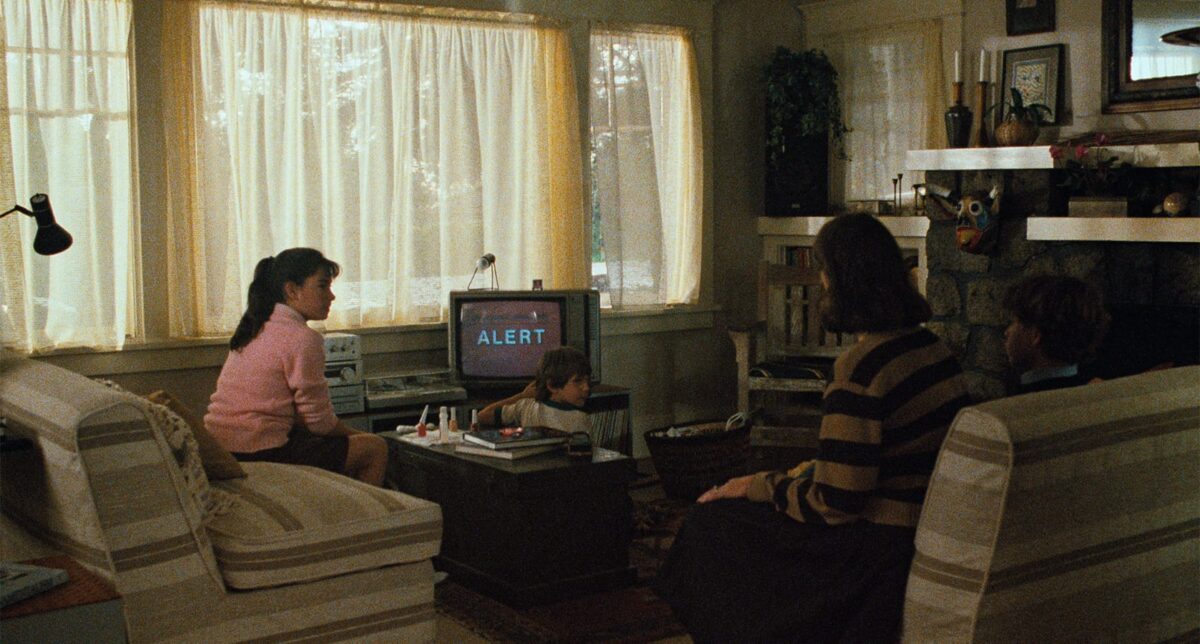
Testament
That’s wild! Had you seen Lynne’s documentary work?
Yes! Lynne and I had been at college together, though we didn’t know each other that well. I directed her once in a play; she was an actress as well. We kept up that way, knowing what each other was doing. She was doing documentaries, very good documentaries.
Great docs. Two of her more acclaimed docs are included in this Criterion release. I was watching them last night. Testament feels a bit “discovered,” almost like a documentary. The camera is fairly patient, there aren’t a lot of cuts. It’s refreshing to watch stuff like that now compared to the kinetic aesthetic of today. There’s so much you’re doing in the frame—the scene with the bedsheets, the scene where you’re looking for the bear. The camera just doesn’t go away.
Right. There was a lot of handheld work, especially during the scene looking for the bear.
How was it working with children in that way?
Those kids were extraordinary. Those three particular kids (Ross Harris, Roxana Zal, and Lukas Haas) were very mature for their age and in their thinking. They knew exactly what was happening. I overheard Lynne telling Lukas during his first scene, “Now you know your dad is not going to be coming home.” And he said, “Yeah, too bad he got nuked in San Francisco.” It was like, whoa, okay, now we know where we are.
I brought up the legacy of the movie earlier. K. Austin Collins of Vanity Fair wrote a beautiful piece in the heart of COVID celebrating Testament. It really captured its relevance. It’s a totally separate thing, but the COVID of it all is another benchmark of the movie’s relevance—the isolation, the family, and losing people in a way that you can’t really harness. When Testament was made it was the Reagan ‘80s and there was a real fear of what might happen given the Cold War…
Yes, but let’s not forget that Reagan made a good treaty (The Intermediate-Range Nuclear Forces Treaty (INF Treaty)) with [Mikhail] Gorbachev when Gorbachev became [the President of the Soviet Union] and we were going to reduce nuclear weapons which did happen. We have reduced weapons but it doesn’t matter. You just send out a few nuclear weapons and you’ve got radiation poisoning up the gazoo. And we don’t have any regulations now, you realize that? That treaty was not re-signed just recently and now we have a free-for-all for atmospheric testing which is the thing that worries me most.
And there’s one thing that is different from COVID: during COVID, we still had all the tech working. We won’t have any tech working after a nuclear event. That’s probably the first thing that will go out. And that’s why the movie is still relevant, even though it took place in the ’80s pre-cellphones. We’re still going to need batteries!
The battery stuff in the movie is fascinating. You’ve been doing theater your whole life—The Great White Hope was your breakout role on stage and then the film. I’m always curious—is there an instinctive recalibration between mediums? Does it matter? Are you performing at a smaller “octave” in front of a camera compared to the theater?
I think it’s a little bit different. It’s not smaller in front of a camera; it’s bigger on the stage. There’s certainly a difference between playing to a hundred people in an off-Broadway house as opposed to a thousand in a Broadway house. Laurence Olivier always used to say that for the theater, the eyes have got to be seen. Now, that’s not true with big musicals where you’re way up in the mezzanine and it still works because of the spectacle, but for dramatic plays and good small comedies, you really do need to connect with the eyes.
The voice is the main thing. That’s why I never really liked to have plays recorded and then aired as if they’re films—the voices don’t sound right. I won’t sign contracts for that, and the rest of the cast looks at me like, “Why are you doing that?” I say, “Wait till you see—it ain’t going to be the same as a good movie.” A good movie always has a great audio engineer working to not overdo it. But we can certainly overdo expressions. Very often when I was working on a play at night and doing movies during the day, I had to be told, “Stage hangover.” Which just meant: bring it down, bring it down.
You worked on a movie during the day and a play at night? Do you remember a specific combo?
Yeah, I do. The best combo was probably performing at the Kennedy Center in a play while shooting All the President’s Men during the day. Keep in mind, Daniel, I had a small scene. But very pivotal!
I’m going to shout out my buddy Blake [Howard]. He’s a podcaster and he had a podcast called All the President’s Minutes where he would go through the scenes of that movie. My colleague and I went on his podcast just to talk about your scene. It was an hour-long celebration of that performance. It’s a masterclass in what a great supporting performance is.
It’s interesting you bring up supporting roles because some of us were just talking about this the other day—that supporting roles are not the same anymore. Look at the size of the roles! Benicio del Toro does a wonderful job in One Battle After Another [for which he’s nominated for Best Supporting Actor this year], but that’s a large role.
I was just having this conversation as well. True supporting roles that get nominated are not common anymore. They shouldn’t all be leading roles that get nominated. It shifted a little bit.
It shifted a lot.
A lot, you’re right.
The studios oversee it.
It’s a campaign thing, right? Nobody is running one actor against another from the same movie in the same category. Here’s a question. Lynne Littman was talking about loving The Red Shoes growing up. And you were a ballet dancer—that was a first love for you?
That was! And The Red Shoes was my movie too.
Did you guys ever chat about that?
No, Lynne and I never talked about that!
You’ve got to give her a call! What a fascinating thing that you both have these “ins” with one of the greatest movies ever made and ballet. Do you remember watching The Red Shoes?
Oh god, yes. In that time, you had to go out to the theater to watch it. I remember the first time going with my girlfriend; I was very little. We walked down the hill for a 24-cent matinee in the afternoon. Then I would take myself again. I’d say, “Mom and Dad, you’ve got to see this great movie.”
Did you understand it at that young age?
I think I got the gist of it. And the whole thing with the world of ballet was incredible.
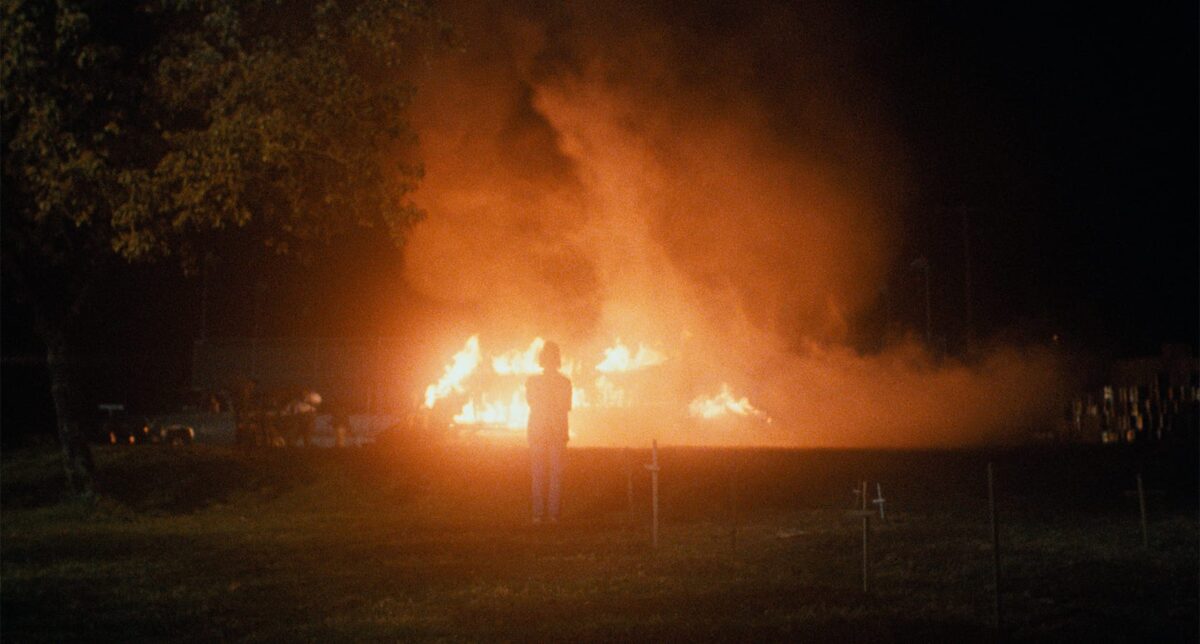
Testament
So you make Testament, a small film originally meant for PBS American Playhouse, then it gets bought by Paramount. The movie was so appreciated and it ended up getting a theatrical release and you got an Oscar nomination. Then the next year, you work on City Heat. That’s a huge movie! How weird was that? What was the difference between Burt Reynolds, Clint Eastwood, and then Testament? The budgets alone!
Well, first of all, I liked the offer. I was going to work with two of those guys! Remember, I played the assistant sort of to both of them. That was great. And I got to kiss them both!
What a gift! What I love about actors is that it’s such a fascinating career. Testament is this beautiful, small, personal thing, and then you just make this huge Richard Benjamin movie, which was supposed to be a Blake Edwards movie! Did you ever get whiplash?
No. And then I got cut out of some other big movies because they wanted to concentrate on other aspects. Like Glory, I played an abolitionist, I was the mother of Matthew Broderick. That was a huge movie. A wonderful movie. I was devastated when the director called me later and said, “I’ve got to cut you out of the whole movie because I’ve got to concentrate on the Black story.” Then the same thing happened in [Terminator Salvation]. I was so excited about it. Daniel, you’ll love this because nobody knows this story. I was supposed to end the [Skynet]. McG was the director. It wasn’t his fault that he cut me out, but Warner Brothers apparently said, “You can’t have the old lady push the button that ends the world and self-sacrifices.” I said, “That’s the whole [reason] I did the movie—that old people can self-sacrifice!” So they cut me out to a little teeny part. I’m still in there, but I was really upset about that.
I’m sorry.
Also, McG told me in the worst way. Nobody told me, and I arrived on the set and I was about to shoot that scene where I save the world and kill myself. Christian Bale is looking right across from me, and McG says, “Oh, you know, don’t you? You’re not doing it.” And Bale is looking at me like, “They didn’t fucking tell you?!”
Oh my god, wow!
Anyway, that’s a scoop nobody knows. It would have been wonderful to see an old woman do this.
I wanted to ask quickly about your book you wrote [Wild Things, Wild Places: Adventurous Tales of Wildlife and Conservation on Planet Earth] about ten years ago.
Oh god, you’re right. 2016. I’m writing another one now about my whole career.
That’s awesome. To that point: is there an underrated movie you’ve made that you would tell people to go check out?
Right now there’s a movie I just finished just before Christmas. I loved it so much. The director is now editing. It’s called Clara and Vanessa. It’s one of the favorite movies I’ve ever done. My co-star is Robert Joy. I can’t say too much about it right now, but I really loved it and I hope and pray it’s as good as I think it is.
Testament arrives on The Criterion Collection on Tuesday, March 17.