
David Lynch passed a little more than six months ago, and the world of cinema is still mourning. (Honestly, that may never end.) Let’s start with a book devoted to two of the most important elements of any Lynch creation—music and sound—followed by works from Walter Murch and Neil Jordan, new books on music, and a stack of novels made for summer reading.
Always Music In the Air: The Sounds of Twin Peaks by Scott Ryan (Tucker DS Press)
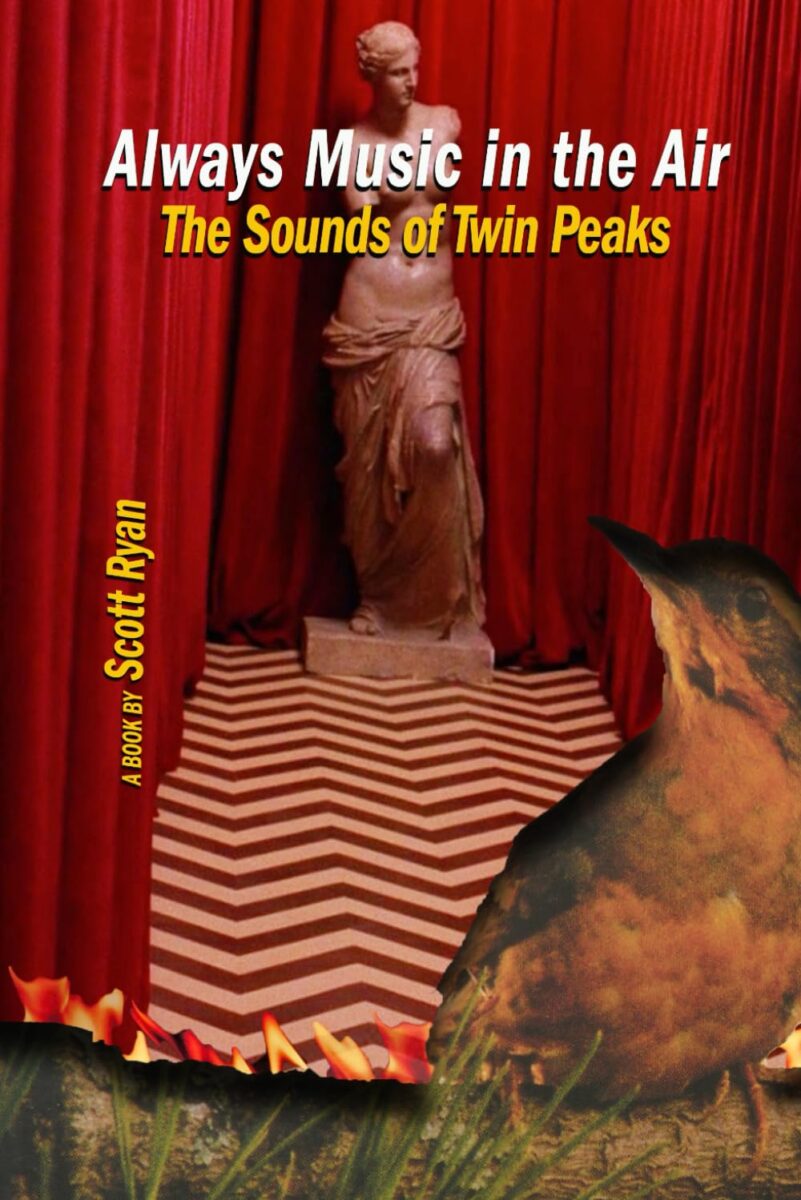
We have Scott Ryan to thank for some of the finest coverage of David Lynch’s career—namely, the Twin Peaks-dedicated Blue Rose Magazine, Fire Walk With Me: Your Laura Disappeared, and Lost Highway: The Fist of Love. Ryan’s latest, Always Music In the Air: The Sounds of Twin Peaks, is another deep dive into the works of David Lynch, this time all three seasons of Twin Peaks. Here, Ryan discusses the late, great Julee Cruise, ponders the genius of Angelo Badalamenti, and breaks down some of Peaks’ most memorable musical moments. (Yes, this includes James Hurley’s “Just You.”) This memory of the “longbox” CD artwork is priceless: “The back cover had the Red Room curtains and floor (where the zigzags are not black and white, but dark yellow and almost brown) with little pictures of key cast members displayed like a list of suspects in little boxes. This was such a helpful thing to have back in 1990. I was still learning the characters’ names. ‘Wait. Killer Bob? That’s his name? You are telling me that this is one of the greatest mysteries of all time and one of the characters is named KILLER Bob, and he turns out to be the killer?’” Ryan is, above all else, a fan, and it makes his books not just indispensable but downright joyous.
Suddenly Something Clicked: The Languages of Film Editing and Sound Design by Walter Murch (Faber & Faber)
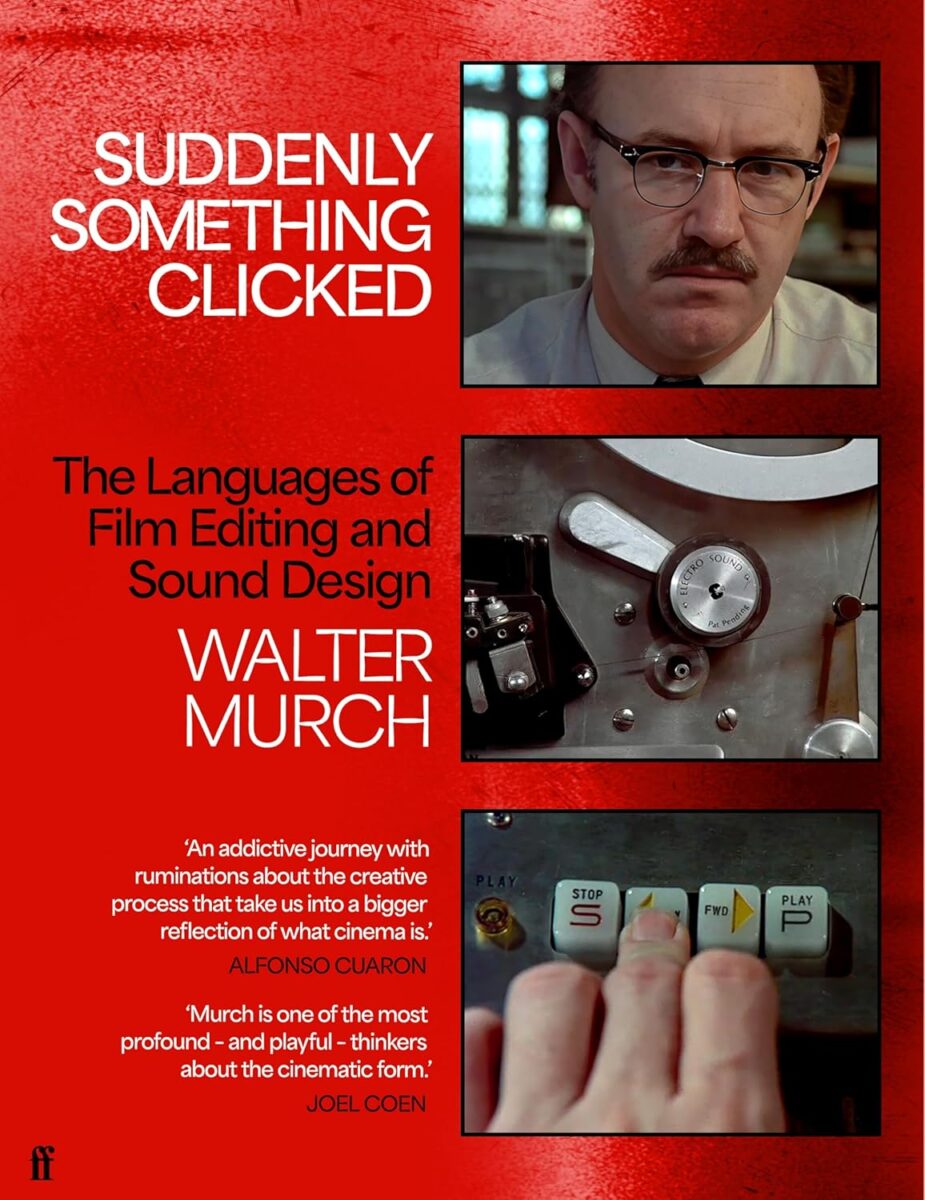
There is no one better suited to discuss film editing and sound design than Oscar-winner Walter Murch, the editor of a litany of greats: The Conversation, Apocalypse Now, The Godfather. His first book, 1992’s In the Blink of an Eye: A Perspective on Film Editing, is a classic. “Much has happened in those years,” Murch writes, “but the most significant development was the two-decades-long (1990-2010) transformation of cinema from an analogue to a digital medium. As I suggested in Blink, it is a shift whose closest analogy in the history of European art might be when oil painting began to displace fresco in the fifteenth century.” Suddenly Something Clicked goes to great lengths to not repeat details from Murch’s earlier book. Rather, it is a worthy companion. The chapters covering his work on The Conversation and the restoration of Welles’ Touch of Evil are riveting.
Ambrose Chapel: A Screenplay by Brian De Palma and Russian Poland by David Mamet (Sticking Place Books)
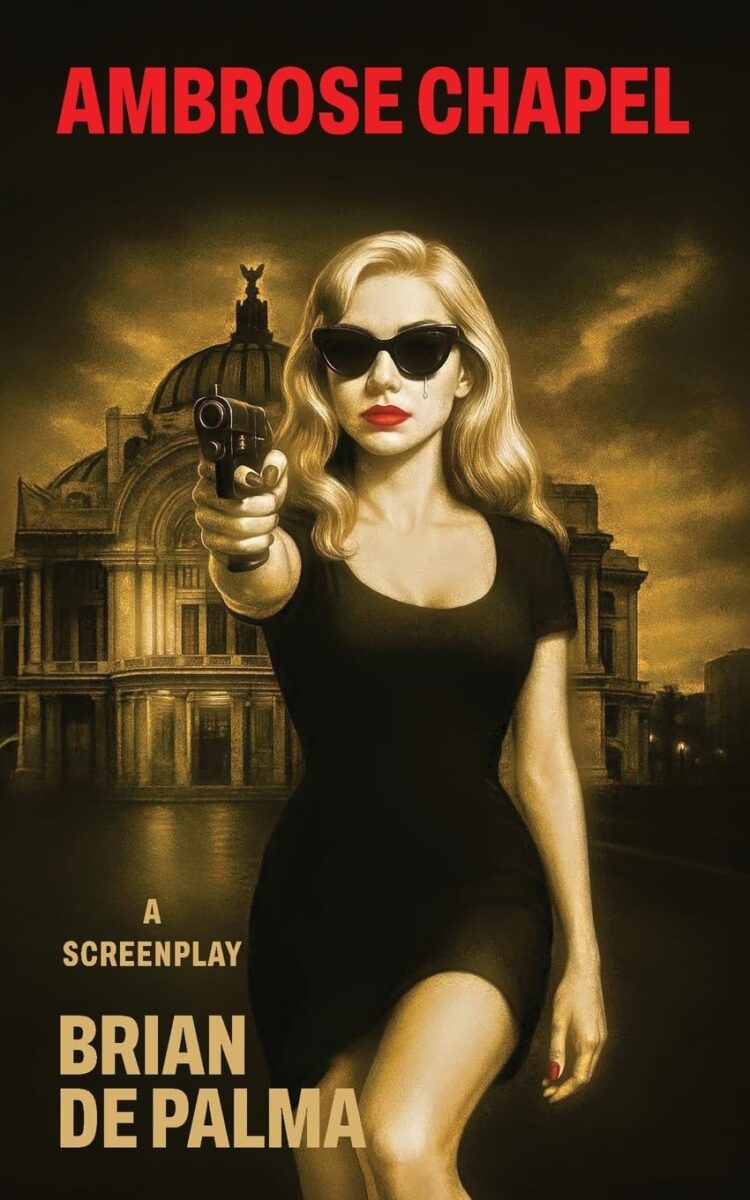
Let us give thanks for the good people at Sticking Place Books, a publishing company that has released everything from studies of Casualties of War to the poems of Abbas Kiarostami. Two of the latest releases are unreleased 1990s scripts from Brian De Palma (yay!) and David Mamet (boo—oh wait, this is a David Mamet work from three decades earlier—yay!) Russian Poland is the strange, compelling story of two Jewish World War II veterans on a mission into late 1940s Israel. De Palma’s Ambrose Chapel is the more enticing of the two scripts, and its release is, I think, very noteworthy. As James Kenney explains in his introduction, “Ambrose Chapel adopts the sleek posture of a geopolitical thriller, all international intrigue and stealthy rescues. But before we’ve even found our footing, games are underway.” Kenney says the script’s DNA is “deeply De Palma, but the tone is surprisingly giddy, even liberatory.” Actors whose names had been bandied about for starring roles include Brad Pitt, Liam Neeson, Tea Leoni, and even Madonna. What a shame Ambrose never took flight, but thank goodness we can ponder what might have been.
Amnesiac: A Memoir by Neil Jordan (Head of Zeus)
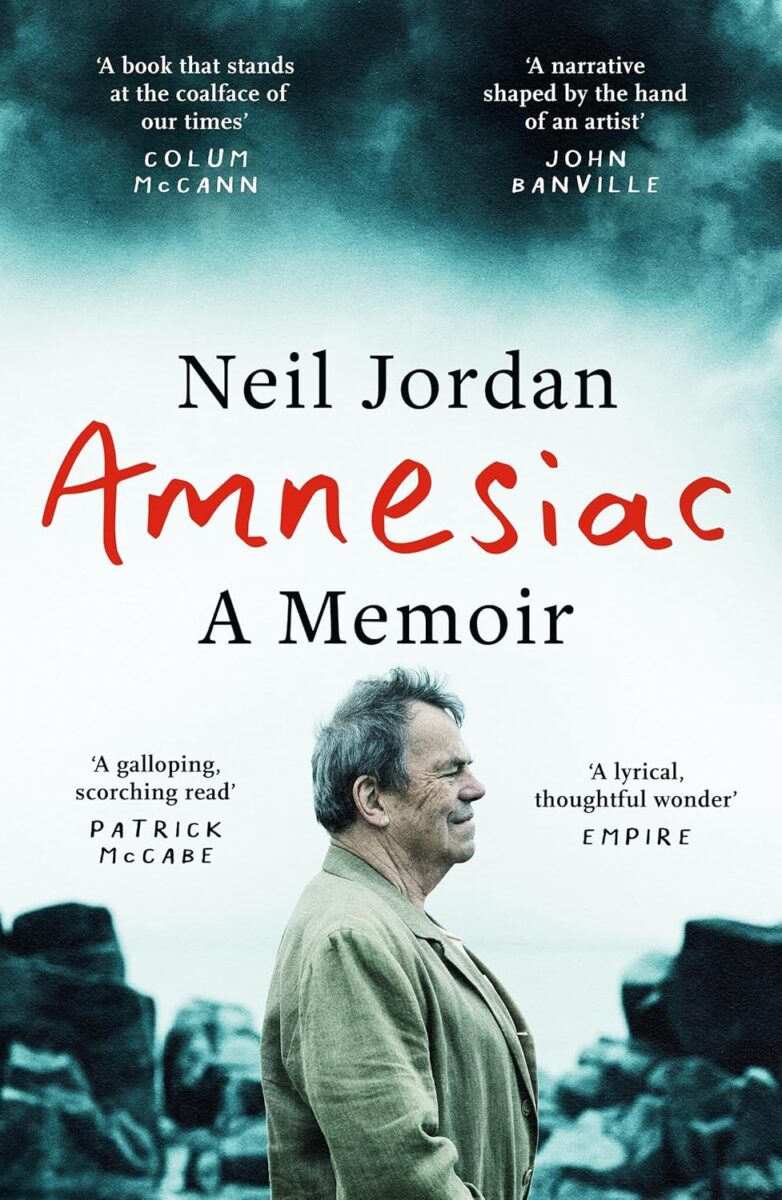
I had the chance to interview Crying Game and Interview With the Vampire director Neil Jordan in 2012, shortly after the Toronto International Film Festival screening of his return to the world of the undead, Byzantium. He was rather ornery, but also offered some compelling insights on why he chose to make another vampire film. (“I think the whole thing was a great opportunity to really reinvent the vampire legend really. It’s become a bit tired of late, you know?”) That sturdy and sarcastic tone is evident throughout Amnesiac (released on August 5). It is a memoir that is by turns moving, jarring (one chapter is called “My Paedophile”), funny, and often gossipy. Consider this phone call Jordan received from Stanley Kubrick: “I got another call from Stanley. ‘Your friends did another number last night’ They’re not my friends, Stanley. He meant the IRA.” Years later, Kubrick called to ask Jordan’s opinion of Tom Cruise: “I had told him he was a very good actor. ‘He had better be,’ he said. ‘Because he’s not a star for his personality.’”
Quick hits
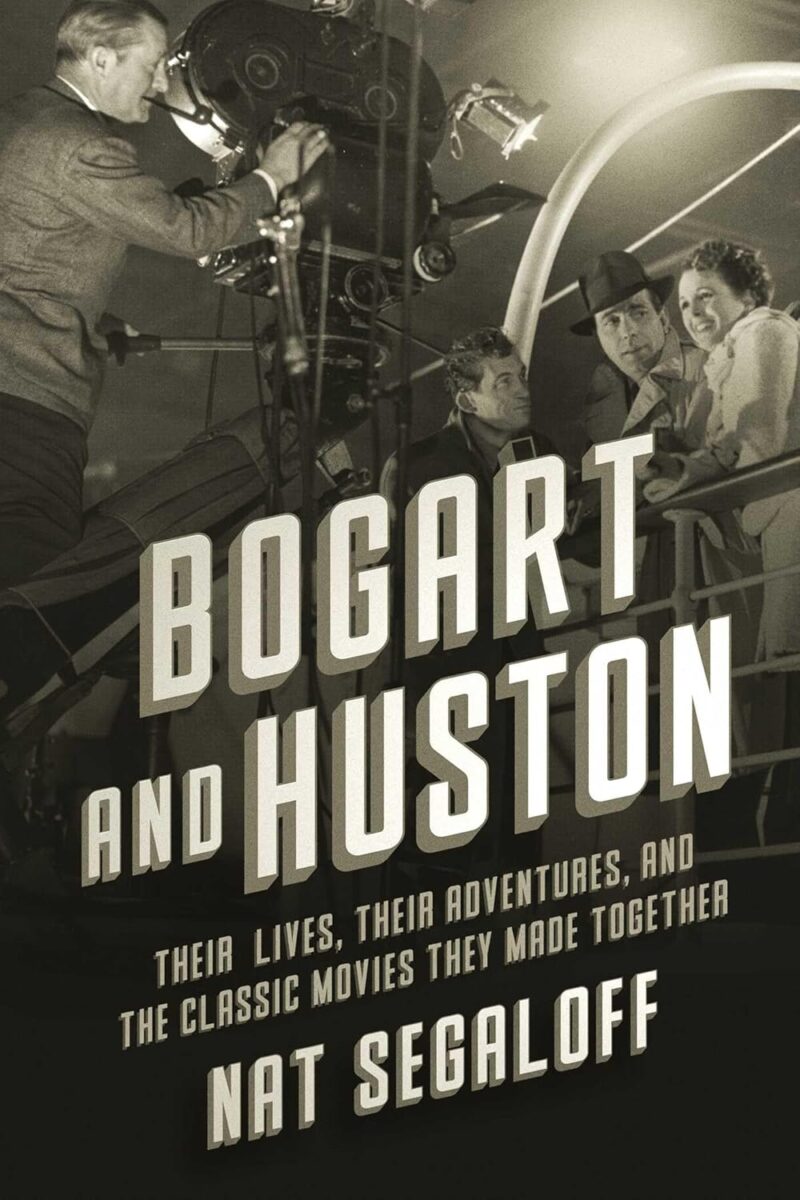
One of the great pairings in big screen history is explored in Bogart and Huston: Their Lives, Their Adventures, and the Classic Movies They Made Together by Nat Segaloff (Pegasus Books). Segaloff’s analysis of their friendship and its complexities fascinates. On The African Queen: “Casting began before there was a script. Huston, of course, wanted Bogart to play the grizzled, drunken chief of the tiny Congo vessel. He knew it was outside his friend’s comfort zone as an actor (though not as a sailor), but he knew the actor would rise to the occasion if prodded and told him, ‘The hero is a lowlife, and you are the biggest lowlife in town and therefore most suitable for the part.’”
What Is Wrong With Men by Jessa Crispin (Pantheon) smartly and hilariously looks at the crisis in masculinity as embodied in the films of Michael Douglas. “His was a performance of injury, oppression, and confusion, as he was traumatized by a world that was essentially working against him,” she writes. “[T]he typical Michael Douglas character will at some point dive into a state of frenzy and exasperation, shaking his head and waving his arms to say, Look at me! Look at what they are doing to me.”
Greta: The Work, Life, and Style of Greta Gerwig by Selena Fragassi (Epic Ink) is a brisk but info-packed biography of one of filmdom’s most successful young actor-directors. As Fragassi explains, the phenomenal box office and worldwide impact of Gerwig’s Barbie is a sign that she is a next-level talent. After all, “to make a movie about such an iconic yet polarizing doll could have gone so many different — and possibly disastrous — ways.” Epic Ink also brings us a companion book, Emma: The Work, Life, and Style of Emma Stone by Stacia Deutsch. I actually found Deutsch’s look at the incomparable Emma Stone to be even more enjoyable. It offers a nice mix of fan talk (“Just another day for a brand ambassador”) and some new-to-me revelations; somehow I missed news that her real name, Emily, had been revealed. The announcement is seen as marking “her transition from child actor, first entering the business through a reality TV competition, to adult, versatile, accomplished star.”
Ray Milland’s performance in The Lost Weekend is an all-time favorite of mine, and his work in Billy Wilder’s film is a key part of Dashing to the End: The Ray Milland Story by Eric Monder (University Press of Mississippi). This, the first comprehensive biography of Milland, considers how the role of Don Birnam pushed the actor further than he’d ever gone before: “[T]he film diagrams the destruction of the character Don Birnam as it simultaneously indexes the destruction of the movie star Ray Milland.”
In These Fists Break Bricks (Revised and Expanded Edition): How Kung Fu Movies Swept America and Changed the World, authors Grady Hendrix and Chris Poggiali (Running Press) take an exhaustive and fascinating look at the history of kung fu cinema; the book is packed with vintage advertisements and posters, also includes a foreword by Rza, who recalls how these films allowed him “to be transported from the slums of NYC to the hillsides of China and Japan.” And veteran producer Pat Ferns’ The Big Picture: A Personal History of Independent Television Production in Canada (Sutherland House) chronicles the evolution of Canadian content in the digital age, while also including his personal memories.
My kids and I have enjoyed paging through LEGO Marvel Spider-Man Explore the Spider-Verse, the latest LEGO release from DK. As usual, it is a showcase for LEGO sets, but a fun one at that, and it also includes an exclusive LEGO Cyborg Spider-Man minifigure. We have also found much to chew on in DK’s DC Cinematic Universe, written by Nick Jones and Stephen Wiacek. It’s a comprehensive trek through DC history, from the days of Christopher Reeve and Marlon Brando to the more recent films starring the likes of Jason Momoa, Margot Robbie, and Viola Davis. (The book was released prior to the release of James Gunn’s Superman.)
Star Wars: The Acolyte Visual Guide (DK) by Pablo Hidalgo is a factoid-heavy guide to Leslye Headland’s one-and-done Disney+ series. The Acolyte gave viewers much to chew on, and the series’ characters, locations (such as the “witch fortress”) are explored in great detail by Star Wars vet Hidalgo. There will not be a second season, but we now know the story of Wookie Jedi Master Kelnacca’s life thanks to Visual Guide.
The best cover art of the month must be I’d Just as Soon Kiss a Wookiee: Uncovering Racialized Desire in the Star Wars Galaxy by Greg Carter (University of Texas Press) — and it has the cleverest concept, too. Carter’s mission “is to uncover the link between George Lucas’s creation and the real world.” He does so in bold and incisive fashion. HIs analysis of the oft-derided sequel trilogy is noteworthy; I especially enjoyed his look at Colin Treverrow’s scrapped Duel of the Fates.
Lastly, The Happiest Place on Earth: The Incredible Story of Walt Disney’s Disneyland by Don Hahn and Christopher Merritt (Random House Worlds) is a must for Disney geeks or readers fascinated with stories of how massive entertainment projects come together. The weighty coffee table book released to commemorate Disneyland’s 70th anniversary is packed with memories, details, and images. Most notably, there are unpublished documents and concept drawings presented here for the first time.
New books on music
Anyone who knows me in the real world is likely aware that a) Oasis is my favorite band and b) once the reunion tour was announced, it was a goal of mine to get to at least two shows. (See you in Toronto on August 24 and New Jersey on August 31, Gallaghers!) I saw Oasis many times before its explosive end in 2009, and I have also read my share of books highlighting the band’s music as well as the combustible relationship between Noel and Liam Gallagher. Quite frankly, the books written during the band’s imperial phase were so-so at best, and very few texts followed—until now.
It gives me great pleasure to say that A Sound So Very Loud: The Inside Story of Every Song Oasis Recorded by Ted Kessler and Hamish MacBain (Pegasus Books) is the finest book ever written about the band. Kessler and Hamish are veterans of NME, the venerable UK music publication (now web only), and both have had remarkable histories with the Gallaghers. Many of those personal stories are shared in A Sound So Very Loud, but what makes the book so special is its approach — analysis and backstories for every song the band recorded. Yes, every song, from the White Label Demo of “Columbia” to the COVID-era release of an unreleased demo called “Don’t Stop …” The latter entry concludes with a fine example of the authors’ winningly cheeky tone: “[T]he demo did a fine job of cheering people up during the pandemic and starting some rumors about whether Oasis were getting back together, which obviously would never happen.” (A Sound So Very Loud is set for release on August 19.)
Also new in stores is Supersonic: The Complete, Authorized, and Uncut Interviews (Crown). This authorized release includes the full, uncut interviews recorded for the stellar 2016 documentary Supersonic, directed by Mat Whitecross. Fans of the film will recognize many quotes. (Noel: “Oasis’s great strength was the relationship between me and Liam. It’s also what drove the band into the ground in the end.”) However, it is the new material that makes Supersonic an essential purchase for the Oasis faithful. (Liam: “I never, ever could not be arsed getting on that stage. I take massive offense at that. There is no way I’m having people going I can’t be arsed, that is bollocks. Not having that.”)
Such Great Heights: The Complete Cultural History of the Indie Rock Explosion by Chris DeVille (St. Martin’s Publishing Group) is a wildly entertaining and incisive study of indie in all its glory, from Pavement and Death Cab for Cutie to Sufjan Stevens and Joanna Newsom. DeVille is a witty writer, and his book is full of surprises; I adored his take on the power of The OC’s Seth Cohen: “Part of the appeal was that Seth was reflecting back the characteristics of the bands he touted, taking to extremes the music-fan impulse to define yourself by the records you loved.” (Such Great Heights is set for release on August 26.)
Cocteau Twins’ Blue Bell Knoll (33 ⅓) by Chris Tapley (Bloomsbury Academic) is a worthy entry in the long-running series devoted to the most important albums ever made. While the Twins’ fifth album might not be as well-known today as Heaven or Las Vegas, the 1988 release is seen by Tapley as the band’s most enigmatic record. It is, he writes, “a tipping point that comes after the youthful exuberance of their early work has given way to careful attempts to position themselves and subsequent disappointment that it has only given rise to new problems.”
Pop culture junkies adore lists—the longer the better, really—and that’s what 501 Essential Albums of the 80s: The Music Fan’s Definitive Guide, edited by Gary Graff (Motorbooks), is all about. What I enjoyed most about this one is that it offers a varied and wide-ranging lineup. In other words, not only Thriller and Like a Prayer, but also Soul Mining, The Stone Roses, and Blade Runner: Original Motion Picture Soundtrack.
Eternal Flame: The Authorized Biography of The Bangles by Jennifer Otter Bickerdike (Da Capo) is a fun jaunt through the career of the band known for “Manic Monday” and “Walk Like an Egyptian.” As Bickerdike recounts, the band was not always given the respect it deserved. Nevertheless, Susanna Hoffs and company accomplished much during their heyday. “As of 2024,” she writes, “they are still the only entirely female rock ’n’ roll band to sing and play their own instruments on five top ten Billboard hits.”
And Style Codes: David Bowie by Natalie Hammond (Harry N. Abrams) is a colorful and loving appreciation for the ways in which Bowie subverted fashion norms and changed his look over time. The book offers some nice tips for the unstylish likes of me: “[F]or a truer imitation of his eighties approach to tailoring, seek out a striped tie that you can knot then strategically loosen to your liking.”
Novels in brief
Your summer novel reading list is ready to go. It starts with Retreat, by one of our favorite actresses, Krysten Ritter (Harper). The Jessica Jones star’s second novel (her first, 2018’s Bonfire, earned raves from Gillian Flynn) is a crackling tale of identity theft at a high-end Mexican resort community.
Movie adaptations are on the way for Kill Your Darlings by Peter Swanson (William Morrow) and Victorian Psycho by Virginia Feito (Liveright). Julia Roberts will star and James Gray will direct the former, which involves a frayed marriage and a dark past—told in reverse. Meanwhile, Margaret Qualley was originally set to star in Psycho, and it was perfect casting; it was easy to imagine the star of The Substitute as a vengeance-seeking governess. However, all is not lost, as Longlegs star Maika Monroe is taking over the role. I admired Fetto’s debut, Mrs. March, and Victorian Psycho is even better.
Another witty and pitch black novel is Etiquette for Lovers and Killers by Anna Fitzgerald Healy (G.P. Putnam’s Sons). The 60s-set murder mystery features a phenomenal lead character, who receives a love letter and engagement ring for another woman, one who turns up dead. And the mysterious relationship between an actress preparing for an upcoming play and a younger man is at the heart of Katie Kitamura’s ambitious and compelling Audition (Riverhead Books).
There are many fine novels about wildly eccentric families, and The Usual Desire to Kill by Camilla Barnes (Scribner) belongs on that list. Veteran playwright Barnes has cooked up a sharp, funny debut about a woman dealing with her set-in-their-ways parents in rural France.
The graphic novel Simplicity by Mattie Lubchansky (Pantheon) is quite moving; it tells the story of a transgender academic investigating a cult in the “former United States” of 2081. Similar themes can be found in The Unworthy by Agustina Bazterrica, translated by Sarah Moses (Scribner). The post-climate catastrophe, convent-set novel chronicles the collision between an “unworthy” member of the Sacred Sisterhood and a mysterious newbie.
It has been years since we have had an acceptable take on the Robin Hood legend, so I’d love to see The Traitor of Sherwood Forest by Amy S. Kaufman (Penguin Books) brought to the screen. This retelling is focused on a peasant who serves as a spy for Robin — and possibly a patsy. And Dogs by C. Mallon (Scribner) is a harrowing debut about the aftermath of one fateful judge in the life of five high school friends.
Riley Sager’s works are often featured in this column, and his newest, With a Vengeance (Penguin Random House), is an intense, cinematic murder-mystery set on luxury train racing from Philadelphia to Chicago. Middletide by Sarah Crouch (Atria Books) is a riveting thriller about a reclusive writer forced to defend himself after a body is found on his property, while The Echoes by Evie Wyld (Knopf) is a lovely ghost story.
In the complex and haunting The Death of Us by Abigail Dean (Viking), a couple whose marriage was destroyed by an encounter with a serial killer are forced to reunite and confront their past.
Bestselling author Steve Cavanagh has drawn high praise from authors like A.J. Finn and Lee Child, and his last four twisty treats are available from Atria: Fifty Fifty; The Devil’s Advocate (released on August 5); Kill for Me, Kill for You; and Witness 8.
Universality by Natasha Brown (Random House) is a wild thriller from rising star Natasha Brown, and Until Alison by Kate Russo (Putnam) is a compulsively readable campus novel that its author says was inspired by the Decemberists’ song “The Engine Driver.” And I was floored by Ada Calhoun’s devilishly funny Crush (Viking), in which a married woman sees the reality of her marriage and considers the alternatives.
Kristen Perrin is well-established author of books for young readers; her smart new murder-mystery series for adults, the Castle Knoll Files, began with How to Solve Your Own Murder and continues with How to Seal Your Own Fate (Dutton). Louise Hagerty’s Fair Play (Harper) has a similarly playful tone, and The In Crowd by Charlotte Vassell (Doubleday) is a U.K. high society whodunnit.
Recent horror novels of note include Something in the Walls by Daisy Pearce (Minotaur) is an effective chiller that sees an inexperienced child psychologist attempts to save a teenager who believes she is being haunted by a witch; The Haunting of Room 904 by Erika T. Wurth (Flatiron Books), which explores a woman with the ability to commune with the dead (like her sister before her); and Hungerstone (Zando), in which the 19th century vampire classic Carmilla is reimagined with gusto by author Kat Dunn.
A number of new Star Wars releases are available in book and audio form from Random House Worlds and Random House Audio, respectively. In addition to Star Wars: The Acolyte Visual Guide, the series has spawned Star Wars: The Acolyte: Wayseeker by Justina Ireland (read by Jessica Almasy), while the ongoing High Republic series concludes with Star Wars: The High Republic: Trials of the Jedi by Charles Soule (read by read by Marc Thompson). And two fan favorite Star Wars Legends return in paperback and audio form: Rogue Planet: Star Wars Legends by Greg Bear (read by Jonathan A. Davis) and Shadows of the Empire: Star Wars Legends by Steve Perry (read by Marc Thompson).
Finally, socialite wars: The Last American Heiresses by Stephen Greco (A John Scognamiglio Book) is an entertaining novel about the real-life rivalry between legendary heiresses Doris Duke and Barbara Hutton.
And on that note—enjoy the rest of your summer reading, and see you in the fall.