
We have almost reached the end of 2025, and there is a lot to get to, starting with books on an unmade Charlie Chaplin film, memories from Sir Roger Deakins, and the making of Guillermo del Toro’s latest and (in my opinion) Quentin Tarantino’s greatest.
The Making of Quentin Tarantino’s Once Upon a Time…In Hollywood by Jay Glennie (Insight Editions)
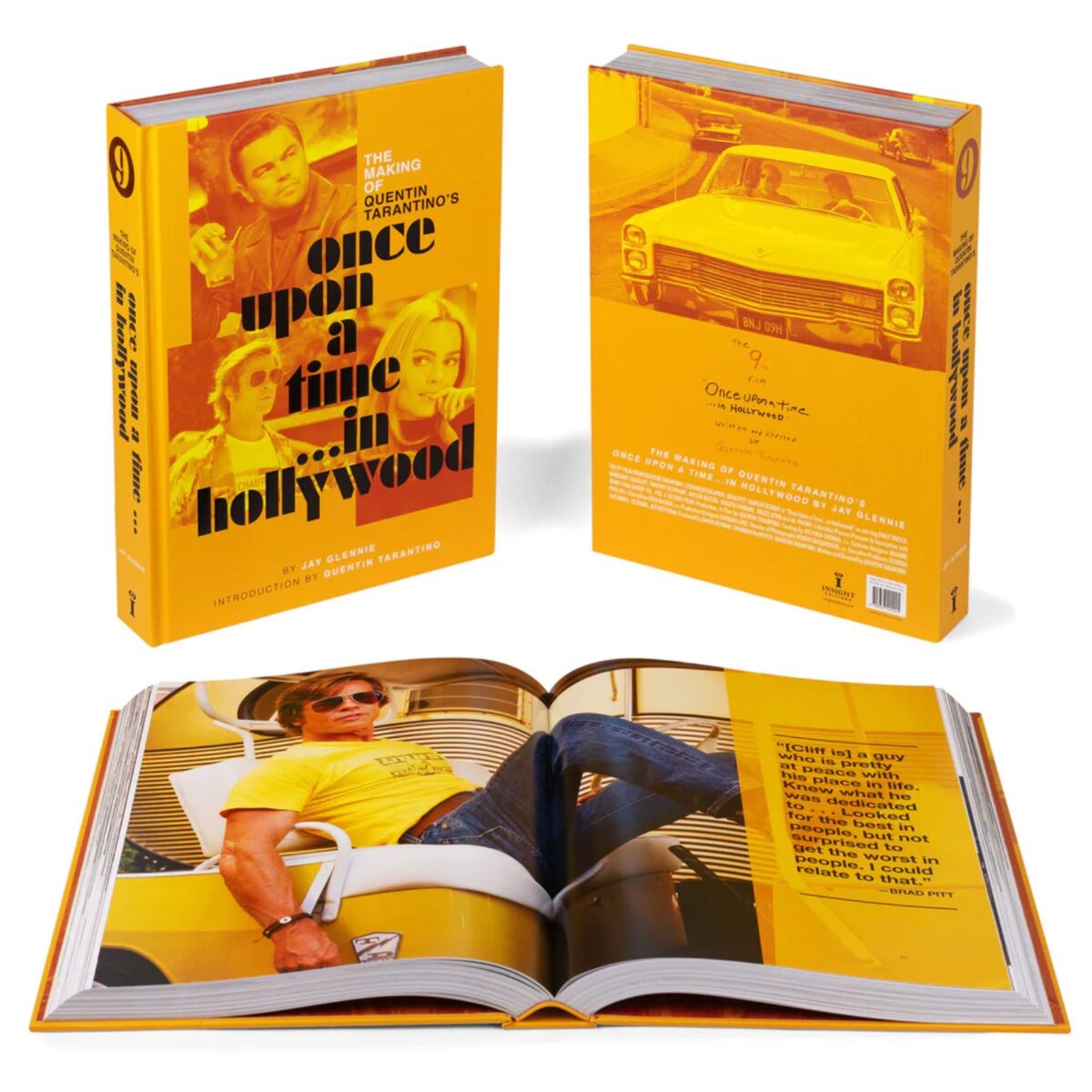
It was legitimately major news when Insight Editions announced the “Quentin Tarantino Library,” a new series of books on the making of Tarantino’s nine films from author Jay Glennie. Coming in 2026 and 2027, respectively, are explorations of Inglorious Basterds and Django Unchanged, but first we have The Making of Quentin Tarantino’s Once Upon a Time…in Hollywood — and it is smashing. At nearly 500 pages, this is easily the most lovingly designed, readable, and in-depth account of a Tarantino project to date.
Especially breathtaking are the fake posters for Rick Dalton’s films and the set photographs by Andrew Cooper; the ever-photogenic Margaret Qualley appears to have been Cooper’s most game subject. Qualley, of course, was on the verge of megafame, as were supporting players Austin Butler, Sydney Sweeney, and Mikey Madison. The latter would be an Oscar winner just a few years later, but thought outside of the box when trying to land the key role of a member of the Manson family: “Madison had taken the missive as a call to get creative and had indeed created a piece of art and was beginning to regret having done so. The painting was huge.”
These are the types of small details that make Glennie’s Hollywood such an impressive release. By the way, my favorite part of the initial series announcement is this tease at the end: “Glennie is set to write large scale, deep-dive books for all ten of Tarantino’s films, the nine he has made and the one that is forthcoming which Tarantino has announced as his last.” We’re waiting, QT.
Reflections on Cinematography by Sir Roger Deakins (Grand Central Publishing)
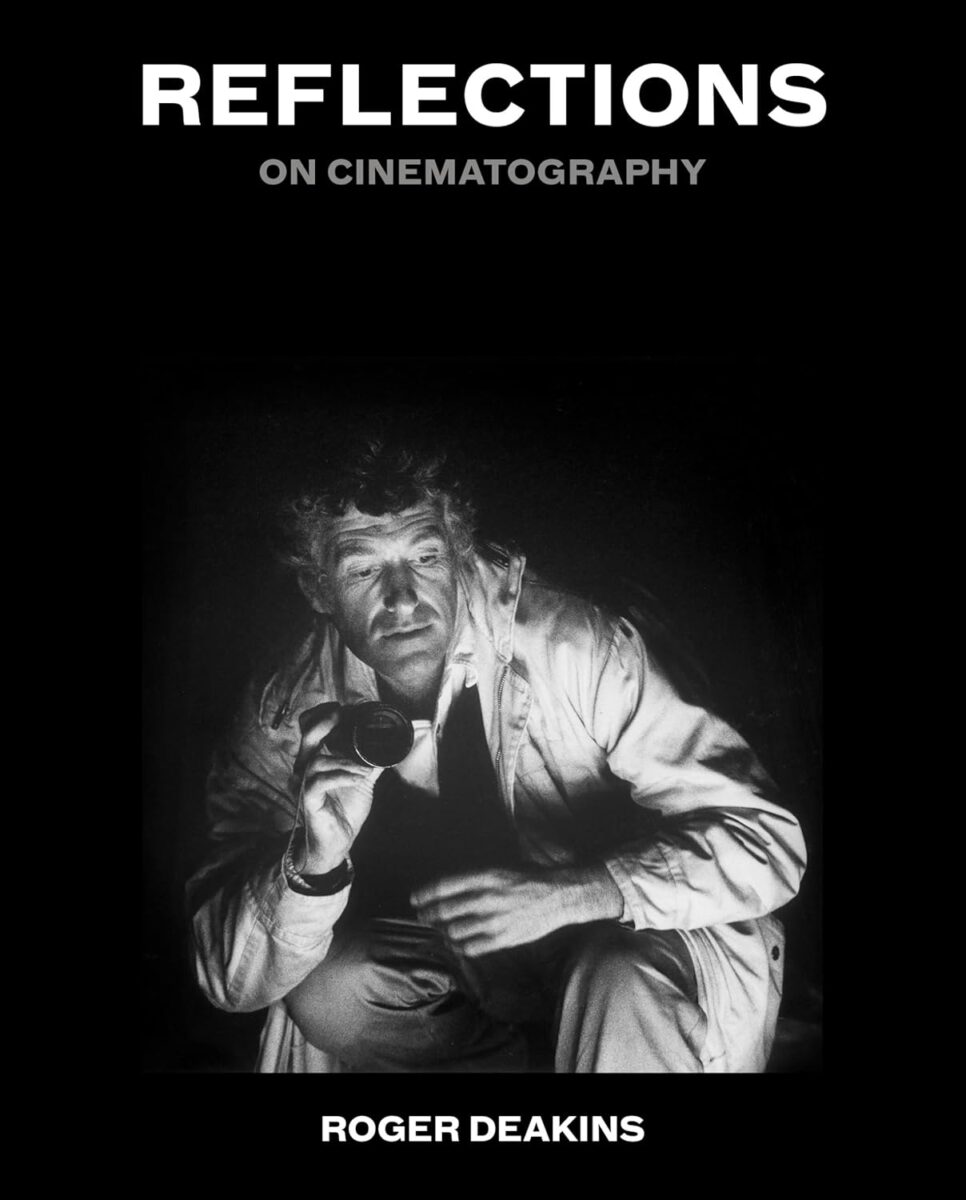
The opportunity to read the memories of the cinematographer of No Country for Old Men, Blade Runner 2049, and The Assassination of Jesse James by the Coward Robert Ford is not to be ignored. Reflections on Cinematography by Sir Roger Deakins is a thoughtful, engrossing account of an incredible career. Deakins highlights some of the most memorable scenes in recent cinema, among them the shimmering lights of the Wallace Corporation in 2049: “I wanted the entire Wallace Corporation interior to be a place where sunlight constantly played in motion.”
Especially incisive is Deakins’ look at one of my favorite films, Alex Cox’s Sid and Nancy. Here is Deakins on the gorgeously grim final scenes of Gary Oldman’s Sid Vicious wandering against the backdrop of cloudy Manhattan: “The day we filmed, a low cloud hung over the Twin Towers and the cold grayness of the day provided a striking contrast with the pink neon sign simply reading PIZZA. On a sunny day the scene would have been entirely different, and, once again, we got lucky.” Deakins may call it luck, but Reflections demonstrates that he is undoubtedly a genius.
Charles Chaplin’s The Freak: The Story of an Unfinished Film by David Robinson (Sticking Place Books)
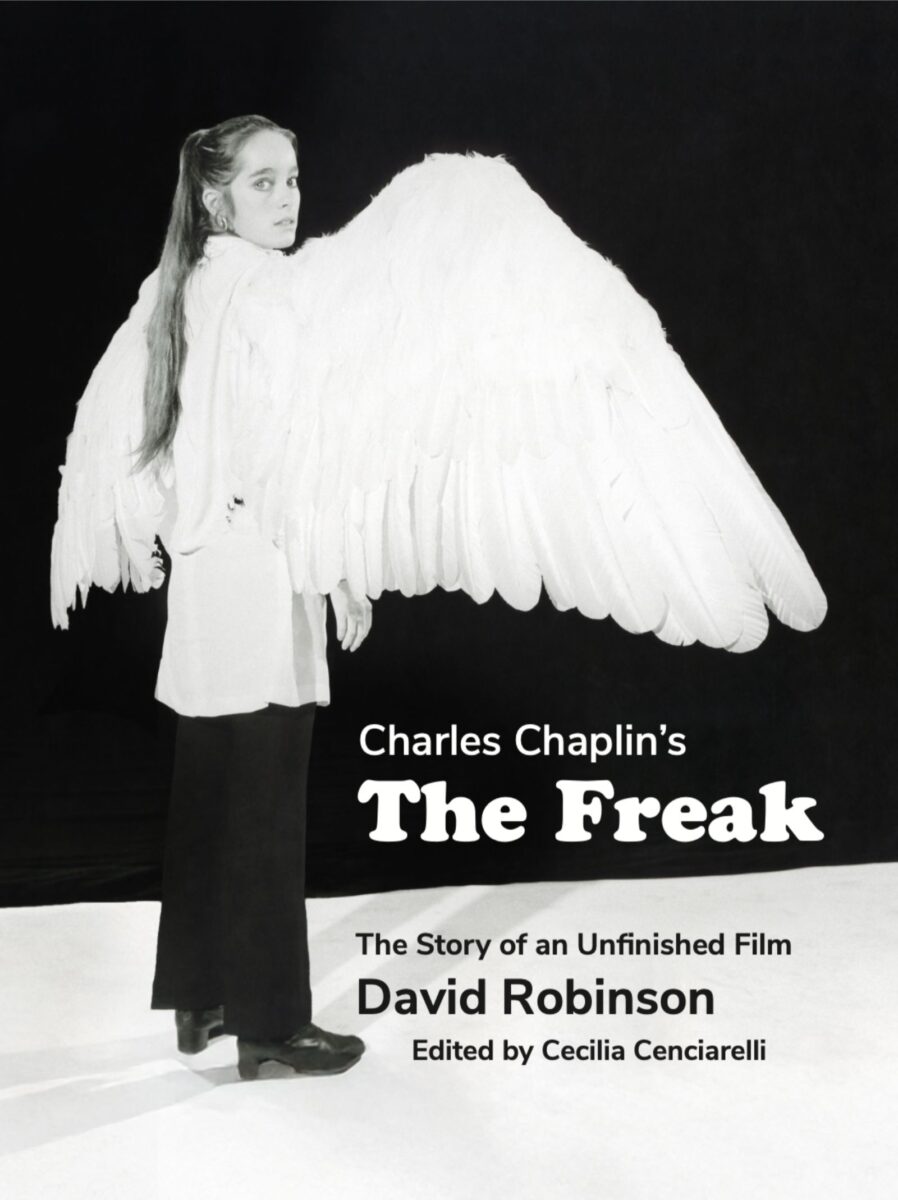
Cecilia Cenciarelli’s preface to Charles Chaplin’s The Freak: The Story of an Unfinished Film offers a succinct summary of why his book is so important: “The unmade films that haunt the history of cinema are often likened to restless ghosts — faded images that never came to life, or half-dreamed dreams. Some are closer to genies trapped in a lamp, locked away in drawers and archives, waiting for that unfinished artistic impulse to be free at last, so it may tell its story. The Freak by Charlie Chaplin belongs to this second category.” The story of a young woman with wings named Sarapha was to be Chaplin’s final film, one starring his daughter, Victoria. David Robinson’s book shares why the film was never made, but also offers tantalizing glimpses at what could have been. The book also — for me, at least — serves as an introduction to Victoria Chaplin, who served as her father’s ideal Sarapha and later became a renowned circus performer. Robinson shares recent interviews with Victoria along with stunning archival photos of rehearsals at the Chaplin home, not to mention the full script and artwork. The result is a truly astounding chronicle of a never-finished bit of cinema history. Based on what we see here, The Freak may have ended up as one of Chaplin’s finest achievements.
Frankenstein: Written and Directed by Guillermo del Toro by Sheila O’Malley (Insight Editions)
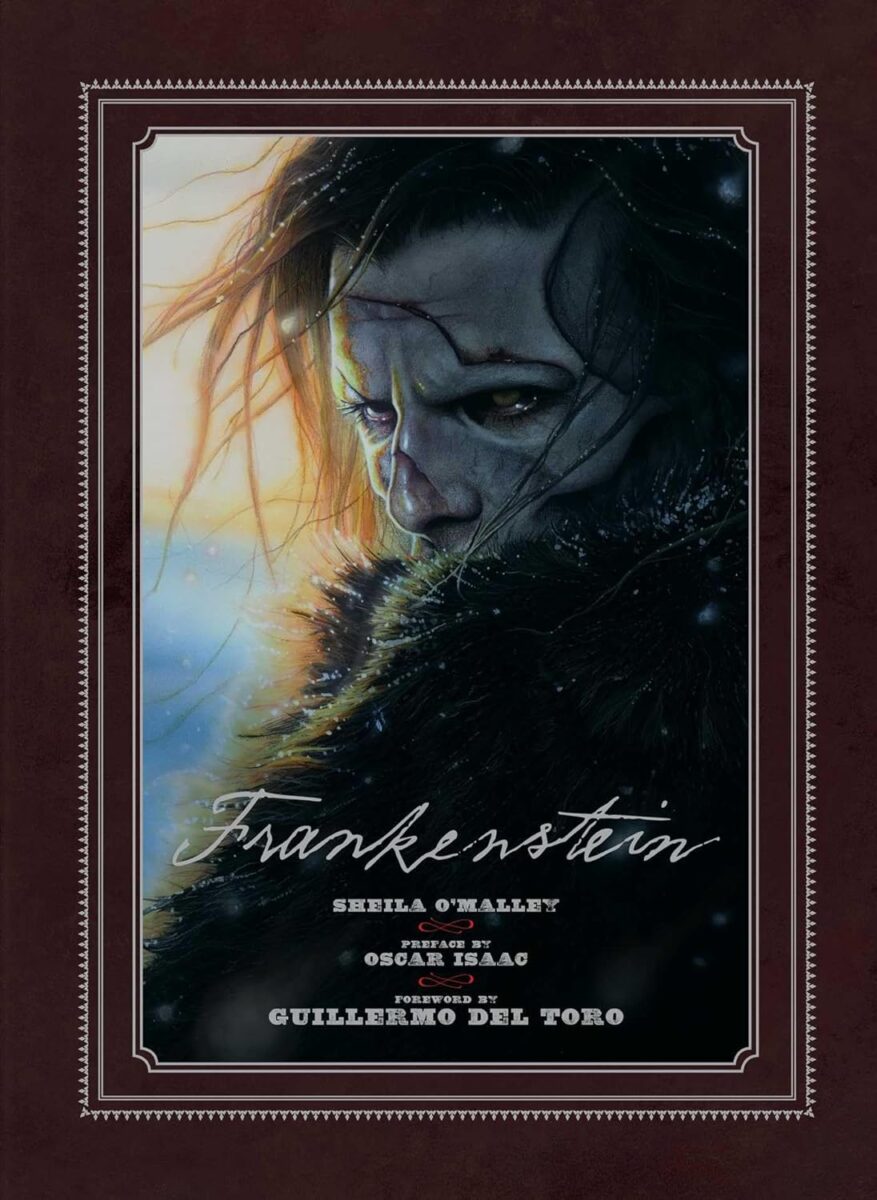
The success of Guillermo del Toro’s Frankenstein, both commercially and critically, may have surprised some. However, one look at Sheila O’Malley’s Frankenstein: Written and Directed by Guillermo del Toro shows that del Toro should never have been doubted. After all, the director of Pan’s Labyrinth and The Shape of Water had been preparing for his adaptation of Mary Shelley’s novel since childhood. As he explains, when first seeing James Whale’s Frankenstein and Bride of Frankenstein as a “good, God-fearing Catholic” 7-year-old, “I felt a jolt of recognition in that seminal moment: Gothic horror became my church, and that figure, right there, became my shepherd.” O”Malley’s book covers the entirety of the film’s development and production, offering some surprises (yes, they really built the Arctic ship where Victor Frankenstein tells his tale) and close studies of the intricacies of the creature’s face, body, and wardrobe. Written and Directed greatly enhances the experience of watching del Toro’s Frankenstein.
Algorithm of the Night and Last Week in End Times Cinema by A. S. Hamrah (Semiotext(e))
I could not help but laugh awkwardly (and turn red) when coming upon a stinging section in the brilliant introduction of critic A. S. Hamrah’s Algorithm of the Night: “In the world of film criticism, there is nothing sadder than seeing the phrase ‘Tomatometer-approved critic’ in somebody’s bio. I don’t understand why critics seek approval from this content aggregator, owned by Comcast and WBD, which takes and republishes their work for free.” He is right, of course, and I say that as someone whose X bio says “@RottenTomatoes-approved film critic.”
Hamrah’s writing, in Algorithm and the relentlessly amusing Last Week in End Times Cinema, is not for those easily-offended film stans. He zeroes in on the absurdity of Hollywood news briefs in Last Week, a rundown of sharp bulletins (“WBD’s Max is bringing back the HBO brand because no one likes Max,” “The Penske-owned Golden Globes, held two days before the fires began, were heavily covered in the Penske-owned press”). Meanwhile, Algorithm is a blistering collection of Hamrah’s reviews from the last six years. Both books are indispensable, and Hamrah is unbeatable.
Future Boy by Michael J. Fox and Nelle Fortenberry (Flatiron Books)
One of my favorite moviegoing experiences of 2025 was seeing Back to the Future on the big screen to commemorate its 40th anniversary. The film’s release date was also marked with the release of the delightful Future Boy by star Michael J. Fox (and Nelle Fortenberry). The actor’s memoir of the time period in which he was shooting the hit series Family Ties by day and Robert Zemeckis’ Back to the Future by night is brisk, funny, and touching. “By 3:00 a.m. we wrap,” Fox writes, “and I’m driven home. My driver extricates me from the car and tosses me into my bed (which, by the way, will remain unmade for weeks, if not months).”
Quick hits:
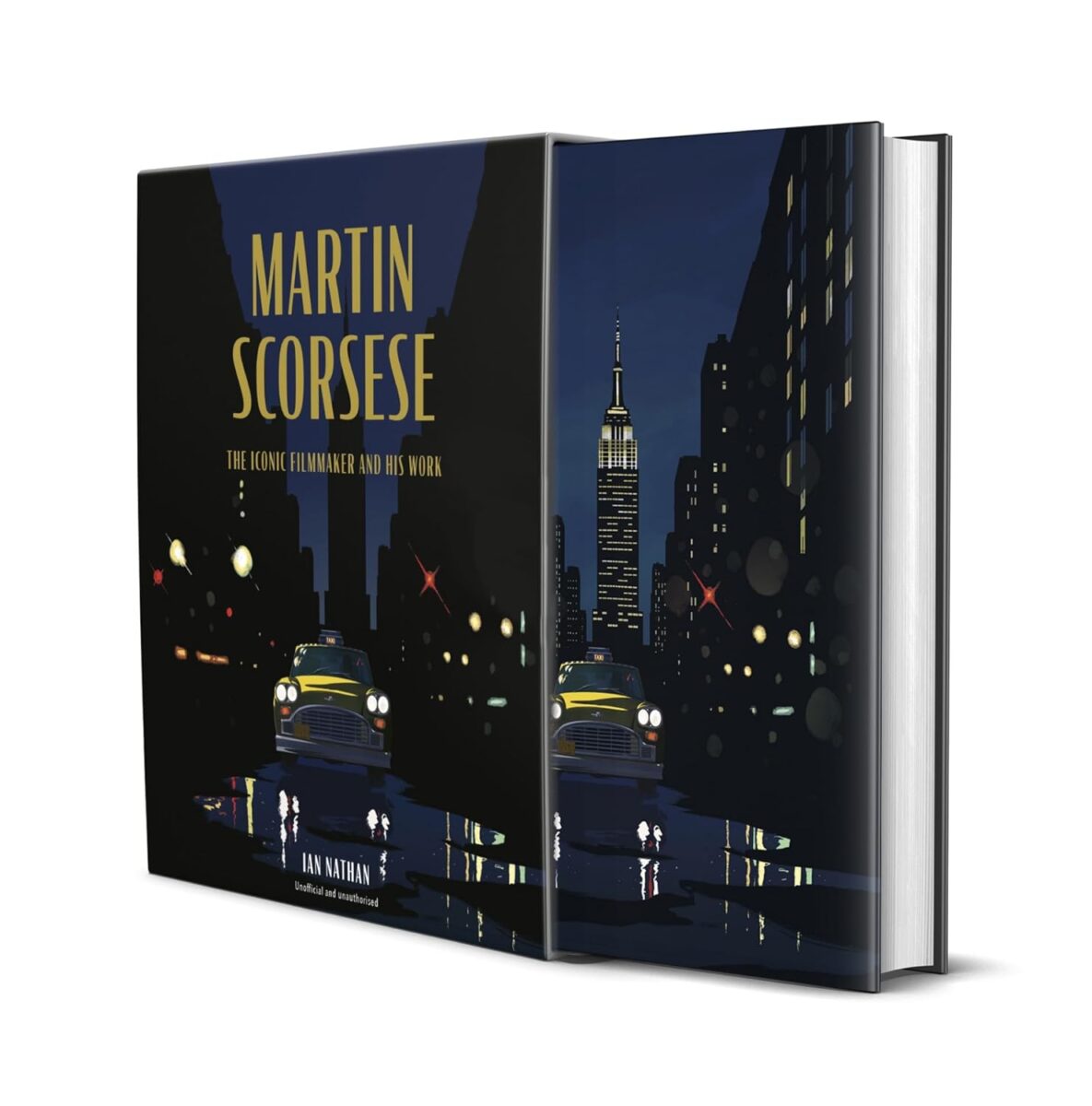
Not that we need to be reminded of Martin Scorsese’s greatness, but Rebecca Miller’s Apple TV documentary Mr. Scorsese made me want to run back to some of the director’s less-heralded efforts, such as New York, New York and Kundun. I had the same feeling while paging through Martin Scorsese: The Iconic Filmmaker and His Work by Ian Nathan (White Lion Publishing). Nathan has written fine books on the works of Christopher Nolan and Wes Anderson, as well as an appreciation of the Mad Max series. Scorsese might be his finest work yet, specifically Nathan’s analysis of The Irishman and Killers of the Flower Moon. Similarly, Hayao Miyazaki: The Influences and Inspirations Behind the Iconic Films by Nicholas Rapold (Frances Lincoln) is a deep, loving tribute to an iconic filmmaker. Each chapter takes on an element of Miyazaki’s life and work — “How Four Great Writers Have Inspired Miyazaki’s Story-Building,” “The Animated Films That Inspired Miyazaki,” “The Personal Memories That Haunt (and Cheer Up) Miyazaki’s Movies.”
Several recent releases feature legendary filmmakers in their own words. Let’s start with Caché and Amour director Michael Haneke. Haneke on Haneke, edited by Michel Cieutat and Philippe Rouyer (Sticking Place Books), starts with his theater years before covering his entire filmmaking career, up to 2017’s Happy End. “We’ll see if Happy End is my last film,” Haneke states at the book’s close. “Let’s leave some room for surprises.” Steve McQueen: Interviews (Conversations with Filmmakers Series), edited by Geoffrey Lokke (University Press of Mississippi), is the first collection of the 12 Years a Slave director’s conversations to date; it ends with his ambitious, four-hour documentary Occupied City. (“Once people see the film, the length is never discussed,” McQueen states.) Meanwhile, Julie Dash: Interviews (Conversations with Filmmakers Series), edited by Kameelah L. Martin (University Press of Mississippi), is a much-needed study of the filmmaker whose 1991 classic, Daughters of the Dust, is one of the key independent films of the 1990s. And Catherine Breillat: I Only Believe in Myself (Conversations with Murielle Joudet) (Semiotext(e)) is composed of a lengthy conversation between the Fat Girl director and film critic Joudet between September 2022 and March 2023.
Roger Lewis’ weighty (more than 900 pages!) The Life and Death of Peter Sellers (riverrun) is rightfully considered a classic. Originally published in 1995, Life and Death was the basis for the surprisingly on-point HBO film starring Geoffrey Rush. This new edition features an afterword exploring Sellers’ oft-growing legacy.
The most moving Tinseltown book this month is Hitchcock & Herrmann by Steven C. Smith (Oxford), an often emotional account of the collaboration between Alfred Hitchcock and the composer Bernard Herrmann. The duo had many successes together, but the most compelling part of the book is the tale of their breakup, when Hitchcock was angered over Herrmann’s score for the drippy Torn Curtain. More Hitch for the holidays: Just in time for the film’s 70th anniversary, Rear Window: The Making of a Hitchcock Masterpiece in the Hollywood Golden Age by Jennifer O’Callaghan (Citadel) looks at the creation of the iconic Jimmy Stewart and Grace Kelly vehicle, and Criss-Cross: The Making of Hitchcock’s Dazzling, Subversive Masterpiece Strangers on a Train by Stephen Rebello (Running Press) does the same for the Hitchcock film based on Patricia Highmsmith novel.
Pre-Code Essentials: Must-See CInema From Hollywood’s Untamed Era, 1930-1934 by Kim Luperi and Danny Reid (Running Press) is an outrageously enticing jaunt through Hollywood’s “pre-Code” era, while Circle of Lions: Nicholas Ray, Gloria Gahame and Me, A Love Story by Anthony Ray (Sticking Place Books) shares, in gripping fashion, the explosive story of the romantic entanglement between Anthony—the son of director Nicholas Ray—and his stepmother, Gloria Grahame.
The Ray family drama is pretty heavy, so perhaps it’s time for some more humorous options. No Lessons Learned: The Making of Curb Your Enthusiasm as Told by Larry David and the Cast and Crew by Lorraine Ali (Black Dog & Leventhal) is, as the cover puts it, “A Celebration of a Pretty, Pretty, Pretty Good Show.” While Larry David is not one for introspection, he does share killer quotes throuhout the text (“Don’t try to be funny. And above all else, don’t tell jokes.”)
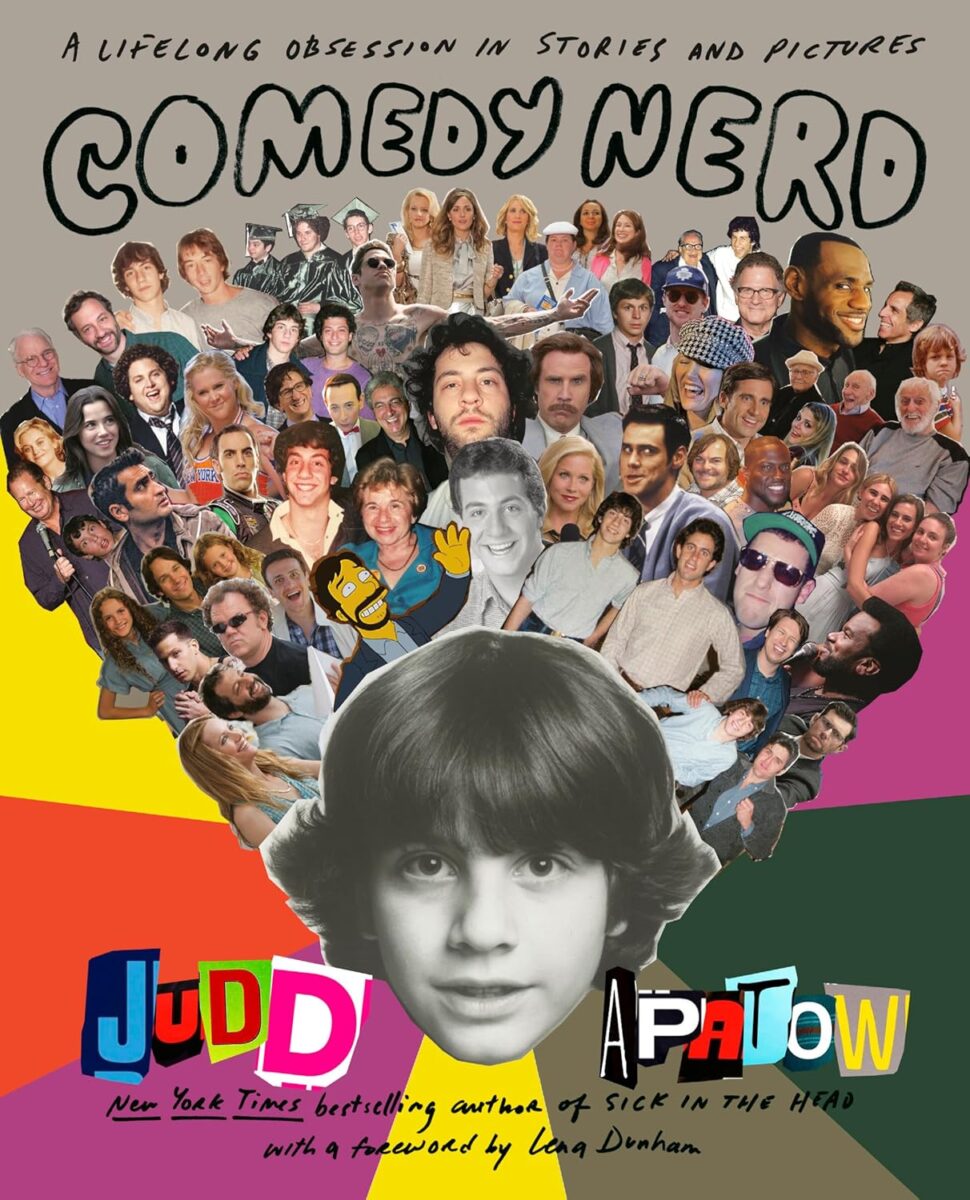
David does not come off particularly well in Comedy Samurai by Seinfeld/Curb/Borat mastermind Larry Charles (Grand Central Publishing). However, no one comes off worse than Sacha Baron Cohen. Charles is a born storyteller, and the same is true of Judd Apatow. Comedy Nerd (Random House) is a photo-heavy trek through a career that has seen Apatow work with legends like Garry Shandling. The book is full of surprises; how had I never heard that Apatow moderated a There Will Be Blood panel featuring Paul Thomas Anderson and Daniel Day-Lewis? As Apatow tells it, “My first question was, ‘Daniel, I know you don’t like doing interviews and you have several topics you have requested I not bring up tonight, but I feel I would be remiss if I didn’t ask you this question. Which movie did you prefer, Knocked Up or Superbad?”
Spinal Tap II: The End Continues came and went from cinemas in September, but it had its pleasures. There are more to be found in A Fine Line Between Stupid and Clever: The Story of Spinal Tap, in which Rob Reiner, Christopher Guest, Michael McKean, and Harry Shearer discuss their 1984 classic and its unexpected legacy. Funny Because It’s True: How The Onion Created Modern American News Satire by Christine Wenc (Running Press) is an absolute must for anyone who has ever read The Onion and wondered how this satirical institution came to life. And It’s (Almost) Always Sunny in Philadelphia by Kimberly Potts (Gallery Books) has a wonderful subtitle—“How Three Friends Spent $200 to Create the Longest-Running Live-Action Sitcom in History and Help Build a Network.” Potts’ book is a hoot, and a fitting tribute to one of the great sitcoms of the last few decades.
For the kids and their D&D-loving parents, there is The Players Campaign Journal and The Dungeon Master’s Campaign Journal (Clarkson Potter). And the wildly fascinating “Disney Adult” subculture comes under the microscope in Disney Adults: Exploring (and Falling In Love With) Magical Subculture by AJ Wolfe (Gallery Books). The author runs the popular Disney Food Blog, and therefore approaches the subject with much respect. (“The book dives deep into this misunderstood world,” she writes.)
Mission Unaccomplished: American War Films in the Twenty-First Century by Alan Nadel (University of Texas Press) examines the modern American war film through a post-Iraq War lens, while Horror’s New Wave: 15 Years of Blumhouse by Dave Schilling (S&S/Simon Element) offers a colorful appreciation of Jason Blum’s hugely successful company; the M3gan dance gets an entire page, and quite frankly, it deserves it.
Lastly, The 1990s: A Visual History of the Decade by Henry Carroll (Thames & Hudson) is a mix of nostalgia, joy, sadness, and WTF-ness, featuring photos of virtually every major moment of the decade in which I was a gawky teenager. My favorite pic is the “London Swings Again!” Vanity Fair cover featuring Liam Gallagher and Patsy Kensit at peak attractiveness.
New books on music:
Speaking of Gallagher, our previous column included several books on Oasis. Another, Oasis: Trying to Find a Way Out of Nowhere by Jill Furmanovsky (Thames & Hudson), offers a unique visual glimpse into the band between the years 1994 to 2009, and again in 2025. Many of Furmanovsky’s shots are well-known among fans, including the band looking chill during the “Wonderwall” video shoot and one of a wacky Liam in front of Bono in 1997. As a bonus, the book closes with a shot of the band’s London rehearsal space on May 27, 2025, a little over a month before the start of the summer reunion tour.
It has been another eventful year for the Gallaghers’ favorite band, the Beatles. Over the Thanksgiving holiday, my family alternated viewings of Stranger Things season five with the long-awaited Disney+ debut of The Beatles Anthology. To accompany the nine-part documentary, The Beatles Anthology (25th Anniversary Edition) (Chronicle Books) has been released, and like the doc, it’s an insightful, funny, and unforgettable journey through the Fab Four’s history.
In other Beatle news, Wings: The Story of a Band on the Run edited by Ted Widmer (Liveright) is the book Paul McCartney’s post-Beatles group has long deserved. I recently saw Macca in concert, and Wings is a major part of those shows; it was a delight to read Story of a Band on the Run after the show. Perhaps unsurprisingly, the late Linda McCartney stands out here. I especially adored Sean Ono Lennon’s memory of Linda bringing together Paul and Yoko Ono during a contentious 1990s meeting: “I’ll never forget, Linda just reached out and grabbed her [Yoko Ono’s] hand, and grabbed Paul’s hand. And she just goes, ‘Hey, come on, guys. Like, we’re hippies. Like, it’s all about love. Let’s just relax. It’s love. We love each other!’”
Like Story of a Band on the Run, The Story of Abba: Melancholy Undercover by Jan Gradvall (St. Martin’s Press) includes a mix of new and old interviews. Gradvall avoids the obvious biography tropes, instead mixing the story of our favorite Swedes with reflections on Abba’s legacy.

The shelf of essential David Bowie books is already lengthy, but room must be made for David Bowie Is (Abrams). This lovely release was published to accompany the international exhibition launched at London’s Victoria and Albert Museum. This, “the only volume that grants access to Bowie’s personal archive of performance costumes, ephemera, and original design artwork by the artist,” is filled with treasures. Highlights include Bowie’s asymmetric knitted bodysuit from 1973’s Aladdin Sane tour and the stage set model for 1974’s Diamond Dogs tour.
I recall the Rock & Roll Hall of Fame in Cleveland featuring several Bowie items, including his Alexander McQueen-designed Earthling-era Union Jack jacket. For details on how the Rock Hall came together, the development of its yearly concert events, and how complicated it can be to track down music ephemera, check out The Rock & Roll Hall of Fame by Craig J. Inciardi (Diversion Books). Like the hall itself, this one is a blast of nostalgia.
New and recent novels
If you are seeking a good novel (or, in one case, graphic novel) to read during the holidays, I have a few recommendations to share. Let’s start with Thomas Pynchon’s Shadow Ticket (Penguin Press). The beautifully unpredictable Shadow is another Pynchon knockout. Yes, One Battle after Another has ushered in Pynchon fever, and appropriately so. But rather than re-reading Vineland, dive into the author’s latest novel, a surprisingly brisk sort-of detective romp set during the Great Depression.
Now for something completely different: Batman: Revolution by John Jackson Miller (Random House Worlds) is a killer follow-up to Miller’s previous novel, Batman: Resurrection. Both are set in the world of Tim Burton’s Batman, with Revolution offering a new take on the Riddler.
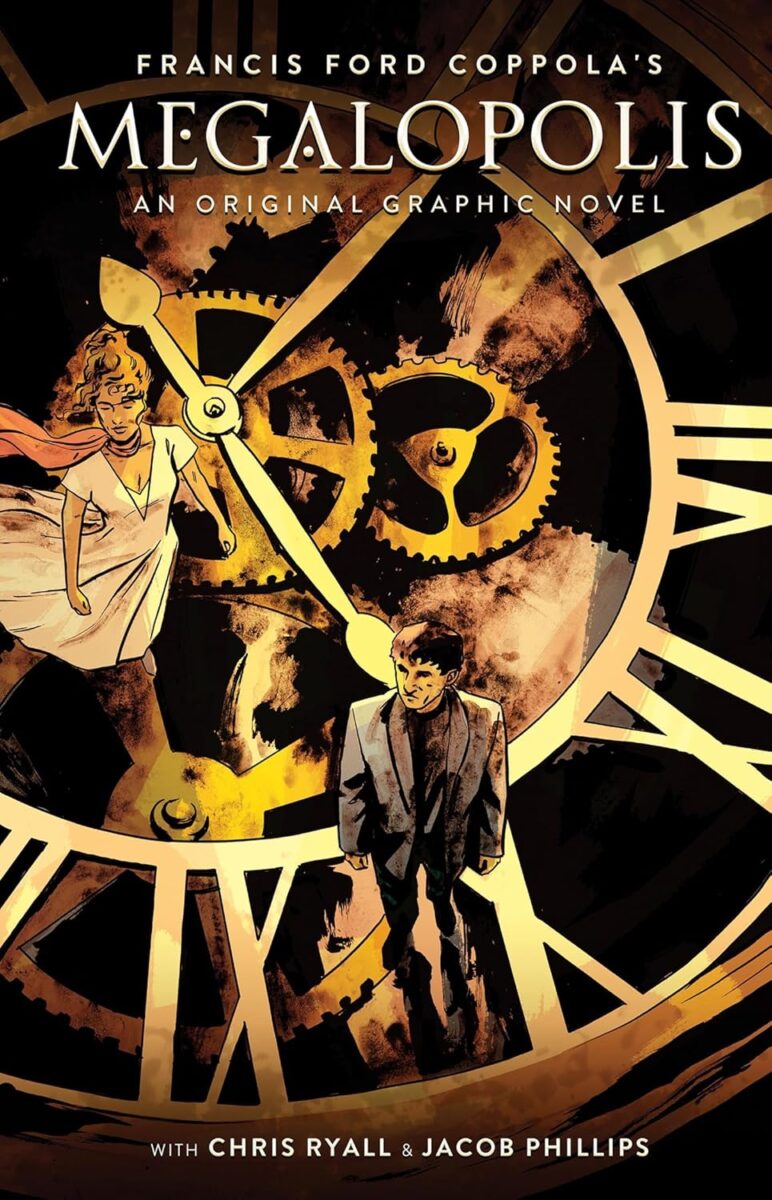
Lastly, even if we can’t sit down and watch a DVD or Blu-ray of Francis Ford Coppola’s Megalopolis, we can read Francis Ford Coppola’s Megalopolis: An Original Graphic Novel, in which the director’s feverish 2024 film is adapted by Chris Ryall and illustrated by Jacob Phillips (Harry N. Abrams). There are changes from the film (including that line uttered by Jon Voight), but the gloriously whacked-out spirit of Coppola’s passion project comes through.
Watch this:
This, our final books-and-more column of 2025, comes to an end with a brief rundown of recent noteworthy home viewing releases. Paramount’s Mission: Impossible — The Final Reckoning, which I found a fine end to the Ethan Hunt series, and the underrated Charlize Theron-starrer Aeon Flux, look fab in 4K. The same can be said for two recent Warner Home Entertainment releases, the Brad Pitt racing vehicle F1 and Zach Cregger’s Weapons. For pure enjoyment, they are hard to top this year.
The major Criterion Collection release of 2025 is without question Stanley Kubrick’s Eyes Wide Shut. While there is some debate over the look of the 4K restoration, the release itself—including the documentaries Never Just a Dream, Lost Kubrick: The Unfinished Films of Stanley Kubrick, and Kubrick Remembered—is undeniably stellar. Another biggie was David Cronenberg’s A History of Violence, which features an essay by critic Nathan Lee and excellent cover art by Connor Willumsen. And Cronenberg’s latest, 2025’s underrated The Shrouds, is out now from Janus. (Shrouds will end up on my end-of-year top 10 list.)
And, of course, Kino Lorber has offered treats throughout the year, most notably the fascinating, George Lucas-produced flop, Radioland Murders; William Friedkin’s wild, underseen chiller, Rampage; and Dogtooth, which I still consider to be Yorgos Lanthimos’ most effective film. I must also mention two films I loved as a teenager, and that my teenage son now considers to be classics, Billy Madison and Happy Gilmore. Kino appreciates Adam Sandler, and so do we.
Enjoy these books and films, friends—see you in 2026.