
As someone who’s always admired the look of the Czech embassy in Berlin––an array of nicotine-hued trapezoids that sits on the corner of Wilhelm Strasse––I was pleased to discover that the Spa Hotel Thermal in Karlovy Vary was designed up by the same architectural duo. Walking into town from the train station, it’s always the first thing you see: a reliable slab of brutalist concrete that towers over the town’s otherwise candy-colored skyline––one of which, The Grand Hotel Pupp, was even grand enough to inspire Wes Anderson’s Grand Budapest Hotel.
The Thermal was constructed in the late 1960s and ’70s by Věra and Vladimír Machonin as a multi-screen theatre and central meeting point of the Karlovy Vary Film Festival, which at the time operated biannually, trading the spotlight each year with Moscow as the place for socialist cinema. That all changed after the Velvet Revolution and, in 1994, with the arrival of Jiri Bartoška, a beloved festival director who presided over the now-annual event all the way up to his passing last year. I’ve loved the Thermal from the moment I first laid eyes on it in 2018: its perfect incline of seats in the Velký sál (perhaps my favorite cinema in the world), its vague resemblance to a movie camera when viewed from above, and the still-endearing way (à la Venice’s Salle Grande) the festival adorns the lower rim with national flags of selected films.
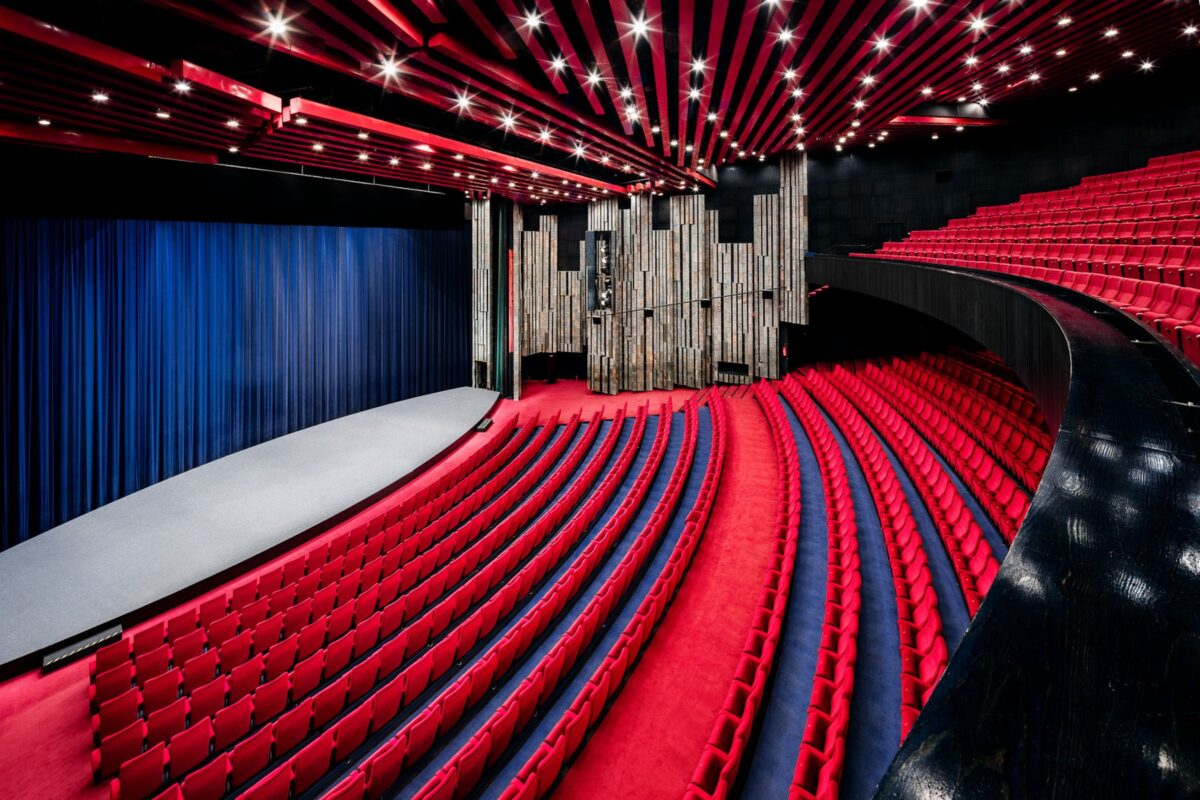
Velký sál theater in The Thermal
This year, this custom resulted in the rare sight of the stars and stripes (for numerous movies) holding space with the flag of Iraq (for Hasan Hadi’s The President’s Cake, a wonderful breakout from Cannes) like feuding in-laws at a wedding left to the whims of a random seating arrangement. Given the Czech Republic’s dispiriting support of Isreal these last few years––voting against a number of UN resolutions and opposing EU efforts to label Israeli goods from illegal settlements in the West Bank and Golan Heights––it was unsurprising to find neither Israel’s flag nor that of their Palestinian neighbors, despite both nations featuring heavily in the program. (The latter was represented by Partition, All That’s Left of You, and the devastating Put Your Soul on Your Hand and Walk; the former by A Letter to David and Nadav Lapid’s Yes, which premiered at this year’s Berlinale and Cannes, respectively.)
Given all this, it came as little surprise that the majority of this year’s Crystal Globe competitors skewed towards the social and personal. Events wrapped up last Saturday in the Velky, where Miro Remo’s Better Go Mad in the Wild was awarded the main prize, becoming just the third Czech filmmaker to do so this century. In the years I’ve been coming here, I’ve yet to see the award go to a better title than Radu Jude’s I Do Not Care If We Go Down in History as Barbarians, which won in 2018. I can’t say that Wild bucks this trend, but Remo’s expressionistic and cinematic documentary portrait of twin farmers living in the Czech countryside certainly has the right kind of juice to make a splash on the documentary-festival circuit over the coming months.
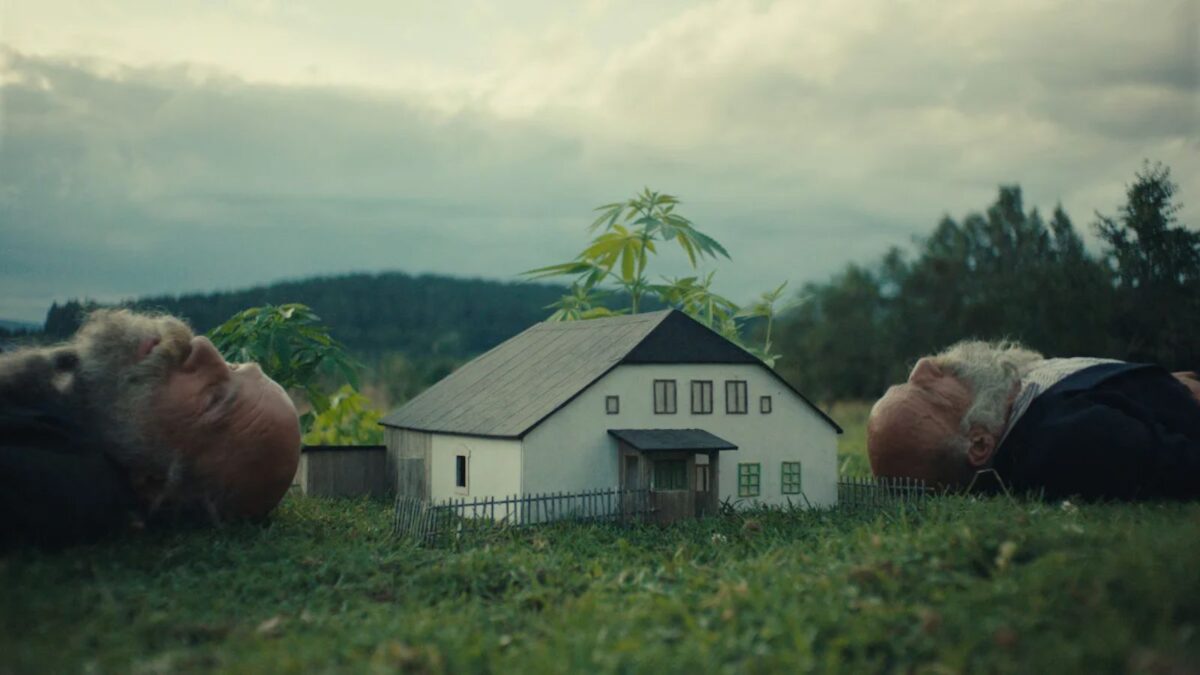
Better Go Mad in the Wild
The subjects are Franta and Ondra––though it’s probably more appropriate to call them collaborators, given how often they perform to camera. They are occasionally seen tending the farm but spend most of the film reciting poetry, helping the director create visual tableaux, and taking the piss out of each other as opportunities arise. Narrated by a talking cow and scored with buoyant orchestral surges (including a very effective use of Smetana) by Adam Mate, Wild produces an unusual kind of energy. Funny, surreal, never condescending, it drifts past at what feels like less than its 83-minute runtime––always a welcome treat.
The exceptions to the aforementioned rule were Divia, Dmytro Hreshko’s evocative documentary on the natural world’s response to Russia’s war in Ukraine, and Soheil Beiraghi’s Bidad, a film about a young woman in Tehran who goes viral for singing on the streets––an act forbidden under Shariah law. Added late to the program––and less than two weeks after Israeli bombs started falling on Beiraghi’s country––Bidad (which eventually won the Special Jury prize) was understandably a bit below the median strength of other competing titles. It does, however, boast an electric performance by Amir Jadidi (A Hero), who whisks away the protagonist Seti (Sarvin Zabetian) one night after a police raid. It made me pine for a movie centered on just the two of them, where political discomforts could arise through conversation instead of an occasionally blunt approach.
One film with a more convincing tune was Ondrej Provaznik’s Broken Voices. Set in Czechoslovakia in the 1990s and based loosely on the Bambini di Praga scandal, it tells the story of a grooming choirmaster from the POV of his students. Less a true-crime exposé than a compelling coming-of-age tale, it suggests a move from subjugation to independence that seems to mirror what was happening in the country at that time. The music is never less than evocative, but the performances really make it. Not least Kateřina Falbrová, who stands out amongst a fine cast of young actors that Provaznik admirably wrangles to a number of astonishing locations: an otherworldly spa hotel high up in the mountains, a drafty church of cold concrete, and a wonderfully jarring coda set in a spot we probably shouldn’t give away. Broken Voices continued to surprise me, even in spite of its familiar central arc.
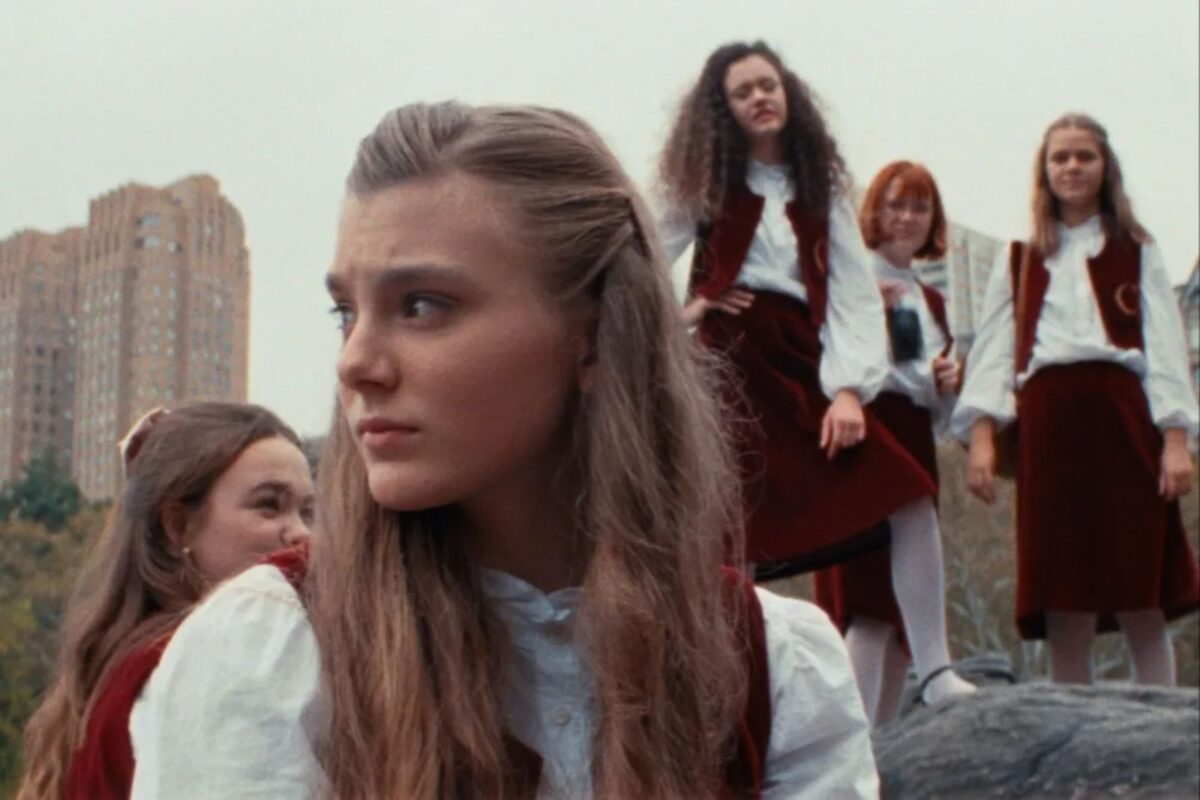
Broken Voices
An only slightly more appropriate age-gap romance occurs in Nina Knag’s Don’t Call Me Mama, a work that pokes around some similar places as Michel Franco’s Dreams (a Berlinale premiere that also featured in this year’s selection alongside Franco’s signature globe of hair at various festival mixers) in its story of a younger immigrant man who starts an affair with an older woman who, uncomfortably, also happens to be his meal ticket. We’re not in Los Angeles’ ballet scene, as in Franco’s project, but a high school in Norway where Eva, the wife of the town’s mayor (a cheater), meets Amir, one of many recent arrivals from Syria who the locals are helping to integrate.
This inherently uneasy power dynamic––which Franco struggled to resolve in his final act before delivering an earth-shattering final chord––is left a little underexplored. But unlike Dreams, Knag allows us to witness the early throes of their coupling, making the inevitable implosion hit hard. Pia Tjelta (fittingly awarded for her performance) and Tarek Zayat are both excellent, and it’s their provocative chemistry that makes Don’t Call Me Mama worth your time.
Another is Out of Love, a film about sisterhood, motherhood, and the anxieties of entering middle age that is directed by Nathan Ambrosioni, a 25-year-old man––a quirk I presume played some part in him being awarded the festival’s Best Director prize, though the title was deserving on its own terms. It’s a quality piece of work, deftly directed and well-acted with a wonderful second act, if perhaps suffering a touch from a case of too many endings.
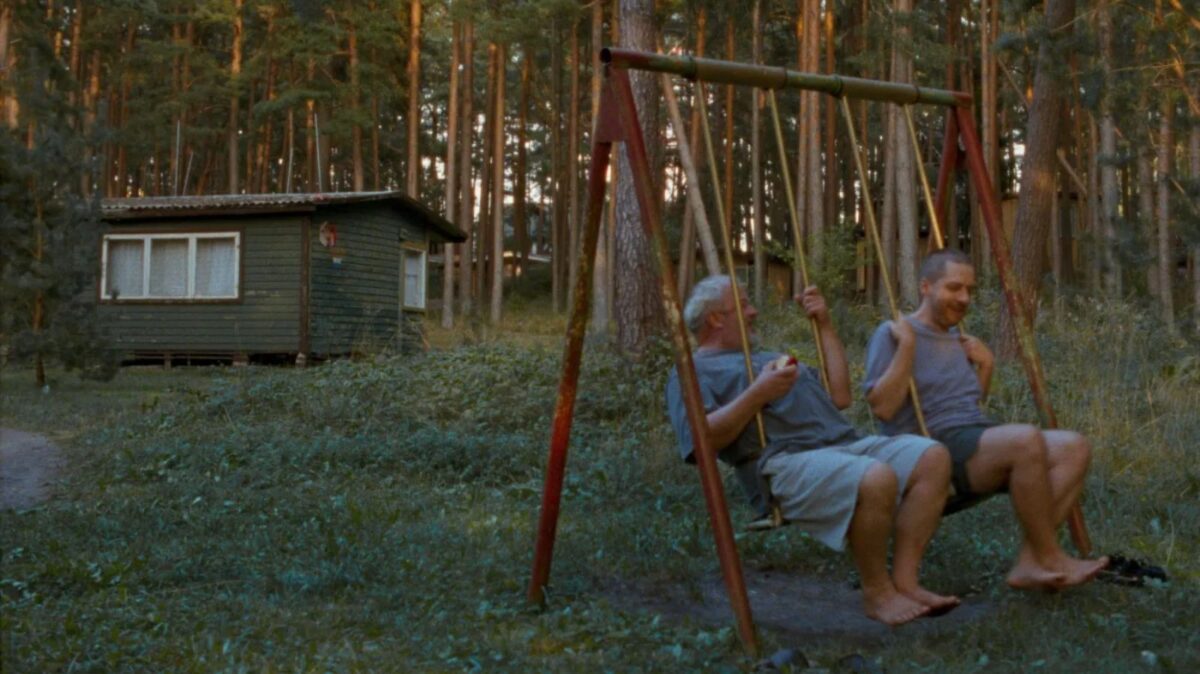
The Visitor
Amongst the more poetic selections was Vytautus Katkus’s The Visitor, which works the bones of a well-worn narrative (the émigré returning home after the death of a parent) into a thoughtful, melancholic, warming soup. The Visitor’s vibes will be familiar to fans of Bas Devos’ recent (and similarly soupy) Here––even if Katkus (a renowned cinematographer from Lithuania) is not yet quite on the Belgian’s level. His images, as one would expect from the DP of Saule Bliuvaitė‘s Toxic, are consistently lovely (all slow tracking shots and washed-out colors), though Katkus is perhaps guilty of paying them too much attention while granting too little to the characters tasked with populating them. There will be plenty of time for that in future projects, however, and whatever the case, there is definitely something stirring in the film schools of Vilnius these days. We continue to watch that space with great interest.
Another city that continues living in many an imagination is the Lisbon of João Rosas’ The Luminous Life, a film to please anyone who appreciates the languid rhythms of a nice Rohmerian walk-and-talk. Rosas’ career has thus far comprised three shorts. Each focused on the same character, Nicolau, who was played in each by the same actor, Francisco Melo. As this began when Melo was just 10 years old, we can presume it’s no accident that Rosas allows the camera to linger for a moment on a newspaper image of Antoine Doinel. Luminous is Rosa’s debut feature, and shows Nicolau at the ripe old age of 24. It’s as calming as it sounds, a work full of pining and melancholy, and one with the irresistible lure of young ro(h)mance. Just be warned: this is also the kind of world where characters wander about quoting Sartre and where even the cold-blooded ad execs grasp for profound things to say. And yet Karlovy Vary has always thrived on that kind of artistic idealism. I imagine Bartoška would have liked it.