
Cashiers Du Cinéma, the madcap comic zine that examines the lives of movie theater employees, has programmed a new ten-film series kicking off at BAM this Friday. The series includes arthouse standard-bearers like Goodbye, Dragon Inn and Cinema Paradiso, but also oddities like the ’80s slasher Blood Theater and The Projectionist, a comedy that includes Rodney Dangerfield’s debut film performance.
Since launching in 2023, Cashiers Du Cinéma has traced the often-banal and oddly beautiful lives of ushers, concession workers, and projectionists. Each new, increasingly ambitious issue overflows with comics and essays from contributors like actress Elsie Fisher, filmmaker Owen Kline, cartoonist A.T. Pratt, and—in its latest issue—Ronald Bronstein, who pens a letter to the editors.
Said editors are David Cardoza and Dan Welch, who frequently contribute their own comics to the zine. Cardoza is also a filmmaker whose latest short, Turtle Sandwich, which stars three nine-year-olds from the after-school program he used to teach, premiered at the New York Film Festival last fall. Cardoza and Welch met in 2018 while working at Film at Lincoln Center, becoming fast friends and collaborators. I recently sat down with the two over Mexican omelettes to discuss the upcoming series at BAM, the perils of self-publishing, and the influence of Mad magazine.
The Film Stage: Talk to me about the origins of your friendship and how Cashiers Du Cinéma started.
Dan Welch: We met at the movies.
David Cardoza: We both worked at Lincoln Center around mid-2018.
Dan: I’m still there. I print the tickets. I scan the tickets.
David: It was a fun time. We were seeing a lot of movies together and that’s how we hung out. We had a similar cynicism attached to how we saw everybody from within our little bubble. So there’s a level of trust between us that came from years of hanging out and working on each other’s projects, as well as working in a theater together. I think it got to a place a few years ago where it felt like we were hanging out too much and needed to just start making stuff. Now the working relationship is synonymous with the friendship.
Dan: We just had to stop drinking while making stuff.
David: We tried making this movie years ago where Dan played a white guy who moves into a Hispanic neighborhood and falls under some Aztec curse.
Dan: We shot a bunch of it but then realized the audio was terrible and that we were just hanging out.
David: And getting wasted. It kind of started from that—creative exploits that failed. So we thought, “Let’s try to do something successful for once.”
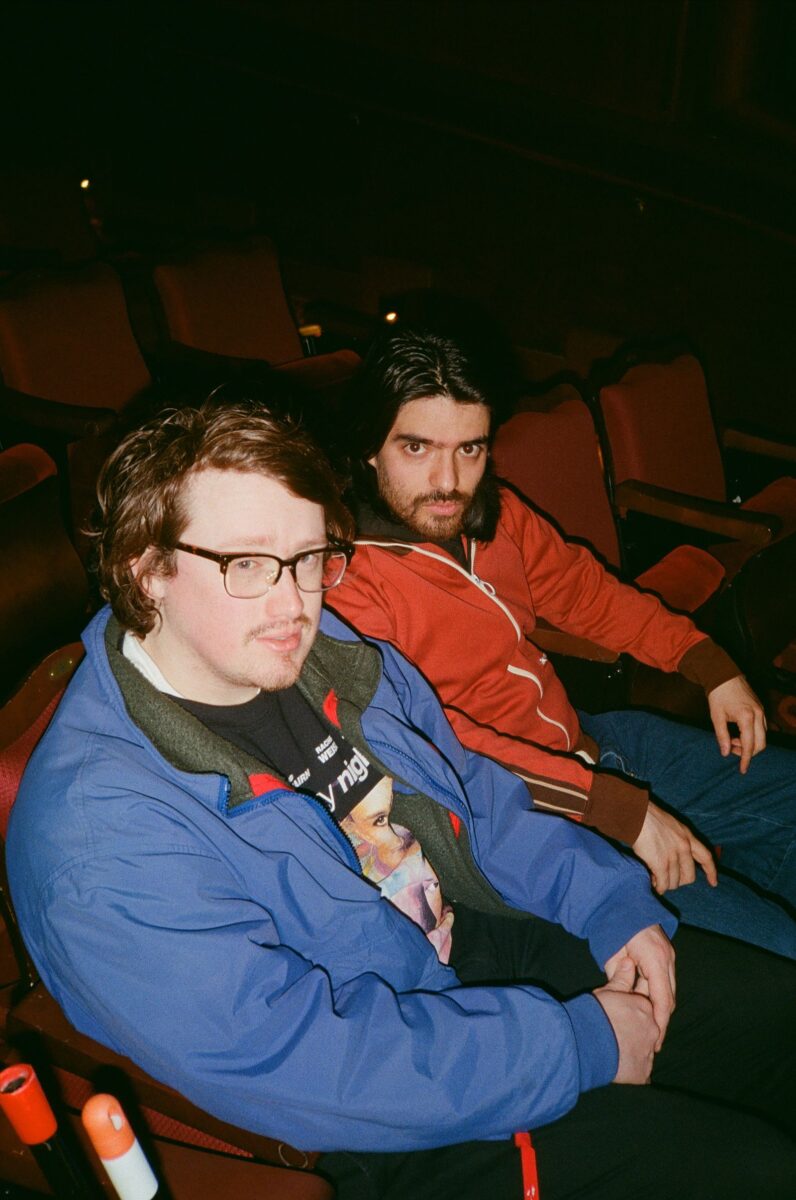
Dan Welch and David Cardoza
There’s clearly a lot of love put into it. What’s the process of gathering the material and making the zines themselves?
Dan: Usually we put out a call for submissions three or four months before the projected release date. I’m the one with InDesign, so once we get the submissions, I will do the layout and share it with David as I’m going. And once that is done, I have a Risograph printer at home. It’s an automated printer; there’s no digital interface, so you put something on a scanning bed and it burns the image into a sheet of rice paper. The ink is shot through the screen and onto the paper at a very fast pace, which is kind of the selling point. We started with around 200 copies for the first issue, and for this latest issue, I printed a thousand.
David: And we’ve gone back and reprinted old issues because the demand was there. People are kind of flocking towards the thing now. We were able to do what Dan wanted to do from square one, which is: create a place for comics people and movie people. Because comics people love movies, but movie people don’t really understand underground comics. They might know Crumb, but in general it’s a blind spot for a lot of film people. That’s been the number-one goal.
Dan: We also want the series at BAM to be a bit of a Trojan horse in terms of sneaking comics into a film institution. I think these two worlds solve a lot of each other’s problems.
David: And there’s so many great illustrators and artists who love the movies and used to work at theaters. A.T. Pratt, for one, who is in this latest issue.
Dan: David Berman. Ian MacKay.
Berman was also a bit of a cartoonist, right?
David: He was, that’s right. I also heard in an interview that Sean Baker managed a megaplex when he was 19. I want to hear that story.
Dan: Matt Damon and Ben Affleck keep bringing up how they worked in a theater while promoting The Instigators.
David: For our last issue, it should just be all celebrities.
Why do you guys think Cashiers has resonated with people in New York in such a way? I feel like I see it everywhere.
David: Maybe it’s because we live in a city with the most glorified theaters in the world. Because it’s a bit of an echo chamber. Maybe it wouldn’t be as interesting if you live in the middle of nowhere where they only have shopping-mall cinemas. But I don’t know.
Dan: The majority of orders I get on the online store are from outside of New York. There’s, like, 50-or-so stores scattered across the country that all buy copies. It isn’t just a New York thing. There’s a great comic in the new issue about working at an arthouse cinema in North Carolina and how the first line of defense for the arthouse is in towns like that.
David: The movie theater I used to work at in Colorado was called the Chez Artiste Theatre, and the woman who managed it took so much pride in her job. She would introduce all these senile old people who went there to movies that would have never played anywhere else in that town. It was beautiful to see this one person who was a light and was so enthusiastic.
Dan: I don’t know if I’d care about movies if I hadn’t worked in theaters. When I was in my early 20s and I was broke, the only fun thing I could do for free was go to movies. I took advantage of that and it gave me an education.
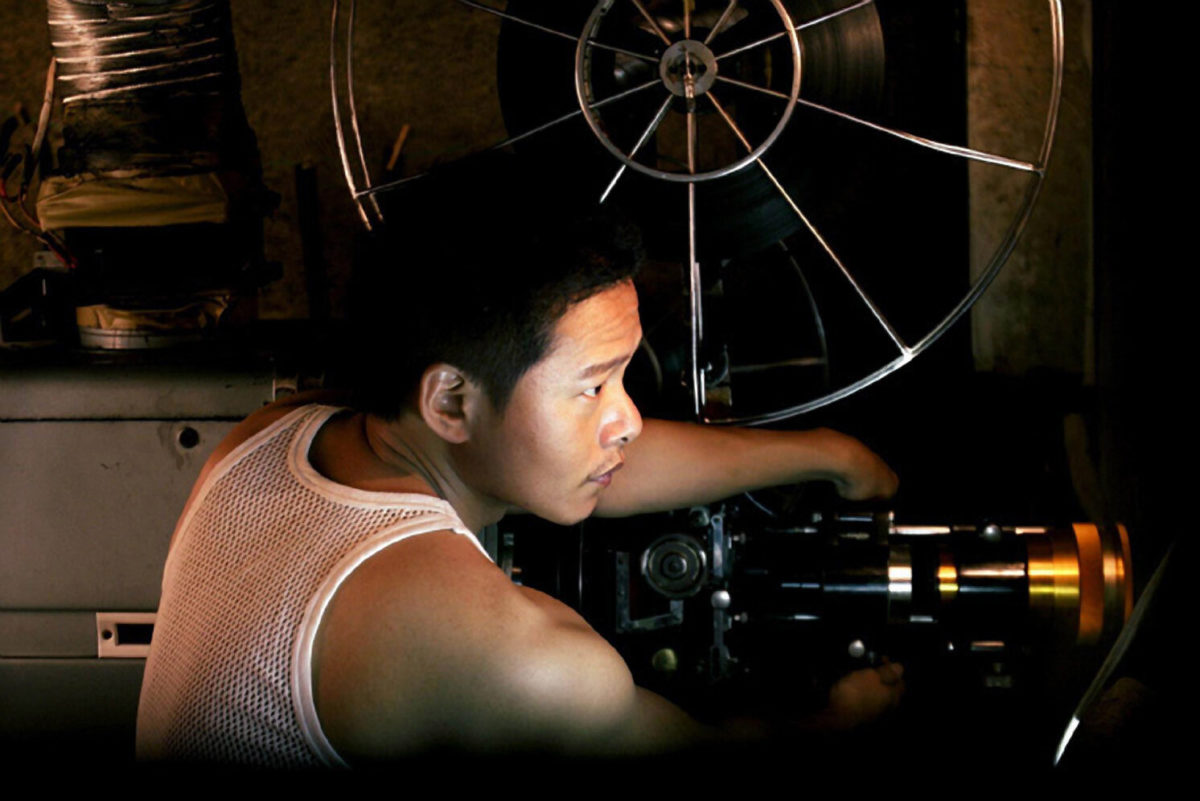
Goodbye, Dragon Inn
How did the upcoming series at BAM come about?
David: A friend told us that some people at BAM were into the magazine and so we pitched them this idea for the series.
Dan: I think it is a product of us being hungry. The BAM series goes beyond just programming films. We’re doing comics-readings; we’re gonna sell copies in the lobby. And we’ve made a program guide zine, too.
David: The series includes movies from all over the world, spanning from 1930 to now, which is kind of a testament to how few movies there are about working in a cinema. So we kind of had to scrounge the earth to find any good ones. There’s a lot of bad ones. Working at the movies is a really mundane thing, so a lot of these movies end up being slow cinema. The one we’re the most excited about, though, is The Projectionist from 1970. It includes Rodney Dangerfield’s first role in a film and it’s amazing because he’s playing it more straight as this tyrannical manager. He’s unfortunately not in a lot of the movie, but the four scenes he is in are incredible. That’ll be on a 35mm print we got from MoMA.
Dan: We very much didn’t want it to be a series about the “magic of cinema.”
David: Cinema Paradiso is maybe the one exception. Also Goodbye, Dragon Inn, which plays all the time. But this will be the last time it plays before we burn all the DCPs. But I hope people come and see even the films that play a lot, for the sheer benefit and context of the series and what it stands for.
Have you had any heroes or just notable figures come out of the woodwork to let you know they’re fans of the zine? And how did the Ronald Bronstein letter in the new issue come about?
David: I knew that Bronstein had bought copies and whenever I would run into him somewhere, like every six months, he’d just ask us questions about the magazine. And it felt strange—like the roles were reversed. And then he wrote this letter for us to put in the magazine and it was really, really flattering.
Dan: Stephen Bissette, who drew Alan Moore’s run on Swamp Thing. He sent us a nice note and ordered a bunch of copies.
Where did the love of comics start for you guys?
Dan: I started with Watchmen and from there I went further and further underground. When I was younger there was the big graphic novel boom and they were taken really seriously. But there’s no infrastructure really anymore for interesting, challenging comics, which is why I think all the best comics now are being self-published.
David: I started more with Mad magazine and Simpsons comics because that was just around. I was drawing in class all the time and it became a problem. My parents got called in at some point because I was tracing something from Tales From the Crypt and the teacher told them I was demented. He said, and this is verbatim: “We’re gonna clean all the cobwebs out of your head.” I guess the cobwebs are still in my head. When we started the magazine, we wanted it to be like Mad or like Crumb’s Weirdo anthology. It was gonna be mean-spirited and cynical shit about the repertory scene. But now it’s a very genuine thing and there’s a lot of beautiful, humanist work in it.
Was part of the fun riffing on the name and logo of Cahiers Du Cinéma—taking comics, a medium looked down-upon sometimes, and placing it in the context of this esteemed French film magazine?
David: 100%.
Dan: Well, if you read interviews with these old cartoonists like Art Spiegelman, they’re always bringing up that one issue of Mad magazine that looks like Life magazine—
David: Oh yeah, the Basil Wolverton one! “Beautiful girl of the month!”
Dan: All these legendary cartoonists thought it was Life magazine and then realized it wasn’t. And you hear that story enough times and think these guys are really dumb, but a couple issues in I realized we were doing the exact same thing with Cahiers Du Cinéma, in terms of ripping off the cover design for a magazine and repackaging it as something else, and it’s a trick that still works.
David: Whenever we’ve gone to comic shows or just sold copies in-person, there’s always one bag lady who is like, “Wow, they still print these. Wonderful.” And then she starts flipping through it and looks horrified.
Dan: I don’t think the magazine works without the pun, and if you’re going to go with that, you may as well double down. That pun had been floating around Lincoln Center for a while and I thought the title justified turning it into an actual physical thing. If you have a stupid idea, you have to commit to it a thousand percent.
Cashiers Du Cinéma’s ten-film series will run at BAM Cinema from February 13–19.