
One October after Lebron and Bronny James made history as the first father-son duo to play on the same NBA team, Daniel Day-Lewis has come out of retirement to star in his son’s debut feature, Anemone. Since graduating with a BA in Art from Yale five years ago, Ronan Day-Lewis has made a name for himself as a painter among American art curators. But it’s nothing near the name he’s already built for himself globally in one film.
Ahead of Anemone‘s New York Film Festival premiere and theatrical release, I sat down with the writer-director (and title designer) to talk about the pressures and graces of directing his dad, the father-son thematics at work, the pull––as the son of writer-director Rebecca Miller––to make a first feature, religion, score, and much more.
The Film Stage: “Painterly” is one of the first words Anemone brings to mind, so let’s start there: you’re a painter. Would you say painter-turned-director or are you still fully doing both?
Ronan Day-Lewis: Yeah, I’m still definitely fully doing both. Painting has definitely been mostly my life for the last few years, up until this film. But I’ve been interested in pursuing film and, you know, making short films and writing for years. So it’s sort of been a twin focus for me for a while. But, career-wise, painting was definitely the thing for me up until this.
How did directing come into the picture and take focus?
I had been interested ever since I was a kid. I was always corralling my friends into making little short films in our family’s backyards with our parents’ flip cameras and stuff. Then I got more interested and got more serious about film as a teenager, around eighth grade. I started to think about writing more. And I saw some films, specifically this film Zombie Girl, which was about a 12-year-old girl who makes a feature-length zombie film in her small town in Texas.
There was something about seeing that and being exposed to other films by my parents and at sleepovers and stuff. I started to get really, really passionate about film around then, and I was lucky enough to see that my mom was a filmmaker and see that that was something that you could actually do as a writer in your life. And so I started to write screenplays around then.
So, for a long time, I’d been thinking about film and making smaller, shorter-form films and music videos. But it was definitely a massive leap, of course, to this. Having developed my sensibility as a painter the last few years to a greater degree helped a lot with that leap because I felt like, even though there was so much I had to learn about technically, that confidence in the visual language was something that I had. I felt like my feet were at least touching bottom in that respect. And there was a lot about it that was obviously, you know, a leap into the unknown.
I noticed some of your artwork was in there. Was that something you wanted to work in from the start?
It was very subconscious, the way that started to enter the script. Certain images started to bleed into the world of it, and I I didn’t consciously realize how much overlap there was between my paintings and the film until other people started mentioning it while we were shooting. It’s really a strange thing. And once I realized that, I started to consciously lean into it more. I knew I have a certain taste––I feel very strongly about color, obviously as a painter––so that was something I was thinking a lot about as we were designing the film. And painting and film are both forms of image-making, so I was definitely pulling a lot from what I knew as a painter. But yeah: I realized more and more how many images were actually in common.
You’ve referenced the influence of your parents. How has their influence––either one of them or both––affected you moving into the feature filmmaking sphere? And how has it affected your tastes as an artist?
In a really unconscious way, it’s influenced me a lot. I absorbed a lot. Just all the films that they showed me growing up gave me at least a similar kind of substrate to think about film as far as the kind of film I was drawn to and, tonally, what my instincts were when I started working on this.
Would you watch all kinds of movies? Or was there a specific type of movie that was more common?
Yeah, all kinds of movies. I’m trying to think of some examples. My parents showed me Kes when I was really young. I was five years old. That was one of the early memories I have of just being completely devastated by a film. Rocco and His Brothers, stuff like that––films that I would normally never come across until a bit later in life. I was really lucky to be exposed to some things like that that early on. That shaped the way I thought about film.
Is that shot of the woman hovering over Ray’s bed a Tarkovsky reference?
It’s interesting, because it wasn’t initially a Tarkovsky reference. And then I was actually ripping off a different Tarkovsky shot. When the wind travels through the grass in the beginning of the film, I was thinking about Mirror. Then I realized… I did start thinking consciously about the hovering woman as a Tarkovsky reference at a certain point, yeah. [Laughs]
How did the process of making a film with your dad come about? And was that something you always wanted to do?
No, it was very unexpected in a way, because I had another film that I had written that I hoped was going to be my first film for a long time. I almost shot it in Germany, but the financing fell through last-minute. And then, basically, after retiring, we had a chat where he was just like, “One of my regrets with this is that we won’t get the chance to work together.” And we started talking about it in a very kind of low-pressure way, just thinking about an idea that we could just explore. I was just trying to write something that we could try to make on a smaller scale. When he first brought that up to me, I’d never thought about it, maybe, consciously, but part of me was disappointed at the idea of us never being able to collaborate together.
So it was a really exciting thing when he mentioned that. But it took us a long time to come around to find the kernel of an idea that we were both excited about. I had had this general thing for a while of wanting to do something about brotherhood as an archetype. I have two brothers, and it’s just something I wanted to find a way into. Then it turned out that he independently had an interest in that, so we kind of latched onto that as an anchor. And it just developed very, very gradually, and the scope of the script as we worked on it expanded more and more. So yeah: it was kind of a circuitous route that brought us to this place.
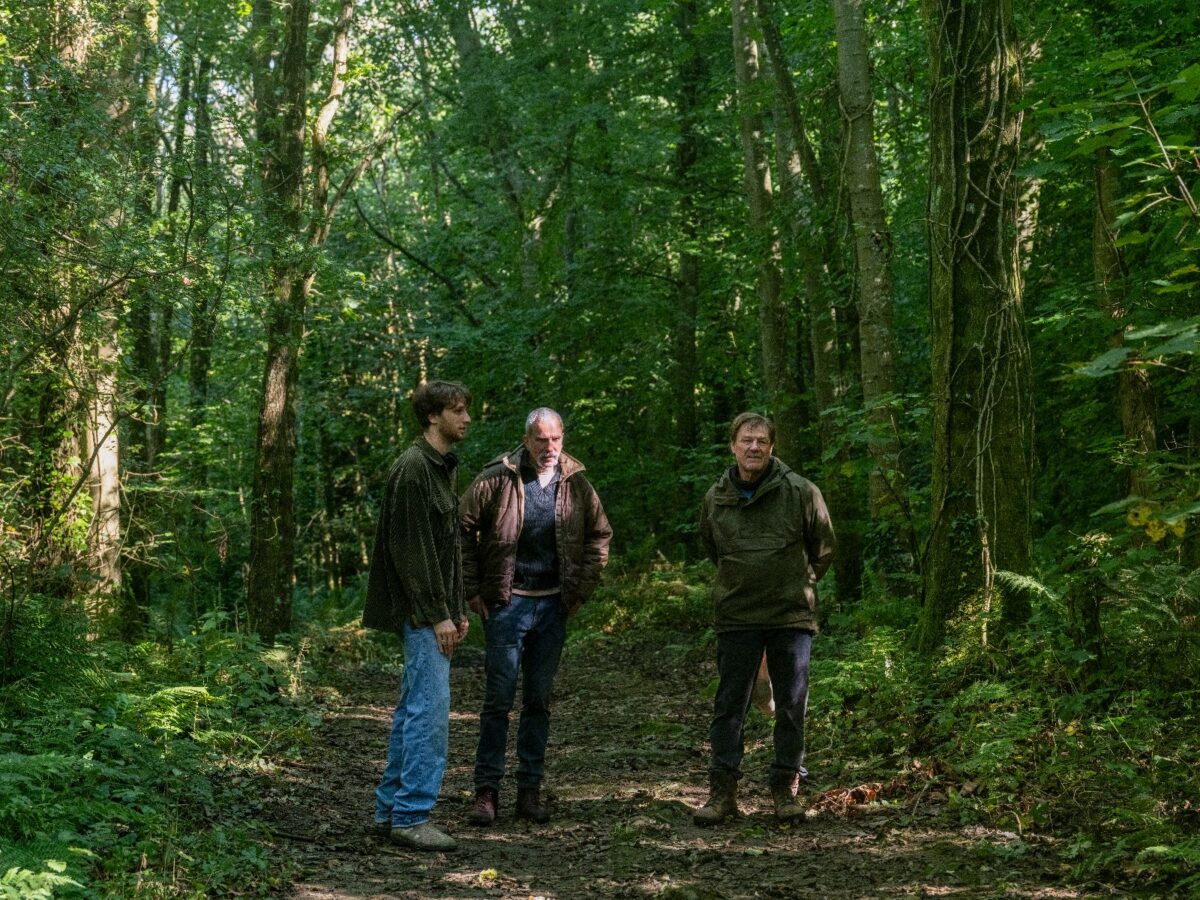
On the surface, a father and son making a film about a son with an absent father certainly begs the questions: which parts of this are autobiographical? What comes from the imagination? And what kind of conversations were you having as you wrote together?
Yeah, it’s interesting. It was never explicitly autobiographical. At first it was really just an exercise in imagination, and then I think we realized at a certain point that the thematic thread of the father-son relationship did really resonate with us. Not in terms of the absent father, as much. I mean, not at all in that respect. [Laughs] But the idea of the son and the mystery of the father’s past life to the son and the ways that we can become fascinated and obsessed with these perceived notions of who our parents are. And that simultaneous yearning to almost, like, inhabit that. But also this fear of becoming the same as your parents––it was something that we both connected to in different ways, that mystery––and that started to feel more and more personal. But at first, we started with just these two characters and the circumstances of their lives. Brian really crept up on us, actually, and that’s sort of a multi-generational aspect that wasn’t initially part of the concept. So it was interesting seeing how that ballooned into one of the central themes.
It’s a fascinating universal experience to tap into––that we can never know our parents before we met them. What did your actual writing process look like? Would you bring pages to meetings or write in real time together? Would you be sitting down at a table? Taking turns on one or separate computers?
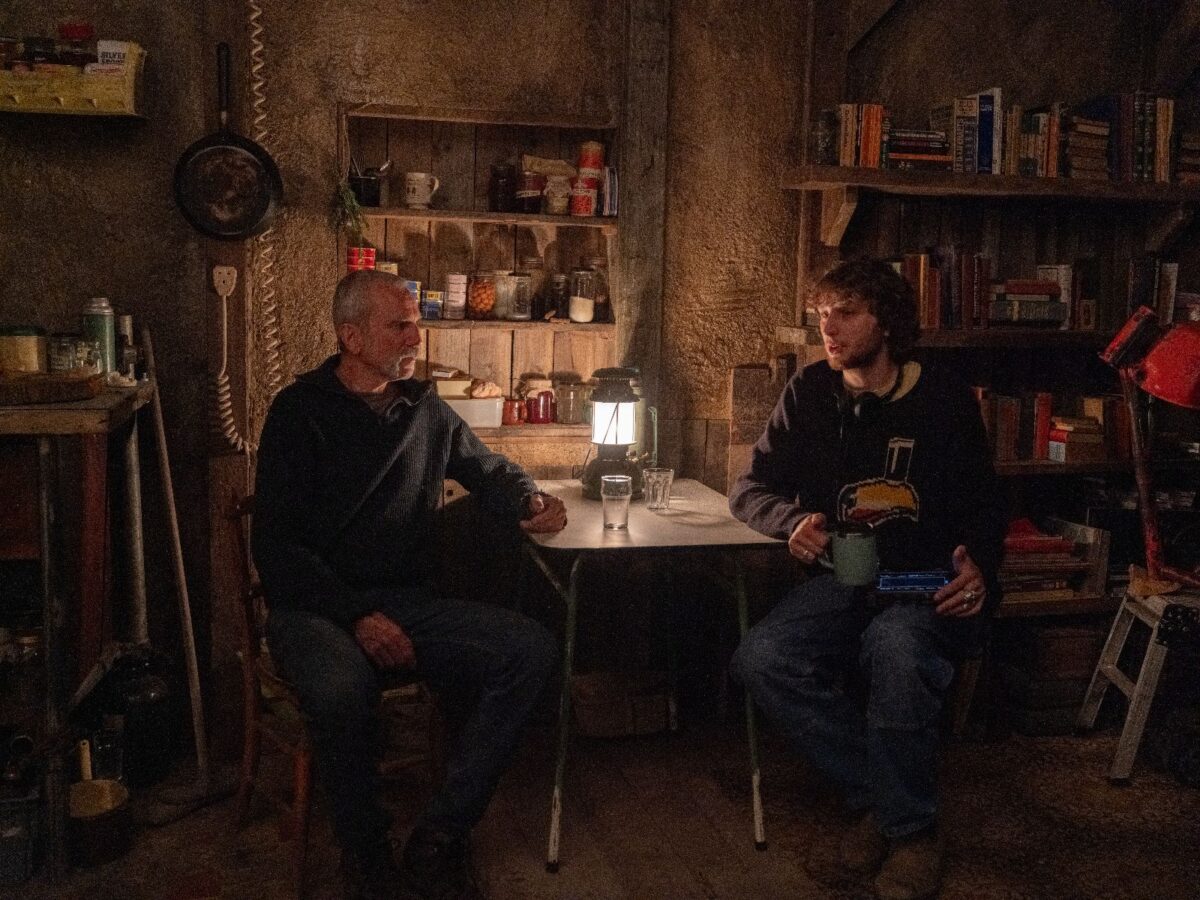
We would never really work on it when we weren’t in the same place, until the very end of the process. But for most of the time I’d have my laptop and we’d sit at the kitchen table or sit on the edge of a bed and just kind of brainstorm. We had a Google doc at first where I was just writing down fragments of ideas, just these little islands that were forming about potential avenues of Ray’s past. At first we didn’t really outline or anything, so we were really walking into the dark with a flashlight. And it was very character-led where there was a lot of improvisation where we would create this central scenario and then, scene by scene, these new scenarios where the characters were in a certain place together. Then it was like: how would they react? How would one react when the other does this and vice-versa. It was very intuitive like that, which was different from my experience working on past scripts where I’d gone in with a really intensive outline and this kind of roadmap. So, yeah, there was something exciting and kind of freeing about that.
Were there creative boxes in terms of your dad participating? I’m just noticing there aren’t very many actors in it, and he’s set in a very remote location most of the time. Was that a prerequisite?
Yeah, it’s funny, because we had originally set out to write something really contained that, basically, would just take place in the hut and the surrounding area of the hut that we could film in a really claustrophobic, contained way. At a certain point in the writing process we just started to get sick of that hut, essentially, and the claustrophobia of it, which stayed really important––it’s still a very claustrophobic film, but Nessa and Brian just started to kind of insist on themselves being real people instead of these footnotes in the brother’s periphery.
Once that happened, the scope just started to open up a lot more in ways that––I mean, the backdrop of the weather and the cosmic backdrop of it was hinted at early on in the script. There was always a sense of that. But once we gave ourselves permission to open up the world a bit more, as far as Nessa and Brian, it allowed the edges of the sandbox to expand. But yeah: that was definitely part of the concept initially––to have it really contained, almost like a two-hander.
What was your relationship with organized religion growing up?
It was pretty nonexistent. I lived in Ireland growing up from seven to thirteen, so I went to Catholic school there, and I always felt very outside of organized religion, almost envious of that as an organizing principle or something. There was a lot of prayer and stuff. Even though I didn’t really subscribe to it, I still felt there was this fascination with it and with the imagery and the mythology. I’ve never subscribed to one organized religion, but I’m really fascinated with Christian imagery, iconography, and Christianity in general.
I was surprised with how much the score reminded me of a scratchy indie aughts noise band at times, and I was wondering if that was something you had in mind from the beginning, because I loved it. And there were certain shots where I’d find myself thinking, “This would never seem like a good combination, but it’s really working.”
[Laughs] That’s great. Well, since the film is set in the mid-90s––and not just because of that, but, in general, this was the kind of music I was drawn to––I was listening to a lot of shoegaze in prep and a lot of Slowdive and, you know, My Bloody Valentine and Drop Nineteens and this band Lovesliescrushing. So I had this playlist that I was listening to obsessively, and I started to use it as a crutch when I was trying to describe things tonally to the heads of department. I was kind of struggling to describe how to marry these different parts of the visual language and the tone; I would play them these songs and it just became a guiding star for us.
So when it came time to work with Bobby Krlic, the composer, I broached that with him, and I wasn’t sure if he would go for that. But he really understood that unlikely synergy between the fuzziness, the different aspects of the sound of shoegaze, and the kind of thematic world of the film. Because even though it’s not the most obvious pairing, there was something about the vocals in shoegaze––these angelic, spiritual vocals trying to prod through layers of rough guitar––that felt relevant to Ray in terms of his journey in the film. I was really amazed at how Bobby was able to basically create this shoegaze score that still had this cinematic, emotional ballast. It was really exciting to see that come together.
What was it like directing your dad? Did your relationship take on a different mode or was it business as usual?
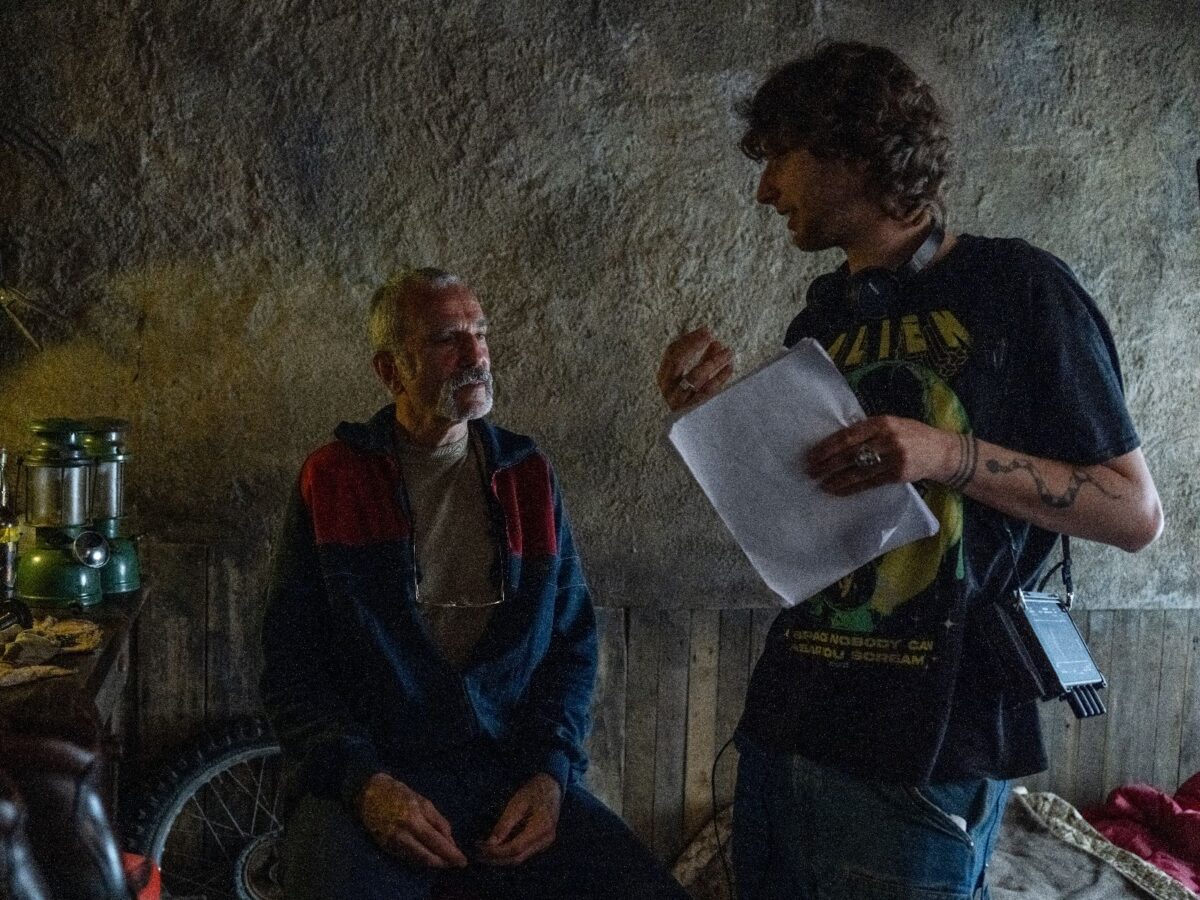
I had a couple big advantages going in, which is that, since we had written it together, we’d had so many of these exhaustive discussions about the character and the script and his emotional state at different points in the story. So once we got to set, it was pretty intuitive. We would talk through things, but a lot of it was to do with the rhythm of the scenes and the ways he would move through space, and it was just suggesting, trying things in different ways. There was so much of the groundwork that we had already done. And then, also, us having that intimacy of our relationship meant that… well, I think most young filmmakers would be extremely intimidated by that, by working with him and giving notes. So it was good to have that––those two things helped a lot––but yeah, it was interesting. I was kind of nervous about how that would feel going in, but it felt pretty natural once we got going. We kind of slipped into a rhythm, a silent understanding.
Do you think you will make another, or is this a one-and-done kind of situation?
I would love to make more films.
Well, you, of course. I assume you’re going to make more films. But together, do you plan on making more?
Oh, together. Yeah, it would be amazing. I think we would just have to find something, another idea that we both cared enough about. But yeah, I mean, I would love that. That would be great.
Anemone is now in theaters.