
Summer is here, and there are plenty of books in our latest roundup worthy of lugging to the beach. Just don’t be surprised if you get funny looks for eating up a book about Hannibal Lecter while lounging poolside.
A Place Both Wonderful and Strange by Scott Meslow (Running Press)
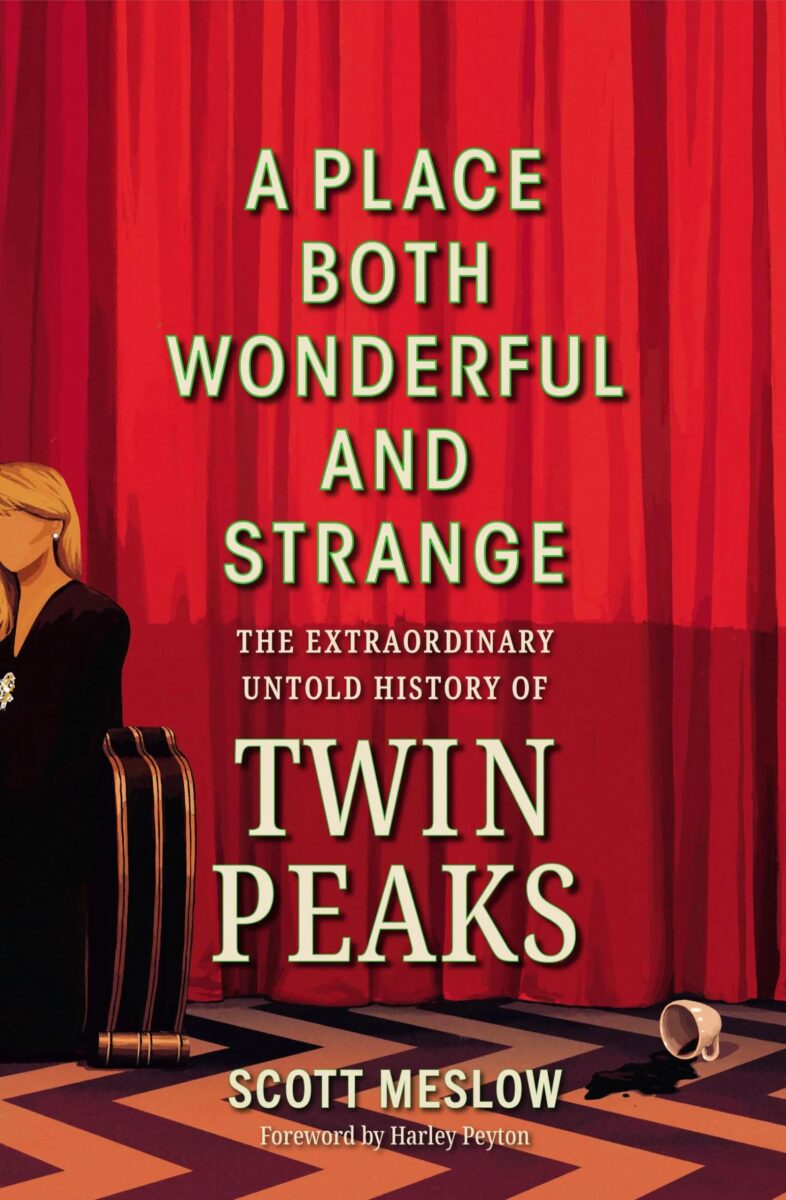
The death of David Lynch in early 2025 has inspired a deluge of new books, several related to the Lynch-Mark Frost television masterpiece that is Twin Peaks. Scott Meslow’s A Place Both Wonderful and Strange: The Extraordinary Untold Story of Twin Peaks is one of the finest yet. While we have encountered many of these stories before—the start of the project as Northwest Passage, its season one success and subsequent downfall, followed by a big screen turn in the form of Fire Walk With Me and subsequent resurrection as The Return—Meslow’s style makes it all feel fresh. He also spends a significant amount of time on The Return, and that makes Wonderful and Strange an essential addition to the Peaks canon. Considering episode 18, he asks, “What does it all mean? Has Jowday triumphed or been defeated? Either way, what’s the cost? Is this an ending, a beginning, or a loop?” These are the questions that haunt Peak-ers to this day.
Hannibal Lecter: A Life by Brian Raftery (Simon & Schuster)
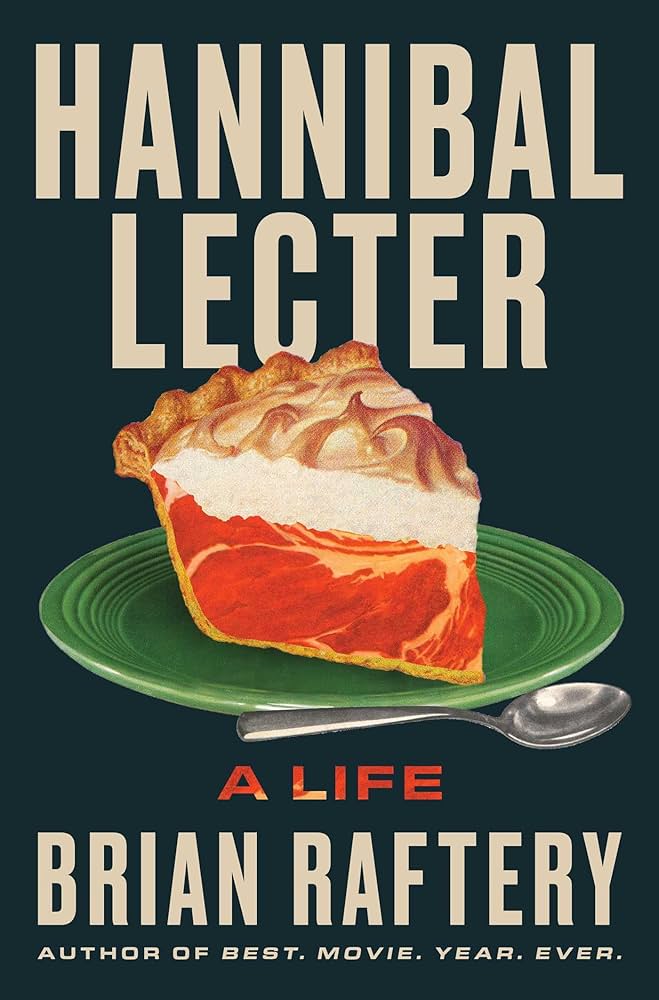
Brian Raftery, the author of Best. Movie. Year. Ever.: How 1999 Blew Up the Big Screen, can be counted on to write with humor and verve. In other words, he is well-suited for the job of tackling the life of Thomas Harris’ most unsettling and brilliant creation, Hannibal Lecter. Raftery outlines the life of the secretive Harris as well as his literary successes and the film and television adaptations that follow. Raftery also has the chutzpah to open Hannibal Lecter: A Life with Donald Trump’s campaign trail obsession with “the late, great Hannibal Lecter.” What was the reason for Trump’s fixation on a fictional “cannibal with a double-digit body count”? Raftery considers several logical reasons: “[B]oth are unapologetically id-driven, pursuing their desires without hesitation or guilt.” Even more compelling: “By the time Trump began commending Hannibal the Cannibal in interviews and speeches, both men had been infamous for decades — so much so that they’d managed to reinvent themselves.”
A Century of Hitchcock: The Man, the Myths, the Legacy by Tony Lee Moral (University Press of Kentucky)
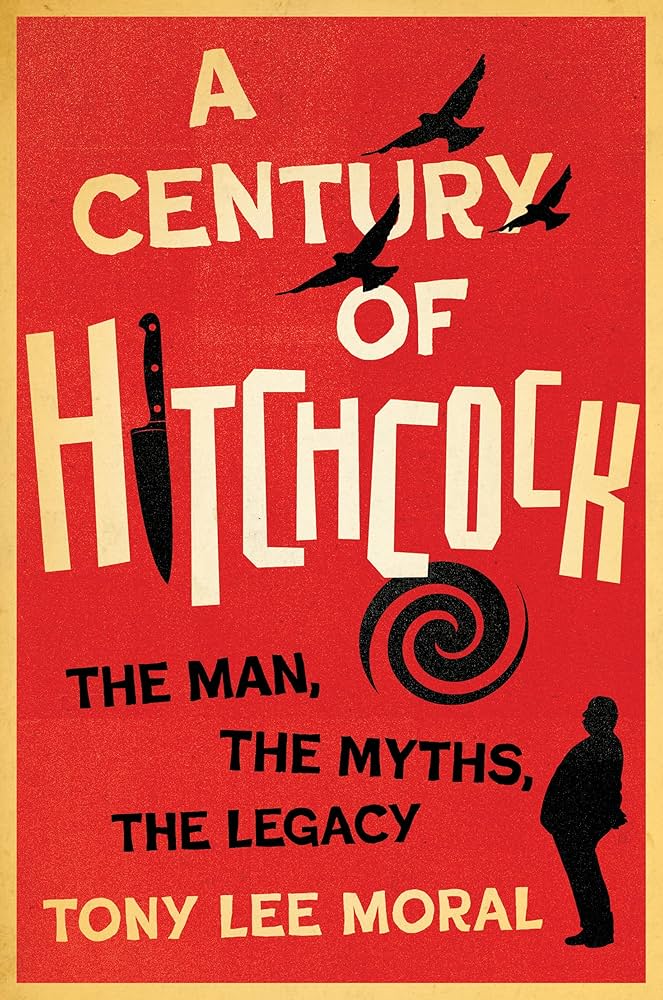
Tony Lee Moral’s A Century of Hitchcock proves there is still plenty to say about the legendary director of Vertigo and Psycho. And while Hitch’s entire career is covered here, what’s most exciting about A Century of Hitchcock is its focus on what happened to the master’s legacy after his passing. In particular, I was riveted by part three of the book, titled “Hitchcock’s Legacy.” Of particular note is the story of Donald Spoto’s salacious, still-controversial biography, The Dark Side of Genius. Spoto—and The Birds and Marnie star Tippi Hedren—do not come off well here. “More of a narrative architect than a truthful biographer,” Moral writes, “Spoto shaped the stories he told so that they aligned with his personal worldview.” When considering the future, Moral concludes that Hitchcock’s “reputation will be influenced by cultural shifts and the biographers who tell his story.”
Karmic Winds: Reflections of the Smartest Guy in Hollywood by Peter Hoffman (Rare Bird Books)
The “Hollywood insider tells all” is one of my favorite genres, and I find it particularly involving when said insider is a producer or studio exec. Peter Hoffman was president of Carolco Pictures when the independent studio was at its peak—the days of Rambo, Total Recall, Terminator 2: Judgment Day, and Basic Instinct. As is often the case with these stories, it all ended in disaster, with Hoffman even serving time in federal prison. Still, Carolco’s successes are undeniable, and Hoffman had first-hand involvement. In a memoir filled with saucy tales, my favorite is likely when Hoffman ordered that Terminator 2, then running weeks over schedule, be finished and ready to strike into negatives in ten weeks in order to make its July 4 release date. James Cameron said no, and according to his lawyer, wanted his name taken off the credits. Hoffman explained that Cameron did not have the “Alan Smithee” clause in his contract. “I hung up and sweated,” Hoffman writes. Cameron did it—a completed film in ten weeks—“but never forgave me for my demand.”
Intimate Audrey: An Authorized Biography by Sean Hepburn Ferrer and Wendy Holden (Grand Central)
It’s now more than three decades since Audrey Hepburn passed away, and she is still the epitome of elegance—onscreen and off. Her life has been covered many times before, including by her son, Sean Hepburn Ferrer, in the photo-driven Audrey Hepburn: An Elegant Spirit. With Intimate Audrey, Ferrer offers a more comprehensive profile of his mother. And while it’s of course intoxicating to read about the making of her films, Intimate Audrey is far more interested in Hepburn’s off-screen life. One comes away especially impressed with her dedication to service. As Ferrer writes, Hepburn “was a huge-hearted human being who was prepared to risk her life in places no one else would go.”
A double dose of Marty: Insomnia and Martin Scorsese: All the Films
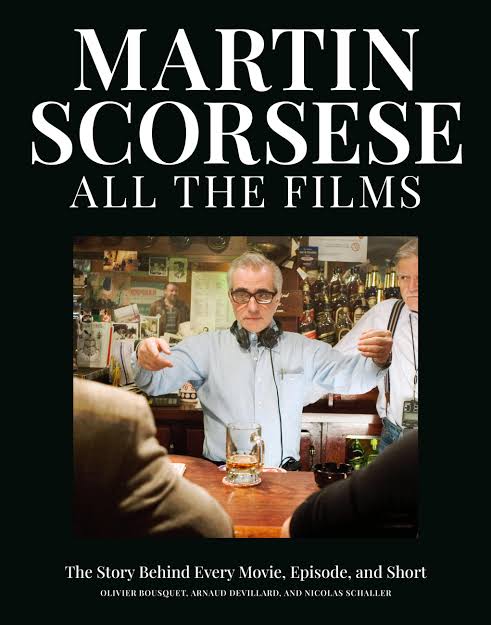
Martin Scorsese is always making headlines, some good (wrapping production on What Happens at Night, the Charli XCX cover appearance), some bad (the Black Forest Labs news). However, any Scorsese scholar knows that high highs and low lows have always been part of Martyworld. This duality is fully present in Insomnia by Robbie Robertson (Crown). The late leader of The Band and Scorsese were roommates in the late 1970s, and this living situation has drawn interest for decades. Finally, we have Insomnia, in which Robertson breaks it all down. The book is moving and often funny, and filled with almost intriguing, sometimes very sweet details. Example: “After Telluride, and his pilgrimage to John Ford’s desert, Marty went back to New York. I went to New Orleans with Bob [De Niro] and Harvey Keitel to watch Ali avenge his loss to Spinks. Run-down, run ragged, I didn’t know how to stop running. I just wished Marty had been there beside me.” During the ensuing days Scorsese almost died; it’s genuinely heartwarming to read of his friend Robbie’s devotion. Marty completists will also want to pick up Martin Scorsese: All the Films by Olivier Bousquet, Arnaud Devillard, and Nicolas Schaller (Black Dog & Leventhal). Like books in the All the Films series about Wes Anderson and Steven Spielberg, this one covers every film, television episode, and short. Also included are appreciations for noteworthy Scorsese collaborators like Thelma Schoonmaker and Dante Ferretti.
Quick hits:
The ever-expanding list of visual appreciations of the worlds of Wes Anderson has grown with Live Like Wes: Home Decor Inspired by Wes Anderson Movies by Jesse Atkinson (Hachette Mobius), a beautifully designed how-to for the creative cinephile. Highlights include The Royal Tenenbaums’ bohemian kitsch living room—not to mention suggested dishes for a Tenenbaums afternoon tea—and a French Dispatch-style office.
Kathryn Bigelow’s 2025 Netflix drama House of Dynamite came and went with minimal fanfare, but the film’s intensity and morality earned its share of praise. As usual for a Bigelow film, it was also beautifully shot. These immaculate visuals come through in House of Dynamite (Rizzoli New York), a companion to the film featuring stills from Eros Hoagland.
Netflix and other streamers come under fire in Boom to Bust: How Streaming Broke Hollywood Workers by Miranda Banks and Kate Fortmueller (UC Press), a vitally important work that attempts “to help readers—from industry professionals to journalists, students, and scholars—understand the stakes, stakeholders, and the profound impact streaming has had on film and television production.”
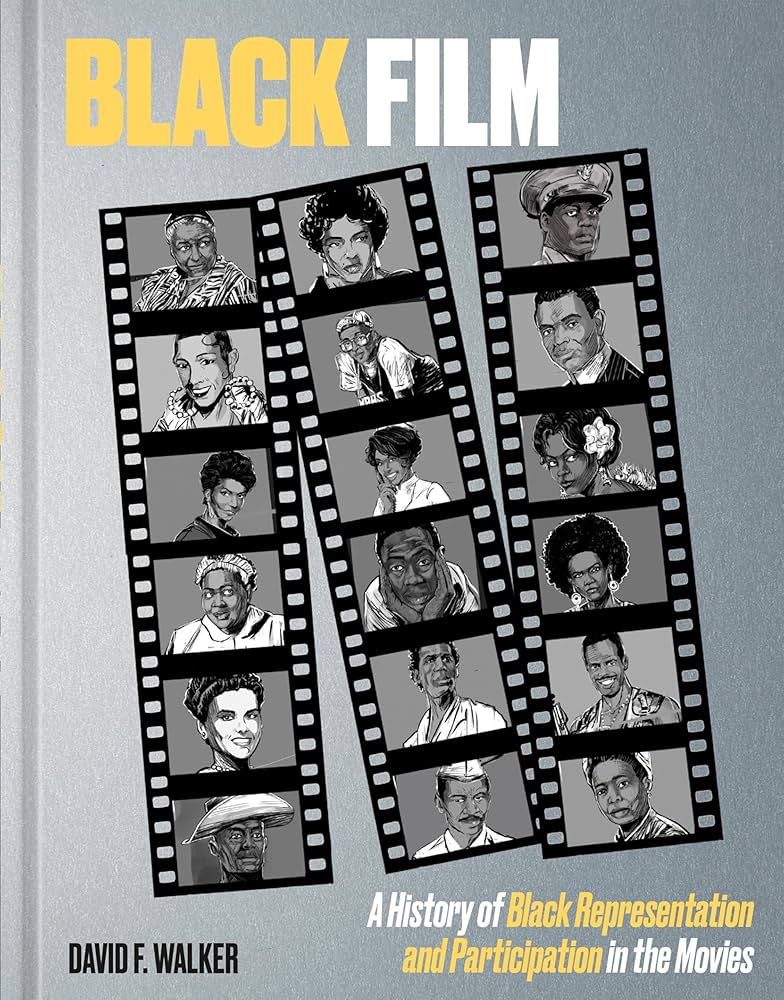
Black Film: A History of Black Representation and Participation in the Movies by David F. Walker (Ten Speed Press) is startlingly comprehensive—running from minstrel shows to the blockbuster success of Sinners—and The First Movie Studio in Texas by Kathryn Fuller-Seeley and Frank Thompson (University of Texas Press) is a positively fascinating look at the “film ranch” started by Gaston Méliès, older brother of Georges Méliès, outside of San Antonio in 1910.
A much darker bit of cinema lore is examined in Black Dahlia: Murder, Monsters, and Madness in Midcentury Hollywood by William J. Mann (Simon & Schuster), in which the bestselling author turns his probing eye to the still-unsolved murder of Elizabeth Short in 1947. Mann’s rundown of suspects in the book’s final section is downright riveting.
Last year’s release of biography Desi Arnaz: The Man Who Invented Television has inspired the re-release of the 1976 memoir, A Book (Running Press), in expanded form, while A Star is Reborn by Robert Hofler (Kensington Publishing Corp.) shares the glittery history of the many versions of A Star Is Born—from the Janet Gaynor and Judy Garland starrers up to the melodramatic hits starring Barbra Streisand and Lady Gaga.
Let’s close this section with some books for the kiddos. I always enjoy the interactions between legendary film critic Leonard Maltin and his daughter, Jessie Maltin. They teamed up to author Family Movie Night Menus (Running Press), a delightful book pairing films like E.T. the Extra-Terrestrial with recipes for treats like chocolate peanut butter pie. Publisher Clarkson Potter’s series of Dungeons & Dragons books continues with Dungeon Master’s Workbook of Worldbuilding: An Official Companion to the Dungeon Master’s Guide and Player’s Workbook of Epic Adventures: An Official Companion to the Player’s Handbook offer tips and guidance for young players, while LEGO Marvel Secrets of the Avengers (DK) is another jolly, brick-filled romp through the Marvel universe; LEGO Thanos looks especially hilarious, and the book comes with an exclusive T’Chaka minifigure.
My favorite “kids” book of the month, though, is undoubtedly Where’s David Lynch? (Smith Street Books), which may give little ones nightmares but will delight mom and dad. Humorously and lovingly illustrated by Kev Gahan and written by Keith Gow, the Where’s Waldo?-style picture book includes details like a “missing” sign for the ear in Blue Velvet and a “NO TAILGATING” sign in Lost Highway.
New books on music:
This roundup of recent music books includes several performers with ties to cinema, among them Bob Dylan, Taylor Swift, Jeff Beck, and the immortal David Bowie.
Lazarus: The Second Coming of David Bowie by Alexander Larman (Pegasus Books) is a gloriously detailed accounting of Bowie’s complex late period, from Tin Machine through Blackstar. As a fan of many of these albums (specifically Outside, Earthling, and Heathen) I found reading a book focused on this sometimes neglected stretch of time to be captivating.
Similarly, Roberto Polito’s astonishing After the Flood: Inside Bob Dylan’s Memory Palace (Liveright) explores Dylan’s work since 1991—after he received a Grammy Lifetime Achievement Award. Polito finds this work (most notably 2020’s epic “Murder Most Foul”) to be bursting with “secrets, signs, tokens, clues, omens, marks, tools — a ghost language.”
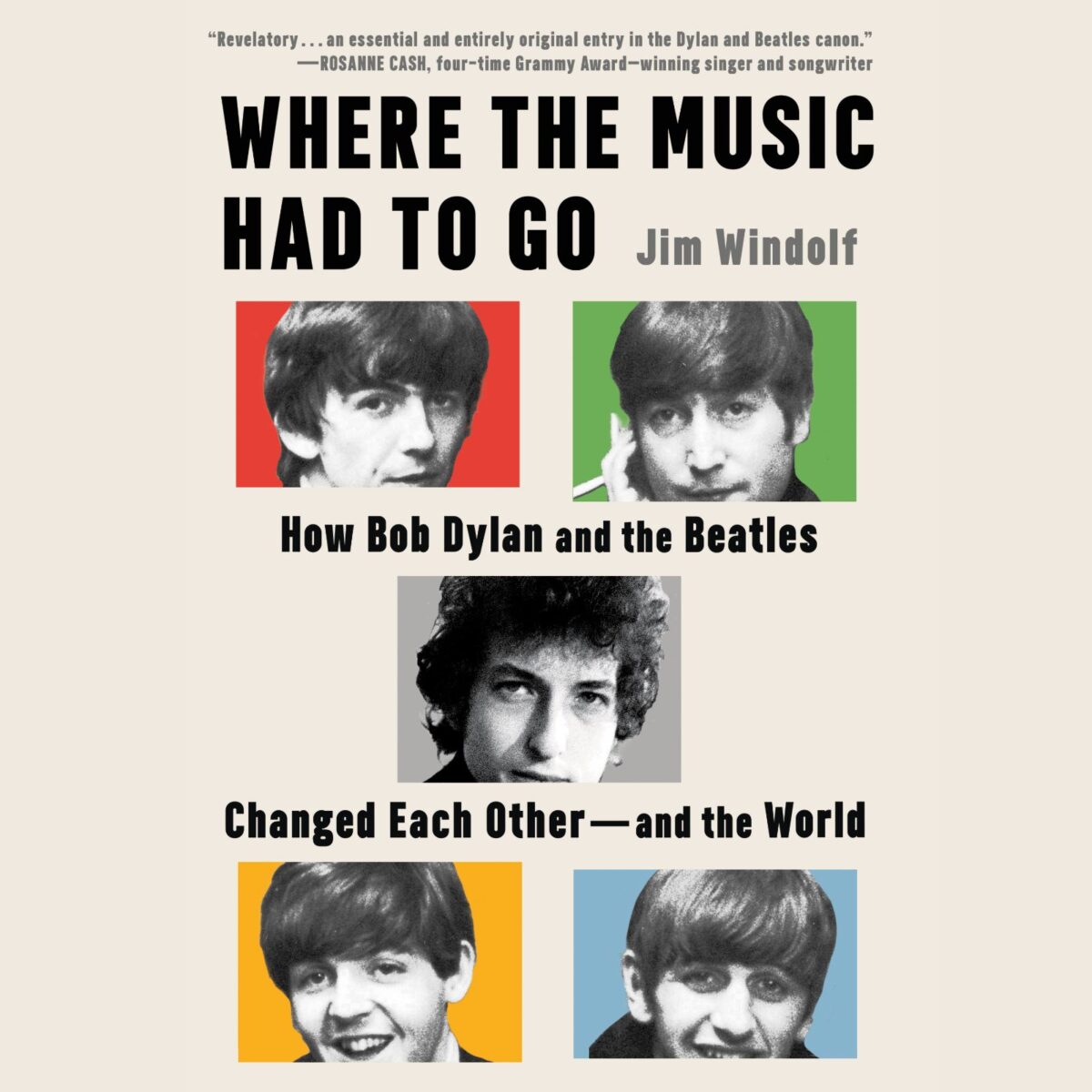
Dylan is also featured in Where the Music Had to Go by Jim Windolf (Scribner), which analyzes the sometimes friendly, sometimes rivalrous relationship between Dylan and the Beatles. “I won’t go so far as to argue that Dylan was the fifth Beatle,” Windolf writes, “but I will make the case that the relationship was deeper and more consequential than has been noted by earlier writers.” In other Fab Four news, doomed Beatles manager Brian Epstein is the subject of Mr. Moonlight: Brian Epstein and the Making of the Beatles. The book makes for an involving—if somber—continuation of Norman’s past work, specifically his landmark Beatles bio, Shout!
Like the All the Films books mentioned previously, publisher Black Dog & Leventhal’s All the Songs series is all about the deep dive — in this case, every recorded track and album. Fleetwood Mac: All the Songs by Olivier Roubin and Romuald Ollivier explores the unique trajectory of the band that began as part of the British blues bloom and later became “an American pop hit machine.” And yes, the tangled love lives of its members are covered. Taylor Swift: All the Songs by Damien Somville and Marine Benoit is easily the most dense cataloging yet of Swift’s unparalleled career, covering her earliest singles and concluding with The Tortured Poets Department. (The book was released prior to her Life of a Showgirl album.)
One of rock’s most legendary—if low-profile—guitarists is profiled in the entertaining Blow by Blow: The Jeff Beck Story by Brad Tolinski and Chris Gill (Da Capo; to be published on July 14). His was an unparalleled career; Beck’s work with the Yardbirds and a young Rod Stewart were merely first steps. Blow by Blow also chronicles the late guitar god’s film work, including a disastrous attempt at working with Hans Zimmer on the score to Days of Thunder. Beck hoped the gig would be “a test run for something bigger,” a la Eric Clapton’s side career working with Michael Kamen. Unfortunately, “the sessions were conducted in a high-stress, rushed environment.” By the time Beck returned home to England, “he was done with Hollywood.”
In Won’t Back Down: Heartland Rock and the Fight for America (Norton), author Erin Osmon explains how and why “the elbow-grease anthems of Bob Seger, Bruce Springsteen, and Tom Petty were everywhere” in the 1980s. The book also explores figures like John Mellencamp and Bonnie Raitt, while also documenting the ways aging artists like Bob Dylan and Neil Young influenced and became part of “heartland rock,” which Osmon defines as songs “built with minimal chord changes and usually spare but powerful drumming.” Even more important was the subject matter: “sketches of common people and their trials and aspirations.”
Finally, the most eagerly awaited music release of the year might be Even the Good Girls Will Cry by former Hole bassist Melissa Auf der Maur (Da Capo). While promoting her memoir, Auf der Maur shared that backstage at an Olivia Rodrigo concert, the “Drop Dead” singer told Auf der Maur’s daughter, “Without your mother, none of this would have happened.” Indeed, the importance of Hole cannot be overstated, and Auf der Maur was as essential to the band’s impact as Courtney Love. As Even the Good Girls Will Cry documents, life in the band was complicated at the best of times, but Auf der Maur had an understanding of how to handle the ups and downs. “The drama and chaos of Courtney Love and Hole are infamous, but to me it all felt familiar,” Auf er Maur writes. “I found comfort in the chaos. My upbringing was the perfect training ground to be in a rock band and immersed in the world of Courtney. Despite how new I was to the band, I fit right in.”
New and recent novels
Summer is made for novels, and many of the books included here are either set for film adaptations, deserve to be adapted, or have some other link to cinema.
Let’s start with Men in Love by Irvine Welsh (Pegasus Books), a long (500 pages) but very satisfying Trainspotting sequel. It’s set before Welsh’s previous revisiting of the lives of Renton, Begbie, Sick Boy, and Spud, 2002’s Porno, and I found it to be a much stronger novel. Set during the late-80s rave scene, Men in Love is being released in the U.S. at a perfect time, as Danny Boyle’s adrenalized and unforgettable adaptation of 1993’s Trainspotting was recently rereleased in cinemas.
The setting of The Silver Book by Olivia Laing (Farrar, Straus and Giroux) is sure to intrigue film fans. This is a gorgeously written fictional account of the 1970s Italian filmmaking scene, in which a master director and a young art student fall in love amidst the release of Pasolini’s Salò and Fellini’s Casanova.
Caro Claire Burke’s Yesteryear is one of 2026’s most buzzed-about novels, and it’s no wonder; this darkly comic story of a tradwife social media maven transported to the 1800s has an irresistible premise. Anne Hathaway is developing the film adaptation as we speak.
The work of James Ellroy has been adapted for the screen to great acclaim (L.A. Confidential) and befuddlement (De Palma’s fascinating Black Dahlia). His latest epic look at the dark history of America, Red Sheet (Knopf), would make for a phenomenal TV series. Here, Ellroy explores the Red Scare with an intoxicating mix of characters real and imagined.
DUCK redux by Nic Bettauer (Atmosphere Press) is a unique novella based on the author’s 2005 film DUCK, which starred the late Philip Baker Hall. It retells the story of the film, which revolves around a man in dystopian Los Angeles “who had loved deeply and well, but whose loving had come to an end.” However, an encounter with a duckling provides a reason to care again. I’ve not seen DUCK, but found DUCK redux to a sweet, moving tale.
As a longtime Patricia Highsmith reader, I was pleased with J.R. Thornton’s Ripley-esque Lucien (Harper Perennial). It’s a brisk, confidently crafted thriller about a Harvard freshman whose seductive roommate—the delightfully named Lucien Orsini-Conti—just may ruin his life. The Society by Karen Winn (Dutton) has a similar feel, offering a sharp, twist-heavy tale centered on a secret Boston society for elites known as the Knox.
Jordan Harper has become one of literature’s hard-boiled heavyweights, and his latest, A Violent Masterpiece, is even stronger than 2023’s Everybody Knows. In Masterpiece we watch the grim collision between a defense attorney representing a Hollywood pedophile, a streamer who prowls the streets of Los Angeles, and a “concierge” who connects the wealthy with their vice of choice.
Accumulation by Aimee Pokwatka (G.P. Putnam’s Sons) feels like a great horror film. Its protagonist is a documentary filmmaker turned housewife whose dream house becomes a nightmare. Also unsettling is Jennie Godfrey’s debut novel, The List of Suspicious Things (Penguin). Inspired by the real-life Yorkshire Ripper murders, this coming-of-age mystery set in late-1970s England is a knockout.
Discipline by Larissa Pham (Random House) is a provocative post-Me Too thriller about an author whose book tour leads to an encounter with the professor whose relationship inspired her novel. E.A. Jackson’s Missing (Atria Books), in which a detective revisits the decades-earlier disappearance of a baby in London, is an engrossing procedural with clear allusions to real-life unsolved crimes.
On the more humorous side is A Good Person by Kirsten King (G.P. Putnam’s Sons), a darkly funny gem about a woman whose “situationship” leads to a hex and murder charges. Another utter charmer is The Infamous Gilberts by Angela Tomaski (Scribner), an English manor-set portrait of an offbeat family that stretches from World War II to the 2000s. And released overseas in 2024 and finally arriving stateside is Sisters in Yellow by Mieko Kawakami (Knopf). Translated by Laurel Taylor and Hitomi Yoshio, Sisters is a fiercely original look at four women navigating life in 1990s Tokyo.
The quest for a mysterious artifact is one of many puzzles to be found in Atlas of Unknowable Things by McCormick Templeman (St. Martin’s Press), an engrossing thriller with gothic undertones. And the London of Jack the Ripper is reimagined in The Dreadfuls by A. Rae Dunlap (Kensington Publishing Corp.), an absolute blast of a novel in which a reform school misfit and her roommate investigate the murders.
The Minimalist by Kailee Pedersen (St. Martin’s Press, to be released on August 18) feels like a spiritual cousin of Tár; in this enthralling drama the death of a composer sees his young female student gain possession of his unfinished final work. Also music-themed is Darkening Song by Delphine Seddon (Saturday Books), a wildly intelligent study of stardom in which a teenage record label intern encounters a mysterious 16-year-old singer online. It’s easy to see why this one is already in development as a TV series.
Finally, the tenth novel from Riley Sager, The Unknown (Penguin Random House), releases on August 4. As expected from the author of The Only One Left and Middle of the Night, it’s a doozy of a horror-thriller. The premise is killer: An actress is cast in a film about a century-old unsolved mystery on a commune in Vermont, and soon disappearances begin happening once more. Yes, The Unknown is a perfect beach read. Enjoy.