
Ahead of the Academy Awards, we’ve reviewed every short film in each category: Animation, Documentary, and Live Action. Below are the Best Documentary Short nominees:
All the Empty Rooms | USA | 33 mins
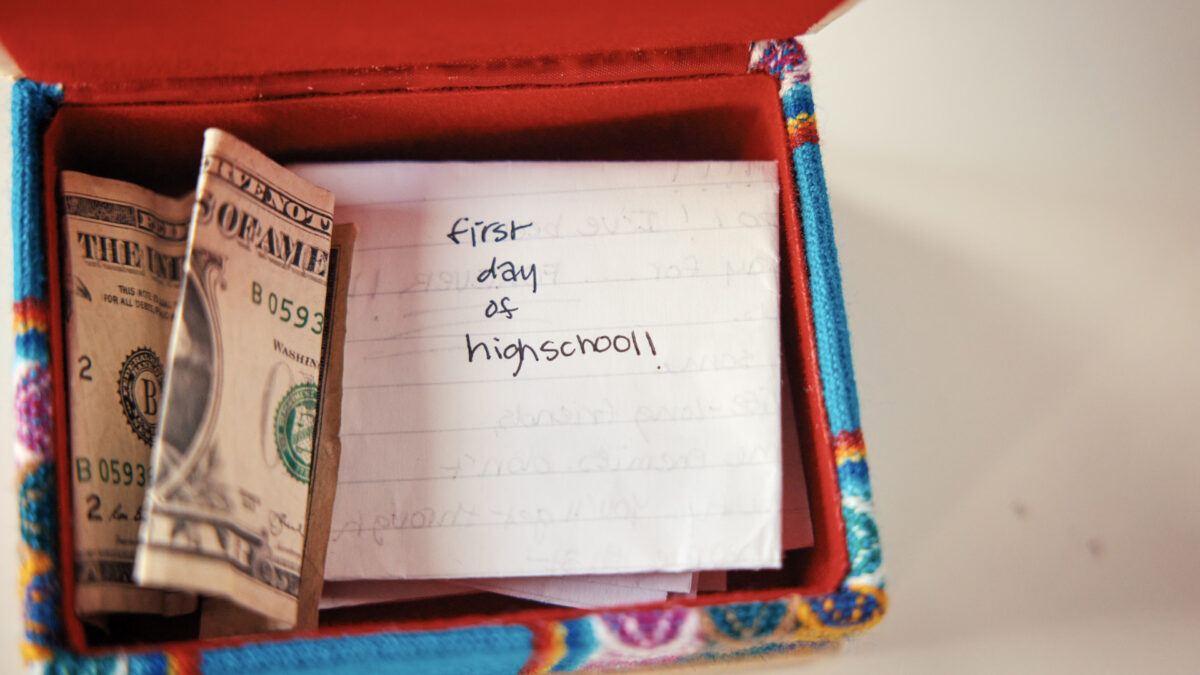
Steve Hartman embraces his role as the “feel good story” guy in his newsroom. After programs full of tragedy and suffering, his producers like to leave their audiences with a glimmer of hope that, as he posits, might remind them “life is still worth living.” While it’s one thing to wear that hat to focus on fluffy, joyous human interest tales, however, it’s another to be tasked with trying to conjure a smile from despair. At a certain point, constantly looking beneath the horror to make nightmares like school shootings palatable inherently becomes exploitative.
As documented in Joshua Seftel’s All the Empty Rooms, Hartman decided to flip the script. Rather than wade through the media’s car crash mentality that pushes victims aside to prop the shooter up as the “star,” he wanted to provide space for the grieving families to show the world who was lost. So, with the assistance of photographer Lou Bopp, he reached out to parents about visiting their homes to document the rooms that have been left untouched since their occupants’ murder. To reclaim their agency from their killers.
It’s a lovely thought and I do want to experience the finished piece now that his bosses agreed to run it, but that’s not this. This is more a human interest story about Hartman and his delicate process to cross the final three rooms off his list. So, while affecting in its portrayal of those families and sobering in its juxtaposition between them and Hartman and Bopp’s own kids, I can’t shake the feeling that Seftel ostensibly made a teaser for CBS. It’s a behind-the-scenes look providing context for something else and is therefore incomplete on its own.
C+
Armed Only with a Camera: The Life and Death of Brent Renaud | USA | 38 mins
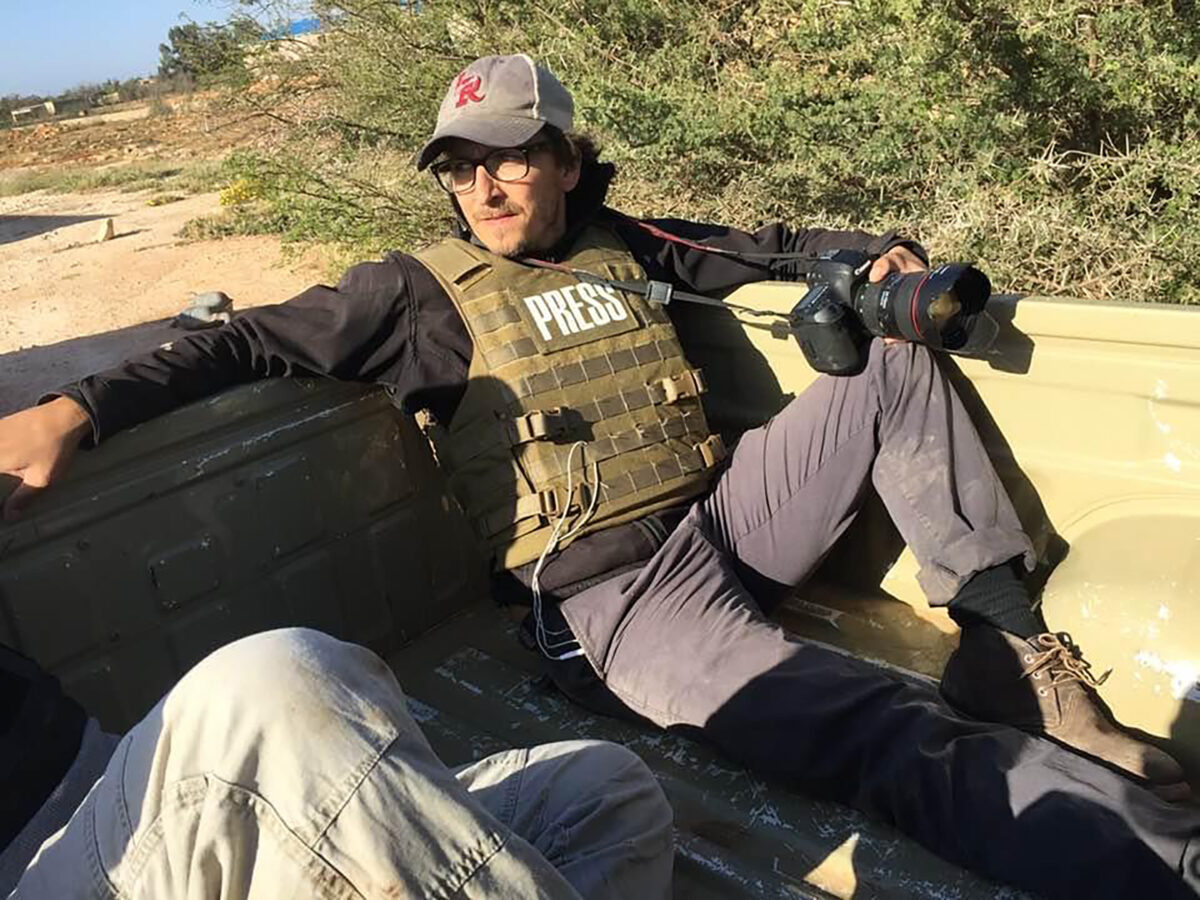
Armed Only with a Camera: The Life and Death of Brent Renaud is an interesting project in that it can’t help feeling exploitative insofar as how it utilizes footage of its subject’s death. Had Brent Renaud’s brother Craig crafted a feature length documentary that really delved deep into the former’s life becoming a journalist, understanding his autism, and capturing truly invaluable images of countries at war, we could better absorb his murder and the outpouring of love at his funeral as the culmination of a life rather than a morbid device for external catharsis.
That’s not to say Craig shouldn’t have filmed his brother’s corpse being laid to rest in his coffin. He gives as good of an answer as one can for why he does it despite his grief. But the need to splice his documentation of Brent’s death and its aftermath with Brent’s footage of death in Iraq, Ukraine, Honduras, etc. just to stay on task during such a short runtime does lend the whole a slapdash aesthetic that is seemingly trying to create parallels instead of letting them build naturally during the course of a more structured progression.
Thankfully, the second half fixes this shortcoming. Whereas I got whiplash moving from country to country around the linear process of preparing Brent’s body for burial at the start, the way Craig cohesively moves from funeral speeches to the cities Brent filmed with each speaker allowed a clearer path the inherent weight and respect in play. The disparate pieces brought together solely by Brent’s presence soon became shared experiences of purposeful cause and effect. The result is therefore an effective first draft of a potentially profound finished product.
B-
Children No More: “Were and are Gone” | Israel | 36 mins
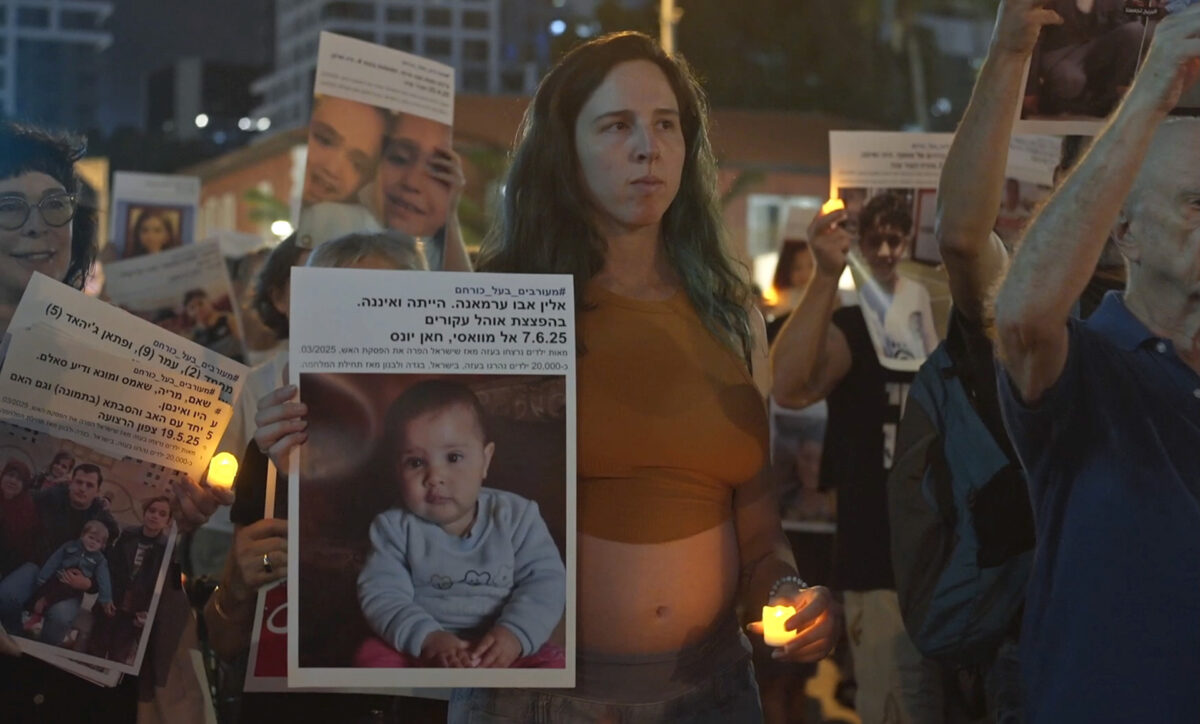
Just as more than half of America wants Europe to understand they don’t condone Donald Trump’s rhetoric or actions, it’s important to see the same is true in Israel when it comes to the Palestinian genocide that has continued despite its so-called ceasefire. And I love how the activists filmed by Hilla Medalia in Children No More: “Were and are Gone” do it with silence. Yes, it allows them to stand wherever they want because they don’t need a permit if they don’t engage in political speech. But it also invites their opponents to show their true faces.
Because it’s easy to ignore posters of smiling children that were murdered. It’s easy to walk on by because it’s obviously been easy for so many Israelis to simply deny their complicity in those deaths. The fact that so many voluntarily scream and taunt these protestors only proves how tenuous their hold is on the “reality” they speak about. Those images haunt them. They provide a mirror onto their indifference and cruelty. As one woman states, this protest doesn’t diminish the plight of Israeli hostages. It merely reminds Israelis that their suffering isn’t unique.
It’s a powerful statement with Medalia doing a wonderful job pulling back the curtain to learn why they use photos of the children when they were alive and why they stay silent. We hear the pros and cons for how they chose to add martyrs without photos to the cause and what sites are best to demonstrate. We bear witness to that bile and the mental gymnastics necessary to believe 18,700 kids dying is an acceptable price for October 7th (let alone the decades of violence prior). And amidst all that evil is also the introspection to prove these protests work.
B+
The Devil is Busy | USA | 31 mins
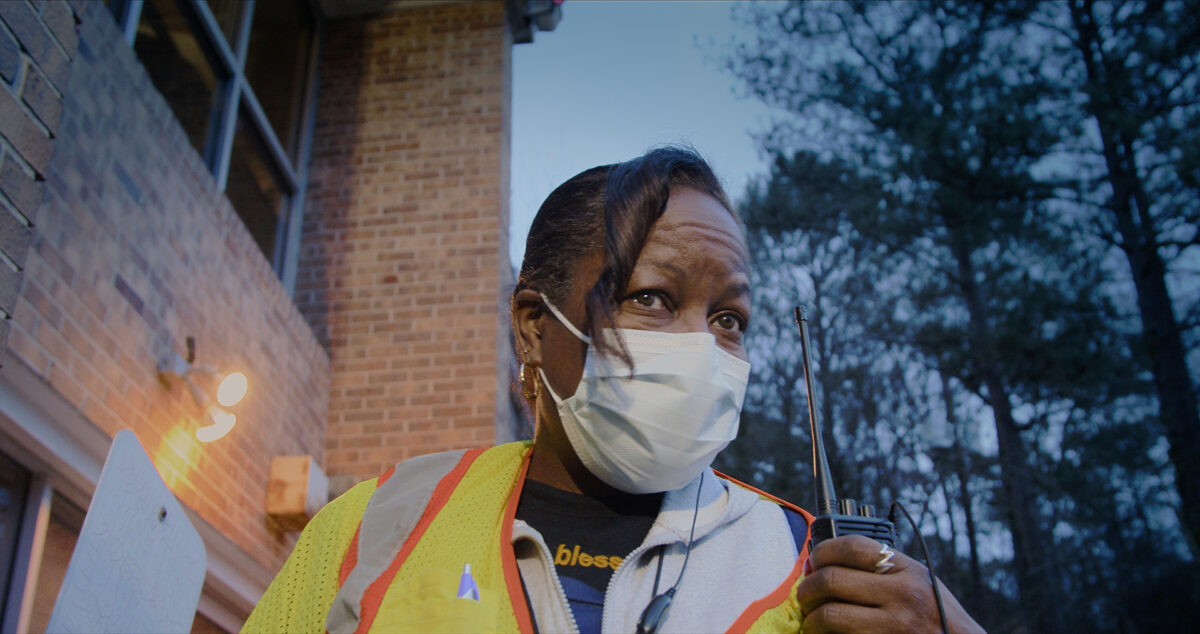
It’s not a coincidence that the protestors outside the Feminist Center for Reproductive Liberation in Atlanta, GA are all white men. Even so, I was ready to give them the benefit of the doubt and not presume this truth until one of them literally speaks into his loudspeaker to admonish patients for not “listening to the men” protesting in the street. It’s all a performative act of righteousness in pursuit of feeling as though they’re in control. And it’s driven by obvious hypocrisy since they deny these women the same ability to repent that they themselves wield.
Christalyn Hampton and Geeta Gandbhir’s The Devil is Busy spotlights an ultrasound technician and OBGYN, but it’s head of security Tracii Wesley who serves as our lead guide through a single day’s rough waters post-2022’s dissolution of the Constitutional right to abortion in America. She explains the protocols to protect each patient (many driving in from out-of-state), the stories of the men protesting, and her own complex relationship with the medical procedure, her faith in God, and her duty to ensure everyone in her care feels safe, loved, and seen.
There’s real power in Tracii’s words and actions that go beyond the media firestorm of hyperbole on both sides. The threat posed to the women who visit and work in this building is real. The violent histories of the men appropriating Black Lives Matter as a means to call what happens in the clinic “Black genocide” is real. Hearing a staff member reconcile how she had more rights two decades ago than her daughter has now is real. And none of them are wrong to wonder what issue will be targeted next to terrorize even more women in the future.
B+
Perfectly a Strangeness | Canada | 15 mins
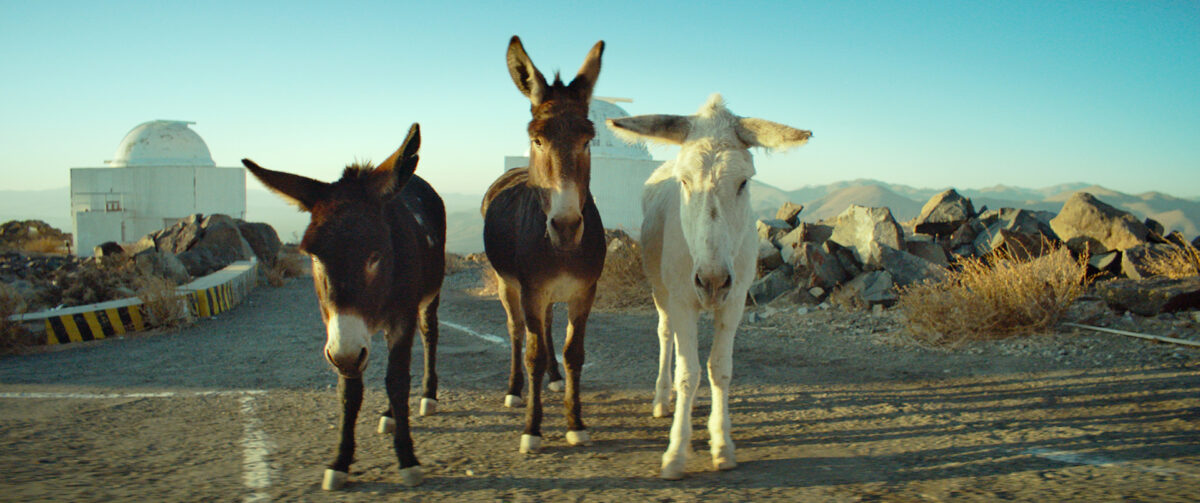
A wordless glimpse at three donkeys (Palomo, Ruperto, and Palaye) roaming the property of an apparently abandoned observatory, Alison McAlpine’s Perfectly a Strangeness juxtaposes living creatures against machines as well as past against present. I say “apparently” because we do ultimately enter these buildings to find robots moving and telescopes pivoting. So, while there are no humans present, the place itself does remain operational.
The animals epitomize small-world traveling on the ground while the technology tempts us with the infinite span of space. We can think about the donkeys as modes of transportation and cargo hauling from a bygone era replaced by mechanical trucks on rails too. And, of course, the close-ups of their eyes opposite the reflections in mirrors and potential sight of the observatory’s lenses create a conversation between known and unknown.
Is there enough here to sustain its runtime? That’s up to the eye of the beholder. McAlpine eschews narrative for vibes and, while the cinematography is gorgeous, I won’t lie and say I wasn’t hoping for more. Without a profound epiphany or literal point of conflict, we become a fly on the wall to the filmmaker’s whims in hopes it fascinates us as much as it did her. I’m both confused and impressed that something so esoteric earned an Oscar nomination.
B-
Starting February 20, the 21st annual Oscar® Nominated Short Films, presented by Roadside Attractions, will debut in theaters only. Click here for details.