
Ahead of the Academy Awards, we’ve reviewed every short film in each category: Animation, Documentary, and Live Action. Below are the Best Documentary Short nominees:
Butterfly | France | 15 mins
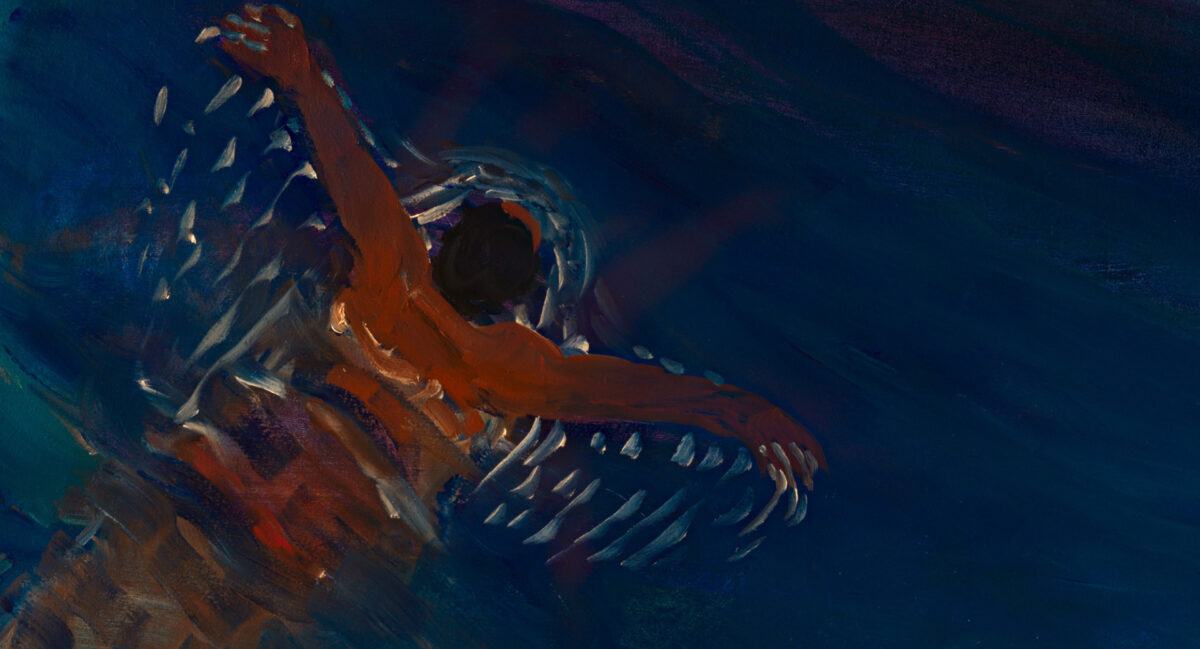
As we learn at the end of seventy-year-old Florence Miailhe’s Butterfly, it was the brother of her subject that taught her how to swim. So, there’s a personal connection to Alfred Nakache on top of his story’s historical merit. One that has led her to create this film using oil, pastels, and sand on glass in ways that allow metaphor and time to pass as though they are projected through water. Birds becoming swimmers. Swimmers becoming dolphins. A boy becoming a man.
Nakache was an Iraqi Jew whose family immigrated to Algeria. As seen on-screen, he was afraid of water as a boy before learning to love it en route to a spot on France’s 1936 Berlin Olympics team. Once the Nazi hold over Europe increased, however, he’d ultimately be denounced and banned from French pools before being sent with wife and child to Auschwitz. We watch it all unfold as memories while he swims in the sea decades later.
The whole plays like a visual poem as its textured colors mix and shift to merge moments connected by their emotional impact. From the joy of love to the fear of death. The aspirations of a young man to the tired reality of one who endured more than any human should. It proves a well-composed biography that hits the indelible moments of a life marked by extreme highs and lows during an era of infamy. And every frame is painted with Miailhe’s profound admiration.
B+
Forevergreen | USA | 13 mins
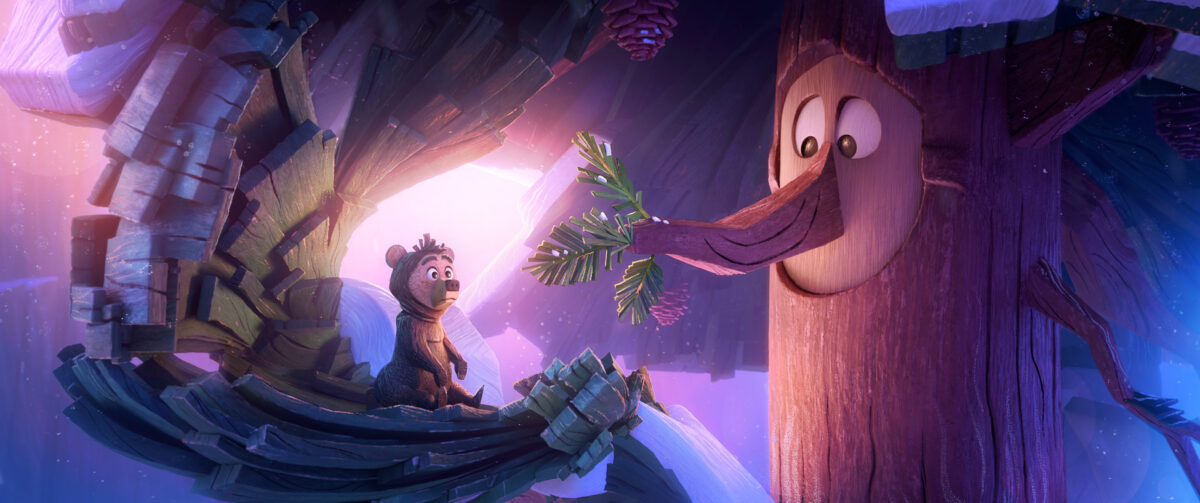
The animation on Nathan Engelhardt and Jeremy Spears’ Forevergreen is gorgeous. What initially looks like stop-motion will soon have you questioning its origins once certain frames reveal a texture shift that shouldn’t happen unless the animators used a completely different maquette for that one single instance. It’s less a mistake than a product of a computer graphic system being used to approximate that stop-motion aesthetic. A blip in an otherwise perfectly rendered bit of artifice. Evidence of a human touch.
This truth fits the story as its heartfelt narrative of an evergreen tree saving and raising a young bear cub could easily be seen as an anti-AI metaphor. Yes, the Bible verse and thanks to God during the credits show that surely wasn’t its intent, but a message about sacrifice and love can apply to many different subjects. That its main point of conflict arises from the bear spurning its protector to pursue the empty calories of potato chips on an ill-advised adventure that risks destroying the whole forest, one can’t ignore the allusion.
That despite nature sustaining us for millennia, we’ve decided to embrace a technology that not only erodes our innate creativity but also leeches the land of its water and energy. That our impulse to follow convenience in ways that leave us susceptible to losing our agency for empathy rather than bolster our ability to be empathetic ultimately leads us down roads where we learn our mistake too late after losing something we love. That we must stop embracing easy capitalistic fixes serving those in power and think about a future that empowers us instead.
B
The Girl Who Cried Pearls | Canada | 17 mins
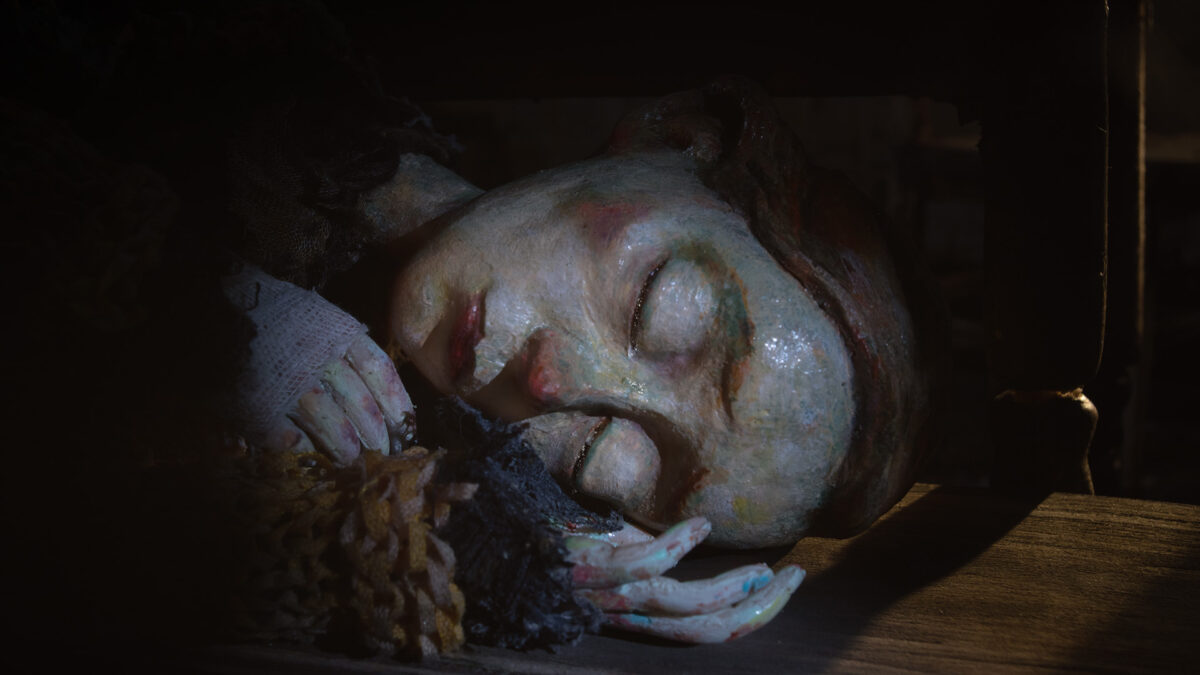
A little girl (Gabrielle Dallaire) goes rummaging through her grandfather’s (Colm Feore) cabinet of treasures to find a pearl hidden within a case made to look like an apple. She hides when he enters the room, but he knows she’s there and what she took. So, he sits down to tell her the story of how he came to possess the crystal and why it means so much to him. You see, he wasn’t always rich. He was once an urchin boy who happened upon an inexplicable magic (or divine intervention) that changed his life forever.
Chris Lavis and Maciek Szczerbowski’s (co-written with Isabelle Mandalian) The Girl Who Cried Pearls didn’t go where I expected. And that’s kind of the point. It shows how easy it is to grow enamored by a well-crafted tale—to hang on every word as the implausible drama unfolds and its lessons are revealed. I wanted answers about the young girl whose tears became jewels and who disposed of the evidence to not anger her mother. Did he ever meet her? Did they fall in love? Could he have exploited her gift as the pawnbroker exploited his discovery?
Filmed shortly after COVID lockdown with real actors to serve as reference for each scene, the animators then crafted immaculately detailed sets upon which to interpret those performances via maquettes with impossibly fluid movements akin to an expertly choreographed dance. And sitting at its back is a beautifully constructed fable that’s as much about respecting the plight of others with compassion as it is knowing how to manipulate crooks in ways that earn them their just deserts. It’s the perfect mix of emotion, artistry, and expert sleight of hand.
A-
Retirement Plan | Ireland | 7 mins

John Kelly’s (co-written by Tara Lawall) Retirement Plan works as a realization of one of Ray’s (Domhnall Gleeson) many declarations: “I will write a devastating yet optimistic piece of poetry.” It’s the sort of humorous catalog verse piece you find at McSweeney’s that has then been animated by a fan to post on YouTube. Each line spoken receives a brief vignette. Each visual gag is rendered with dry wit to either exist alone or in conversation with its predecessor.
And it perfectly depicts the mood of an aging man contemplating what his potential free time will entail upon retirement. Making good on boring promises (replying to emails and going through the bookmarked articles he never touched). Imagining himself doing the types of “cool” things he probably used to mock others for doing. Realizing that being “cool” isn’t worth being in a constant state of fear once he discovers dogs, extreme sports, and orgies are too much.
Gleeson’s delivery is impeccable. The bright, two-dimensional comic strip aesthetic is uncomplicated, economical, and suited for a well-timed jump cut to the punch line. The words themselves are unafraid to veer into territory that embraces the space for imaginative fun either in tandem with the visual or building off it (ie. “orgy” is never spoken, but its visual appearance makes total sense with what is). And Ray’s absurd final ambition is definitely worth the wait.
B
The Three Sisters | Israel, Cyprus | 14 mins
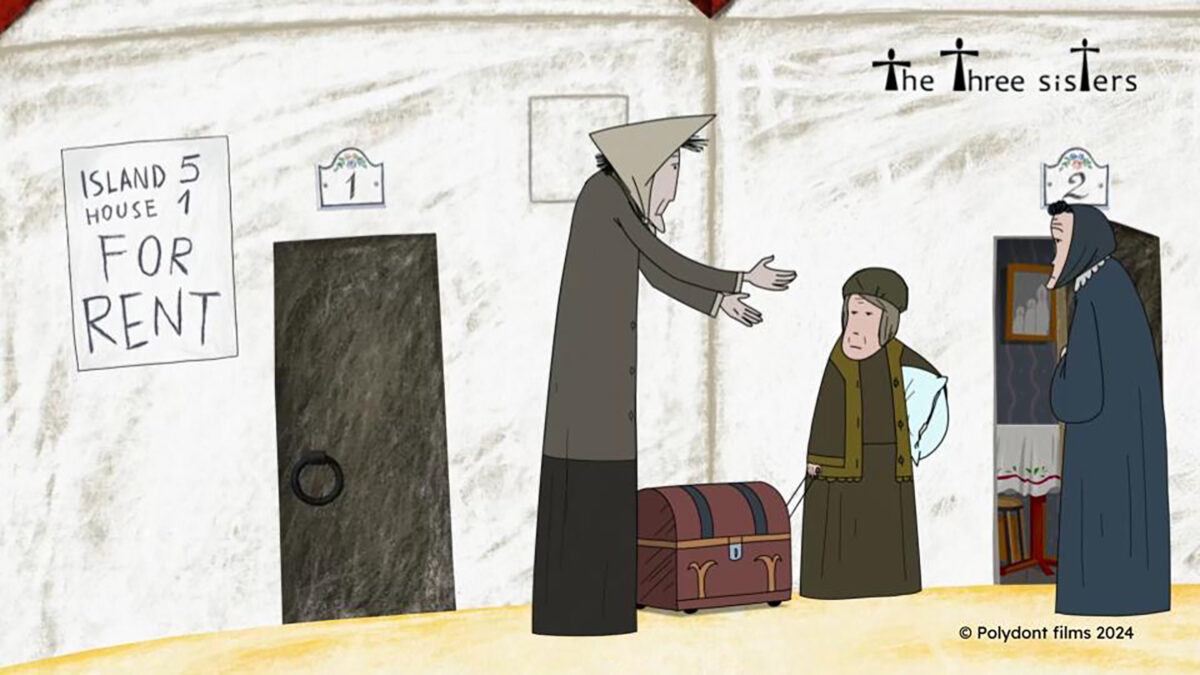
When three sullen sisters living in three small houses on their own private island in the sea fall victim to a horrible morning of bad luck that leaves them penniless, they have no choice but to rent one of the homes out. The potential lodger who arrives proves to be a boorish sailor that the two eldest women (presumed from height) hold their noses at while the youngest conversely swoons. Jealousy spawns. Lust takes hold. And these hermits suddenly find themselves having the time of their lives.
How Konstantin Bronzit portrays this shift in demeanor is humorous with each sister procuring her best dress, removing her bonnet to reveal colorful hair, and finding ways to gain the upper hand to win their new tenant’s favor. They ultimately throw themselves at him, exchanging decorum for desire. Had The Three Sisters been made by a woman, the lesson might be about not letting one man hijack your sisterly bond. With a Russian man at the helm, however, it’s conversely about how there just needs to be more men to go around.
Patriarchal comedy aside, I did like the way Bronzit utilized the economy of his setting to tell the story. No inch of this mound of land with three doors and three windows goes unused as its inhabitants let down their guard to further advance his sex-crazed plot. And you must appreciate the experiment Bronzit (now a three-time Oscar nominee) performed by submitting it under the false name Timur Kognov to ensure festivals accepted it on merit rather than celebrity. It has proven to be a divisive lark, but its animation does shine.
B-
Starting February 20, the 21st annual Oscar® Nominated Short Films, presented by Roadside Attractions, will debut in theaters only. Click here for details.