
A few weeks ago, I landed in Copenhagen for this year’s CPH:DOX in the early hours of the evening, still a little dazed from covering the Oscars the night before. My plan that night was to catch a screening of Stillz’s Barrio Triste—the latest release from Harmony Korine’s EDGLRD productions and frankly, as my colleague C.J. Prince accurately alluded to in his excellent TIFF review, the most exciting piece of cinema I’ve seen all year—but with a few hours to spare before that audio-visual plunge, I decided to submit myself to the warm embrace of a bowl of noodles.
The location I had in mind was a buzzy spot, Slurp, that was opened in 2017 by Philipp Ineiter, one among a vast constellation of local restaurateurs who graduated from stints at René Redzepi’s Noma before going on to open their own eateries in the city. In the weeks leading up to my visit, that culinary ecosystem had been left dangerously seared by a slew of allegations against Redzepi from ex-employees and interns (these ranged from the depressingly cliché throwing of insults, produce, and fists to far more troubling rumors of sexual misconduct) who finally felt emboldened enough to speak out after years of industry-wide silence. Good for them.
As I mulled the ripple effect that such a story might have on a city now synonymous with that food scene (as much an essential part of its tourism industry as a key part of its own self-image), I was presented with a bowl of darkened, savory broth with a clump of perfectly cooked ramen lurking just below the surface. As the aromas struck me, my mind jolted back to a film I’d watched in preparation the previous day: Ian Purnell’s Arctic Link, a hypnotizing documentary about deep-sea broadband lines (of which there are apparently enough already to wrap around the planet 32 times) and the efforts to bring one to a remote Alaskan community.
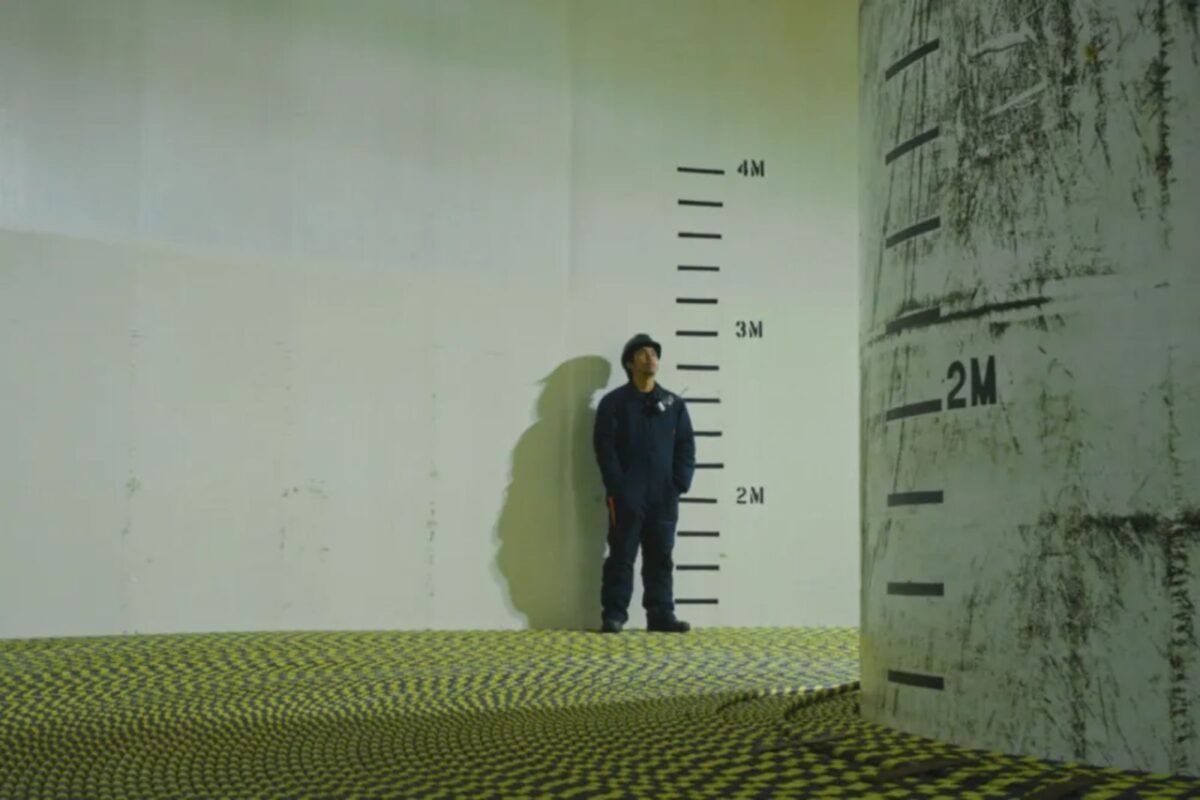
Arctic Link
Purnell’s film introduces the viewer to this world via a stylish visual collage: images of ships, waves, and—shoutout to Slurp—darkened waters and lengthy tubes that appealed to a recent fascination I’ve had for any and all social-media accounts dedicated to videos of terrifying shells and precariously loaded container ships. Having watched every title in this year’s DOX: AWARD selection, it was the best in competition—an opinion that wasn’t shared by the jury, who awarded the main prize to Dongnan Chen’s Whispers in May, a beautifully captured coming-of-age tale set amongst the Liangshan Mountains in Eastern China, and which admirably makes no distinction whatsoever between its realities and fictions. The plot follows three charismatic teenage girls in a small town as they journey to the next village over in order to purchase a dress for a kind of rite-of-passage ceremony. It may stretch the definition of what we mean by “hybrid non-fiction films”—exactly, I guess, what places like CPH:DOX are here for.
Prizes this year also went to Nolwenn Hervé’s The Cord—an energizing portrait of a women’s health clinic in Venezuela and the admirable folks who work there, doubling as a kind of accidental time capsule of life before the illegal capture of President Maduro back in January—and Nathan Grossman’s AMAZOMANIA, a captivating piece of revisionist history that begins with a showing of Swedish filmmaker Erling Söderström’s 1996 expedition to the remote Carubo tribe in the Amazon rainforest. It then jumps forward to the present day, where Grossman goes to meet the director and convinces him to retrace his earlier film’s footsteps, both geographically and, as soon becomes clear, in a revisionist manner that will lead him to some uncomfortable realizations about his proudest achievement. It’s a wonderfully compelling work at times, one with echoes of early Herzog protagonists in Söderström’s Quixotic self-regard, even if it doesn’t quite add up to the sum of its parts.
A more localized and authoritative gaze on the ecological wonders of central America can be found in Otilia Portillo’s Daughters of the Forest – Mycelium Chronicles, a suitably trippy exploration (the sound design alone is enough to trigger memories of wilder evenings) of the fungal world that treats the practical knowledge passed down by older generations and the scientific approach of their younger kin with equal respect and importance—rightly positioning them as in-conversation with one another. The ecosystem at risk in Jeanie Finlay’s excellent All Rivers Spill Their Stories to the Sea (namely, the local fishing industries of England’s Northeast region) might be halfway across the world from the mushroom foragers of Portillo’s film, but its importance is of a similarly existential level to the surrounding community. It renders Finlay’s heartfelt, pseudo-Loachian study of its decimation (following decades of Tory greed and short-termism) all the more devastating.
The festival’s hottest ticket was for the European premiere of John Wilson’s The Story of Concrete, a film that packs the cosmic worries and idiosyncratic humor of Wilson’ How to series into what is essentially a brilliant feature-length episode. It managed to blow the roof off the city’s 650-seater Bremen theatre even before Wilson took the stage for an almost-too-perfect Q&A with his spiritual forebearer Louis Theroux, who managed an impressive change in tone for a presentation of The Settlers (his essential 2023 study of Israeli aggressions in the West Bank) directly after.
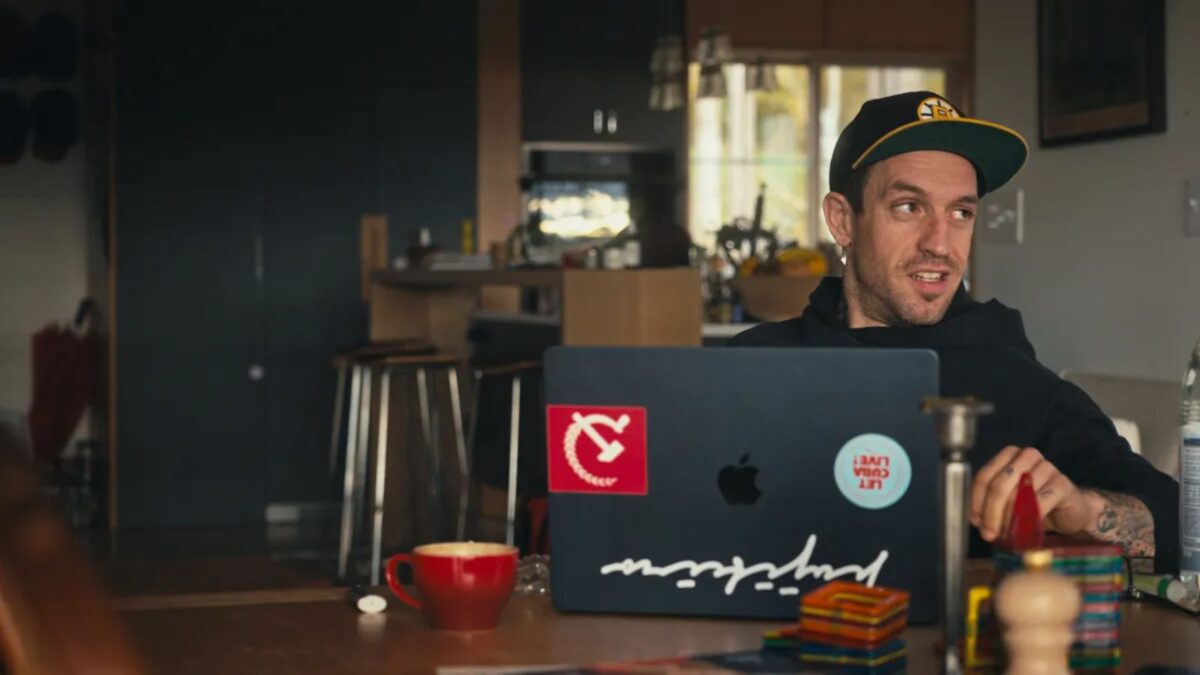
All About the Money
As far as geopolitical studies were concerned, however, none proved more riveting than Sinéad O’Shea’s All About the Money. The film tells (incredibly, mostly from the horse’s mouth) the unbelievable story of Fergie Chambers, a one-time heir to the Cox family’s old-world publishing fortune who—thanks to his unique mix of pseudo-intellectualism, Marxist-bordering-on-anarchist spirit, and terminally online behavior and syntax––manages, at least as far as personality and appearance are concerned, to embody all the best and worst parts of both Roman and Kendall Roy.
Shooting over a number of years––primarily in Chamber’s commune in the Berkshires (Mao poster-laden kung-fu gyms and all) and extradition-free Tunisia (where he invests heavily in a financially terminal football team)—O’Shea maintains a remarkable level of access without once coming across as leading or exploitative. Like a lot of the best docs, it’s a fascinating, humane, intellectually stimulating, and relentlessly entertaining work that must be seen to be believed.