
The exhaustively extended awards season finally being over isn’t the only reason to celebrate this month. Led by my current frontrunner for the best film of 2026, there’s plenty of new releases to look forward to, also including a bold formal experiment, a controversial festival premiere, a journey into space, and much more.
10. undertone (Ian Tuason; March 13)
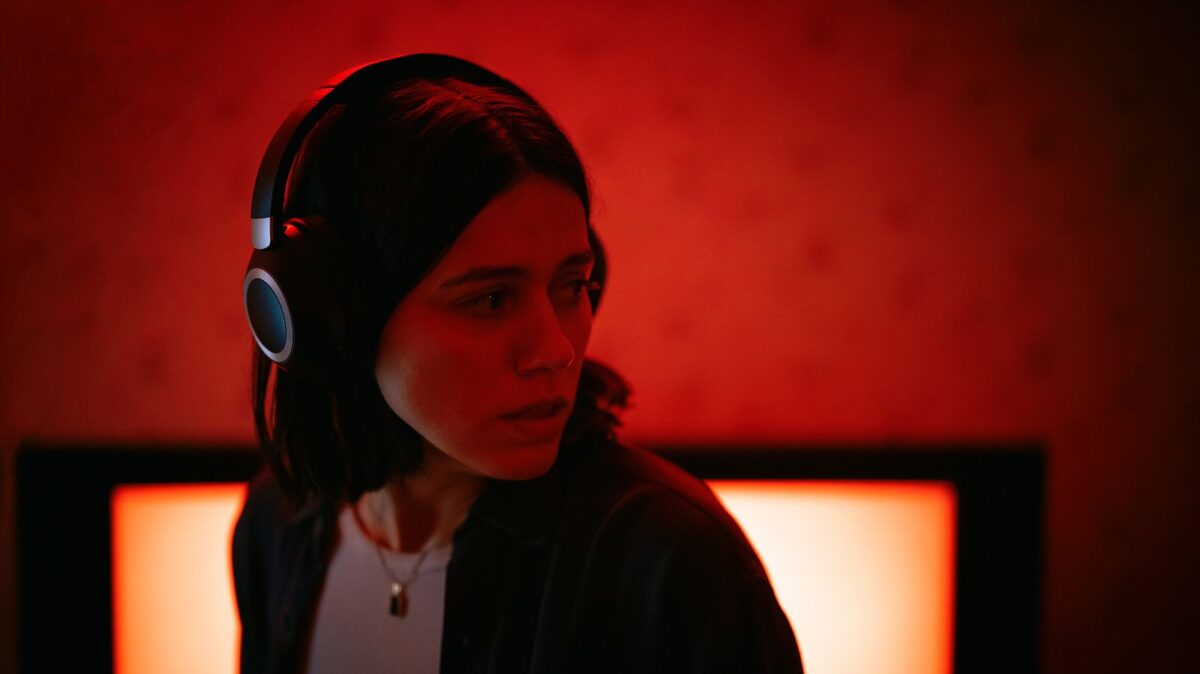
After earning buzz from its Fantasia Festival and Sundance premieres, A24 is hoping for a horror breakout with Ian Tuason’s undertone. Caleb Hammond said in his review, “Whether a shot of an empty hallway at night or a door frame where a wooden cross hangs, undertone maximizes visual dread with its innate understanding for what constitutes a liminal space. It can be difficult to pinpoint exactly why these shots unsettle––they just do. Similar to Ti West’s House of the Devil using ’80s satanic panic as a jumping-off point to effectively serve up scares, the religious iconography in undertone mostly exists for mood-building that feels surface-deep. But that its mood is strong and scares are present might be enough. With its creative use of budget limitations and a real feel for haunting imagery, undertone stands out as a promising debut for Tuason and co. It also showcases that a pipeline of distributors discovering titles at festivals that punch above their weight, then granting them both additional funding and a larger platform, is still alive and well.”
9. A Magnificent Life (Sylvain Chomet; March 27)

While his work was seen worldwide (or least screened worldwide, even if the theaters were empty) via the opening animated sequence of Joker: Folie à Deux, Sylvain Chomet is properly back 16 years after his previous feature The Illusionist. Savina Petkova said in her review, “Like most biopics, A Magnificent Life pays tribute to its subject, but this film particularly makes Pagnol a man in with the times, embracing the medium of cinema when his theatre colleagues were too skeptical to try. Chronologically and thematically, the second part concerns cinema and Pagnol’s cinephilia––his collaboration with Hollywood and Paramount Studios told in sober, likely accurate ways. At this point the more fairytale-like elements governing the narrative arc make room for serious business talks, the joys and the stress of making cinema. As a treat, some films Pagnol directed appear amidst the animated world as a live-action clip shown on a TV set.”
8. Project Hail Mary (Phil Lord and Chris Miller; March 20)
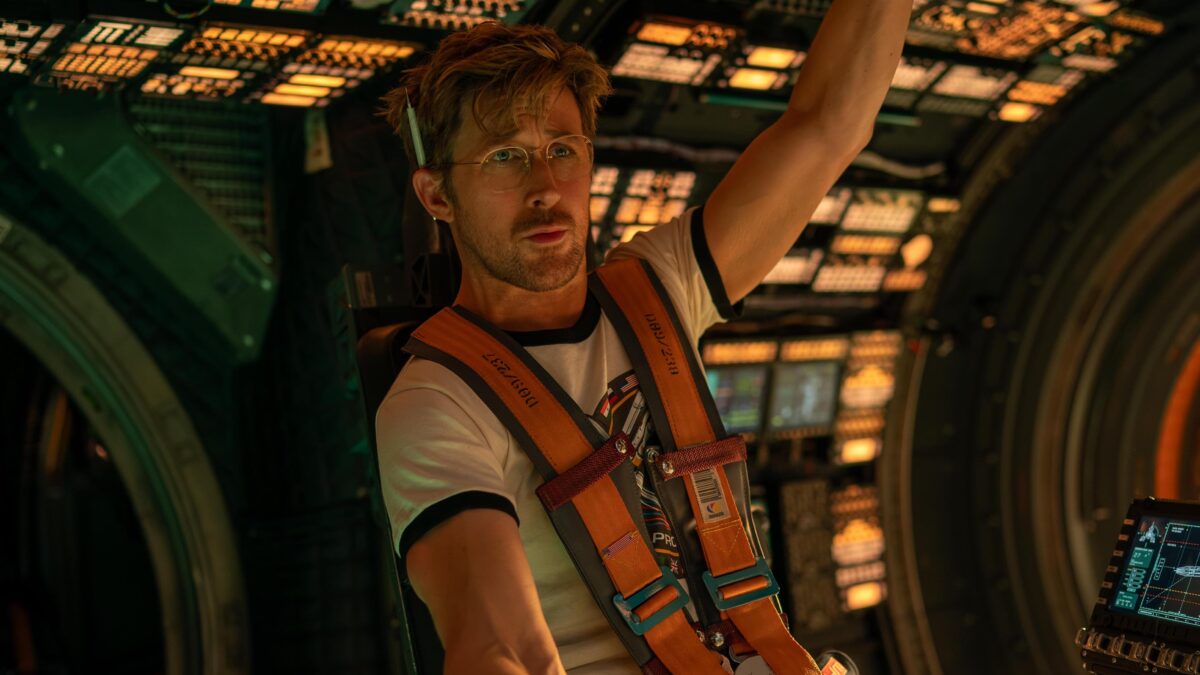
While studio releases thus far have been better than expected, with 28 Years Later: The Bone Temple and Send Help, if early buzz is to be expected, the most acclaimed tentpole of 2026 thus far will be the first official directorial collaboration from Phil Lord and Chris Miller since 2014’s 22 Jump Street. Starring Ryan Gosling, Sandra Hüller, Lionel Boyce, Ken Leung, and Milana Vayntrub, the Drew Goddard-scripted adaptation of The Martian author Andy Weir’s entertaining novel will touch down in a few weeks.
7. John Lilly and the Earth Coincidence Control Office (Michael Almereyda and Courtney Stephens; March 27)
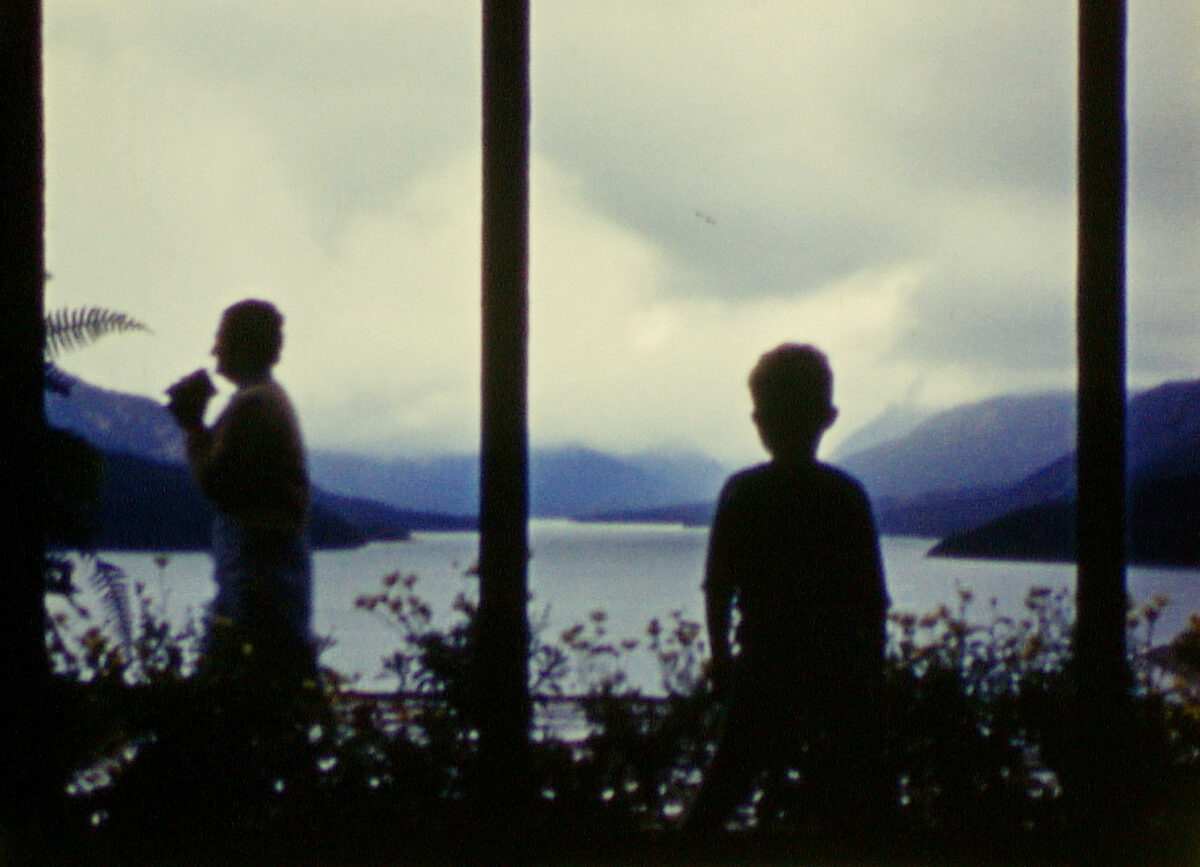
Michael Almereyda and Courtney Stephens have teamed for a compelling new documentary exploring the strange life and career of utopian neuroscientist John C. Lilly. Leonardo Goi said in his review, “The first time I came across the name John C. Lilly I was––rather fittingly, for reasons that will become clearer in a minute––not exactly sober. Late in the night or early in the morning, back from a housewarming party, my YouTube algorithm fed me a video concerned with an American scientist who’d spent his career trying to communicate with dolphins, a lifelong obsession that saw him, among several unbelievable feats, flood his beachside mansion into a pool, elect a few cetaceans as roommates, and watch as one of them became sexually fixated on his research partner. I suppose there must be other portraits of the man circulating in some dark corners of the web, but what sets apart Michael Almereyda and Courtney Stephens’s John Lilly and the Earth Coincidence Control Office is that the professor isn’t the documentary’s only focus. Lilly’s experiments on interspecies communication are secondary to the discourses they were embedded in, which is to say Earth Coincidence isn’t a biopic so much as a study of a few tumultuous decades in US history, and how ideas––even and especially the most absurd––can seep into culture.”
6. Two Prosecutors (Sergei Loznitsa; March 20)

Sergei Loznitsa returned to the festival circuit last year with some of the most acclaim in his career, and the Cannes premiere Two Prosectuors will now get a U.S. release this month. Leonardo Goi said in his review, “When Donbass arrived in 2018, sandwiched between the start of the 2014 Russian-backed conflict in the titular eastern Ukrainian region and full-scale invasion of the country four years since its release, the world Sergei Loznitsa trained his camera on was a surreal, decaying wasteland. It’s not that the film was necessarily prophetic about the atrocities that would later spread across Ukraine. But it spoke to concerns that now feel especially of-the-moment, the same that have long served as a cornerstone of the Belarus-born, Kiev-raised director’s oeuvre. While Donbass was a work of fiction, its preoccupations with the way truth can be manipulated also haunt the archive-based documentaries for which Loznitsa is arguably best known. From Blockade (2006) to The Kiev Trial (2022), the director hasn’t exhumed USSR-era footage as a sort of time machine, but a means to reappropriate history from the regime’s official narratives. Which is why to salute Two Prosecutors as the filmmaker’s ‘return to fiction,’ as the Cannes Film Festival did upon welcoming Loznitsa’s latest to its Official Competition, is both technically accurate and somehow misleading”.
5. Pompei: Below the Clouds (Gianfranco Rosi; March 6)
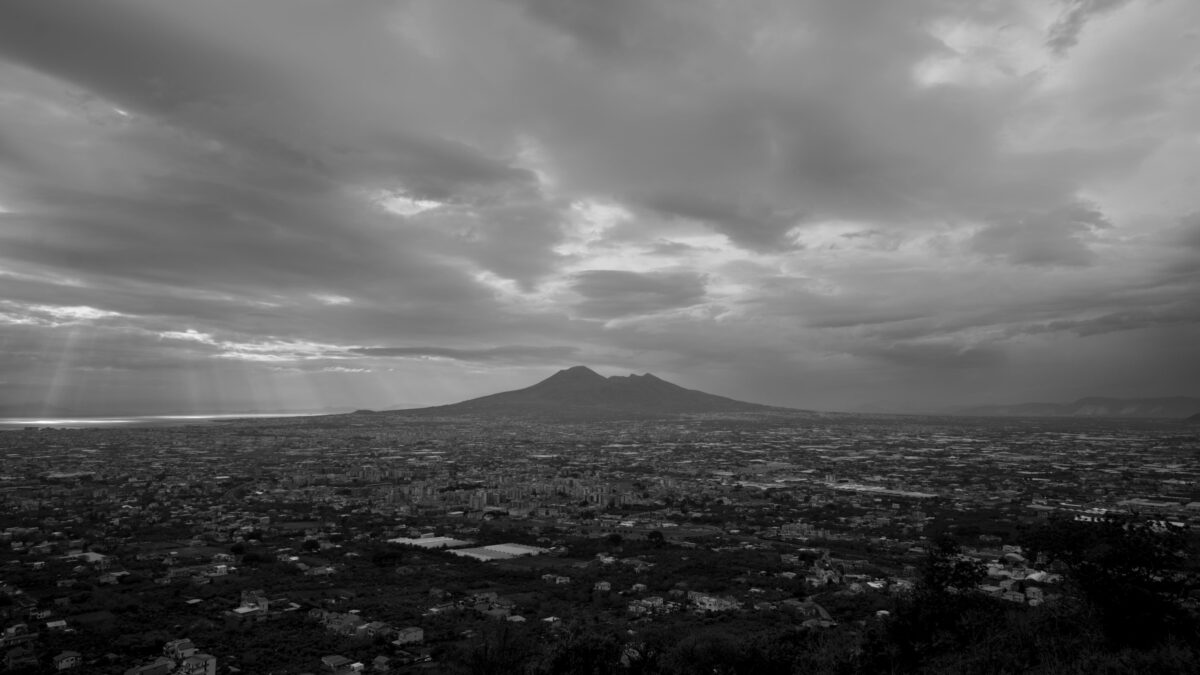
In his most visually stunning film yet, Gianfranco Rosi teamed with The Brutalist composer Daniel Blumberg for his latest feature, Pompei: Below the Clouds. Luke Hicks said in his review, “With Mount Vesuvius looming over southwestern Italy’s idyllic region of Naples, both in history and imagery, one might reasonably think Gianfranco Rosi’s Below the Clouds is about the storied volcano, active and enormous. Yet the title announces Rosi’s focus clearly: Below. In the shadow of Vesuvius––an ominous, peripheral character in the film’s mosaic of curios and quiet charismatics––the vast, densely populated terrain the ancient volcano lords over is teeming with distinct and peculiar modern life. Through a welcome litany of characters and occupations, Rosi shows us around Naples with an invasive interest, like a father bestowing a passion to his child.”
4. Kontinental ‘25 (Radu Jude; March 27)
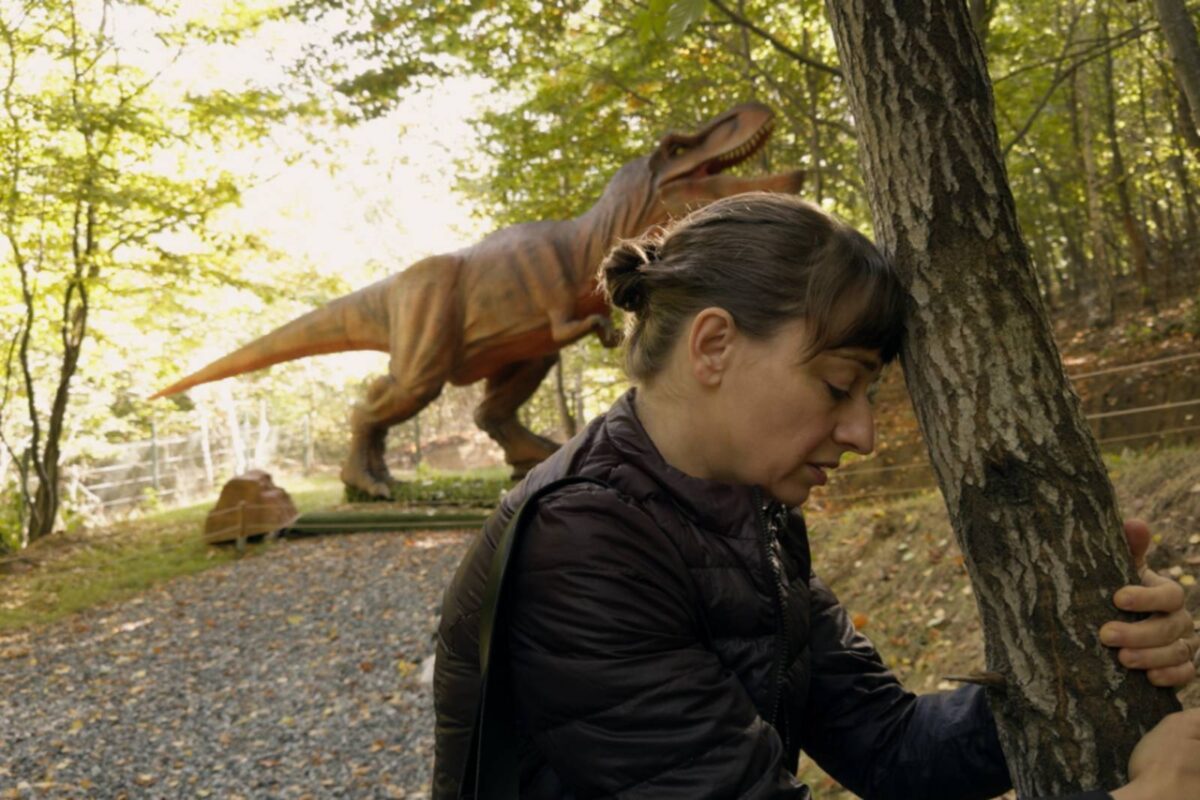
Continuing his prolific streak, Romanian director Radu Jude premiered two features last year, the latter of which, Dracula, arrived last fall. Now, his first work of 2025, Kontinental ’25, finally hits U.S. theaters this month. Rory O’Connor said in his review, “The Romanian filmmaker Radu Jude keeps his in check by grounding flourishes in pure mundanity. Near the end of Kontinental ’25, an ex-professor, Orsolya (Eszter Tompa), and her former student, Fred (Adonis Tanța), sit by an anti-communist resistance monument in Cluj and watch a horrific video of a drone attack on a Russian soldier. Having found the dead body of a man she evicted earlier that day, Orsolya, who now works as a bailiff, is looking to blow off some steam. They move uphill and Fred––whose delivery bag is plastered with Romanian flags, so as not to be confused with immigrant gig workers––serenades her. Next, they have sex in the bushes. The film up to this point has been awash with ideas and vaguely apocalyptic images: Roman ruins, a robot dog, a dinosaur park, zoomed-in footage of the Hindenburg disaster, a scene from Robert Aldrich’s atomic-era nightmare Kiss Me Deadly. This should all be a lot, but somehow Jude keeps it together.”
3. Dry Leaf (Alexandre Koberidze; March 20)
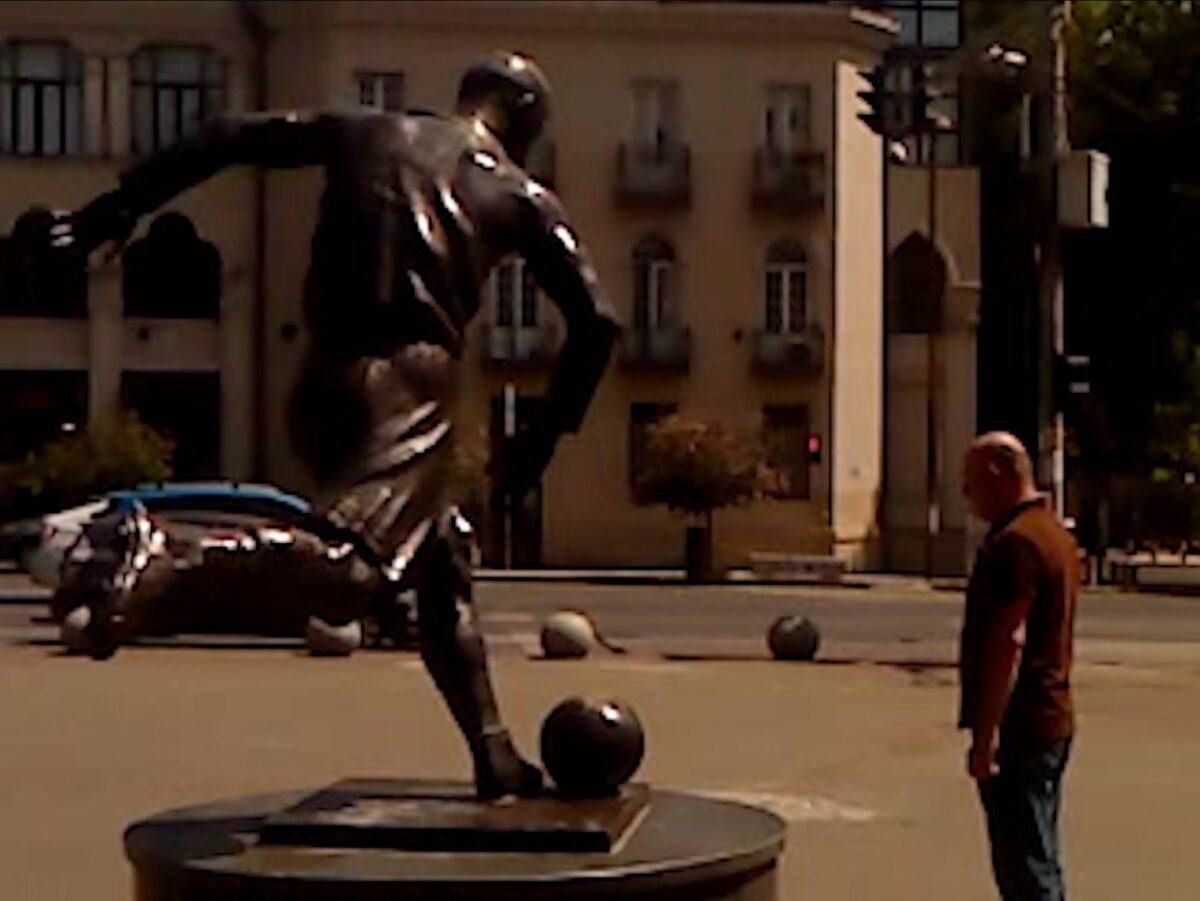
While filmmakers tout their usage of the latest and greatest technology through extensive aspect-ratio videos and infographics, leave it to Alexandre Koberidze to utilize a nearly two-decade-old phone to craft one of the most beautiful works of the year. The Georgian director, returning after the wondrous Do We See When We Look At The Sky?, shot his latest feature Dry Leaf entirely on a 2008 Sony Ericsson W595. Nirris Nagendrarajah said in our 2026 preview, “Languorous without becoming laborious, meditative without becoming meandering, abstract without becoming abstruse, Alexandre Koberidze’s Dry Leaf is a road movie unlike any other. It follows Irakli (David Koberidze), a father in search of his daughter, a sports photographer whose sudden disappearance is less of an enigma to solve than a vehicle for Koberidze’s imagination to serenely drift. Featuring Giorgi Koberidze’s charming, addictive score and shot on a Sony Ericsson, the fuzzy look of which transforms mundane landscapes into foreign-seeming textural images and hypnotic sequences, Dry Leaf, at 186 minutes, actively heightens our perception to its bucolic territory, its singular wavelength. It’s the kind of film where the destination is less important than the journey, where submission to its logic is more meaningful than a resistance, and where, like a vivid dream, its numinous sensations linger long after viewing. No matter the resolution, Koberidze has established himself as a modern enchanter.”
2. Yes (Nadav Lapid; March 27)

Synonyms and Ahed’s Knee director Nadav Lapid returned last year with Yes, a blistering satire targeting Israeli nationalism that premiered at Directors’ Fortnight. Luke Hicks said in his review, “Tel Aviv native, defector, and auteur Nadav Lapid opens his fifth feature in a catastrophic state of carouse. A filmmaker known for his employment of trademark dance sequences, Lapid is back with an equally visceral but uncharacteristically clubby groove in Yes, a work whose sarcastically enthusiastic title points to the relentless ridicule and hometown mockery that defines it.”
1. Miroirs No. 3 (Christian Petzold; March 20)
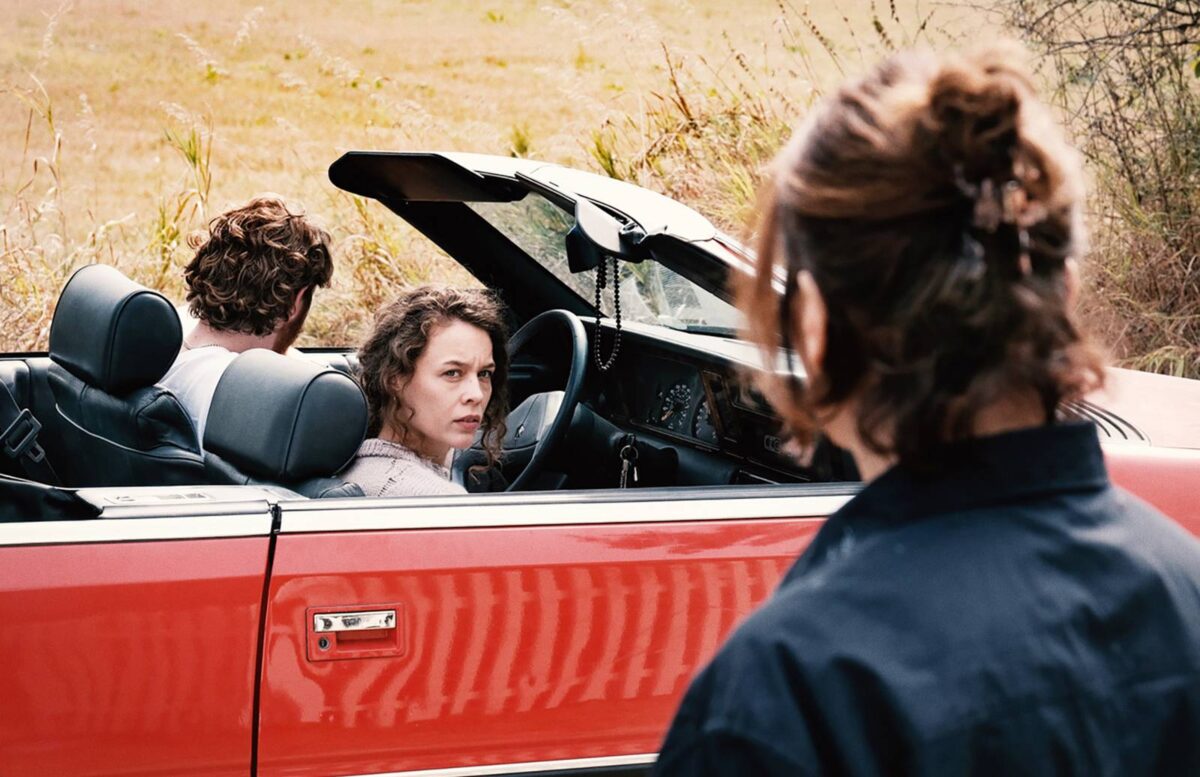
One of the greatest directors working today, Christian Petzold is returning with another masterfully enigmatic, gripping drama. The Paula Beer-led Miroirs No. 3, which premiered at Directors’ Fortnight last year, will arrive stateside this month and is currently my favorite film of 2026. Luke Hicks said in his Cannes review, “Miroirs No. 3 is the kind of work best-served with as little information as possible. It’s not among Petzold’s greatest, but films like Barbara and Undine have made that a very high bar to clear. It’s textbook Petzold, which I mean as a major compliment. Don’t expect all of the mysteries to be uncovered. There is no big explainer moment or narratively satisfying closure, the likes of which Petzold rejects, but the enigmas that do reveal themselves yield rare treasures.”
More Films to See
- André Is an Idiot (March 6)
- The Bride! (March 6)
- Hoppers (March 6)
- Bodycam (March 13)
- Slanted (March 13)
- Dead Lover (March 20)
- Late Shift (March 20)
- Lumiere, Le Cinema! (March 20)
- Touch Me (March 20)
- Ricky (March 20)
- The AI Doc: Or How I Became an Apocaloptimist (March 27)
- Alpha (March 27)
- Fantasy Life (March 27)
- Mike & Nick & Nick & Alice (March 27)
- The Serpent’s Skin (March 27)