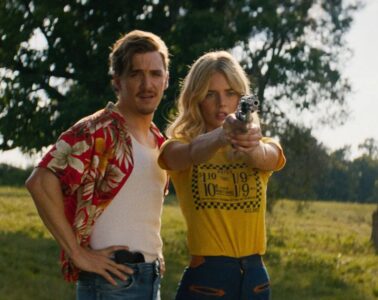
After speaking with Kellan Lutz, star of the newly released actioner Java Heat, one thing becomes clear: he’s having a lot of fun. Yet, he isn’t afraid of the hard work, even going so far as saying that everyone who works on a movie should be given an award for the arduous task. A few months ago I had the chance to talk with Lutz about his career to this point, what he looks for in films, his favorite type of stunt work, being top billing, working in Indonesia for Java Heat, and why he’s proud of everything he’s done. Check out our conversation below
The Film Stage: You’re still a fairly young actor. But you’ve got quite a few films under your belt already. Do you feel any particular drive to defend films you are in that are negatively criticized?
Kellan Lutz: You know, we all do collectively the best we can. Like, working on Java Heat, I love action movies. That’s my forte. It’s the genre that I choose. I love being active. With doing a movie, someone is always going to find something that’s wrong with it. We aren’t here to be judged. We are creating passion projects and if you don’t understand it, like amazing art, some people just don’t understand what they did. If you really want to grade everyone, you have to have a curve to it. Everyone’s not the same person. Everyone can’t be the same actor. You can’t have the same actors in every movie so it’s your own vision. And I wish people were just more supportive in general. In certain parts of the world, they’re just quick to bash someone down. But it takes a lot of hard work. And not every movie is trying to win an Oscar. We’re trying to tell a story. Someone’s dream and vision. I think everyone should get an award for just making a movie. They don’t realize how much time and dedication the productions are. How much work it is. It’s not easy. People think being an actor is easy. It’s a lot of hard work. So, am I quick to defend…? I can only speak personally, my performance. I know some days I’m like, “Ah, yeah, I could have done that better.” Or, due to moments of life… someone passing or a pet passing or just hardships of life where I just didn’t connect the way I wanted to and due to day shortages, you can’t get another day to redo a scene. So, you aren’t perfect 100 percent of the time. But I know that I’m proud of everything that I do.
This film, you’re the draw. You’re the headliner. It’s got you and Mickey Rourke, but beyond that it doesn’t have a lot of known actors for an American audience. Do you feel a lot of that pressure? You’re top of the poster here.
I know. I know. I think Mickey had that in his contract that he could choose.
[Laughs]
I really appreciate it. I worked my butt off on this. I was doing second unit and first unit. I think also, because I fell into acting, I was never obsessed with anyone. I didn’t know who Brad Pitt was growing up. I just never watched movies. So there’s not really anyone that I’d be intimidated by. I just respect them. I think it would be awesome to work with them. So I’m still going to be me and do my stuff. But having Mickey there was great. I saw one of the last scenes, with me spitting in his face, he’s totally cool. But I was just being me, in character. It’s just an honor to work with him. I didn’t really realize that I was pretty much the only American there because he’s playing French. That never really connected. I just saw the characters as they were but after seeing the movie it’s pretty cool.

You said you’re into the action genre. So, what’s your thing? Gun fights? Hand to hand? Chases? And how much of that is actually you versus a stunt double?
Most of this is me. We had some great stunt guys. Even the building fire. That was the first time I had gel plastered all on me just in case.
That’s awesome.
Yeah! You never get to do that in big studio movies. They don’t even let you run on rocks because you might twist your ankle. So action stuff… I just love doing action. I love shooting. But I love fighting. Probably fighting, mainly. That just shows more physicality. But in this one, I got to ride a motorcycle. I got to blow stuff up. Got to shoot guns. Got to fight people. Jump from buildings. Crash through windows. A plethora of different things. That’s what I like.
It’s a lot of things you probably didn’t do in a lot of the other films.
No, but in real life I did. Like, growing up, I’d do all these things. That’s why it’s great to do them in a movie. But other films, yeah, you never really get to do much yourself. That’s why I love independent movies.
You shot this on location, right?
Yeah.
I know most of your days are probably 14 hour or 15 hour work days. You come in, you work, you work, you go to bed. Did y’all have any time to run around the city?
Well, the great thing about shooting there… I’m very active when choosing projects. Looking at how much action they have and where do they shoot? I’m big on traveling. So being here and talking to [director Conor Allyn], I think we had 32 different locations.
Wow.
So you’re seeing the country while you’re working. In between takes they’d have like an hour to setup a new shop. I’m just sniffing around! I’m checking stuff out. We shot at Borobudur temple; I was going up and down that thing. It’s like a free pass because there are no tourists on it because we’re shooting. So it’s the best of both worlds. I’m learning Bahasa (Indonesian for ‘language’) from the locals and the crew. Working with them and chatting in their language. Learning about the food. We were shooting in a meat market and then another animal market and I was learning about how they sell all these animals. A lot of different things that just opened your eyes and you become worldlier with it. It’s a great experience to travel and shoot on location. You really feel it. You really feel like you are experiencing this stuff for the first time versus green screen. Like Tarzan was a bit of green screen and I had to act like there was an alligator there! It’s different when there’s a real alligator there.
Definitely. You can tell when an actor has to act against something like a tennis ball.
And some actors are really good. They’re able to pull it off.

Java Heat is now in limited release and hits VOD on Monday, May 13th.

Speaking with Enid Zentelis about her new film Bottled Up, two things become clear: how personal the story is to her and how determined the female filmmaker was to tell the story her way. Her first feature, Evergreen, ran the festival circuit in 2004. Nine long years later, she’s back with this refreshingly different take on addiction in all of its forms. For more on the film, you can read our review here.
Zentelis talked on everything from perfect movie endings to what a world looks like ruled by stuffy white male critics. Check out our conversation below.
TFS: You’re first film, Evergreen, came out in 2004. Here we are, 9 years later, with Bottled Up. What’s that journey like for you?
Zentelis: Well, I guess there’s a lot. While I didn’t have another feature made in that interim, I did some films. I did a film with [Bill] Clinton, I did a film with some bands [including Wilco]. I did some commercial directing and I was trying to get a couple of other projects off the ground, which almost went. And then I had 2 kids. Before you know it, it’s that amount of time. And to get back into it, I wrote the script for [Bottled Up] maybe three years ago. So even though this day marks so many years later, it sounds so long when people word it that way.
It’s funny, though, because I have good friends here [at Tribeca], also female directors, that are all here with their second features. All of our first films came out at the same time so, it is tough. I’m hoping it doesn’t take so long [for the third film]. I’m definitely not having any more children, so that’s going to help. Shave 4 years off the process.
From your viewpoint, what are the big differences between the first feature and the second feature, in terms of your process as a whole?
Well, also in that interim I started teaching [at NYU]. That’s a great thing to do while having kids, to have a more regular schedule. When you’re hustling for work you can’t be there at bed time. The great benefit of [a regular schedule] is really honing my skils and reexaming what I feel about directing and writing because I’m teaching both of those things in volume at NYU. There’s nothing that makes you better at that thing then having to articulate it to others. That’s the biggest difference, is I feel I’ve gotten many times smarter. I’ve gotten much more time to think about my approach to things and where I want my work to go artistically. Aesthetically, how I want to visualize things has stayed the same. I mean it’s refined and hopefully I’ve grown. I know how to better execute them and hopefully next time I’ll have more than 18 days and a bigger budget.
[Laughs]
I basically had to pick one or two moments in the whole film to execute, stylistically, scenes that you aren’t really allowed to do in that time period. You know, I’m a big fan of Paul Thomas Anderson and that style. For that kind of approach you need time. We were shooting 13 to 14-page days consistently.
How long was the shooting script?
Over a hundred pages. I didn’t get to shoot everything. I didn’t have enough time. So I had to, as we were going, make those choices. Which is why I’m so proud of [the scene between Sylvie, Fay and Becket in the zoo in Canada] because of what I was able to do in 3 shots. It’s essentially 3 shots and I feel like they are very cinematic and I tell that story visually.
The way that this movie handles addiction is what jumped out to me. It is as much about the enabler as it is about the addict. And the film doesn’t judge either of these characters. How do you come to make a measured film about a topic like this?
The fact is, I’ve lived so closely to this tragedy, without revealing too much. It doesn’t dawn on one to go in and vilify someone. It’s about human beings and how they experience. In terms of Sylvie and how her body chemically reacts, and her personality, which is imperfect. She’s not an angel who then becomes an addict. She was a problematic and selfish before this. So I wanted to have this story set with real people. There’s so many real people affected by so many shades of addiction or enabling.
When you look at the landscape of stories about addiction its hard to find [commentary on those who enable]. I look at Days of Wine and Roses and Nicholas Ray’s Bigger Than Life. Those were the only films – a little bit with Mike Leigh’s Naked – that start with the characters.
In so many films it’s the addiction that’s the main character…
Right, [this film] is about the lives of these people, so it has to be pedestrian and it has to be…for me the comedy is a way for the audience to enter. And it’s never a comedy that’s slapstick, I’d never do that.
I think a lot of people have expectations of addiction films, which this is quickly characterized as. But when people come out of it it’s not what they would characterize it as first. But with those expectations, [Bottled Up] is always going to feel challenging, which I welcome.

Another thing that stands out are the strong female characters, particularly the character of Fay (played by Melissa Leo). It’s a role that’s unfortunately not available for actresses in that age bracket especially.
That too is a fight. They are ready to act, but it’s a fight to get it made and it’s a fight to get it well-received, no offense to you, by male critics. You know, it’s not the expected. I think the greatest thing I read about that was [New York Times film critic] A.O. Scott once when he was writing about Sideways. He wrote, ‘yeah, you know, I like this movie just fine’ but he felt the need to say that ‘all of us film critics are middle-aged white guys’ and that’s what they relate to and of course. You look for things that make you feel found. So it’s always going to be a little tough. But you got to do it because you believe in it, and I do so.
Was the film always going to be as funny as it is on the screen now?
Yes. These characters always had that life, always had that relationship. You need to be invested in Fay. You need to be with her and root for her the whole time. And therefore you cannot hate Sylvie (Marin Ireland). And therefore if she ends up with Becket (Josh Hamilton) he’s not some sort of opportunistic guy, nor he is he some turnip off the turnip truck. Fay is the emotional epicenter, so Sylvie has to be funny and charming. And Fay’s humor comes from us understanding how she gets through what she gets through. And Becket’s come from being behind the action, the man on the out, so he becomes funny.
This movie ends at the perfect moment. Right when all is resolved and we’re shown everything that needs to be shown, the movie ends. There’s not 5 more minutes of unnecessary conclusion, as there are in so many films. Where does that come from?
In terms of where the film ends, stylistically, that’s just my style. I don’t cover a moment 5 different ways and kill myself and second-guess myself. I don’t like to overstay, I like films that don’t overstay. They give you what you need emotionally and they leave and, in that way, your imagination still alights.
You’ve completed the highest moment of Fay’s emotional journey. We had another scene actually, that looks beautiful. It’s Fay in the garden and it’s outside and it just was not as strong an ending.
At the Q&A after the film, you mentioned how the ending of the film was very happy, and perhaps a bit unrealistic. Why this ending?
It’s a happy ending in that being a sort of a fantasy, because things rarely ever work out that way [in real life], certainly not that neatly. But with characters like this, you can believe [in this ending].
What’s next?
Well I have two projects that I’m really excited about. One was going to be my second film but didn’t go, and now has renewed interest. I shadowed an internal investigator at HSBC bank. So I have a new angle on that project where the lead character is this conservative, self-hating black man who is an investigator inside the bank. It’s bigger in terms of its narrative reach, big action big theme. But really again, I’m starting from that same thing; it’s this character’s world view. That he feels he’s got to be extra correct when the world around him appears so corrupt and is, in fact, so corrupt as we know now.
Then I have another set in Corsica. My parents are immigrants, my mother’s side of the family settled there after the Holocaust. It has a lot of refugees and ex-gangsters. It’s been a landscape and a part of my life that I’ve been constantly like, ‘how can I [tell this story]?’ Because it’s a lot. So I think I’ve found a way to do it. Its like a coming-of-age tale, but very different. I don’t know if you know the graphic novel American Born Chinese? The way that narrative spins where this kid’s trying to find his way, and there’s a tale of this Monkey King that’s this parallel. It’d be film magical realism in a way, but more in the style of Lucrecia Martel, the Argentinian filmmaker. But set in Corsica and I would be really excited to do it.

Bottled Up premiered at the Tribeca Film Festival.

Since the amazing “Ship’s Mast” sequence on the hood of the 1970 Dodge Challenger R/T in Quentin Tarantino’s Death Proof, Zoë Bell has slowly moved from primarily a stunt double in action films and TV shows to becoming a more frequent screen presence in front of the cameras. You might have seen her in last weekend’s Oblivion and her latest film in this endeavor is Raze, a project she came on to produce and star in, which premiered at Tribeca last Sunday in the midnight series.
The film revolves around women that have to fight to the death against other women inside a prison system to save loved ones and themselves. During our discussion, Bell talked about how their aim was to subvert the typical trappings of the women-in-prison genre. You won’t see any bra and panty fights here. There’s a focus on character and highlighting the emotion of what it takes to have these women fight to the death. We also talked about the outfits they wore instead, dealing with her own stunt doubles, balancing reality with energy, why some of her friends were sad she didn’t reach out for help, and writing her own film.
The Film Stage: So, you premiered Sunday night. How’d that go?
Zoë Bell: Well, we’re still waiting on the critical side of it. Still waiting to hear about distribution and reviews. But as far as the public reaction, it was amazing. To be working on something so close and intimate for the last year and a half from conception to premiere. So watching it on Sunday it would almost be impossible for me to view it objectively, but seeing it in a theater with an audience and surround sound, color correction, and all the sound design and amazing soundtrack. It was the first time I got to watch Sabrina as opposed to Zoë watching Zoë work. Having the audience respond to all the areas that we wanted them to respond to, it was amazing. People were laughing when we wanted them to laugh. And you wouldn’t think this is a movie that would get much laughter. It’s not a comedy by any means. [Laughs] To have the audience get behind Sabrina to the point where they were rooting for her and cheering for her out loud, it was just a really satisfying experience. And they had such amazing things to say afterward. It just makes you beam.
One thing I love is the trajectory of your career. How you’ve slowly went from behind the scenes to in front of the camera. But a lot of the stunt people work in that field because of the simple fact that the main actor or star can’t risk getting seriously injured and maybe out of production for 2-3 weeks to recover or have their face messed up. It would seriously derail a small film and even a big one. Do you see that occurring with you now?
Zoe Bell: You mean requiring a stunt double?
Yeah!
Yes. I’d be naive to say no. I don’t really need a stunt double. But if I’m doing something I’m not really good at… I’ve jumped out of planes before and I’ve done that, but I don’t have a license and I’m not a skydiver. So, if I was doing a skydiving movie, I’d want a stunt double because I’d want my character to be as believable as possible. I don’t have ego issues around if I need a stunt double. The insurance side of things is something I couldn’t fight anyways. If I end up being the lead person in a big budget movie, chances are good that insurance companies are going to require me to have a stunt double regardless even if it’s stuff I can do.
I’d probably still like to do all my own stuff and not from a place of ego but I just love doing that stuff. I also like the genuineness of when you can tell it’s the same person all the way through. But I did a movie called Angel of Death a while ago. It was a web series. I had a stunt double. She didn’t do anything…at all. [Laughs]. But we had one standing by because we had a really small schedule. But as a stunt double, as you say, you’re technically replaceable. And because when you’re acting your face is on film so much you’re instantly irreplaceable. Not because anything personal. Not that I’m an irreplaceable individual, but just that my face is now on that film.
Hair pulling is kind of a dirty weapon in these fights, but, it’s an available tool as well. So, when you are setting these fights up, how much do you acknowledge that and include it or do you try to write it out in some way?
We had a lot of conversations about various things, and that was one. But if you see real life women fight, there’s a lot of hair pulling and there’s a lot of scratching and slapping. We did have them in some of the fights and a lot got cut. They didn’t end up in the final edit. But there are some montage fights where there is hair pulling. But we didn’t shy away from that at all because we wanted it to be sort of realistic. But we were limited in time and resources and hair pulling is actually really painful. [Laughs]. So we had a couple of throwing people around and doing that stuff. But fights to the death are a little bit different. You can’t really pull someone’s hair to death. There would have been like an hour fight. [Laughs].

I noticed you had white tops and grey sweats. How much of that was a conscious decision? I saw in one photo of you there was blood all over you and the shirt and it’s a great effect.
That was one of those happy accidents. We decided against dressing in dark colors for that reason. But to be honest, we had a discussion at the beginning of whether these women should be in bras and panties or not. But that was a conversation. I was never a big fan of that because I was going to be the lead. Not to disrespect movies that do that, but we were trying to stay clear of those types of genre movies just because that was the challenge we made to ourselves. We wanted it to be about these women fighting to the death because they have no choice. And trying to get into the emotion of that. The truth is if you were fighting in bras and panties, they would come off. So, we’re not doing that movie. And to be honest, the grey sweats and white tank, from what I can remember, kind of came from me because there’s something kind of old school cool about that to me. They feel kind of timeless and classic. And we didn’t want them in full dojo gear. But we did go with tight pants because then there is less chance of them being ripped off and being used as a weapon. But the first time we got blood on one of the tops we were like, “Oh, shit yeah! That looks awesome.” [Laughs].
You’ve mentioned that after Raze, a lot of friends came up to you kind of disappointed that you didn’t reach out to them for help with the film. Can you be a bit more specific as to what those areas might be?
Yeah, I had some people I had worked with from Quentin’s crews sort of in the lighting department and the DP departments. My whole thing was that we didn’t have the money. We obviously didn’t have the money they would have deserved, because that would have been our whole budget. But when you know someone who’s been working that long and that hard, and has earned the right to earn that kind of money, if I’m asking you to do a four week shoot I would have been asking them to say no to paying work for four weeks. So not only would we have been paying them a very small amount of money, but then we would have been costing them the money they could have been making. But one of my friends said, “Look, at least give me the option.” They all want to work on projects that they feel passionate about. They want to help friends that need their help. So a lot said, “Hey, if I couldn’t do it, I have people that can and that would love to and we could sub out and make it work. And if we couldn’t make it work, I’d just tell you I couldn’t.” So I was like, “OK. Point taken.” It was a really nice experience. I mean, it was a bummer because I was like, “Shit!” But the people we ended up working with were amazing anyways. But it was definitely a learning experience. There’s no harm in putting it out there and people that want to help and can help, they will. And if they can’t, they’ll be honest with us.
You came on board mainly because this is a passion project for director Josh Waller and how he wasn’t just trying to make a film that would be easy to market. You talked about how passionate he was. Then you came on as a producer as well. So, how much do you try to balance retaining some kind of market versus just sticking to your own voice all the way through with no care for the market?
I originally came on board as a producer because Josh had brought the idea to me. Then I met the other guys involved and they told me to come on as a producer, because it was a female action film and that was my area of expertise. That’s when I got really passionate about it. I knew then I would have some input and have a collaboration, which was really exciting for me. And they didn’t mind trying something new and doing something that hadn’t been done before, brilliantly. There was a lot of discussion. Josh is really passionate about storytelling, character development, and relationships,
[Co-writer Kenny Gage] is kind of an old street brawling boxer who is intelligent and an incredibly steady guy. He’s a fan of action movies. He’s a fan of fighting movies. He’s like the target audience, almost. He was always pushing for more fights, blood, and gore. But it was brilliant because with all of us, including [co-writer Robert Beaucage], I think what ended up happening was we found that balance. It was a matter of us finding a place to meet in the middle. It was important to me and Kenny to have the fights be amazing. And it was important for Josh, myself, and Kenny that the emotional content be there. Basically, we wanted the fights to be part of the storytelling. And we wanted the emotional storytelling to be part of what made the fights so graphic, disgusting, and horrific. So yeah, it was a fine line.

A lot of close quarter combat action sequences are getting mauled today by too many quick cuts and too many angles. It’s getting to a point where I lose track of who is fighting who and where I’m at. Can you tell when this is about to happen on set? Can you notice, “Oh, wow, that’s a lot of cameras. What are we doing that for?”
I can always tell. It’s one of the interesting things because you first saw it in the Bourne movies with that shaky cam aesthetic, up close and really tight. But the fact of the matter is that when people saw the Bourne movies, even if they were frustrated that it was up too close, they were affected the way I imagine the filmmaker wanted them to be because they did get disoriented. But if you do it right, you can get up close and personal and your audience will feel that. It’s certainly a creative decision. The truth is I know a lot of filmmakers that are shooting an action movie that say, “Let’s just shoot it wide.”
The reality is if you shoot everything too wide and too long of a shot, unless you’re shooting a movie with Tony Jaa, then you see too much. [Laughs]. But even films with Tony Jaa, you don’t want to get to the point where you’re so wide you lose the energy of it. So there’s a fine line. And I think how some movies even after the Bourne films keep doing that the audience gets more frustrated. The effect of it should be limited and now they’re like, “Hold on a minute.” We tried to get a mix of all of it in our fights. And sometimes we had fights in the same location or same situation, and we didn’t want it to feel the same. So we gave the fights a little personality. When I watched the first Bourne movie, and that started happening, I loved it. I really felt it. I was like, “Oh my God, what was that? Oh my God, that sounded painful. Did he? Did he? Ow. He’s dying!” Then after a while you’re watching too many fights across the various films and it’s like, “Come on. Now it’s not unique. It’s not surprising. Now it’s just frustrating.”
Yeah, there’s a balance.
Bell: And when they’re setting up the shots, you can never have too many cameras. [Laughs]. But there are certain angles that make the same move look ten times more powerful than some other angle even if you just do the same move exactly the same. So it’s a matter of having the knowledge of that. When it’s best to be close and best to be wide. You can tell when we’re shooting it. And I’ll be honest. You can do so much with the footage in editing. Editing is so key. You can take a fight you shot one way and edit it to be almost a different style.
You mentioned in an interview that you have this working title film called The Bali Movie.
Well, yeah, but I didn’t even call it that. He said, “Oh, The Bali Movie.” And I was like, “Wow, that’s what I was just calling it in my head.” [Laughs]
Well, you mentioned you’re writing a treatment for it. Is it nice to have some quiet time and be on a different side of film?
Well, ironically, it hasn’t been quiet for me because all of this stuff is blowing up. [Laughs]. So I’m looking forward to taking the time to be quiet and truth be told I’m not a seasoned writer by any means. I’ve written treatments for myself and talking to other people about it so I could show people, but this one, because I do want to produce it as a feature and I’m very serious about it I want to write a good treatment. It’s interesting because when I’m talking about it and jamming about it with my friends, there’s a bunch of places that have yet to be worked out. So when I go to sit down and start writing, I’ve just started asking myself the questions that I haven’t yet answered. Like I’ve got a list of questions I haven’t yet answered. So, “Until you answer those questions, Zoe, you’re not a writer.” I need some structure so I’m not just writing pages and pages in different directions. I need to pick a path. But I’ve got a lot of travel the next couple of weeks and I kind of like the idea of being trapped on the plane for twelve hours where that’s sort of my quiet time. So I’m excited to start. For me, it’s nice to have something real to base stuff on.
Well, I’m glad you mentioned that because I’m excited to see where Raze takes you.
Me too! [Laughs].
Have you sat down with any distributors yet?
Honestly, I got home at two o’clock this morning. I think two of the other boys get home today or tomorrow. And the other gets home next week. And I’m pretty much gone until the 18th of March. So sometime Monday we’re going to touch base but we need to have a sit down and debrief. Figure out where we go from here. I mean we had the premiere and everyone’s sort of burnt out at the end. It’s like, “Yay! It’s done.” But now there’s this whole other process that we’re walking into. So yeah, that’s going to be really interesting. I can’t wait to see what happens. Well, I hope I can’t wait. I hope exciting things happen. That’s what I hope.

Raze premiered at Tribeca and has a final showing tonight at 11:30PM at Clearview Cinemas Chelsea 4.

One of the many fascinating documentaries playing at this year’s Tribeca Film Festival is Michael H. Profession: Director (read our review here), which profiles notorious Austrian filmmaker Michael Haneke. Featuring never-before-seen behind the scenes footage, the documentary looks inside the quirks and mystery behind one of contemporary cinema’s most looming figures. We were able to talk to director Yves Montmayeur and learn how he came to meet Haneke, the challenges he faced in making the film his favorite film from the helmer and more. Check out our quick conversation below, conducted via e-mail, below.
How did you meet Michael Haneke?
A journalist friend of mine coming back from Cannes Film Festival in 1992 said to me that he saw a movie there which could really excite me. He was talking about Benny’s Video, which was programmed at Director’s Fortnight at that time. Two months later I had the opportunity to see the movie in a film festival in Rennes City. And he was right, I was totally amazed with this movie! So innovative and so brutal! And fortunately, Haneke was there, sitting alone in the film festival patio, dressed in black as usual with his severe way of scanning everybody around. Nobody dared to approach him. People were thinking, like always, that a director who’s able to do a such violent and disturbing film must be mentally disturbed himself. Searching for some German words to introduce myself, he interrupted me abruptly to say in perfect French, “I can guess what you will say! Because all the French I met told me the same expected story. Is it ‘I’m sorry, I studied German at school but I have all forgotten.’ Is that right?” He was right! It was my first sally from Haneke. I then did a cinema magazine interview with him, and later he came to work in Paris and we became friends.
What led you to start filming behind the scenes materials and how many films did you shoot BTS for Haneke?
When Michael Haneke told me that he will direct a movie in France I thought immediately about filming him here, on set. It was Code Unknown in 1999. It was my first filming experience. I probably became addicted in directing film documentaries from that exciting experience, but I’ve never expected at that time to direct all his other films (except The Piano Teacher and Funny Games US).
Did you ever feel at times, particularly during the interviews, that Haneke was directing you?
Not at all. He’s much more curious to discover your questions, and of course to guess what is the question behind the question. When he doesn’t want to answer to your question, he’s telling you in a front way, as you can see in the documentary.
What was the biggest challenge in making the documentary?
Juggling so many different film formats: DV, HDV, Beta SP, Digit Beta, Super 8. I’ve filmed Haneke for 15 years in so many different places, from Paris to Vienna, North of Germany, Cannes Film Festival; sometimes interviews were in French, sometimes in German. It was a real challenge to edit this materia prima.
Why did you choose to not include the American remake of Funny Games?
For a very practical reason: the producers wouldn’t allow me to film on the set, so there wasn’t any BTS material to use. And the film clips were so expensive that my producers and I decided to skip over this movie.
What’s the best piece of advice Haneke gave you as a fellow filmmaker?
Nothing, probably because he’s not used to giving any advice about filmmaking. In fact, he doesn’t like to interfere in the work of other directors, even with me talking about his own work! But I think he gave me the best advice allowing me to film him at work without any makeup. I mean, I was amazed to see how honest he is with his audience without resorting to any tricks or any cosmetic effects that so many others directors do. It’s a big lesson!
Do you think people unfamiliar with Haneke should see this documentary first or see his films first?
Well, I really don’t know. What I can say is that I hope my film makes you want to see Haneke’s movies or watch them again.
What’s your personal favorite Haneke film?
The Piano Teacher! Usually I don’t like the term “perfect film,” but it is!

Michael H. Profession: Director is now screening at Tribeca Film Festival.

A quality drama can often leave you in unexpected places, and in this regard, Arthur Newman absolutely succeeds. Bolstered by strong performances from Emily Blunt and Colin Firth, the film follows two pretenders on a journey of discovery. This, surprisingly, is director Dante Ariola’s first feature and he allows the character’s journeys to breathe with both quiet confidence and a handle on the comedy within. Set for a theatrical release beginning today, I was able to get on the phone with Dante to discuss how he found the balance of making Blunt crack herself up but not the audience, accents, mystique in the film, and much more.
With their heavy British accents (to the point that Blunt said the word “condom” funny on the set of 5 Year Engagement and had to be told how they wanted her to pronounce it), I was curious if he had any odd instances of getting his two British actors in American roles to pronounce things a certain way himself. Fortunately, it was smooth sailing for the director. “The accents haven’t really been an issue,” Ariola said in regards to how people perceive the film. “[Emily’s] such a chameleon, especially early in her career. I think she’s pretty good at doing an accent and we had a good dialect coach come on early. I think it was more difficult with Colin [Firth], not because of his accent but just the audience’s baggage of knowing, ‘This is Colin Firth.’”
When I mention that it is interesting that he cast two British people in these two small town America roles, Ariola laughed and simply acknowledged that was true: “Yeah, it is very counterintuitive.” He added that while reading the script, he noticed that the character of Arthur Newman was “a pretty flawed guy” and that there were a number of unlikable things about him. So, when he was thinking of who to cast, that actor had to have an “inherent, empathetic quality that would allow the audience to go on a journey with this flawed guy.” That’s when Colin Firth “popped into my head”, the director told me. He also noted that Firth spent some time growing up in St. Louis, so he had been exposed to the American lifestyle and language early on.
As for Emily, he really liked the “chameleon” quality of her acting and how Blunt really does blend into a film. He also touched upon the fact that their age difference in real life works in the film’s reality. “It’s another thing that makes these two characters completely mismatched in every way yet they’re having this experience together,” Ariola said. “But it didn’t become a film about an older man and a younger woman. And they had some inherent chemistry when they met each other.”
Lately Emily has shown off her comedic sensibilities and there are some moments in the film when she, being a naturally funny woman, could take a joke during a dark moment and actually make it funny. Yet, there is one moment in particular where her character cracks a joke and laughs about it with herself but as an audience we don’t laugh. It’s not amusing. So I asked him how much he was aware of that scene. “It’s interesting you bring up that moment,” Ariola said. “I’d say there are a lot of pretty emotional scenes in the film, and then there’s some things that are awkwardly funny without being a gag. But that is one of the few scenes where the idea was to really keep the audience in Arthur’s perspective, like, ‘Who is this girl? How crazy is she, really?’ And I thought that scene was a useful tool.”

He further explored it, saying, “that kind of laughing and the sing-songy thing was one of the few things I said, ‘This would be really nice to bracket this and start really small and take this further where it’s making me uncomfortable and we’ll figure it out in the edit what shade of grey it needs to be.’ That was one of the trickier ones to modulate. From my point of view, it was one of the few ones where I thought that I would have to see where it fit together in the overall mosaic.”
There’s also a certain level of mystique in the film, something he admits was part of the draw to the script by Becky Johnston. “It’s one of those films where it doesn’t explain everything away,” Ariola told me. “I’m a big fan of ‘show me, don’t tell me’. So there’s something about seeing him sitting there [in the employment office] where you kind of know the guy does not look so happy.” He also admits that the film is “a slower burn than a lot of films nowadays” but that it’s pacing is to continue the mystery. “Another piece of the puzzle is always connecting and filled in as the film progresses.”
Trust is a big issue in the film, particularly with how Arthur and Mike’s relationship intertwines. There’s a constant dance of trust where they get close and then pull apart. “There’s definitely a theme of identity running through the film,” Ariola said, “and as the film goes both characters start to reveal, literally, their other names to each other and other aspects of who they really are. I think escapism can be really enjoyable and people do that in a lot of different ways.”
I also asked Ariola what he looks for in films himself and whether he takes any impressions into a film. “I think some of my favorite film experiences are walking into the theater and not knowing anything about the film you’re about to see,” Ariola revealed. “I’m not sure exactly what the expectation of a film would be with this cast. This film, maybe more than some, is more of a mirror. Your reaction to it is where you are at in your own life at the time you see it. I try to have no expectations on a film. I try to never watch a film as a director. Just as an audience member.”
I mention that in relation to going into a film blind, a lot of cinemagoers respond to casting and in particular people they recognize. With Emily Blunt and Colin Firth headlining, it’s a much easier sell. They don’t need to watch a trailer. They like these actors. So I asked about how the trailer for this film came about and how much he was aware of that. “I think it’s a fair representation of the story. It’s a little bit tonally different, but I think it gives an overview of what you’re going to see in the film.” However, he warned that the film may be out of the “wheelhouse” of certain Colin Firth fans. The film is very dark in many ways, and the humor is often understated or awkward and you don’t really get that impression from the trailer, which I think is what Ariola was talking about when he said it is tonally different.
“But I think at the end of the day, this story stands on its own merits,” Ariola added. “I think Colin, in particular, wants to make movies that speak to him. I think he’s earned that. For his fans, it’s still Colin Firth. He’s not playing a serial killer. But it’s definitely not Bridget Jones’s Diary. Not to malign that, but it’s more of apples and oranges.”
I also asked about the extensive use of ambient and natural lighting throughout the film, which Ariola described as his “aesthetic” and went into his goal of the collaboration with cinematographer Eduard Grau. “It was supposed to not look too polished and I was just trying to capture the tone of each scene,” Ariola explained. “It wasn’t an intellectual decision. I wanted it to look a certain way. The foliated trees have the right tone to look at banal imagery and try to bring strange beauty to it.”
Arthur Newman hits theaters today. Check out the first ten minutes of the film below.


One of the stand-out independent films of the year thus far is the low-key Mud from Take Shelter director Jeff Nichols. Starring Matthew McConaughey, Reese Witherspoon, and two up-and-comers in Tye Sheridan and Jacob Lofland, this coming-of-age tale hits all of the right places and rarely rings hollow. Sitting down with McConaughey and Nichols at SXSW, they would take any question and warp them into a great discussion, playing off one another like best friends. Together, we talked about the crazy rebreather seen in the film, how McConaughey slept on the actual island, what it is about Nichols’ frequent use of shelters, and how they got that boat into that tree. Check out the conversation below.
The Film Stage: This is easily one of my favorite films of the festival. It’s a great kind of throwback, an almost 1970s character piece. Talk a little bit about how this came together and getting Mr. McConaughey involved and, how did this magic come together.
Jeff Nichols: Thank you very much. I started thinking about this back in college and I had the idea of a man hiding out on an island in the middle of the Mississippi River. I had this concept and immediately I was thinking of Matthew for this part and this was back when I was in college. I just kind of kept it and started to add layers to it and everything else and in 2006 I sat down and started writing and I wrote the first thirty pages and I got through the first big dialogue scene on the beach with the boys and then I stopped and said “I’m not ready to write this yet, I’m just not prepared for whatever reason.” I came back the same summer I was writing Take Shelter I was writing Mud and I finished it. I just kind of always had Matthew in mind for this part and I was fortunate enough that my career got to a point to where I could actually give it to him. We were at the same agency and we just connected.
What were your thoughts when you first read the script?
Matthew McConaughey: That it was very specific. It had a very specific voice; the character had language that I had never really heard before but I loved the language and it was highly mysterious to me. I loved the superstition, I loved that it was a love story and I loved that it was about this longing and the pursuit for unconditional, almost innocent love, yet very fierce love for this woman. And, as a character, it was fun for me to go “you know what, this is not about shoulder up. This is not about logic.” This guy, who has been living off the grid and is not really civilized, has been able to be that Labrador you kick off the porch a thousand times and will keep coming back and say “pet me one more time.” And so, for me, it was just really harking me back to junior high and that first time of asking a girl “will you go with me?” and the sweat on your brow that you get wondering if she’s going to say “yes” or “no.” And then the first time I was heart broken and those times where you kind of, what Elis is doing, you learn worse, even though its reality, reality kind of punches you in the face. And this story about this young man who’s on that threshold of his ideas and romanticized view, if you wanna call it romantic, of love is banging up against the ceiling of reality and consequences and real life is showing in the consequences and the reality of that.
So this is this guy Mud, who’s this poet in my mind and sort of aristocrat at heart who’s this conduit, who’s a great guy for this young man to run into for the summer. What a great guy to run into and have a summer with. I’m a stickler for stories like this, for logic of the narrative and he’s a very linear thinking when it comes to script like that so, a well-written script is one you can’t really holes in. A lot of times, and some good movies do it but, to get from act two to act three, they’ll give the character convenience where you’ll go, “that character wouldn’t really do that” but they had to do it to get to the next story point. Nothing’s convenient in this story and even the family trying to kill Mud, you understand why they’re doing it because their brother or their son was killed. The divorce, the couple didn’t get back together at the end, that’s not how life works. Most of the time it’s what happens, they divorce, but I love it when the father’s dropping the son off and he’s sending him off not saying “don’t listen to your mother” he’s basically saying “be good to your mom now.” He took the high road, so to speak, and everyone evolves in that way and it was a fun trip back into innocence for me. You said seventies but that time for me was eighties and maybe that’s just because that’s when I was that age, Elis’s age, that it took me back to that. And I like the deliberation of the story.
Nichols: There is a timeless quality to it. It’s great.

The fact that this relies so heavily on the two kids and they pull it off so well, they really do hold your attention. When you’re casting for this, when you’re writing for that and you finally cast these kids, do you expand on their roles? Was it always this intricate?
Nichols: No, it was written just like this. And you have to give credit to these kids for pulling off these words. Tye had come out of The Tree of Life and he had gone through this kind of amazing experience, which I call Malick bootcamp. He never had a script and so he never had that problem that I think a lot of child where, they just get weird and they get, kind of, reality ground out of them. He was able to be on a big movie pit with Brad Pitt and Jessica Chastain and not suffer any of those consequences. So he’d see all of the machinery and everything but he still knew how to improvise. My problem is, I gave him a script. I gave him a thick script and was like, “I need you to play this part.” But there’s something about him when you meet him. And the same thing happened for Neckbone, this kid Jacob Lofland, you meet him and your like, “you look like him, and you sound like him, and you behave like him, now I just need to know that you can speak these lines.” And you just kind of know it when you see it. I knew Jacob immediately when I saw him. I was like, “that’s Neckbone.” There’s something in their personality; they’re mature but at the same time, totally suit their age. I mean, these kids, they were able to just ingest all of this material and it came back out sounding like them.
McConaughey: But Tye was more of an actor. He knows what he’s doing: he has a bit of a process. Jacob was somebody you found who if exactly who he is on screen, who had the confidence to be himself in front of that camera and say things at just the right times where it was a zinger.
Nichols: See, you’ve seen Jacob, we can actually say we shot Reese first, in the first week, there’s a motel room scene and I remember in the first couple takes, you’re watching Tye and you’re watching everything because Elis is always in the front of the camera and my eyes drift over to Jacob ad he’s got this look on his face, he’s just staring at Reese Witherspoon. So I went up to him and I said, “alright, now don’t look at her like you’re shy. This is a pretty looking woman in a motel room, don’t look at her.” And so then all the takes are him sneaking these looks. And I never had to do that again, that was the only real correction I ever made on Jacob and the correction isn’t what changed him, it’s that, slowly as we started to add days on to our shoot, he just gained the confidence. He looked around like “I got this.” I mean he’s a smart kid and he’s a cocky kid and he was just like “Oh, I’ve got this figured out. I know exactly what I’m doing.” I spent more time on the adult actors than I did on the kids. When you write something like this, though, it’s a leap of faith. You’re just saying “they’re out there.” I just added my name as an executive producer to a film with kids and we were talking about it and I was like “you can’t cast now. You gotta cast right before you shoot and you just gotta know that they’re out there. You’ll know them when you see them.”

Your film seemed to have a lot of themes whether it’s with revenge, fear and in this case, it was love. As a filmmaker, what are you trying to connect to your audience?
Nichols: The best way to connect to your audience is to just think about yourself. In each one of my films I try to put kind of an emotional punch in the gut somewhere in there and it’s a specific scene, I could tell you the specific scene for each film if you’d like to hear it. But in this one it’s when that girl breaks up with Elis and I just wanted you to watch a tiny little heartbreak on screen. The only way that I know how to connect these things emotionally to people is if they’re extremely personal for me. I don’t know how to hold the world in my mind when I’m writing these things and so, I try to be really specific and I try to find an emotion that is palpable. In Shotgun Stories it was the fear of losing one of my brothers — that is palpable. Anytime in that process through writing, directing, editing, I can tap into that. With Take Shelter it was the fear of losing the stability in my life and my wife and that fear was immediate. And in this, it was that very fierce need that I had, I was fifteen at the time, to have this girl love me and to have my parents stay together, which, they did. I never had any problems with that but you imagine that and that was enough. So I just try and find a personal emotion that is so intense that, at any part of this very long process, I can just tap into it.
When you guys were the age of the boys do you have memories of kind of running out looking for stuff to do?
McConaughey: I had my mini summer but the one that reminded me the most of this was, I now know that it was mom and dad’s second divorce, at the time I thought mom was on vacation, but I was living with my dad and we were living out in the trailer park and I would go exploring. And, miles from the house I had found this really huge oak tree, the biggest oak tree that I had seen. And about fifty yards further I came across a fence and it was a lumbar yard. And so I got some wire cutters and this was all kind of a little bit like, I found the wire cutters, snuck them out, not that anybody was looking for the wire cutters but these are things you’re thinking about, especially when you’re up to no good. I snipped the fence and we went through and we started stealing the lumber and then found the nail gun and I got those and plywood and built a thirteen story tree house in that oak tree. And I did it all summer long and it was only me, I was the only one who knew about it. I would take my lunch out there, climb up to the thirteenth floor and then pulley up the lunch [in a bucket] and eat it by myself. And then at the very end of the summer we were gonna move and I asked my dad to come on a walk with me, I wanted to show him and I showed him and it was thirteen stories. And I think he knows I got the wood from over there but it was done, I got away with it.
In a lot of your movies there’s this theme of hideaways and having shelters, you’ve got like a van down by the river and a tent in Shotgun Stories and obviously a storm shelter in Take Shelter and a boat in a tree on like a private island in Mud and it seems like a great way to create characters by putting them in these private places and I was wondering if that’s part of your writing?
Nichols: I’ve never thought of it that way and I’m just being completely honest with you. I mean, obviously, the shelter, but each one is so specific. That van in Shotgun Stories is really to help show that that character takes retirement early, that concept of early retirement. He just hits pause sometimes and takes retirement and takes shelter and that shelter is the manifestation of everything that’s going on in that guy’s head. And this boat in these trees, it’s the physical image of what we all want out of a summer on an island in the Mississippi River. Like, if Mud was a thing, he’d be that boat in a tree. And in most stories that would be all you would find on an island if you found that. So each one has its specific purpose to the film and I’ve never thought about it thematically as something I try and apply but maybe it’s just something that’s working on me subconsciously. It’s not out there because each one has a very specific…but, oddly enough now that you mention it, it’s purpose is always character. I’ve always said “I write plot second; I write characters first.” And that very much is an example of it. If it’s important to the characters then that’s where the inspiration comes from. I’m never thinking about how to get somebody from point A to point B necessarily. That seems like an afterthought that I need to figure out.

Did you ever have like an island or anywhere you would escape to when you were a kid?
Nichols: Well, I grew up in the suburbs so, I’m a lie if you wanna build me up as this sweetheart and soft kid that grew up on the river in the woods. And there was actually this group of magnolia trees I used to go into that had arms that grew in a canopy to the floor and you could walk into them, literally, and just be hidden. That’s the closest thing to it probably. This river was actually something I had discovered during the writing of this film, when I had the conceit I really didn’t have much experience with the river and it was a part of Arkansas, my home state, that I wasn’t very familiar with. So, as I was going down there to figure out this story, I was figuring out this river too and it’s when you’re struck by it, you’re literally struck by the Mississippi River and your jaw drops a little bit. And it’s teeming with wildlife and you just feel like you’re in another place for sure.
I was curious about the challenges of working on that, for both of you, because, to me, that river is like one of the main characters of the film.
McConaughey: One of the first things you said to me [to Jeff], about how you were focusing directing different from your last films was, the camera’s gotta move like the river; that slow, fluid pace. Challenges? It’s a real asset, as an actor, when you get to go on location and it’s that location specifically. Because there’s not a demarcation between “okay, now we go to work, now we go home.” I’m not going back to the city, back to the apartment. You’re in rural Arkansas and even if you went back to town to your hotel or home, you were still in rural Arkansas and the people walking around were the people in the story. And then, I try to take advantage of it, I camped out on the river some, which was wonderful. One, you get two extra hours of sleep, because you don’t leave set and two, my only neighbor each night were those tugboats taking stuff up from New Orleans to St. Louis on the Mississippi River, or the donkeys that came by that were on these then thousand acres, or the girl who came by whose name was “Ladasha” and I asked her how you spell that because I had never heard the name before and on her driver’s license it was “L-A-Hyphen-A.”
Nichols: I have to give credit to Matthew. I never slept on that island and he came to us late, we started shooting different parts of the film first and he was coming from another film.And you’re on set and you’re working and somebody came up and almost whispered, “Matthew’s gonna camp out. He wants a tent. Do you know anyone that has a tent?” And I just remember thinking, “this is awesome.” Because we hadn’t worked together before. I’d met him and we’d had conversations leading up to it but you never know really what you’re gonna get and I was like, “this is the right guy. This is the guy.” And he did. He went and camped out on the island. I never did that. And when [Matthew was] telling me the stuff about the barges and the spotlights I was like, “I would’ve written that in the script if I had done my work and stayed out there.” He dug in for sure. But it was a massive expenditure in terms of time and treasure to get out to these places. The boat in the tree wasn’t on the island. But it’s not like we found an easy tree. We built a road in order to get down there to it because we knew so much would have to go there. That boat had to be lifted by a crane to be put into the tree so we had to build a road; I don’t know how much money that cost, more than my first film, probably. So, everyday would start with a drive and then you would get into a gator, like a four-wheeled vehicle, and that would take you someplace and then you’d get into a boat and then you’d go someplace and it was just like you were always immersed, you were doing what the boys were doing. So it was very beneficial.
McConaughey: That is beneficial.

I thought you really effectively captured the feeling of growing up in a small town. What inspired you?
Nichols: Like I said, I grew up in the suburbs but in Little Rock, you drive thirty minutes and you are in the middle of these places. And my grandparents grew up there, my parents grew up in a very small town and I was in a very unique position. I think, had I grown up in a small town like that, I might have some resentment or I might be one of those people that’s just like “ah, I gotta get out of there!” I actually had an outsider’s point of view but with insider’s access. So I would go and stay for weeks at a time with my grandparents and be brought into their community and their friends and everything else so I got to observe people and observe this way of life. And it’s been beneficial for me through all my writing because it’s characters that I feel comfortable with; it’s a location that I feel comfortable with. Which, isn’t to say it’s easy, it’s just something I feel like I understand.
What was your relationship like off-screen with Tye Sheridan? In the film, it kind of seems like you have this mentor relationship with him.
McConaughey: I mean, somewhat. I didn’t try to do anything conscious. We kind of became friends. So I didn’t ever try to go, let me try to give you some advice. There was never anything like that and that’s not who Mud is. Mud would answer a question if Elis was like, “my dad said this” Mud would go “no, that’s not true” because that’s what Mud knows. We hung out a little bit explored some of those camps and stuff like that and when they took him and Jacob and my son fishing at the edge of the river it was neat for the first time becoming a parent myself to have their parents come by and go…and I go…and I was for the first time telling these other parents “your kids will be fine. We’ll watch over them. We got food and things like that.” And then sitting there and going “Yeah you can camp outside, yeah you can stay out late, yeah you can…” So, like I said, Mud was a fun guy in the summer. When I look at the film I go, “boy, if I had a summer that’s the guy I’d wanna run into. Dangerous, fun, mysterious.”
So I was just kind of Mud with them as much as possible but it wasn’t something I thought about or felt like I needed to work on and they didn’t need it either. There was also a certain distance, though. We didn’t need to become chummy best friends because they didn’t need to know…there’s something that I’ve learned as an actor, if you get to know someone really really well off set, that’s fine and good. What it also does is, if you choose to, you’re reminded that they’re acting if they’re someone else when you’re with them on screen. I remember learning that from Chris Cooper. He had a small part in Time to Kill and I remember meeting him on set and he had his hands in his pocket and he’s like “hey, how you doing.” And then we worked in Lone Star and he was like “hey, how you doing.” So, the first time I actually met him is when I’m in a scene with him. And it was great I remember the feeling and going “ah!” And I was so in the moment because I was just meeting him for the first time, because he showed nothing. I’m not saying I did that literally but there’s something about what you don’t say, what you don’t do. I wasn’t always around, but if you came around you were welcome to.
Nichols: I’ve never heard that. We usually hear the same things but I’ve never heard that. That’s really smart. That’s really interesting. Because, I remember, I really like Paul Sparks, the guy who played Carver and I was like, “man, Matthew should know Paul Sparks, they should hang out and be friends. But it’s like, Matthew doesn’t wanna hang out with Paul Sparks because they’re mortal enemies.”
McConaughey: And it was towards the end of filming for me and he had come in and I remember going up and meeting him but I was hesitant to do that but we just shook and kind of looked at each other and didn’t say another word until the end of the night. So I didn’t show my hand and he didn’t show his besides being like “mhm.” And then at the end of the night, after the scene was over, we talked about, “good job on this or that or the other” and he smiled and he was Paul Sparks for the first time and that’s fun to do that and not know what the other person’s gonna do. It goes into that a little, we’re out there playing make-believe, so we get the luxury, it’s not just Halloween night, for two months we get to play make-believe so you wanna protect that.

I just wanted to know about the rebreather that Michael Shannon uses in the film. What the hell is that and how did you find out about it?
Nichols: Yeah, one of the first things that sparked my idea was a book called The Last River that I found in the Arkansas Public Library and it was a photo essay of people who make a living off the rivers. And there was this guy who would dive for muscle shells and he had a diving helmet made out of a hot water heater with a garden hose attached to the top and the pictures were right there in the book and I could go into some more detail that I won’t bother you all with but the interesting thing is, when we went down to do the film, our production designer started asking around, and our props guy, started asking around about these things and we found, the guy that’s in the movie that’s kind of Mike Shannon’s helper who’s drinking beer, he’s related to the guy and we used one of their diving helmets as a model to build our own, we ended up building out own. The affectation that we added is the visor. I saw one photograph of one that had a visor but the majority of them are big cans they stick on their head and they can’t see because they couldn’t see anything anyway because it’s the bottom of the Mississippi River. So that’s an affectation. You go down to the bottom of the Mississippi River, you can’t see anything it’s mud. And they would just sit on their butts and just feel around for these muscle shells and stick them in the bucket. I could talk about that for days but yeah it’s what we did for the whole movie. I found these houseboats for an inspiration and I found a second cousin that had one and went down and we shot in one and we shot in several and there were no sets, there were no props even. That’s Mike Shannon in a homemade hot-water heater guide helmet.
Since it took you this amount of time to get the script and do the film, what does it feel like for you now to have it completed?
Nichols: It’s very satisfying. I’m proud of this film and I’m proud of what we’ve done. And I don’t know if it’s any different than the others but this one feels different in terms of my relationship to it, because I’ve carried it for so long. Take Shelter, I conceived of it in 2007, wrote it in 2008, shot it in 2010 and 2011. That film was immediate. That film had to come out and be about that time. And this film, sometimes people use the term nostalgia as a negative term but this is a nostalgic film for me because I’m looking back at myself in a period of time when I was younger and this whole film was supposed to feel kind of timeless. It did for me personally so if that translates, great. But it’s this kind of relief. I’ve been carrying Mud around so long that it’s out there. If the plane crashes tomorrow at least Mud had been made.

Mud hits theaters on Friday, April 26th.

If you’ve seen Simon Killer then you know that it is the kind of film that begs to be talked about afterward. From the plot and characters, to the themes of modern masculinity and the way that we lie to ourselves and others to get what we want, Simon Killer offers up all kinds of fun fodder for coffee house discussion.
Which is why it was my great pleasure to get to talk to Brady Corbet, the star and co-writer of Simon Killer. During the course of our conversation we touched on his impetus for making this film, the kinds of people he drew on to create Simon, and his attraction to working with challenging directors on dark, weighty projects.
So enjoy this interview with Brady Corbet, and look for Simon Killer in theaters and on VoD now.
Click below to stream/download (right-click and save as…) or subscribe on iTunes.
MP3: The Film Stage Show Interview – Brady Corbet On Transforming Into Simon Killer
Subscribe below:
![]() |
![]() |
![]() |
E-mail us or follow on Twitter: @BrianJRoan, @Nick_Newman, and @thekingbulletin with any questions or comments.

Run & Jump was one of the biggest surprises so far in a strong year of films at Tribeca Film Festival. An absorbing, tender look at a tested marriage, the film comes from first-time director Steph Green, who shot on location in Ireland. Starring Maxine Peake as Vanetia, a strong-willed women whose husband Conor (Edward MacLiam) is recovering from a stoke, she is under the observation of an American, Dr. Ted Fielding (Will Forte in a dramatic turn). We sat down with director and co-writer Green and the leads the evening following the film’s world premiere at the Tribeca Film Festival. Check out our conversation below.
The Film Stage: Thanks for sitting down with us. How’s the fest going so far?
Steph Green: I think I can speak for us all that we’re having a great time. We had the world premiere last night?
I know, hard to get a ticket for it. We had the IMAX experience, we were all the way up front.
SG: Oh I’m sorry – it’s not a good movie to see up very close.
Very intimate.
SG: A lot of handheld…
Yes. Can you tell us how the story came about?
SG: The original script was written by Ailbhe Keogan, an Irish writer whose father suffered a brain injury. So she had the real life version of this with her family coping with something like this, where there was a new version of her dad. It’s a real look at her mother, and how she coped with her husband coming home and of course there’s this added story that I brought in when we started co-writing, which was this foreign doctor, just to make the dynamics more complicated, and to play with this unconventional love triangle.
Yes, you have an interesting and mature way of handling, where the story doesn’t go where other filmmakers have before — it has a very interesting structure.
SG: I was just terrified of making a really clichéd movie, because it did contain a lot of those trap doors into sentimentality or soap opera, with people sitting around having cups of tea at a kitchen table with looks and glances of affection. Structurally we were trying to not do the expected.
So casting Will Forte, he’s a comic actor. How did you jump on board, Will?
SG: He ran and jumped.
Will Forte: My agent is an old friend of Steph’s.
SG: Your agent normally would like to use an actor from the same agency, so they have you look first at those lists, and you were the only person at UTA. I was very interested in Will from that point. I started researching everyone at UTA, and luckily I was friends with his agent so we had coffee.
WF: I think I met you the first time at your office. I had heard from my agent who said she was interested and my agent loved the script, so she sent it to me and I loved it as much as she did and I wanted to be a part of it. We went from there.
SG: People thought I was crazy, but now I feel incredibly validated with all the success Will is having. And his manager said to me, “everyone wants to say they are first, but really they want to be second. But you believed in him first.”
WF: I can’t thank you enough…OK – I’ll stop. It’s been an amazing learning experience, I learned so much from Steph, and Maxine and Ed. It’s all-new territory for me, and they made it such a comfortable and wonderful process. It was such a special time; the whole experience was beautiful and terrifying at times. It’s something I will never forget.

So what was so terrifying about the process?
Maxine Peake: Working with British actors.
WF: Trying to understand their accents. No, it’s hard to trust yourself and believe in yourself. There are so many ways Steph was a wonderful leader, and the confidence she had in me helped me be confident in myself. That was the most valuable thing, and the acting stuff she guided me through the process and told me when I was blowing it and also tell me when she thought I was doing a good job, so you just learn what she wants. It was a great and valuable experience.
I think what’s so wonderful is your character is an outsider and the way the film is framed and the space is composed in each shot, the film grows on you. The first few minutes I wasn’t quite sure where it was going, and then it dawned on me how brilliant the choices you’ve made, Steph, in terms of the role of the observer?
SG: I’m glad you said that about the beginning, I think people get into it much later, and I had feedback from executives that you have punch up the first 10 minutes, and all these notes. But what we found is you need to spend the first few minutes weirdly, to see these tiny slices of domestic life, even if it’s fast and you weren’t on sure footing and who to root for. I had only learned that through trial and error, without those introductory little moments, like Will in the bathtub and two second scene with Vanetia hovering. They are really short scenes, but if you had not spent that time, you’re just not with the movie at all. Then it just turned into a really predictable film.
Were you fighting the forces that are to not box it in to something like a rom-com?
SG: It would have just been so bad, and luckily my producers [Martina Niland and Tamara Anghie] were so supportive. They knew if we took a wrong turn it would have been so bad. There these pitfalls we avoid, you don’t ever judge the characters, and you feel like you can relate all of them.
Maxine and Edward, it’s so perfect how you’ve portrayed this women who’s caught up in this uncertain territory. Can you talk about how you created this very realistic character?
MP: We had five days of rehearsal, which is sort of long in British terms, but it was a lot of improvisation, we’re in a room in a studio. We improvised the first moment Vanetia and Conor meet, and writing out our bios. Then we’d sit with the family and say things like, “I remember the first time you, rode you’re bike without your stabilizers” so you can create these collective memories. There are these moments you tap into in the memory bank. That’s what I felt kind of difficult, a lot of the memories you create you start to feel sorry for the character and I had to battle against that. I had to stop feeling sorry for Vanetia because Vanetia didn’t sorry for herself, so I had to get over that hurtle and not sit through every scene and cry.
Edward Macliam: Part of the process we did with Steph, and subconsciously it got you to trust your instincts, whenever she switched the camera on, I felt there was such a solid structure put on us to just really try out what we wanted to. And we could always trust and be confidant Steph nudging us in the right direction.

This is your first feature film. What did you notice in transitioning from shorts?
SG: I think the most challenging part from me was trying to find financing, you’re almost there and then a bolder comes and knocks the whole project down. And you start from scratch again — you’re being told your project isn’t getting financed for this reason or no, it’s that reason. In the end you have to stay at it and hope it happens. And then once we were financed it felt like a huge gift was given to me and I had been given a privilege. It’s always a privilege to make a short but I had been granted permission to tell this long story with the actors I wanted. It’s been a dream of mine. It’s everything you hear all the time – it’s harder, a longer process — but this happens .These relationships have lasted for years, and that’s really fun. So the parts of it that are different I’m loving.
How long were you working on the film for, from screenplay to festival.
SG: Three years, that’s my quick canned answer, I’m sure it’s about right. The script was floating around before that but I wasn’t attached to it.
How did you become attached, it’s an Irish writer and you don’t have an Irish accent?
SG: I do not, I live there, and I have my Irish residency. I have been back and forth for the last 11 years, I went over 2001 to do a masters degree at University College Dublin and ended up staying, found some friends, found some possibilities. I had done some internships in LA, and knew that was there, and knew that was a direction I was going. But I think I felt accessibility in Ireland, just opportunities, not just career opportunities. Some part of me wanted to grow out and not just be the film major that moved to LA. So I started working on short films with friends, and the Irish Film Board took notice and once you have support from the Irish Film Board it’s incredible, and when I got that on my short film it made sense to go back to them and try to work together on a feature film.
Can you talk about the place you shot – it’s a beautiful film, a lot of use of natural lighting.
SG: We couldn’t afford lights [laughs]. No, we shot in Roundwood which is near Wicklow or in Wicklow. We matched the exteriors for landscapes, roads and locations in County Kerry. County Kerry is where Dingle, the small town you see in the film is, and the shop that you see — that’s all Dingle. So basically near Dublin and the west of Ireland.
Where’s the film going next?
SG: We just all want it to have a life and have it been seen. I want these performances to be seen. It’s a really tricky road for independent films and we’re going to hopefully be in more festivals and hopefully pick up distribution.
Great – I hope so too. Any last words before I leave you?
WF: It was an amazing experience, I feel like guys are my family now – Ed came out for pilot season and we lived together for two months.
And so did your character – he thought you he was part of the family.
WF: I hope Steph and Maxine get to live with me for a while too, or I get to live with them. You just get so close to people with this process, well close to good people. What a good group of people to go through this whole process.
SG: Sorry if we’re grossing you out.
No, I feel the same way – the film is structured a lot like that too.
SG: Thanks for coming.
Thank you.

Run & Jump is currently screening at Tribeca Film Festival 2013.

The film Euphonia revolves around the way we interact with our world and how electronic devices, and anything in our lives, can sometimes wedge themselves in between us and other people. Whether it’s iPods, cellphones, or books, these are issues humanity has to deal with. We are constantly trying to keep up with the world around us, but sometimes we need to slow down and simply listen.
Director Danny Madden deals with this in an interesting fashion and through unique methods of storytelling makes it ever apparent. We were able to catch the film out of SXSW and we thought it was a brainy examination of these themes. You can read our review here. So, it’s with great pleasure that the filmmaker has released their entire movie for free as part of Earth Day, and one can stream it below. We were also able to talk with one of the co-producers of the film, Jim Cummings, and you can read the conversation after the embedded film.
One of the first questions on my mind has been revolving around story lately. Myth building has become such a large part of cinema, with nearly every blockbuster going through extravagant hurdles to create a universe that is interesting. But something often disregarded but equally important is the characters, so in that regard I was curious if this was a concept or a story first.
“It was, from the beginning, about audio,” Jim Cummings recently told me over the phone. “We wanted to make a movie about sound and we thought before even starting it, we had to do everything with sound. The whole movie has to be sound related.” But as much as it was about the device, it had a human element as well. They wanted it to be “about listening in a relationship and not listening,” Cummings said. “What better of a venue to do that than in a high school romance?”
The way they tell the story isn’t the only oddity for Euphonia. There’s also the runtime, a focused 54 minutes. “It’s not really very easily programmable for a film festival,” Cummings admitted. “Doesn’t really fit into a 90 minute theatrical release.” How hard was it to get into SXSW’s feature section despite fitting almost in the middle of a short-film and full feature? “They were super cool about it,” Cummings told me. “We wrote it and it was 22 pages. People say for each page it equates to a minute. So we were thinking we were making a 22 minute movie and we got halfway through editing it at 30 minutes and we were like, ‘Damn, this is a feature.’ We made it 54 minutes because it’s kind of how long it needed to be.”
For those curious if they felt any pressure to shrink it or add to it, Cummings had an interesting response. “We weren’t going to shorten it just to make it easier to program at a festival. And we’re not going to make it longer, like a term paper that you try and put as much crap into as possible.”Perhaps part of that was that they simply weren’t trying to necessarily get a theatrical release for this film. You even get that sense when I asked Cummings why they chose the Zoom H2 as the recorder in the film. “We didn’t really care about rights or anything like that,” Cummings said, nixing my idea that it was about who they could get to sign off on the film. “It’s an accessible thing. A lot of it is shot so documentary and off the cuff, it just made sense to use these things since we were using them already to record movies.” In fact, Cummings added that the Zoom recorders are ubiquitous on movie sets now.
Being familiar with these audio recording devices because of the interviews I do, I asked Cummings about the way they pick up the hidden frequencies and data communications of cellphones. I could tell I struck a chord with Cummings as he eagerly explained why that noise wasn’t included in Euphonia.
“When we were in the editing room doing sound design,” Cummings explains, “and I was like, ‘You know that sound when you walk next to a speaker and you have your cellphone on? [Recreates sound quite well with his voice].’ And [director Danny Madden] goes, ‘Yeah, but that’s too much about cellphones and not about the recorder.’” Their goal here was to catch the unfamiliar.
“The whole movie is about listening to things that aren’t in your surroundings and using a device that separates you and acts as a wedge between you and conversation,” Cummings said. “We didn’t want it to be about cellphones because that’s too familiar. We wanted it to be where someone could be watching the whole movie and come to that conclusion themselves. What is this device that distracts me from real conversation and what are these things in my life that’s stopping me from actually engaging with my surroundings or listening?”
“I would have loved to do it, though,” Cummings admits. “That’s a really fun sound to put in the movie. And it’s such a cool thing. I remember watching an episode of The Office where they do that. Dwight has some kind of recording device and Jim’s cellphone gets next to it and makes that sound. And instantly when I’m watching it, I’m thinking, ‘Oh, my cellphone must be next to the speakers.’ It acts as that alienating device of interaction between the audience and the movie. Which I would have loved to do.”
They recorded the film in Atlanta, Georgia and Cummings insisted that they caught every soundscape they wanted. They even had some fat to trim, calling those scenes “too formulaic” as the justification of removal. However, he did worry about the opening sequence and whether it would instantly turn off the audience. “But it’s supposed to be ugly,” Cummings added. “It’s supposed to be these horrible sounds. If you’re working in a big box store in Atlanta, what those sounds are like and how they can be so infringing upon your comfort levels. As soon as he gets the recorder, he can go out and listen to nice things.”
Cummings also estimated that the recorder in the film was responsible for “ninety percent” of the film’s actual sounds. However, the entire film did source Zoom recorders, whether it was in the shot or not. Even on the soundtrack. “When we were recording us playing music,” Cummings said, “we would setup the Zoom recorder and record through a speaker.” The goal was to make it sound in sync because it would “sound too crisp” if they recorded it any other way.

Check out more information on the official site.

Premiering at the Sundance Film Festival a few months ago, Primer writer-director Shane Carruth delivered another divisive work of science-fiction with the mesmerizing Upstream Color. Having recently begun its theatrical roll-out, we strongly advise heading into this feature knowing as little as possible, and thankfully our chat with the man behind the work will do little to spoil the experience.
Sitting down with Carruth at Sundance, we discussed what he has learned in the last nine years, if he’ll ever return to his ambitious project A Topiary, where the idea from Upstream Color came from, his collaboration with Ain’t Them Bodies Saints director David Lowery, what his next project will be and much more. Check out the conversation below and one can also listen to a different audio interview over on The Film Stage Show.
It’s been 9 years since your last film. With Primer, some of the filmmaking was self-taught or you took it upon yourself to learn. In the nine years since you made Primer, what have you learned when it comes to Upstream Color? I know Upstream Color is a much more visually expansive film.
I don’t know. It is [visually expansive] and it’s really ambitious. Just the sheer number of locations, I think we have something like 1,800 shots in the movie. On average we cut every three seconds and then there are segments we don’t cut for a minute and a half. It’s crazy. It’s a bigger deal, so that required (absolutely) the help of people that had some more time and were really wonderful with what they did. There’s that. It’s weird though, sometimes I feel like I didn’t learn anything because I spent so much time going down this other path trying to get this other film made and wasn’t able to do it and then I came back to something I could control and not really ask permission for. So in some ways, I got in the midst of Upstream Color and would think, “Didn’t I swear to myself I wasn’t going to do this?” It’s difficult, it’s really difficult when you just throw down the gauntlet and you’re like, “I’m going to make this thing and I don’t really care how prepared we are and it’s got to happen. I’ve got to stop waiting.” It’s both positive and negative. The positive is, “Well great, we’ve got a finished film here and I’m extremely proud of it.” The negative is putting everyone through hell because we didn’t have enough resources.
If Upstream Color is a film which hopefully will have great success, do you hope someday to return to A Topiary?
Well, I don’t know. I’m writing something now and I decided basically I’m going to make the films I can make. I’m not going to be asking for permission. I’m not going to try and get political or lobby or pitch or do any of these things because I’m just not good at it and to be honest it’s just heartbreaking. I came to film from a job, a job that paid. I came here because this is my joy and I can’t let it get perverted anymore with meetings and the crassness of the business. It was just driving me nuts. I wasn’t getting straight answers; nobody was saying “no” to me. There was nothing but enthusiasm, but it just wasn’t happening. So I had to be the one to kind of say, “Well we’re going to stop now, we’re going to stop this process.” I don’t want to do that again. I want to keep doing things I’m really passionate about and I’m really lucky that I had this and that I have this next thing. Yeah, I think that’s what I would like my life to be: telling these stories and every 18 months and crafting a release that’s contextualizing it properly.

So with each new project you will control the marketing and everything?
Now it is. Having had the experience I just had in the last few months where I got to make the decisions and cut my own teasers and trailers and key art stuff, I don’t think I could ever give that up again. That’s just too intimate a connection, to have the audience receive the work. I mean it’s enjoyable; it’s too enjoyable I guess. If I can find a way to off load the other things, the technical work, the accounting and the paperwork, that sort of thing, then this stuff is just joyful.
I’m a sucker for teasers that evoke a certain emotion but don’t tell you anything. Were there any other versions of teasers or did you always have this kind of goal where you said, “I’m just going to show the very basics.” I don’t think there is much you could even put in a teaser that would reveal a lot.
Exactly. No this was actually the plan for a while. I knew that I wanted to do one that was just basically an announcement. It’s going to be confounding, we’re going to show some visual elements that no one’s going to be able to piece together but they’re going to now know that something’s coming and it has these visual cues in it. The next one, the “Starlings” one, there’s no genre elements in it at all, there’s nothing in it. If you saw it by itself you might think it’s about a relationship that’s falling apart due to alcoholism or something. I really wanted that because it basically says, “Look here’s where we’re going to end up going, so let’s all get on the same page” and if this is something you’re into, my God then this film is going to be for you. If it’s not then great, we’re not setting expectations in the wrong place. So that was really important to me, and then knowing the trailer itself was going to be a combination of the two. How fun is that? To be able to plan this stuff out and not have it be a big-group-thing type bureaucracy.
Regarding Upstream Color, where did the genesis of the idea come from?
It definitely came from this foreign concept of personal narrative and personal identities being built and how they’re built, whether they can ever be changed; and it’s meant to be an exploration of that. I wanted to take some characters and I knew I would be stripping them of everything that they could understand about themselves so that they wake up at a point in their life where it looks like they’ve done something but they can’t really explain why they would have, because the only explanation would be something that would be difficult to absorb. For Kris, she comes to the understanding, “Oh I must have had a mental break” and she’s now on meds. For Jeff it’s that he’s just a thief and that’s his identity. He sort of just embraces that; he’s just a bad guy. That’s what I wanted to play with, and to get there I sort of needed this construct to be swimming around that would be affecting them at a distance and they can’t ever know what that is. They can’t name it; they can’t speak to it, the sheer mania that would happen by feeling emotional states that you can’t explain. You can’t point to anything and directly understand anything about them. I don’t know, to me that just feels incredibly universal and really rich, rich material to mine.

I talked to David Lowery, who directed Ain’t Them Bodies Saints, another film I loved here. He helped edit this with you and told me the production was four months or so, was it longer than that? There’s also a very specific type of emotion conveyed in the film. Did you storyboard or find they rhythm in the editing room?
He’s amazing. Something like [four months] because there was stuff shot before we were in production and stuff shot after. There’s stuff that is rigidly storyboarded. There’s stuff upfront that is all about control and precise shots and compositions and it’s meant to play out in a very synched way, and those are rigidly storyboarded. Then there are parts at the end that are as well. We’ve got a lot of match cuts and we are following somebody in one environment and then we need to see them in the next. That’s the way we come to understand. Because we are in a completely subtextual world, and because there’s no dialogue, the only way to connect two moments and say that they are speaking to each other is by these match cuts. The editing has to be known before you shoot really, I mean I was walking around with my phone with a still from what we shot yesterday so I could match what we’re shooting today, that became very important and dictated the edit. Then there’s the bit in the middle, this very sort of subjective, emotional experience and that is different. There were always storyboards in the lines of the script that I would sketch out but those were things I would quickly toss away if there was some other, more intimate, way to get there. I think the thing is I don’t like the idea of improv-ing or just making stuff up as you go, except if you’ve built a solid enough language and you’ve come to be adept enough at it. I think at that point maybe you have the permission to go in there and go, “Look I got this tool kit, I know how it works, let’s just find what’s the best solution (given what we have to work with), given the tools we’ve already established.” So that middle third is sort of like the ending. Sorry, you asked about editing and I would say that’s reflected in the edit as well. There isn’t only one way that that could’ve gone.
So you brought on David after you had an assembly edit and he kind of took over?
Yeah, he saved my life basically. [He] completely saved my life because I had it in my head that, while we were shooting, I would be editing at night. The day was just cram-packed, I just couldn’t keep up. I was sleeping like 90 minutes a night and I was managing the edit, but every day I was falling further and further behind. So I got desperate, andI just didn’t expect him to be amazing; and he wasn’t “David Lowery, director of Ain’t Them Bodies Saints.” He was just a friend of a friend. So he came on and saw what I had done, matched it perfectly (without any ego whatsoever) and I came to really trust him and then he started after a lot of conversations. Which was completely key and integral, to be able to communicate with each other is so important and he knows that. Then he started bringing his own ideas into it and it’s just amazing and it’s so rare. I truly came to trust him and it became very collaborative. When we stopped shooting I was able to focus a bit more on editing and so we would edit, not side by side but room by room. He’d be over there and I’d be over here and we wouldn’t see each other for a couple hours and then suddenly I’d see what he was working on.
Were you able to give any input on his film? I know he was probably in his pre-production stage for his movie but were you able to give any input for his?
I was. I don’t know if he wants me talking about this, but I’m going to say it anyways just because it’s true. I don’t think he’d mind. I really do think that we’ve come to have a pretty good rapport. He was editing Ain’t Them Bodies Saints and he would send me a Vimeo link of a five minute segment and I’d send him some notes about what I thought, not that it matters because he knows exactly what he’s doing, but it’s a lot of fun. I guess one or two times I’d send him some notes and he would respond and we’d send emails back and forth. After a while it felt like maybe I had permission to take a stab at it myself — not to fix it — but to show what I might do given my sense of it. So yeah, I did that and it’s just been really great. I think the best thing about David is I knew that I could spend some time cutting something the way that I think it should work and he could come back and go, “that’s really beautiful, but it’s not what we’re doing on here”, and I know he wouldn’t say that out of any reason other than he has a specific vision. It wouldn’t be, “Oh he rejects it because he doesn’t want me stepping on his property.” It’s really such a rare and wonderful relationship.

Were you able to see his film here at Sundance?
I saw a rough cut a while ago but no I haven’t seen it here. Then I saw they did some more work that is just brilliant, like so brilliant, and now I’ve seen the opening 15 minutes multiple times and just seen it had gotten better and better and better. Finally when it’s all lights down I’ll be able to see the whole thing.
I love the practical effects you used [in Upstream Color]. Was there any CG involved with any of that?
[There's] no CG in the movie. Well, except when Kris is at work and she’s meant to be an effects artist.
The literal Upstream Color elements, where was that all done?
It’s done in an aquarium and my backyard, some in an aquarium in the back room. It’s weird, David and I would be at the editing stations working and then ten feet back Tom Walker, the production designer, is brewing up a weird stew of microscopic effects and stuff. So you would go over there and check the frame and then you’d do stop motion for the next eight hours and we’d go back to editing.
You shot in Dallas. What’s special for you about that community?
Absolutely nothing. That’s the thing; I don’t even know if there is a film community, I’ll be honest. I’m shocked that. I think Casey Gideon, the producer, knew Toby, David and James somehow, I don’t know how, but I met them through him and they’re like the only filmmakers (pretty much) I ever met in Dallas. David is the only director I ever met from Dallas that’s directed a feature, and now I guess we’re here. It seems strange, it seems so strange. Everybody that worked on this film is amazing and I’m sure there’s a thriving community there but I just don’t know it. I know they all seem to know each other but I just don’t, I haven’t been in it. I hope that doesn’t come off weird. I didn’t mean to say anything weird about that, I just don’t know much about the community there.
Were you influenced by anything in particular, are there any sci-fi-tinged movies that you enjoyed in the past decade or so?
[Steven] Soderbergh’s Solaris is probably the thing that I’ve watched the most in the last ten years that would be considered science fiction. I can watch that movie on repeat basically but I don’t even think that film needs to be science fiction. It could’ve been anything.

Both films have a really strong emotional center. I’ve only seen Upstream Colors once, I look forward to seeing it again. When it ended I definitely felt very satisfied and I think I got a basic understanding of the plot. Would that be a dream goal for you for most audiences when they first watch it?
Absolutely. That’s the thing; I’m trying to do something new. I’m starting to realize that I’m going to start using the phrase “album movie.” It’s an album that you put on and hopefully you have a decent experience and emotional experience with it but that that’s not the end of it, that’s not the end of the internalization of it (hopefully). I mean if it’s good enough, the hope is that it’s not something you have to see twice, it’s something you want to see twice. That you know, live with for a day and talk about. That’s the goal for it; that people will come to understand what its ambition is and then judge it based on that instead of something else.
Regarding your distribution plans, you’re starting in some cities in April and pop up screenings right? How far along in the future would VOD release be?
Yeah, we open April 5th in New York and then we expand too. Right now we’re booked in over 20 North American markets but by that time it would likely be a lot more than that. About a month later we will come out on cable VOD, retail VOD, iTunes, Amazon and all the digital transactional marketplaces. If we are lucky enough that theatrical continues to expand or continues to play then there will be a period of time where both will be out, digital and theatrical.
Was it important for you to get the theatrical out first? Was it important for you for people to at least have the chance to see it theatrically first and have that experience.
Yeah it is. It’s weird though because I completely recognize that there’s like a lot of schools of thought on this and all of them have this success story they point to. So it’s really difficult to say what’s right and what’s wrong. For me, I still remember a time where you saw something in the theater and if you liked it you’d say, “Oh great, I’m going to see it again on video. So it seems like there’s an expectation that I’d rather not experiment with but at the same time we also don’t have every resource in the world and we need to raise awareness. If cable VOD is too far after theatrical then it’s like we do a bunch of work to raise awareness for theatrical and then awareness goes down and we got to rack it back up. So it’s almost like they need to be close enough to where one can benefit the other as far as the general public knowledge and access.
So are you planning your own personal tour around the US in terms of pop up screenings and you being there? Is that influenced at all by Paul Thomas Anderson?
Unfortunately, I would be lying if I said it wasn’t. I really responded to all that.
Modern Ocean, which is the next project — is there anything in connection of other previous works in terms of style?
Yeah, absolutely. It’s a continuation of the visual and the emotional language of Upstream Color. It’s meant to go much, much further. It’s pretty expansive as a matter of fact. I can’t wait. I really feel like I maybe just scratched the surface on this thing. The next one is a real deep dive. It’s going to be good.

Upstream Color is now in limited release. Check out more details on the official site.